

Key takeaways
- The best fishing kayak is the one you will actually take out, and for a lot of anglers that comes down to weight.
The best fishing kayak is the one you will actually take out, and for a lot of anglers that comes down to weight. A boat that is a struggle to lift onto a roof rack, drag down a muddy bank, or carry to a hidden pond ends up parked in the garage. Lightweight designs trade a little capacity or stability for convenience, and that trade can be the right one if you fish alone, launch from rough access points, or just prefer a short, easy load-in.
The six kayaks below were chosen from the listings for this keyword and are described using only what their titles say. They split into rigid sit-on-top models, including fin-drive pedal boats, and inflatables that pack down to a bag. A couple of net listings that appeared in the same results are left out because they are accessories. Looking at 2026 buying decisions, the main questions are how you will transport the boat, how much gear and body weight it must carry, and whether you want to pedal, paddle, or both.
Quick Picks
Our top picks


As an Amazon Associate we earn from qualifying purchases at no extra cost to you.
| Product | Best for | Key spec from the title |
|---|---|---|
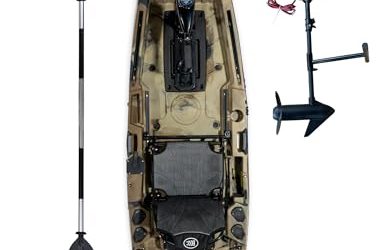
| Albott Modular Fishing Kayak | Pedal-style fishing in a sit-on-top | 9.4 ft, fin drive, HDPE, lightweight |
| Lifetime Muskie Angler Kayak | Simple paddle fishing | 120 inch sit-on-top with paddle |
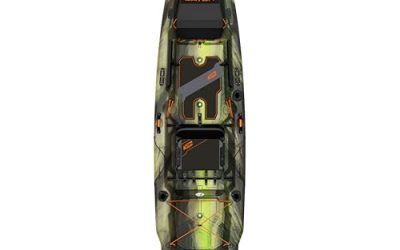
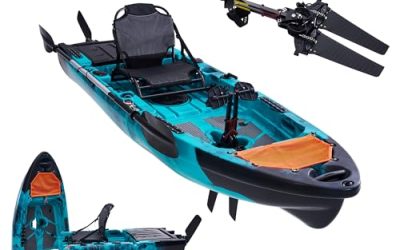
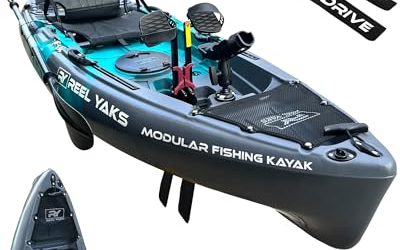
| Reel Yaks Raptor Modular Kayak | Higher capacity with a fin drive | 9.5 ft, 380 lbs capacity |
| Pelican Sentinel 100X Angler | Solo anglers wanting a compact hull | 9.6 ft, one person, sit-on-top |
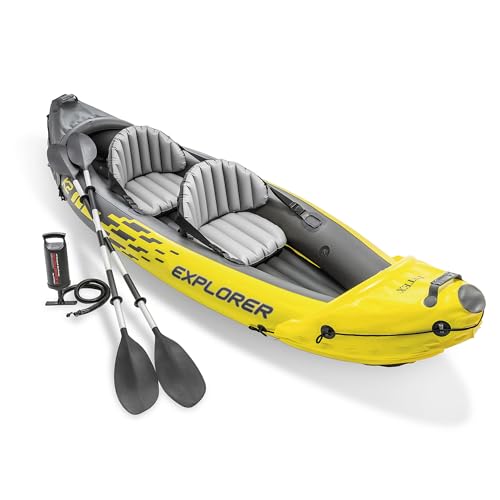
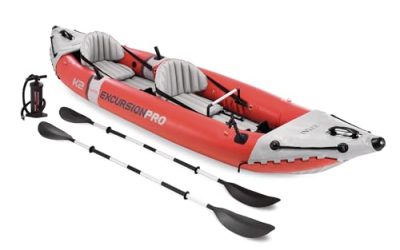
| INTEX Excursion Pro K2 | Portable tandem inflatable | 2-person, paddles and pump, removable skegs |
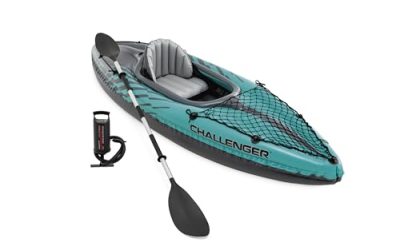
| INTEX Challenger K1 | Solo inflatable for small waters | 1-person, 86 inch oar, high-output pump |
How to Choose
Know your carry weight and lift plan
Rigid sit-on-tops in the nine to ten foot range are easier to move than 12-foot touring hulls, but they are still bulky. If you load alone onto a roof rack, consider a cart or a loading assist, and be honest about what you can lift after a long day. Inflatables win on storage and weight, though they need inflating and drying each outing. Check the listing for a stated weight, since the word lightweight in a title is not a number. A kayak cart, a roof rack with lift assist, or a trailer can erase most of the difference between a light boat and a heavy one, and each costs far less than a lighter hull.
Match capacity to you plus your gear
Add your body weight, a crate, tackle, a cooler, and an anchor, then compare the total with the stated capacity. One listing shows 380 lbs, which suits many adults with gear, while smaller boats may leave little margin. A kayak that sits too low in the water gets wet and tracks poorly. Leave a buffer of roughly 20 to 30 percent below the maximum for comfortable handling.
Decide on propulsion
Fin-drive and pedal systems free your hands for casting and let you hold position in wind, but they add weight and cost. A paddle kayak is simpler and lighter, with fewer parts to maintain. If your fishing is on small lakes or rivers, paddling is usually enough. If you troll or fish in wind and current, a pedal drive can make a day on the water far less tiring.
Consider stability and storage
Wide, flat hulls feel steadier but track more slowly. Shorter boats turn easily in tight spots while longer ones glide further per stroke. Look for scupper holes, rod holders, and tie-down points, and for inflatables, check the floor and skeg design. Cheap models often cut corners with thin seat padding and basic hardware, so budget for upgrades if comfort matters. A good seat is the single most worthwhile upgrade, because back pain ends more fishing trips than weather does. Try the boat on calm water before committing to a long outing.
The 6 Best Options
Albott Modular Fishing Kayak
This 9.4 foot sit-on-top uses a fin drive system and durable HDPE construction, and it comes with spare fins. The title calls it modular and customizable, which suggests it breaks into parts to ease transport. It is aimed at adults who want pedal-style fishing in a manageable size. Fin-drive systems propel the boat with a pedal motion rather than a propeller, which means the underside stays fairly shallow and you can drift over weeds or shallows without a spinning blade. Spare fins in the box are a thoughtful extra, since fins are the wear item on any drive.
- Strength: the fin drive frees up both hands for fishing.
- Strength: modular and lightweight are both named in the title.
- Trade-off: the title is truncated, so confirm weight and capacity on the listing.
Skip it if you prefer a simple paddle boat with no drive system to maintain.
Lifetime Muskie Angler Kayak
The Muskie Angler is a 120 inch sit-on-top that includes a paddle, in a tan finish. It is a familiar budget route into fishing from a kayak, built for anglers who want a straightforward hull without electronics or drives. The simple layout leaves plenty of room to add rod holders, a crate, and a fish finder later, and it is easy to maintain. Anglers who value a low entry cost and are happy to build up their setup over time tend to appreciate this kind of hull.
- Strength: the paddle is included, so you can launch right away.
- Strength: a 120 inch hull provides decent length for tracking.
- Trade-off: the title gives no weight figure, and a ten foot rigid hull can still be heavy.
Skip it if you need a packable boat for a small car.
Reel Yaks Raptor Modular Fishing Kayak
The Raptor is a 9.5 foot modular fin-drive pedal kayak with a 380 lbs capacity, available for adults and youth. The title names it as portable and lightweight, and the capacity figure suits larger anglers or those carrying lots of gear. The mention of both adults and youth suggests an adjustable fit, which can matter if a family member shares the boat. A modular build usually splits into sections, so check how the pieces join and how much each one weighs.
- Strength: a stated 380 lbs capacity offers room for gear.
- Strength: the modular design can ease storage and transport.
- Trade-off: pedal systems add moving parts and cost.
Skip it if you only fish small ponds and prefer a basic paddle boat.
Pelican Sentinel 100X Angler
This 9.6 foot sit-on-top is described as a lightweight one-person angler kayak. It is intended for solo anglers who value a compact hull for ponds and slow rivers, and it comes from a well-known kayak brand. A hull near ten feet is a sweet spot for many solo anglers: long enough to track straight across a lake, short enough to turn in a narrow creek. Think of it as the do-everything choice for ponds, small lakes, and slow water.
- Strength: the one-person format keeps size and weight down.
- Strength: it is named as an angler model, which usually means rod holders.
- Trade-off: the title does not list capacity, so confirm it before loading gear.
Skip it if you want to bring a partner or a child.
INTEX Excursion Pro K2
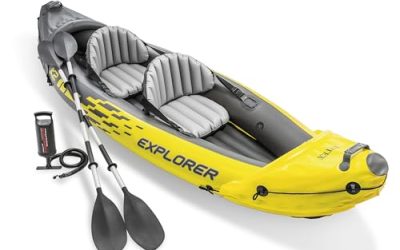
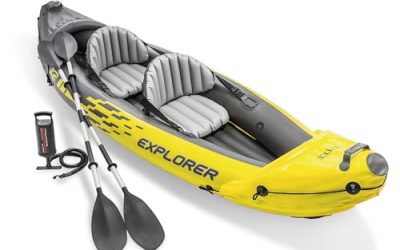
This two-person inflatable includes paddles, a pump, and removable skegs, and the title mentions two dry bags. It suits families and travel anglers who need to store a boat in a closet and carry it in a car trunk. Because there is no rigid frame, it is forgiving on a rocky shore, though you should still watch for sharp sticks and hooks when you fish from it. Keep hooks covered and lures clipped so a stray treble does not puncture a chamber.
- Strength: it packs down and comes with paddles and a pump.
- Strength: removable skegs help the boat track in a straight line.
- Trade-off: inflatables are slower and more affected by wind than hard shells.
Skip it if you want a dedicated fishing platform with rod holders.
INTEX Challenger K1
The Challenger K1 is a one-person inflatable set with an 86 inch aluminum oar and a high-output pump, plus an adjustable seat with a backrest. It targets casual paddlers who need a very portable boat for calm waters. The aluminum oar and pump arrive in the set, so the purchase covers the basics. For fishing, add a clip-on rod holder and a small anchor, and keep sharp lures away from the fabric.
- Strength: a solo inflatable is the easiest boat on this list to store.
- Strength: the adjustable seat with backrest adds comfort.
- Trade-off: it is not fishing-specific, so rod holders are an add-on.
Skip it if you want to fish in current or wind.
Which One Fits Your Situation
You fish alone from a small car
The INTEX Challenger K1 stores in a closet and rides in a trunk, which solves most transport problems. Pair it with a small electric pump for quick setup and you can be on the water within a few minutes of arriving at a hidden access point.
You want to cover water with hands free
The Albott or Reel Yaks Raptor offers fin drive propulsion so you can cast while moving. This matters most on windy days, when holding position near a weed edge with a paddle is nearly impossible, and with big lakes where covering distance is part of finding fish.
You need a simple, budget-friendly hull
The Lifetime Muskie Angler gives you a paddle and a proven format. It is an easy first boat to learn on, and any upgrades such as a better seat can wait until you know how often you will fish.
You fish small ponds with a partner
The INTEX Excursion Pro K2 carries two people and packs down afterward.
Common Mistakes
- Assuming lightweight in a title means light enough for you to lift.
- Ignoring the weight of gear, anchors, and batteries.
- Buying an inflatable for rocky, rough water.
- Skipping a cart and wrecking your back on the walk to the water.
- Choosing a pedal drive when a paddle would be enough.
Related guides
- Shimano Stradic Fl Vs Daiwa Bg Spinning Reel
- Polarized Sunglasses For Kayak Fishing
- Battery Chargers For Marine Batteries
Frequently Asked Questions
Are inflatable kayaks good for fishing?
They work on calm water and are easy to store. Hard shells handle wind and current better, and they carry rod holders and electronics more naturally. If you fish small ponds a few times a year, an inflatable is perfectly reasonable.
How much capacity do I need?
Add your weight and all gear, then pick a boat with a margin above that total. Do not forget wet clothing, a cooler full of drinks, and any fish you plan to keep, which all add more than most people expect.
Is a fin drive worth the extra cost?
It is worth it if you troll, fish wind, or want both hands free. Otherwise a paddle is simpler.
Can one person load a 9.5 foot kayak?
Many people do, with a cart or roof rack assist. Confirm the listed weight before you buy, and practice loading it at home so you know the process before a long drive to the lake.
More from Amazon
Programs that pair well with the guide above. Offers and eligibility are set by Amazon and may change.
Free shipping on eligible items, Prime Video and more. Eligible new members can start with a free trial.
Start a Prime free trialA Prime membership for ages 18-24 with a trial period. Eligibility is set by Amazon.
See Prime for Young AdultsAudiobooks and podcasts to listen to on the go. Eligible new members can start with a free trial.
Try Audible freeAd-free music streaming. Eligible new subscribers can start with a free trial.
Try Music Unlimited freeAs an Amazon Associate we earn from qualifying purchases.

Write Your Review
No reviews yet. Be the first to share your experience!