

Key takeaways
- Flat or matte: Produces minimal reflection and hides surface irregularities well. It is best for ceilings, adult bedrooms, formal rooms, and lightly used walls. Cleaning can burnish or leave shiny spots on some lower-cost formulas.
- Eggshell: Provides a subtle luster and is the most versatile wall finish for many homes. It balances appearance, touch-up ability, and washability.
- Satin: Reflects more light and is generally easier to wipe clean. It suits kitchens, bathrooms, hallways, mudrooms, and playrooms, but it emphasizes dents and uneven patches.
- Semi-gloss: Offers stronger moisture and scrub resistance. It is usually better for trim, doors, cabinets, and bathroom woodwork than for large wall areas.
Best Interior Wall Paint for Every Room
The best interior wall paint for most homes is a premium acrylic-latex paint in an eggshell or satin finish, with washable matte paint reserved for low-traffic rooms and higher-sheen formulas used where moisture, grease, or frequent scrubbing are the main concerns.
There is no single best paint for every wall. The right choice depends on four practical questions: how much abuse the surface receives, how much light reveals imperfections, how often the wall will be cleaned, and how quickly the room needs to return to service. A high-quality paint may cost more per gallon, but better coverage and longer-lasting color can reduce the total cost of repainting.
Our top picks
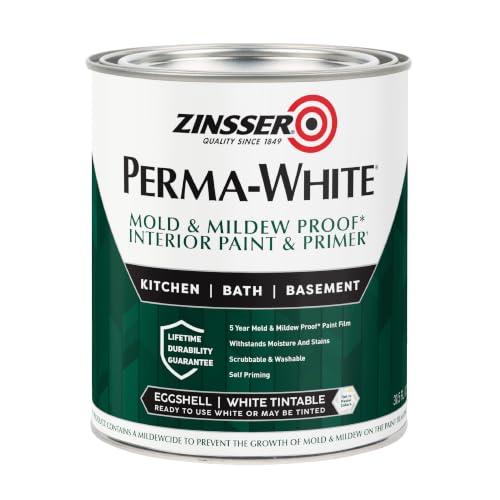


As an Amazon Associate we earn from qualifying purchases at no extra cost to you. Ratings are shown as listed on Amazon.
Quick Picks by Room and Situation
| Room or situation | Best finish | Recommended paint type | Why it fits |
|---|---|---|---|
| Bedroom or quiet living room | Matte or eggshell | Premium acrylic-latex interior paint | Low glare, good color depth, hides minor surface flaws |
| Kitchen or dining area | Eggshell or satin | Washable acrylic-latex paint | Handles fingerprints, splashes, and occasional scrubbing |
| Bathroom | Satin | Mildew-resistant acrylic-latex bathroom paint | Better moisture resistance and easier cleaning |
| Hallway, entryway, or playroom | Satin | Highly washable, scuff-resistant interior paint | Withstands repeated contact and cleaning |
| Rough or imperfect walls | Matte or low-sheen eggshell | Thick, high-hiding interior paint | Reflects less light and disguises small defects |
| Trim and doors | Satin or semi-gloss | Hard-drying acrylic-alkyd or acrylic enamel | Improves durability and makes detailed surfaces easier to wipe |
Best Interior Wall Paint Options in 2026
Best overall: Benjamin Moore Regal Select Interior
Benjamin Moore Regal Select is a strong all-purpose choice when you want dependable coverage, a broad color range, and a finish suitable for bedrooms, living rooms, dining rooms, and hallways. Its eggshell finish offers a useful middle ground: less glare than satin but more cleanability than flat paint.
Choose matte for ceilings or walls with visible patches and texture, eggshell for most living spaces, and satin for busier areas. A typical gallon covers approximately 350 to 400 square feet per coat, although porous drywall, strong color changes, and textured surfaces can reduce that figure.
Best for maximum coverage: Benjamin Moore Aura Interior
Benjamin Moore Aura is a premium option for repainting over darker or strongly contrasting colors. Its higher pigment load and hiding performance can reduce the number of coats in some projects. The extra cost is easiest to justify when labor, furniture disruption, or a tight schedule matters more than the lowest gallon price.
Aura is available in low-sheen finishes that work well in bedrooms and living areas, as well as higher-sheen options for rooms requiring more frequent cleaning. It still cannot compensate for a greasy, glossy, or poorly prepared wall; cleaning and adhesion work remain essential.
Best for high-traffic rooms: Sherwin-Williams Duration Home
Sherwin-Williams Duration Home is designed for interior walls that face regular contact and cleaning. It is a sensible choice for corridors, stairwells, mudrooms, family rooms, and children’s rooms where fingerprints and scuffs are part of normal use.
Its satin finish is the practical pick for heavy traffic, while eggshell creates a softer appearance in family rooms. Use a small sample first: satin reflects more light and can make roller marks, wall patches, and uneven skim coats easier to see.
Best value-oriented choice: Behr Premium Plus Interior
Behr Premium Plus is a reasonable budget-to-midrange option for bedrooms, offices, rental refreshes, and other areas that do not require the maximum scrub resistance. It can deliver good results when applied over a properly primed surface in a compatible color.
Budget paint becomes less economical when it requires several coats. Compare the label’s coverage and the expected number of coats rather than comparing gallon prices alone. For a whole-house project, the paint that costs more but finishes in two coats may use less material than a cheaper paint that needs three.
Paint Sheen: The Decision That Changes the Result
- Flat or matte: Produces minimal reflection and hides surface irregularities well. It is best for ceilings, adult bedrooms, formal rooms, and lightly used walls. Cleaning can burnish or leave shiny spots on some lower-cost formulas.
- Eggshell: Provides a subtle luster and is the most versatile wall finish for many homes. It balances appearance, touch-up ability, and washability.
- Satin: Reflects more light and is generally easier to wipe clean. It suits kitchens, bathrooms, hallways, mudrooms, and playrooms, but it emphasizes dents and uneven patches.
- Semi-gloss: Offers stronger moisture and scrub resistance. It is usually better for trim, doors, cabinets, and bathroom woodwork than for large wall areas.
Paint sheen is not a direct substitute for ventilation. In a bathroom, even moisture-resistant paint can fail early if an exhaust fan is missing, undersized, or rarely used. Repair leaking plumbing and allow damp surfaces to dry before repainting.
Coverage, Drying, and Odor Compared
| Paint characteristic | Typical interior acrylic-latex range | What affects the result |
|---|---|---|
| Coverage per gallon | 350–400 sq. ft. per coat | Porosity, texture, color change, application thickness |
| Recoat time | 2–4 hours | Humidity, temperature, airflow, sheen, and heavy application |
| Light handling | Usually after several hours | Paint may feel dry before it has developed full hardness |
| Full cure | Approximately 2–4 weeks | Formula, ventilation, film thickness, and room conditions |
| Odor | Low to moderate for water-based paint | Ventilation, room size, paint volume, and individual sensitivity |
“Low odor” does not mean odor-free. Open windows where practical, use fans to move air out of the room, and follow the product label. Avoid aggressive washing or placing furniture tightly against a newly painted wall until the coating has cured.
How Much Paint Do You Need?
Measure each wall’s width and height, subtract large doors and windows, and divide the result by the label coverage. Then account for the number of coats.
For example, four walls measuring 12 feet by 8 feet create 384 square feet before subtracting openings. If a gallon covers 400 square feet per coat, one gallon is theoretically enough for one coat. For two coats, the calculation is 384 × 2 = 768 square feet, or about 1.92 gallons. Buy 2 gallons if the surface is smooth and similar in color; buy 3 gallons if the wall is porous, textured, or changing from a deep color to a light one. Keeping a small amount for future touch-ups is also useful.
Durability and Ownership Realities
The first failure is often not the paint film itself but the wall beneath it. Door-handle areas, corners, switch plates, and stair walls collect oils and abrasion first. Clean these areas before painting, repair loose or chalky material, and use primer over stains, exposed joint compound, glossy paint, or dramatic color changes.
Wash painted walls with a soft sponge, mild detergent, and clean water. Do not begin with an abrasive pad, strong degreaser, or concentrated household cleaner. Test an inconspicuous area first, especially with matte finishes. Satin and semi-gloss surfaces tolerate more cleaning, but repeated scrubbing can still dull the sheen.
Touch-ups are easiest when you save the exact product, sheen, color name, and batch information. Even an identical color can look different if the new paint is applied with a brush over an older roller texture. For the least visible repair, use the same tool and feather the edges rather than creating a small, sharply outlined patch.
Common Buying Mistakes to Avoid
- Choosing flat paint for a hallway because it hides flaws, then discovering that it marks easily.
- Using semi-gloss on every wall and making surface imperfections highly visible.
- Skipping primer over water stains, crayon, smoke residue, or fresh drywall compound.
- Estimating paint by room size without allowing for a second coat.
- Repainting before the first coat has dried sufficiently, which can drag or lift the underlying film.
- Assuming bathroom paint eliminates condensation, leaks, or poor ventilation.
Final Recommendation
For the best balance of appearance and performance, choose a premium acrylic-latex eggshell paint for ordinary bedrooms and living rooms, a washable satin formula for kitchens, bathrooms, hallways, and playrooms, and matte paint where hiding wall flaws matters most. If coverage, repainting time, or a difficult color change is the priority, step up to a premium high-hiding line such as Benjamin Moore Aura. If keeping the initial budget controlled matters more and the room receives moderate use, a value-oriented line such as Behr Premium Plus can work well with careful preparation.




Write Your Review
No reviews yet. Be the first to share your experience!