

Key takeaways
- 16GB: Suitable for students, illustration, web graphics, and moderate Photoshop files.
- 24GB to 32GB: The sensible target for professional 2D design, large layered documents, Lightroom catalogs, and multitasking.
- 64GB: Worth considering for 3D scenes, high-resolution video, animation, virtual machines, or unusually large files.
The best laptop for graphic design is usually a 14- or 16-inch model with a factory-calibrated wide-gamut display, at least 16GB of RAM, a fast SSD, and enough GPU power for the software you actually use—not simply the most expensive laptop available.
Our top picks

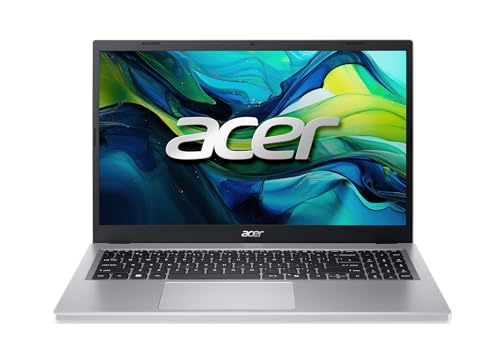
As an Amazon Associate we earn from qualifying purchases at no extra cost to you. Ratings are shown as listed on Amazon.
Best laptops for graphic design by situation
| Design situation | Best fit | Recommended configuration | Why it makes sense |
|---|---|---|---|
| Portable 2D design and illustration | MacBook Pro 14-inch | M4 Pro, 24GB RAM, 512GB or 1TB SSD | Excellent display, long battery life, quiet operation, and strong Adobe performance |
| Photoshop, Illustrator, and occasional video | ASUS ProArt P16 | Ryzen AI 9 HX 370, 32GB RAM, RTX 4070, 1TB SSD | High-resolution OLED screen and a capable discrete GPU in a creator-focused design |
| 3D design, motion graphics, or GPU-heavy work | Razer Blade 16 | Core i9-class processor, RTX 4070 or better, 32GB RAM, 1TB SSD | Powerful graphics hardware and a large color-capable display |
| Professional Windows workstation use | Lenovo ThinkPad P1 | Core Ultra 7, 32GB RAM, RTX professional graphics, 1TB SSD | Business-class construction, workstation options, and better serviceability |
| Lower-cost student or beginner setup | MacBook Air 15-inch or a color-accurate Windows creator laptop | 16GB RAM, 512GB SSD, integrated graphics | Enough for 2D design while keeping weight and cost under control |
What matters most when choosing a design laptop
Display color accuracy comes first
A fast laptop is not useful if its screen shows inaccurate color. Look for a display covering close to 100% of sRGB for general digital work. For photography, print, branding, and professional client work, a panel covering 95% or more of DCI-P3 is preferable. Some Windows creator laptops also offer near-100% Adobe RGB coverage, which can be valuable for print workflows.
Brightness of around 400 nits is comfortable indoors. A 500-nit or brighter screen is easier to judge in a bright studio, although maximum brightness does not guarantee accurate color. Look for a stated factory calibration report, a low Delta E figure—ideally below 2—and a display that supports hardware or software calibration.
OLED screens provide excellent contrast and deep blacks, but static interface elements can contribute to image retention over time. IPS displays generally offer more predictable long-term behavior and can be a better choice for someone who keeps toolbars or menus on screen for many hours daily.
Choose screen size for your workspace
A 14-inch laptop is the practical choice if you commute, work in cafés, or frequently connect to an external monitor. A 16-inch screen gives Photoshop panels, timelines, and large canvases more room, but it adds weight and usually consumes more power.
Resolution also matters. A 2.5K or 3K display is a useful middle ground: sharper than 1080p without placing as much load on the GPU as a 4K panel. A 4K screen is valuable for detailed photography and video, but scaling can make interface elements smaller and battery life shorter.
RAM determines how comfortably you can work
- 16GB: Suitable for students, illustration, web graphics, and moderate Photoshop files.
- 24GB to 32GB: The sensible target for professional 2D design, large layered documents, Lightroom catalogs, and multitasking.
- 64GB: Worth considering for 3D scenes, high-resolution video, animation, virtual machines, or unusually large files.
Do not confuse system RAM with graphics memory. A discrete GPU has its own VRAM, while integrated graphics share system memory. RAM that is soldered to the motherboard cannot normally be upgraded later, so buying 32GB initially is safer than expecting a future upgrade.
GPU performance depends on the application
Photoshop and Illustrator benefit from GPU acceleration, but they do not require a gaming-class graphics card for ordinary 2D work. Integrated graphics on recent Apple silicon, AMD, and Intel systems are generally adequate for illustration, layout, and photo editing.
A discrete NVIDIA GeForce RTX GPU becomes more useful for Blender, Cinema 4D, After Effects effects, GPU-based rendering, AI features, and high-resolution video. For this workload, 8GB of VRAM is a practical starting point; 12GB or more provides additional room for complex scenes and textures.
Be cautious with thin laptops that advertise a powerful GPU but restrict its power limit to control heat. Two laptops with the same RTX model can perform differently because of cooling, wattage, and fan behavior. A thicker workstation may deliver more consistent performance during long renders.
Storage: capacity affects workflow, not just convenience
A 512GB SSD is workable for a student, but it fills quickly once the operating system, applications, RAW photographs, video caches, and project backups are included. A 1TB SSD is a better baseline for working designers. Choose 2TB if you regularly keep active photo or video libraries on the laptop.
Fast PCIe NVMe storage makes applications and large files load quickly, but it does not replace backup storage. Keep at least two copies of important projects, with one copy on a separate device or reputable cloud service. Scratch files also benefit from free space, so avoid running an SSD continuously above roughly 85% capacity.
Recommended laptops in more detail
MacBook Pro 14-inch: the balanced portable choice
The MacBook Pro with an M4 Pro processor is a strong all-rounder for Photoshop, Illustrator, Lightroom, layout, and moderate video work. Its Liquid Retina XDR display offers high brightness, wide color, and excellent contrast. The 14-inch size is easier to carry than a 16-inch workstation, while the 24GB memory option gives more headroom than a basic 16GB configuration.
Choose the 16-inch version if your work involves long timeline sessions or you rarely use an external monitor. Consider a Windows machine instead if you depend on CUDA applications, specialized Windows plug-ins, or hardware upgrades.
ASUS ProArt P16: a flexible Windows creator laptop
The ProArt P16 combines a high-resolution OLED display with modern AMD processors and optional GeForce RTX graphics. It suits designers who want one system for 2D work, 3D modeling, video, and occasional gaming. The screen can be exceptionally attractive for visual work, but check the exact panel specification and calibration mode before purchase.
OLED models deserve sensible care: use automatic screen blanking, vary static layouts when possible, and do not leave a bright desktop or application interface displayed unattended for hours.
Lenovo ThinkPad P1: workstation practicality
The ThinkPad P1 is aimed at users who value keyboard quality, business support, and professional graphics options. It is a sensible choice for CAD, 3D, engineering visualization, and organizations that need certified workstation drivers. Depending on the configuration, memory and storage may be more serviceable than on thin consumer laptops.
It is not always the lightest or longest-lasting option. If your work is mainly web graphics and illustration, you may be paying for workstation features you will rarely use.
Razer Blade 16: maximum mobile GPU power
The Razer Blade 16 is appropriate when creative work overlaps with demanding 3D, rendering, or video production. High-end RTX graphics and a large display provide substantial performance, but the chassis can become warm and fans can be audible under sustained load. Battery life is also usually less impressive than on an efficient ultraportable.
Upgradeability and ownership realities
Before buying, check whether the RAM is soldered, whether there is a second SSD slot, and whether the wireless card and battery are replaceable. Many thin premium laptops have non-upgradable memory. A model with 16GB today may become limiting sooner than a slightly heavier model with 32GB or accessible SODIMM slots.
| Specification | Good minimum | Comfortable professional target | Heavy creative workload |
|---|---|---|---|
| Display | 14 inches, 2560×1600, 100% sRGB | 14–16 inches, 2.5K–3K, 95%+ DCI-P3 | 16 inches, 3K–4K, wide gamut, calibrated |
| RAM | 16GB | 24GB–32GB | 64GB |
| GPU | Integrated graphics | Integrated or RTX 4050-class | RTX 4070-class or higher, 8GB–16GB VRAM |
| Storage | 512GB SSD | 1TB SSD | 2TB SSD plus external backup |
| Weight | Up to 1.6kg | 1.4–2.1kg | 2.0–2.7kg |
Dust is another ownership issue. Blocked vents can reduce sustained performance and increase fan noise. Keep the laptop on a hard surface, clean external vents with appropriate compressed air while following the manufacturer’s guidance, and avoid using it on bedding. Batteries are consumables: heat, constant maximum charge, and heavy workloads can shorten their useful life.
How much laptop do you need?
Suppose you use a laptop four days per week for three years. That is approximately 624 workdays. A $1,500 laptop costs about $2.40 per workday before resale value, while a $2,500 workstation costs about $4.01 per workday. The more expensive model is justified when it saves time on rendering, supports required software, or remains useful longer—not merely because its specifications look impressive.
Final buying recommendation
For most graphic designers, prioritize a calibrated 14- or 16-inch wide-gamut display, 24GB or 32GB of RAM, and a 1TB SSD before paying for an extreme GPU. Choose the MacBook Pro 14-inch for efficient portable 2D work, the ASUS ProArt P16 for a versatile Windows creator system, the Lenovo ThinkPad P1 for workstation features and serviceability, and the Razer Blade 16 when GPU-heavy creative work is central to your job.

Write Your Review
No reviews yet. Be the first to share your experience!