

Key takeaways
- Five fishing line cutters compared on published specs: tungsten carbide nippers, a tethered braid snip, a mountable ceramic cutter and a knot tool combo.
- Top Pick: Dr. Slick Cyclone Nippers (NATCB)
- Runner-up: Boomerang Tool Company Original SNIP (BTC233)
- Also consider: Umpqua River Grip Big Nipper
The best fishing line cutter for most anglers is the Dr. Slick Cyclone, because its tungsten carbide jaws sit in a machined aluminum frame and the cutter set is replaceable, so the tool can be renewed instead of replaced. Anglers who trim braid all day should look at the Boomerang Tool Company Original SNIP and its built-in retractable tether, the Umpqua River Grip Big Nipper pairs carbide jaws with oversized rubberized handles for cold or gloved hands, the LINE CUTTERZ Flat Mountable cutter sticks to a boat console or kayak for hands-free cuts, and the Booms Fishing FC2 folds a nail knot tool and a hook eye cleaner around a basic clipper at the budget tier. As an Amazon Associate, we earn from qualifying purchases.
Table of Contents
- Quick Answer
- How Compared
- Dr. Slick Cyclone Nippers (NATCB)
- Boomerang Tool Company Original SNIP (BTC233)
- Umpqua River Grip Big Nipper
- LINE CUTTERZ Ceramic Blade Flat Mountable Cutter (LCFBC)
- Booms Fishing FC2 Knot Tying Tool
- Nippers, Snips and Mounted Cutters: How the Styles Differ
- How to Choose
- Care and Cleaning
- FAQ
- Conclusion
- Product and ASIN Reference
Quick Answer
- Premium pick: Dr. Slick Cyclone Nippers — tungsten carbide jaws, offset blade face, replaceable cutter set included.
- Mid-range pick for braid: Boomerang Tool Company Original SNIP — serrated stainless blades on a 36-inch retractable tether, rated for braid up to 50 pounds.
- Mid-range pick for big hands: Umpqua River Grip Big Nipper — oversized rubberized handles with tungsten carbide jaws and an eye-cleaning pin.
- Budget pick for boats and kayaks: LINE CUTTERZ Ceramic Blade Flat Mountable Cutter — a fixed ceramic cutting slot that adheres to a flat surface.
- Budget pick for fly and mono work: Booms Fishing FC2 — a 3-in-1 knot tying tool, clipper and eye cleaner on a carabiner retractor.
How Compared
Every cutter in this guide was compared on published specifications only: blade material, rated line types and capacities, dimensions, weight, carry hardware and included accessories, taken from maker product pages and retailer spec sheets. Where a listing gives no figure for a field, that field is described in words rather than filled with a guess. Carry method counted as heavily as blade material, because a line cutter earns its place by being reachable the moment a knot is tied, not by sitting in a tray.
Dr. Slick Cyclone Nippers (NATCB)

The Cyclone is the precision option in this group. Its cutting jaws are tungsten carbide, a material far harder than the stainless steel used in basic nippers, and the jaws sit in a lightweight frame machined from 6061-T6 anodized aluminum. The blade face is offset, meaning the cutting edge is slanted rather than square, so the jaws can work in tight against a fly or a knot and trim the tag end without clipping the hackle or the knot itself. Dr. Slick rates the Cyclone for braid, for modern tippet materials and for coated wire up to 20 pounds, which covers the line range most freshwater and light saltwater anglers carry.
The detail that separates the Cyclone from every other nipper here is serviceability. The box includes a replacement tungsten carbide cutter set, an extra set of screws and a hex key, plus a steel retention ring for attaching the tool to a zinger or lanyard. When the edges eventually dull, the cutting parts swap out and the frame carries on, which is the pattern used by far more expensive machined nippers. At 2.25 inches long, the Cyclone is a vest-sized tool, and the black anodized finish keeps glare down on bright water.
Specs
- Model: NATCB
- Blade material: tungsten carbide
- Frame: 6061-T6 anodized aluminum
- Blade face: offset (slanted)
- Cutting capacity: braid, tippet and coated wire up to 20 pounds
- Length: 2.25 inches
- Included: replacement tungsten carbide cutter set, extra screws, hex key, steel retention ring
- Color: Black
Boomerang Tool Company Original SNIP (BTC233)

The Original SNIP is a spring-loaded snip rather than a pincer-style nipper, and it solves the two problems that define braid trimming: slippery fibers and dropped tools. The blades are 420 stainless steel with a serrated edge, and the serrations grip braided line while the cut closes, so the fibers part cleanly instead of sliding and fraying. Boomerang rates the SNIP for braided line up to 50 pounds, along with monofilament and fluorocarbon, which makes it the most braid-capable hand tool in this guide.
Carry is built in rather than added on. A 36-inch retractable tether lives in the housing, and a carabiner clip anchors the tool to a vest, pack strap or belt loop. The cutting routine is pull, snip, release: the cord draws the tool back to its anchor point after every cut, so it never lands on a deck or in the water. This is the compact sibling of the longer-bladed Long SNIP covered in our fishing scissors guide, and at 0.3 ounces it adds almost nothing to a vest. Anglers who re-rig often, and kayak anglers whose hands stay busy, get the most from this format.
Specs
- Model: BTC233
- Blade material: 420 stainless steel
- Serration: serrated blade edge
- Line rating: braid up to 50 pounds, plus mono and fluorocarbon
- Tether: built-in 36-inch retractable cord with carabiner clip
- Weight: 0.3 ounces
- Color: Grey
Umpqua River Grip Big Nipper

The River Grip Big Nipper takes the standard nipper layout and scales it up for anglers who find vest nippers fiddly. The handles are oversized and rubberized, giving cold, wet or gloved fingers a broad surface to squeeze, and the blue finish is easy to spot in a boat bag or on a dark deck. Bigger handles also mean the jaws close with less pinpoint pressure, which helps when trimming heavy tippet in low light.
The cutting end is not scaled-down hardware, either. The jaws are tungsten carbide, the same cutter material as the premium pick in this guide, so edge life should far outlast plain stainless nippers at this tier. A pin built into the body clears paint and debris from hook eyes, and the attachment ring at the back rotates freely, so the tool hangs flat on a zinger or lanyard without twisting the cord. Fly anglers with large hands, and anyone who fishes through winter in gloves, are the audience for this one.
Specs
- Series: Rivergrip Precision Series
- Blade material: tungsten carbide
- Handles: oversized, rubberized
- Color: Blue
- Hook eye cleaner: built-in pin
- Attachment: free-rotating ring for zinger or lanyard
LINE CUTTERZ Ceramic Blade Flat Mountable Cutter (LCFBC)
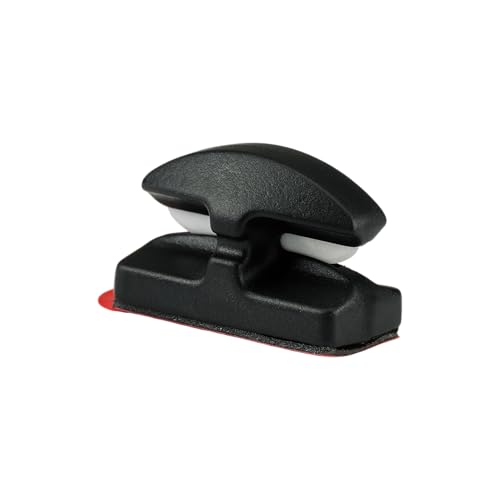
The Flat Mountable cutter removes the hand tool from the equation entirely. It is a fixed cutting station: a ceramic blade sits in a guarded slot inside an ABS plastic housing, and the housing mounts to any flat surface with a 3M adhesive backing. Line is drawn across the slot and parts against the ceramic edge, so trimming a leader or cutting a length of braid from a spool becomes a one-handed pull rather than a two-handed squeeze. Consoles, cooler lids, kayak decks and rigging benches are the natural homes for it.
Ceramic brings two practical advantages to a mounted tool. The blade does not rust, which matters on a saltwater boat where a forgotten steel tool corrodes in place, and the edge has no moving parts to jam with sand or dried salt. LINE CUTTERZ rates its ceramic cutters for braid, monofilament and fluorocarbon. The trade-off is portability: this cutter lives where it is mounted, so it pairs with a vest nipper rather than replacing one.
Specs
- Part number: LCFBC
- Blade material: ceramic
- Body material: ABS plastic
- Mounting: flat mount with 3M adhesive backing
- Line types: braid, monofilament and fluorocarbon
- Color: Black
Booms Fishing FC2 Knot Tying Tool

The FC2 is a combination tool built around the nail knot, the connection fly anglers tie between fly line and leader. One small stainless steel body carries three functions: a knot tying tool that wraps and seats nail knots, a line clipper for trimming the tag ends, and a hook eye cleaner pin. For an angler whose cutting is mostly light tippet and leader work at the rigging stage, that bundle covers the whole job in a tool barely longer than a finger.
A carabiner retractor is included, with a 34-inch polyester cord, so the FC2 clips to a vest or pack and stays tethered between uses. The honest limitation is line type: the published guidance for this tool covers monofilament and fly lines, and braided line is not recommended, so braid anglers should choose one of the cutters above instead. Within its intended mono and fly line work, the FC2 is the lightest and simplest carry in this guide, and the knot tool gives it a second job that no plain nipper here can do.
Specs
- Functions: nail knot tying tool, line clipper, hook eye cleaner (3-in-1)
- Material: stainless steel
- Tool size: 2.6 x 0.5 inches
- Retractor: carabiner style, 34-inch polyester cord
- Retractor size: 3.8 x 1.5 inches
- Tool weight: 0.02 pounds
- Line guidance: monofilament and fly lines; not recommended for braided line
Nippers, Snips and Mounted Cutters: How the Styles Differ
Nippers use two opposed jaws that meet at a point, and they excel at precision: trimming a tag end flush against a knot, or snipping fine tippet without touching the fly. Their limit is leverage, which is why heavy braid defeats basic models. Snips use spring-loaded scissor-style blades, and serrated versions grip braid fibers during the cut, making them the faster tool for repeated braid work at the expense of some fine control. Mounted cutters fix the blade in a housing and move the line instead of the tool, which suits a fixed rigging spot but not a vest. Combination tools like the FC2 trade cutting capacity for extra functions, adding knot tying and eye cleaning around a lighter clipper. None of these styles replaces fishing scissors for bait work or heavy mono; they cover the line-trimming jobs that come up between casts.
How to Choose
Match the blade to the line first. Braided line is the demanding case: choose serrated stainless blades rated for braid, or tungsten carbide jaws, and check the pound rating the maker publishes. Monofilament and fluorocarbon are easy on any cutter here, and fine tippet rewards the flush, close cut of an offset nipper face.
Decide how the tool will be carried before deciding which tool it is. A built-in retractable tether, as on the Original SNIP, is the most foolproof vest carry. A free-rotating ring, as on the Umpqua Big Nipper, suits a zinger you already own. A mounted cutter removes carry from the question for boat and kayak rigging. Then weigh service life: replaceable carbide cutters, as included with the Cyclone, turn a dull tool into a renewed one, while budget clippers are replaced. Finally, size the handles to your hands and your season; oversized rubberized grips earn their bulk on cold days and in gloves.
Care and Cleaning
Rinse every cutter in fresh water after saltwater use and dry it before storage, since even stainless blades pit when salt dries on the edge. Work the jaws open and closed while rinsing to flush grit from the pivot or jaw faces. A drop of light oil on a steel pivot keeps spring-loaded snips moving freely. Ceramic blades need no oil and cannot rust, but the adhesive mount should be checked each season and the housing kept out of prolonged direct sun. Keep the spare cutter set and hex key that ship with the Cyclone in your rigging kit, and swap the cutters when tag ends begin to fray rather than part cleanly.
FAQ
Can a fishing line cutter handle braided line?
Yes, provided the cutter is built for it. Serrated stainless blades, like those on the Boomerang Original SNIP, grip braid fibers while cutting and are rated by the maker for braid up to 50 pounds, and tungsten carbide jaws cut braid cleanly as well. Plain light-duty clippers are the exception: the Booms Fishing FC2, for example, is published for monofilament and fly lines, with braided line not recommended.
What is the difference between a nipper and a snip?
A nipper closes two opposed jaws at a point, which gives a precise, flush trim on tippet and tag ends close to a knot. A snip uses spring-loaded scissor-style blades that open on their own after each cut, which makes repeated cuts faster and gives serrated models extra grip on braided line. Nippers favor control; snips favor speed.
Do tungsten carbide cutters stay sharp longer than stainless steel?
Carbide is a far harder material than stainless steel, so carbide edges resist the dulling that braid and coated wire cause, and both carbide models in this guide use it for exactly that reason. The Dr. Slick Cyclone adds a further step: its carbide cutter set is replaceable, with a spare set, screws and a hex key in the box, so edge life can be renewed without replacing the tool.
How should a line cutter be carried on a vest or kayak?
On a vest, the cutter should hang from a retractor or lanyard at chest height, where it can be pulled down to the line and released. Built-in tethers, like the 36-inch cord in the Original SNIP, and rotating rings, like the one on the Umpqua Big Nipper, both serve this role. On a kayak, a cutter can ride on a retractor clipped to a seat or crate, or a mounted ceramic cutter can be fixed to the deck for pull-through cuts.
Conclusion
For one cutter that covers the widest range, the Dr. Slick Cyclone pairs carbide jaws with a replaceable cutter set in a compact aluminum frame. Braid anglers who value speed and a tether that cannot be lost should take the Boomerang Original SNIP, and the Umpqua River Grip Big Nipper serves large or gloved hands with carbide jaws of its own. The LINE CUTTERZ Flat Mountable cutter turns a boat console or kayak deck into a fixed cutting station, and the Booms Fishing FC2 remains the budget route for mono and fly line rigging, with a nail knot tool no other pick here includes.
More from Amazon
Programs that pair well with the guide above. Offers and eligibility are set by Amazon and may change.
Free shipping on eligible items, Prime Video and more. Eligible new members can start with a free trial.
Start a Prime free trialA Prime membership for ages 18-24 with a trial period. Eligibility is set by Amazon.
See Prime for Young AdultsAudiobooks and podcasts to listen to on the go. Eligible new members can start with a free trial.
Try Audible freeAd-free music streaming. Eligible new subscribers can start with a free trial.
Try Music Unlimited freeAs an Amazon Associate we earn from qualifying purchases.
Write Your Review
No reviews yet. Be the first to share your experience!