

Key takeaways
- Compare the best jigging rods for tuna, from heavy E-glass power to slow pitch finesse, with specs on length, power, guides, and jig weight ratings.
As an Amazon Associate we earn from qualifying purchases.
Jigging for tuna is a vertical game played in deep water against fish that pull harder and dive longer than almost anything else that eats a metal jig. A rod built for this work needs a short, powerful blank that lifts a heavy jig without folding, guides that survive braided line under load, a reel seat that stays locked through a long fight, and a butt section you can brace when a yellowfin or blackfin sounds under the boat.
The five jigging rods for tuna below cover the main styles tuna anglers actually fish: a classic speed jigging spinning rod, a shock-absorbing E-glass casting rod, a compact heavy conventional rod, a solid-blank slow pitch rod, and a spiral-wrapped slow pitch casting rod. Each is purpose-built for jigging and rated for the heavy braid and jig weights tuna fishing demands.
Disclosure: This article contains affiliate links. If you buy through them, we may earn a commission at no extra cost to you.
1. Shimano Trevala Jigging Spinning Rod
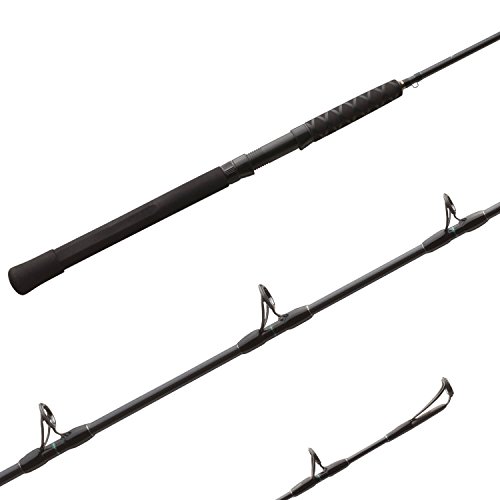
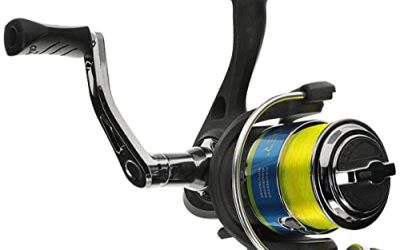
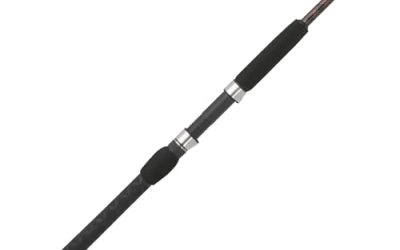
The Trevala series is the rod family that introduced many American anglers to Japanese-style butterfly jigging, and the spinning models remain a natural starting point for tuna work. FishUSA describes the Trevala Spinning Rod as a strong, compact jigging rod for vertical presentations, with the lifting power and control needed for tuna, amberjack, grouper, and snapper around reefs, wrecks, and offshore structure. That tuna-first billing is exactly why it leads this list.
The blank uses Shimano’s TC4 construction, built for durability under the repeated high-load bending that speed jigging produces. Where a pure graphite blank can feel brittle when a tuna surges at the boat, the TC4 build takes abuse while still recovering quickly enough to keep a jig moving with short, sharp lifts. The one-piece format keeps power consistent from butt to tip, with no ferrule to flex or work loose mid-fight.
Components are a step above entry level: Fuji guides and a Fuji reel seat, custom EVA grips shaped for wet hands, and a rubber gimbal that seats in a fighting belt or rod holder. For anglers who prefer a spinning reel — casting at surface-feeding fish, then dropping straight down — this is the most versatile pick here. Choose a heavier power if your tuna run large or your jigs run deep; the extra-heavy models are built for big braid, heavy jigs, and fish that need moving away from structure quickly.
Specs
- :
- Brand: Shimano
- ASIN: B001NZEKOI
- Model: Trevala Spinning (TVS series)
- Type: Spinning, 1 piece
- Length: 5 ft 8 in to 7 ft models in the series
- Blank: TC4 construction
- Guides: Fuji, aluminum oxide / Alconite class
- Reel seat: Fuji
- Grip: Custom EVA with rubber gimbal
- Best for: Speed jigging and vertical jigging for school to mid-size tuna
2. Okuma Cedros Jigging Casting Rod CJ-C-661MHa
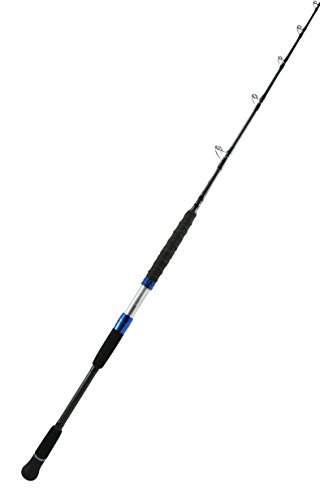
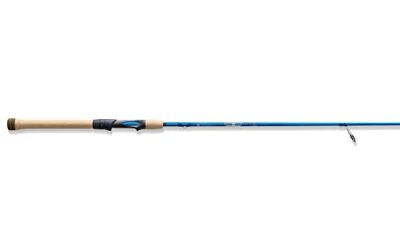
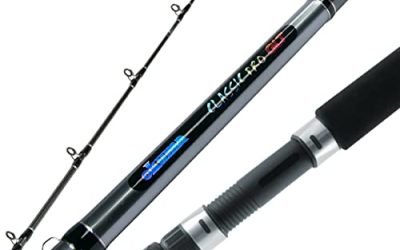
If you fish braided line — and nearly every tuna jigger does — the Cedros makes a specific engineering argument: an E-glass blank absorbs the shock spikes that non-stretch braid delivers straight to the rod, the hook, and your arms. Okuma built the Cedros jigging rods around that idea, pairing the forgiving glass blank with serious pulling power, and review roundups have singled the Cedros out as an ideal rod for powerful species like tuna and snapper.
This pick is the 6 ft 6 in medium-heavy casting model, CJ-C-661MHa. At that length it is long enough to work a jig through a full lift and short enough to stay manageable when a tuna circles under the hull. The E-glass blank bends deeper than a graphite jigging rod, which keeps steady pressure on the fish during head shakes and reduces pulled hooks when a tuna lunges at the surface.
The hardware matches the blank’s heavy-duty brief. The Alps pyramid-shaped, two-tone anodized aluminum reel seat is shaped for an ergonomic grip and real control under load, and the Alps high-rise 316 stainless steel guide frames carry Zirconium inserts that cut friction from braided line and keep line off the blank when the rod is loaded. A split handle with a ribbed EVA foregrip and contoured butt grip gives leverage without excess weight, and Okuma backs the Cedros jigging rods with a limited lifetime warranty.
Pick the Cedros if your tuna fishing is mostly vertical jigging over wrecks, rigs, and lumps, and you want the most forgiving, hardest-pulling rod in this group rather than the most sensitive one.
Specs
- :
- Brand: Okuma
- ASIN: B075N1YFPK
- Model: CJ-C-661MHa
- Type: Casting (conventional), 1 piece
- Length: 6 ft 6 in
- Power: Medium Heavy
- Blank: E-glass
- Guides: Alps high-rise 316 stainless steel frames, Zirconium inserts
- Reel seat: Alps pyramid-shaped anodized aluminum
- Grip: Split EVA, ribbed foregrip
- Warranty: Limited lifetime
- Best for: Vertical jigging with braid for yellowfin and other hard-pulling tuna
3. St. Croix Mojo Jig Casting Rod MJJC58HMF

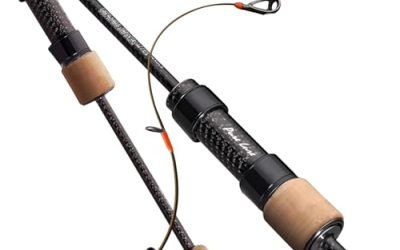
St. Croix built the Mojo Jig series specifically for vertical jigging, and the conventional models were tested from New England to the Gulf Coast on large game fish. The MJJC58HMF is the short, heavy end of that family: a 5 ft 8 in casting rod that trades length for leverage, which is the right trade when the fight is straight up and down and the fish has the whole water column to run in.
The blank is premium SCII graphite built with St. Croix’s Integrated Poly Curve tooling, Fortified Resin System, and Advanced Reinforcing Technology — designed to eliminate weak points in the bend and strengthen the blank without piling on weight. The moderate-fast action loads progressively, so the rod works a jig with authority and keeps bending instead of hinging when a tuna takes off.
Guides are Sea Guide frames in corrosion-resistant SS304 stainless with aluminum oxide rings, underwrapped for added blank protection. Conventional Mojo Jig models use a Fuji palming reel seat that sits low and comfortable during the lift-and-drop rhythm of jigging, and the heavy models add a Fuji gimbal for belt work. Split-grip EVA handles keep the rod light through a long drift. This is the pick for a compact, premium graphite conventional rod for speed jigging tuna over deep structure.
Specs
- :
- Brand: St. Croix
- ASIN: B01IVNYR2Y
- Model: MJJC58HMF
- Type: Casting (conventional), 1 piece
- Length: 5 ft 8 in
- Power: Heavy
- Action: Moderate Fast
- Blank: SCII graphite with IPC, FRS, and ART
- Guides: Sea Guide SS304 stainless frames, aluminum oxide rings, underwrapped
- Reel seat: Fuji palming (PSS-SD)
- Grip: Split-grip EVA, Fuji gimbal
- Best for: Compact, high-leverage vertical jigging for tuna over deep structure
4. GOOFISH Slow Pitch Jigging Rod, 6 ft 6 in

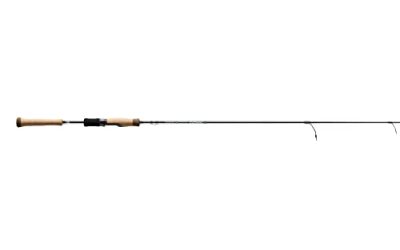
Slow pitch jigging asks something different from a rod: instead of ripping a jig upward, the rod loads and recoils so the jig flutters and falls like wounded prey. GOOFISH builds its slow pitch rods around a solid Nano blank — a solid, rather than tubular, construction that bends in a deep, even curve and is remarkably hard to break for its weight. Fishing Papa’s tuna jigging roundup named the GOOFISH jigging rod its pick for blackfin tuna, and the maker’s own range is aimed squarely at tuna and grouper.
The 6 ft 6 in platform comes in color-coded ratings; the heavy blue specification is the tuna choice, rated for PE3–6 line with a recommended jig range of 150 to 400 g and a maximum jig weight of 500 g. That covers the deep, heavy-jig work where slow pitch shines — dropping a flutter jig over a deep lump or down to tuna holding under bait schools. Lighter ratings in the same length exist for shallower work, so match the color rating to your jig box rather than buying on length alone.
Components are Fuji throughout, with Fuji guides carrying Alconite inserts and a Fuji reel seat, plus camouflage EVA split grips. The rod comes in spinning and casting versions, and in one-piece or two-piece butt-joint form if a full-length rod is awkward to transport. For slow pitch work on blackfin and school yellowfin without a boutique Japanese blank, this is the accessible specialist in the group.
Specs
- :
- Brand: GOOFISH
- ASIN: B078NKYWTV
- Model: Slow Pitch Jigging Rod, 6 ft 6 in (Blue, PE3–6)
- Type: Spinning or casting, 1 piece or butt-joint 2 piece
- Length: 6 ft 6 in
- Blank: Solid Nano
- Line class: PE3–6 (heavy blue rating)
- Jig weight: 150–400 g recommended, 500 g maximum
- Guides: Fuji, Alconite inserts
- Reel seat: Fuji
- Grip: Camouflage EVA split grip
- Best for: Slow pitch flutter jigging for blackfin and school tuna
5. Tsunami Trophy Slow Pitch Jigging Casting Rod

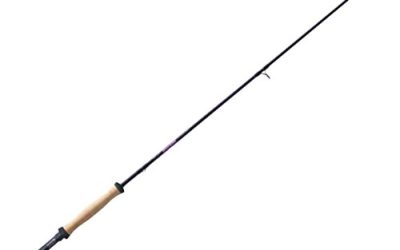
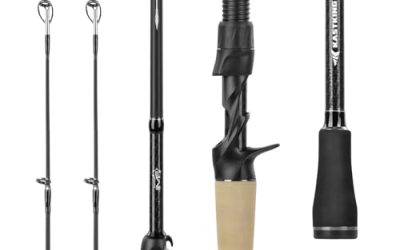
The Tsunami Trophy Slow Pitch series brings a custom-rod feature — a spiral, or acid-wrapped, guide layout — to a mainstream jigging rod. On a conventional rod under heavy load, line pressure tries to twist the blank; wrapping the guides around the blank so the line runs underneath cancels that torque, which keeps the rod tracking straight during a long tuna fight and reduces stress on the blank. On The Water’s gear editors credited the Trophy Slow Pitch with bringing that high-end layout and responsive action to vertical jigging for stripers, bluefish, sea bass, and even small tuna, and tuna-specific roundups have named it a best conventional tuna jigging rod.
The blank is a high modulus graphite mesh and composite blend, built for strength and weight reduction. The composite content gives the Trophy a little more forgiveness than a pure high-modulus graphite slow pitch rod, which is welcome when a tuna hits a fluttering jig close to the boat. Fuji O aluminum-oxide guides, a Fuji graphite reel seat with trigger and stainless hoods, and custom EVA grips with a split rear grip complete the package.
In extra-heavy casting trim the Trophy Slow Pitch handles heavy braid in the 40–65 lb class and jigs in roughly the 90–200 g range, which suits school tuna, blackfin, and smaller yellowfin over moderate depths. It is the value-minded conventional pick here: a genuine slow pitch tool with the guide layout tuna anglers usually pay custom prices for.
Specs
- :
- Brand: Tsunami
- ASIN: B0798VMGTT
- Model: Trophy Slow Pitch Jigging Casting Rod (TSSPJC series)
- Type: Casting (conventional), spiral / acid-wrapped guides
- Length: 7 ft class models in the series
- Power: Extra Heavy (heavy casting models)
- Blank: High modulus graphite mesh and composite blend
- Line rating: 40–65 lb braid class on extra-heavy models
- Jig weight: About 90–200 g on extra-heavy models
- Guides: Fuji O aluminum oxide
- Reel seat: Fuji graphite with trigger, stainless hoods
- Grip: Custom EVA, split rear grip
- Best for: Budget slow pitch jigging for blackfin and school tuna
How to Choose Jigging Rods for Tuna
Start with jigging style, because it decides almost everything else. Speed jigging uses a stiff, fast-recovering rod and a high-speed retrieve to rip jigs upward; the Trevala and Mojo Jig fit that game. Slow pitch uses a softer, deeper-bending rod that loads on the lift and lets the jig flutter on the fall; the GOOFISH and Tsunami Trophy are built for that rhythm. Classic vertical jigging with heavy braid and big jigs sits between the two, and that is where the E-glass Cedros earns its place.
Match power and jig weight to your fishery. School blackfin on 100–200 g jigs need far less rod than yellowfin over deep structure on 300–500 g jigs. Your typical jig weight should fall in the middle of the rod’s rated range, not at its ceiling, and the line class should match the braid you actually fish.
Spinning versus conventional is a real fork in the road. Spinning rods are simpler, cast a jig toward surface-feeding tuna, and never backlash mid-drop. Conventional rods give direct-drive control, easier depth counting off the spool, and the spiral-wrap option on slow pitch models. Many tuna anglers own one of each and choose by technique.
Finally, look at the parts that fail first: braid-rated guides that will not groove, a reel seat that locks down and stays locked, and a gimbal butt if you use a fighting belt. Because tuna jigging rods live a hard life, a strong warranty, like the limited lifetime coverage on the Cedros, is a practical feature rather than fine print.
FAQ
How long should a tuna jigging rod be?
Most tuna jigging rods fall between 5 ft 8 in and 7 ft. Shorter rods give more lifting leverage and are easier to pump against a fish under the boat, while longer rods move more line on each lift and are a little more forgiving with light slow pitch jigs. Length matters less than matching power and jig rating to your fishing.
What jig weights do tuna jigging rods handle?
School tuna work often uses jigs from about 100 to 200 g, while deep-water yellowfin jigging can call for 300 to 500 g. Every rod above lists its working range in its specs; choose a rod whose recommended range brackets the jigs you fish most, instead of one that only reaches your heaviest jig at its maximum rating.
Is slow pitch or speed jigging better for tuna?
Neither is universally better. Speed jigging triggers reaction strikes from active, feeding tuna and covers water quickly. Slow pitch shines when tuna are deep, pressured, or keyed to a falling jig, because the fluttering fall is what draws the strike. The rod has to match the technique, since a stiff speed jigging blank will not load a slow pitch jig properly, and a soft slow pitch blank will not rip a speed jig.
Can I use one of these rods for other species?
Yes. The same traits that suit tuna — heavy braid ratings, strong blanks, and corrosion-resistant guides — also suit amberjack, grouper, snapper, and kingfish. The Cedros and Trevala in particular are widely fished as general offshore jigging rods, and the slow pitch rods double as excellent deep jigging rods for bottom species.
More from Amazon
Programs that pair well with the guide above. Offers and eligibility are set by Amazon and may change.
Free shipping on eligible items, Prime Video and more. Eligible new members can start with a free trial.
Start a Prime free trialA Prime membership for ages 18-24 with a trial period. Eligibility is set by Amazon.
See Prime for Young AdultsAudiobooks and podcasts to listen to on the go. Eligible new members can start with a free trial.
Try Audible freeAd-free music streaming. Eligible new subscribers can start with a free trial.
Try Music Unlimited freeAs an Amazon Associate we earn from qualifying purchases.
Write Your Review
No reviews yet. Be the first to share your experience!