

Key takeaways
- Compare the best fishing line conditioners and detanglers for mono, braid, fluorocarbon and fly line, with specs, application tips and buying advice.
- Top Pick: Scientific Anglers Fly Line Dressing — Best for Floating Fly Lines
- Runner-up: Conclusion
- Also consider: Conclusion
If line peels off your spool in tight coils, tangles on the cast, or feels rough running through the guides, a line conditioner is the cheapest fix in the tackle box. The best fishing line conditioners relax line memory, cut friction, and help line last longer, and the standout all-round pick is the KVD Line and Lure Conditioner, a non-toxic polymer spray built for fluorocarbon, copolymer, braid, and monofilament. Anglers who want a slicker, oil-style treatment can look at Ardent Line Butter or Reel Snot, while fly anglers are better served by Scientific Anglers Fly Line Dressing or Rio’s pre-moistened cleaning towelettes.
This roundup compares five proven conditioners and detanglers side by side. Each takes a different approach — bonding polymer coatings, lubricating line-and-reel treatments, a classic fly line dressing with a cleaning pad, and pocket-sized wipes — so the right choice depends on the line you fish and whether you treat line at home or on the water.
As an Amazon Associate, we earn from qualifying purchases.
Table of Contents
- What a Line Conditioner Actually Does
- KVD Line and Lure Conditioner
- Ardent Line Butter Conditioner
- Reel Snot Line and Reel Lube
- Scientific Anglers Fly Line Dressing
- Rio Fly Line Cleaning Towlette
- How to Choose a Fishing Line Conditioner
- How to Apply Line Conditioner
- FAQ
- Conclusion
- Product and ASIN Reference
What a Line Conditioner Actually Does
Line memory is the tendency of monofilament and fluorocarbon to hold the coiled shape of the spool. Those coils slap the guides on the cast, shorten distance, and twist into tangles, especially on spinning reels. A conditioner coats the line with a friction-reducing layer that lets the coils relax and lets line slide through the guides with less resistance. The result is smoother, longer casts and fewer backlashes on baitcasting gear.
Conditioners also slow down the two things that age line fastest: ultraviolet light and surface wear. Sunlight breaks down nylon and dulls braided line, while grit and repeated casting rough up any line’s surface. A bonded coating shields the line from both. In cold weather, treated line also sheds water instead of carrying it into the guides, reducing icing. A good conditioner will not replace fresh line forever, but it stretches the useful life of every spool.
1. KVD Line and Lure Conditioner — Best Overall
Developed by RMR Industries with Kevin VanDam, Line and Lure is the conditioner most closely associated with modern fluorocarbon and braid. Instead of the oils and silicone used by older dressings, it is a non-toxic blend of polymers that bonds to the surface of the line and dries smooth and tack-free. Because there is no oily residue, treated line does not fling grease onto the reel, the rod, or your hands.
The formula is hydrophobic, so it sheds water rather than soaking it up, and the maker rates its sunscreen protection as extremely high, which matters for braid that fades and weakens in the sun. It was designed first for fluorocarbon, copolymer, and braided lines — the stiff, high-memory lines that benefit most from conditioning — and works on monofilament as well. The maker states that one 4 oz bottle delivers more than a hundred typical applications, and a separate Saltwater Formula adds extra corrosion protection for coastal use. This is the premium pick in the group and the safest first bottle for anglers who fish several line types.
Specs
- Brand: Line & Lure by RMR Industries, developed with Kevin VanDam
- Formula: Non-toxic polymer blend; contains no oils, silicone, or solvents
- Format: 4 oz pump spray bottle, non-aerosol
- Line types: Fluorocarbon, copolymer, monofilament, and braided line
- Finish: Bonds to the line surface and dries smooth and tack-free
- Protection: Hydrophobic coating with high UV sunscreen protection
- Tier: Premium
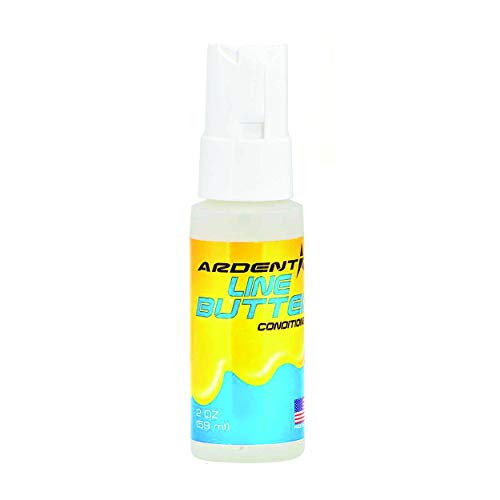
2. Ardent Line Butter Conditioner — Best for Freshly Spooled Line
Ardent’s Line Butter is the line-care member of the Reel Butter family, sitting alongside the brand’s reel oil and grease in its Reel Care 3 Step packs. It takes the opposite approach to KVD: where the polymer spray dries tack-free, Line Butter is a slick, lubricating conditioner that leaves line feeling smooth and supple, which makes it a favorite treatment to run through new line as it goes onto the spool. Winding fresh fluorocarbon or mono through a cloth dampened with Line Butter relaxes the factory coils before they set into memory.
The compact 2 oz pump bottle gives controlled application with little overspray, which matters with a product this slick. Published descriptions credit it with reducing line memory, easing casting, and quieting the rasp of braid through the guides. Anglers who maintain their reels with Ardent oil and grease can keep the whole routine in one brand. It sits in the mid-range tier.
Specs
- Brand: Ardent
- Format: 2 oz pump spray bottle
- Formula family: Part of the Ardent Reel Butter line of synthetic reel-care products
- Line types: Monofilament, fluorocarbon, and braided line
- Stated purpose: Conditions line to reduce memory and smooth casting
- Also sold: Bundled in Ardent Reel Care 3 Step packs with Reel Kleen and Reel Butter Oil
- Tier: Mid-range
3. Reel Snot Line and Reel Lube — Best Dual-Purpose Treatment
Reel Snot is built to do two jobs: condition the line and lubricate the reel. The published description calls it a line and reel lubricant developed by anglers, formulated to lengthen casting distance, lessen reel noise, reduce backlashes, and cut line memory and twist. That dual role makes it a practical single bottle for anglers who travel light, and the maker notes it also helps prevent guide icing and de-ices reels in cold weather — a genuine edge for winter walleye and ice anglers.
The original formula is eco-friendly, non-flammable, non-aerosol, and odorless, and the maker states it will not cause wear and tear on line the way harsher products can. It works across fluorocarbon, monofilament, and braid, applied with a few quick squirts to the spool. The same base formula also comes in Garlic and Java scented versions that double as fish attractants. Keep application light and wipe down grips and thumb bars afterward, because a treatment this slick does not belong on handles. It is a mid-range pick.
Specs
- Brand: Reelsnot
- Format: 2 oz bottle, non-aerosol
- Formula traits: Eco-friendly, non-flammable, and odorless per the maker
- Line types: Fluorocarbon, monofilament, and braided line
- Dual role: Conditions line and lubricates reel parts; lessens reel noise
- Cold weather: Helps prevent guide icing and de-ices reels
- Variants: Original, Garlic, and Java scented conditioner and attractant versions
- Tier: Mid-range
4. Scientific Anglers Fly Line Dressing — Best for Floating Fly Lines

Fly lines are a different animal from conventional line: a coated, tapered line whose slickness and buoyancy decide how well it shoots and floats. Scientific Anglers Fly Line Dressing is the classic treatment for them, made by 3M and sold with a cleaning pad so the clean-and-dress routine happens in one pass. The dressing carries advanced lubricants that restore the factory slickness a fly line loses as it picks up algae, grit, and sunscreen over a season.
Published descriptions emphasize two practical advantages. First, the dressing improves floatability, so a dressed floating line rides higher, picks up off the water more cleanly, and mends with less effort. Second, the line can be fished immediately after application, with no overnight curing step, which makes it a streamside treatment rather than a workbench ritual. For conventional spinning and casting line, choose one of the sprays above; for a floating fly line, this is the purpose-built option in the mid-range tier.
Specs
- Brand: Scientific Anglers (3M)
- Format: Dressing bottle with cleaning pad included
- Line types: Fly lines, best suited to floating lines
- Stated purpose: Cleans, lubricates, and restores slickness and floatability
- Application: Apply with the pad; line can be fished immediately afterward
- Tier: Mid-range
5. Rio Fly Line Cleaning Towlette — Best Portable Cleaner
Rio’s cleaning towelettes take the simplest possible format: individually wrapped, pre-moistened wipes that live in a vest pocket, boat bag, or glove box until the line needs attention. There is no bottle to leak and no pad to keep track of — tear one open, pinch the line inside the folded wipe, and pull the full length of line through. The wipes are unscented and made to strip off the dirt, algae, and oils that dull a fly line’s surface while conditioning it in the same pass.
A six pack is a budget-tier, consumable approach, best treated as maintenance between deeper cleanings rather than a full restoration for a neglected line. Anglers who fish dirty water, algae blooms, or sandy banks will appreciate how quickly a wipe brings back a line’s slick feel mid-trip, and the sealed format keeps each towlette fresh until it is opened. Rio also sells a larger top-off bag format for heavy users, but the six pack is the easy add-on for any fly angler’s kit.
Specs
- Brand: Rio Products
- Format: 6 individually wrapped, pre-moistened towelettes
- Scent: Unscented
- Line types: Fly lines
- Stated purpose: Cleans and conditions line; removes dirt and residue buildup
- Best for: On-the-water maintenance and travel kits
- Tier: Budget
How to Choose a Fishing Line Conditioner
Start with the line you actually fish. Fluorocarbon and copolymer are the stiffest, highest-memory lines in common use, and they respond best to a bonding polymer conditioner like the KVD spray, which was designed around them. Braid needs UV protection and a coating that quiets guide noise without gumming the weave. Fly lines should only get products made for fly lines — a dressing or wipe that cleans and restores the coating rather than a general spray.
Next, pick a format that matches your routine. Pump sprays give controlled, no-waste application and are easiest to use at home during spooling. A dual-purpose lubricant such as Reel Snot suits anglers who want one bottle for line and reel. Wipes and pad dressings are fly line tools: wipes win on portability, a dressing on depth of treatment. Finally, weigh the conditions — cold-weather anglers should look for anti-icing claims, saltwater anglers for corrosion and UV protection, and anyone who dislikes greasy gear for a formula that dries tack-free.
How to Apply Line Conditioner
Clean line first: a conditioner seals in whatever is on the surface, so wipe the line down with a soft, damp cloth before treating it. For sprays, either mist the spooled line directly and let it dry before fishing, or spray a cloth and wind fresh line through the cloth as you spool, which coats every inch evenly. A light coat is the goal — heavy application adds nothing but mess. For fly line dressings and wipes, pull the line through the pad or towlette in long, steady strokes. Reapply when casts start to feel short, when coils return, or after several trips in dirty or salty water.
FAQ
Do line conditioners really add casting distance?
They can, by attacking the two things that shorten casts: friction and memory. A conditioned line slides through the guides with less resistance and leaves the spool in straighter coils instead of tight rings that slap each guide. The gain is most noticeable on stiff fluorocarbon and spinning reels, where memory is worst, and smallest on fresh, limp monofilament.
How often should line conditioner be applied?
A practical rhythm is to treat line when it is first spooled, then reapply every few trips or whenever handling noticeably degrades — coils creeping back, rougher retrieves, or shorter casts. Fly lines benefit from cleaning and dressing after days on algae-heavy or silty water. Light, regular applications beat rare, heavy soakings.
Can one conditioner handle braid, mono, fluorocarbon, and fly line?
The major conventional conditioners are published as safe for monofilament, fluorocarbon, copolymer, and braid, so one spray can cover a whole rod locker. Fly lines are the exception: their coatings call for fly-specific dressings or wipes, and conventional sprays should not be substituted for them.
Will a line conditioner damage line or rod guides?
Products sold as line conditioners are formulated to be safe for line and guides when used as directed, and the polymer and eco-friendly formulas in this roundup are published as non-toxic or line-safe. The risk comes from substitutes — general solvents and harsh household sprays can weaken monofilament. Keep overspray of slick lubricants off grips and handles.
Conclusion
For most anglers, the KVD Line and Lure Conditioner is the buy: a bonding, non-greasy polymer spray that tames fluorocarbon memory, protects braid from the sun, and asks almost nothing in upkeep. Ardent Line Butter earns its place at spooling time, Reel Snot covers line and reel in one bottle with real cold-weather value, and fly anglers should match the tool to the job — Scientific Anglers dressing for a full restore, Rio towelettes for quick streamside maintenance. Treat the line you already own before replacing it, and most spools will fish better and last longer.



More from Amazon
Programs that pair well with the guide above. Offers and eligibility are set by Amazon and may change.
Free shipping on eligible items, Prime Video and more. Eligible new members can start with a free trial.
Start a Prime free trialA Prime membership for ages 18-24 with a trial period. Eligibility is set by Amazon.
See Prime for Young AdultsAudiobooks and podcasts to listen to on the go. Eligible new members can start with a free trial.
Try Audible freeAd-free music streaming. Eligible new subscribers can start with a free trial.
Try Music Unlimited freeAs an Amazon Associate we earn from qualifying purchases.
Write Your Review
No reviews yet. Be the first to share your experience!