

Key takeaways
- Compare the best fishing fighting belts for offshore stand-up fishing: gimbal pins and rotary cups, padding, waist ranges and rod butt fit explained.
- Top Pick: PELLOR 360-Degree Adjustable Padded Fishing Fighting Belt
- Runner-up: SANLIKE Stand-Up Fishing Belt, Aluminum and Carbon Fiber
- Also consider: Frdhee Fishing Fighting Waist Belt
A fighting belt does one job: it gives the butt of a stand-up rod a padded, stable place to sit against your hips so the load of a running fish goes through your legs instead of your back and arms. The designs split into two families. True gimbal belts carry a rigid plate with a cup or slot that the rod butt drops into, sometimes with a locking cross pin. Belt-and-holster systems are lighter straps with a simple holder, better suited to wading and surf fishing than to long offshore fights.
This guide compares five belts sold on Amazon across both families, from a rotating-cup ABS plate to an aluminum and carbon fiber stand-up belt, plus two wading belt kits. Each pick is described from its published listing specs only: materials, padding, waist range, and what style of rod butt the holder accepts. Match those points to your rods and waist first.
As an Amazon Associate, we earn from qualifying purchases.
Quick answer
For most offshore anglers, a padded gimbal belt with a rotating cup is the practical pick: the PELLOR 360-degree belt suits mixed rod butts, while the SANLIKE aluminum belt adds a locking pin for grooved butts. Wading and surf anglers are better served by the belt-and-holster kits from LACUEQUES and AzReference, and the Frdhee is the light budget option.
PELLOR 360-Degree Adjustable Padded Fishing Fighting Belt
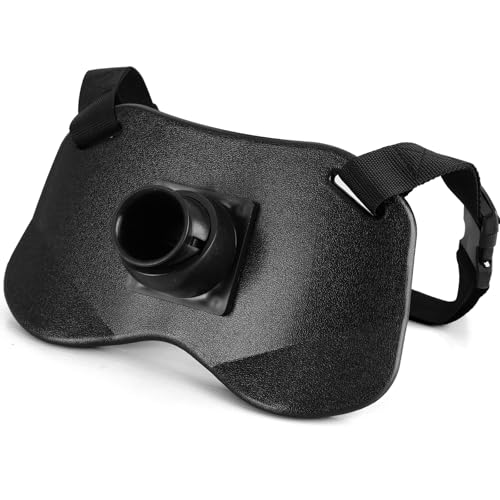
The PELLOR is the rotating-cup design in this group. Its holder turns a full 360 degrees, so when a fish changes direction under the boat the cup can swing to follow the pull instead of forcing you to twist the whole plate around your hips. The plate is ABS with a padded backing, the strap closes with an adjustable safety buckle, and the holder is listed at 1.5 inches, sized for the thicker conventional butts common on offshore stand-up rods.
One design point to check against your rods: the PELLOR uses a rotary slot and has no locking pin. A rod butt cut with a gimbal groove will sit in the cup but will not lock onto a pin, so the rod can rotate freely. If every rod you fish has a grooved butt and you want the butt locked in orientation, the SANLIKE below is the better match. The hardware is listed as seawater-corrosion resistant.
Specs:
- Brand: PELLOR
- Model name: Fishing Fight Belt (part CH-WAYJ03)
- Plate: ABS with padded backing
- Rod holder: 360-degree rotary slot, no locking pin
- Rod butt fit: holder listed at 1.5 inches
- Closure: adjustable safety buckle
- Size: Medium
- Tier: mid-range
SANLIKE Stand-Up Fishing Belt, Aluminum and Carbon Fiber

The SANLIKE is the rigid-plate option here, built around an aluminum alloy and carbon fiber gimbal instead of molded plastic, for anglers who want a plate that does not flex under heavier stand-up tackle. A thick EVA pad backs the plate, the belt is listed at 16 ounces, and the strap extends to 140 cm, or 55.1 inches, at maximum.
Inside the cup, the SANLIKE carries two fittings: a stainless insert pin that engages rod butts cut with a groove, and a rotary slot for round butts, so one belt covers a mixed rod locker. The holder hole diameter is listed at 2.16 inches. This is the most offshore-focused belt in the guide; wading anglers will find it more belt than they need.
Specs:
- Brand: SANLIKE
- Plate and gimbal: aluminum alloy with carbon fiber
- Padding: EVA pad
- Rod holder: stainless insert pin for grooved butts plus rotary slot for round butts
- Holder hole diameter: 2.16 inches, as listed
- Belt length: extends to 140 cm (55.1 inches)
- Weight: 16 ounces, as listed
- Tier: premium
Frdhee Fishing Fighting Waist Belt

The Frdhee is the lightest and simplest belt in this roundup, a budget-tier fighting waist belt with an integrated rod holder. The listing describes an Oxford fabric belt, with PVC shown in the material field, in black, and the whole unit is listed at 8.8 ounces, or 0.25 kilograms. That low weight makes it an easy belt to leave in a boat bag or hand to a guest who did not bring gear.
Keep expectations matched to the design. This is a compact holder for light to moderate stand-up work, pier fishing, and occasional boat trips, not a wide rigid plate for prolonged fights with heavy tackle. The listing does not publish a plate width or a maximum waist measurement, so anglers who need those numbers confirmed should look at the SANLIKE or the wading kits below, which state their waist ranges plainly.
Specs:
- Brand: Frdhee
- Type: fishing fighting waist belt with rod holder
- Materials: Oxford fabric belt, PVC per the listing material field
- Color: Black
- Item weight: 8.8 ounces (0.25 kilograms), as listed
- Style: adjustable
- Tier: budget
LACUEQUES Wading Fly Fishing Belt Kit

The LACUEQUES is a different tool from the two gimbal plates above. It is a wading belt kit: a polyester belt with a buckle closure and a belly rod holder, sold with a pliers holster, a pole holster, a tackle pouch, and a water bottle holder. The listing frames it as a fish fighting belt for saltwater surf use, and the fit range is wide, covering waists from 32 to 61 inches in the Tan colorway.
That kit format suits surf and wading anglers who want the rod parked at the belly while they handle pliers, tackle, and a caught fish with both hands. It is not a rigid offshore plate, and the holder is a holster rather than a pin-locking gimbal cup, so it is not the pick for stand-up fights on heavy conventional tackle. One listing note: a crawl of the Amazon page showed no featured offers available, so check the current seller and availability before relying on it for a trip.
Specs:
- Brand: LACUEQUES
- Model: LACUEQUES-Fishing-Belt
- Material: polyester
- Closure: buckle
- Waist fit: 32 to 61 inches, as listed
- Included: belly rod holder, pliers holster, pole holster, tackle pouch, water bottle holder
- Color: Tan
- Size: one size fits most
- Tier: budget
AzReference Adjustable Fishing Wading Belt with Rod Holder

The second wading option is the AzReference belt, an adjustable wading belt with a rod holder listed for waists up to 55 inches. The style is described as adjustable with a snap fitting, and the listing assigns it to spinning and casting techniques, matching its intended water: rivers, surf, and shorelines where anglers cast and retrieve rather than fight fish from a braced stand-up stance.
The published specs are brief: package dimensions of 7.76 x 3.43 x 3.39 inches, size Medium, model az83959 and part az92784. No plate material or holder diameter is published, so treat it as a compact belt-and-holder for light rods. Anglers with thick offshore butts, or who want a locking gimbal pin, should step up to the PELLOR or SANLIKE.
Specs:
- Brand: AzReference
- Model: az83959 (part az92784)
- Type: adjustable wading belt with rod holder
- Waist fit: up to 55 inches, as listed
- Style: adjustable, snap
- Size: Medium
- Fishing technique: spinning, casting, as listed
- Tier: budget
How to choose
Start with the rod butt, because the holder has to match it. Offshore stand-up rods often end in a butt cap cut with a cross groove. A belt with a stainless gimbal pin, like the SANLIKE, locks that groove so the rod cannot twist in the cup. Plain round butts work in any cup or slot, and a rotating holder, like the PELLOR’s 360-degree slot, lets the rod follow a fish that changes direction. Measure your thickest butt against the listed holder size first.
Next, match the plate to the fight. Rigid plates in ABS or aluminum spread the load across the abdomen and hips for stand-up offshore fishing. Aluminum and carbon fiber plates stay rigid under heavier tackle; ABS plates are lighter and simpler. Belt-and-holster kits skip the plate entirely: they carry the rod and your tools while you wade, but they do not give the butt the same braced platform during a long fight.
Then check the fit numbers, not the size label. Waist ranges here run from the LACUEQUES kit’s 32 to 61 inches to the AzReference’s up-to-55-inch strap and the SANLIKE’s 55.1-inch maximum belt length. Measure over the clothing you actually fish in, including rain gear, and leave adjustment room both ways. Finally, weigh padding and care: EVA and foam backings keep a hard plate off your stomach during repeated fish, and every belt here benefits from a freshwater rinse after saltwater trips, since buckles and pins crust up first.
Who should skip
Skip fighting belts entirely if your fishing is light freshwater work with small spinning rods; the butt never builds enough load to need a plate, and a belt just adds bulk. Skip the wading kits for stand-up offshore fishing on heavy conventional tackle, because a holster-style holder is not a substitute for a rigid gimbal plate with a pin. Skip the compact budget belts if you need a published plate width, holder diameter, or waist range and the listing does not state one. And skip any belt whose holder diameter is smaller than your rod butt; that mismatch cannot be fixed on the boat.
FAQ
Does a fighting belt work with spinning rods?
It can, as long as the rod butt fits the holder. Belts like the AzReference are listed for spinning and casting techniques, and the cups on the PELLOR and SANLIKE accept plain round butts. The locking pin only matters for butts cut with a gimbal groove, more common on conventional offshore rods.
What is the difference between a gimbal pin and a rotary slot?
A gimbal pin is a cross pin inside the cup that engages the groove in a rod butt and locks the rod’s orientation. A rotary slot holds the butt while letting it rotate, which helps when a fish moves side to side. The SANLIKE offers both fittings; the PELLOR uses a rotary slot only.
How tight should a fighting belt be?
Snug enough that the plate stays centered on your hips when the rod loads up, with the strap adjusted before the first fish, not during the fight. Use the published waist range for the belt you choose and measure over your fishing clothing so the buckle lands mid-adjustment, not at the last hole.
How do I care for a fighting belt after saltwater trips?
Rinse the plate, buckle, and pin with fresh water, shake off the excess, and hang the belt to dry out of direct sun. Check that rotating cups still turn freely and that straps and stitching are sound before the next trip, since dried salt is what usually stiffens the moving parts.
Final verdict
For boat-based stand-up fishing, the choice is between the two plates: the SANLIKE if your rods have grooved butts and you want the pin lock and rigid aluminum build, or the PELLOR if a rotating cup and simpler ABS plate fit your mixed rod locker. For surf and wading, the LACUEQUES kit carries the most tools, the AzReference is the compact alternative, and the Frdhee is the light spare for the bag. Match the holder to your rod butt first and any of the five will do its job.
More from Amazon
Programs that pair well with the guide above. Offers and eligibility are set by Amazon and may change.
Free shipping on eligible items, Prime Video and more. Eligible new members can start with a free trial.
Start a Prime free trialA Prime membership for ages 18-24 with a trial period. Eligibility is set by Amazon.
See Prime for Young AdultsAudiobooks and podcasts to listen to on the go. Eligible new members can start with a free trial.
Try Audible freeAd-free music streaming. Eligible new subscribers can start with a free trial.
Try Music Unlimited freeAs an Amazon Associate we earn from qualifying purchases.
Write Your Review
No reviews yet. Be the first to share your experience!