

Key takeaways
- Compare the best outboard flush kits, from ear-muff flushers and flush bags to winterizing systems and salt-remover kits, and rinse salt away safely.
As an Amazon Associate we earn from qualifying purchases.
Salt, sand, and silt do not leave an outboard when the boat comes out of the water. They stay inside the cooling passages, where salt crystals keep corroding aluminum and narrow waterways restrict flow a little more after every trip. A freshwater flush after each outing is the simplest habit that slows that damage down, and the right kit makes the habit easy to keep. Outboard flush kits come in several forms: ear-muff flushers that clamp over the lower-unit intakes, flush bags that submerge the gearcase in fresh water, winterizing systems that circulate protective fluid, and mixer kits that add a salt-removing solution to the rinse.
This guide compares five different approaches so you can match the kit to your engine, your storage situation, and how you actually use your boat. Each pick connects to ordinary dock or driveway water supplies, and each one addresses a slightly different flushing job, from a quick post-trip rinse to end-of-season winterization.
Disclosure: This article contains affiliate links. If you buy through them, we may earn a commission at no extra cost to you.
1. ISURE MARINE Universal Rectangular Dual Water Feed Outboard Motor Water Flusher

Rectangular ear muffs suit lower units with wide, flat intake grates, and this ISURE MARINE flusher feeds water to both sides of the gearcase at once. The dual water feed design splits the hose supply so each rectangular cup receives its own flow, which helps maintain water delivery if one side seals less perfectly than the other. The cups slide over the intakes from the front of the gearcase, and the frame tension holds them in place while the engine idles in neutral.
This is a sensible first flusher for owners of mid-size and larger outboards whose intake screens span a broad area. Rectangular cups cover more of the grate than small round cups, reducing the bypass leakage that can starve an engine of cooling water during a flush. Connect a standard garden hose, turn the water on before starting the engine, confirm a steady tell-tale stream, and let the motor idle for several minutes so fresh water circulates through the block, thermostat housing, and exhaust passages.
Specs
- :
- ASIN: B0B48GCT9P
- Brand: ISURE MARINE
- Type: Ear-muff motor flusher with rectangular cups
- Feed: Dual water feed to both intake sides
- Connection: Standard garden hose connector
- Fit: Universal fit for outboard lower units with side intakes
2. Attwood 9372-2 Universal Motor Flusher

The Attwood 9372-2 is the classic round-cup flusher found in boathouses everywhere. Its reinforced polypropylene body resists cracking and will never rust, which matters for a tool that lives in wet storage compartments. Molded round cups deliver fresh water through the side intakes on the lower unit, and a self-adjusting clamping yoke squeezes the cups against the gearcase so the flusher stays seated while the engine runs.
Round cups are a good match for smaller outboards and many inboard-outboard drives with compact intake grates. The self-adjusting yoke removes most of the guesswork from fitting: slide the flusher on from the front, let the clamp tension center the cups, and attach an ordinary garden hose. Because the body is plastic rather than painted steel, there are no coatings to chip and no metal frame to corrode after seasons of saltwater use. Rinse the flusher itself with fresh water after use and store it out of direct sunlight to keep the cups supple.
Specs
- :
- ASIN: B0000AY8IL
- Brand: Attwood
- Model: 9372-2
- Type: Round-cup universal motor flusher
- Body: Reinforced polypropylene with molded cups
- Clamp: Self-adjusting clamping yoke
- Connection: Standard garden hose attachment
3. LOVXULEE Outboard Motor Flushing Bag MF-B001

A flush bag takes a different approach: instead of spraying water into the intakes, it recreates a small body of water around the lower unit. The LOVXULEE MF-B001 bag wraps around the gearcase and fills from a garden hose, submerging the intakes so the engine draws water the same way it does at the lake. The kit is sized for engines up to 500 horsepower and includes a PVC pipe base for structure, quick-release auxiliary ropes, and start-stop drain valves for both the drainage outlet and the hose connection.
Flush bags are especially useful for engines with low-water pickups that ear muffs cannot cover well, and for owners who want to add a flushing solution to the water around the lower unit. They also suit boats stored on lifts or in slips where running muffs is awkward, as long as you can safely support the filled bag. Setup takes longer than clipping on muffs, and the propeller should be removed or treated with great care before running an engine in any bag. When the flush is done, the drain valves empty the bag without tipping it, and the PVC construction folds down for storage. A spare parts kit and instruction manual are included in the box.
Specs
- :
- ASIN: B0DT9ZZYKK
- Brand: LOVXULEE
- Model: MF-B001
- Type: Outboard motor flushing bag
- Material: PVC
- Dimensions: 35 x 16 x 32 inches
- Rating: For motors from 0 to 500 horsepower
- Included: Flushing bag, PVC pipe bases, quick-release ropes, drain valves, spare parts kit, and manual
4. Seaworks Boat Winterizing Kit — Complete Motor Flush and Winterizer System

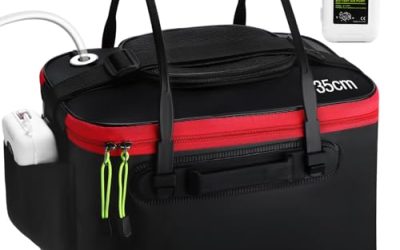
Flushing with plain water handles the boating season, but storage in freezing climates calls for circulating antifreeze through the cooling system. This Seaworks kit is built around that job. It combines a quality motor flusher with a five-gallon bucket and lid, a small electric pump, a lift grate, and a six-foot standard hose, so antifreeze can be drawn from the bucket and pumped through the engine in a controlled loop rather than poured and wasted.
The same hardware doubles as a powered flushing station during the season: fill the bucket with fresh water, or with a diluted engine-flush solution where the engine maker allows one, and let the pump do the work that hose pressure alone sometimes cannot. This is the pick for owners who winterize their own boats, maintain more than one engine, or keep a boat somewhere without a convenient pressurized water tap. Note that antifreeze itself is not included, so plan to supply the correct marine antifreeze for your engine and climate. After winterizing, the components nest into the bucket for compact storage until spring.
Specs
- :
- ASIN: B0CDJW4JL8
- Brand: Seaworks
- Type: Complete motor flush and winterizer system
- Included: Motor flusher, five-gallon bucket with lid, electric pump, lift grate, and six-foot hose
- Pump: 1/6 horsepower
- Use: Freshwater flushing and antifreeze winterization for inboard and outboard engines
- Note: Antifreeze not included
5. Durabasics Salt Remover Flush Kit with High-Pressure Hose

Plain water removes loose salt, but heavy deposits benefit from a remover solution metered into the rinse. The Durabasics flush kit pairs its salt remover with an easy-to-use applicator and a garden hose nozzle sprayer, so the solution is applied through the flushing stream and across exterior surfaces in one routine. The applicator connects inline with a garden hose, which means it can feed treated water to ear muffs or a flush port while the engine runs, then switch to rinsing down the cowling, bracket, and trailer hardware afterward.
This kit makes the most sense for saltwater anglers who flush after every trip and want the remover step built into the same hose setup rather than handled with separate bottles and buckets. It is also a practical add-on for boats kept in coastal storage, where airborne salt settles on the powerhead and steering components between outings. Follow the engine manufacturer’s guidance on running any solution through the cooling system, keep the process at idle, and always finish with the tell-tale stream running clear. The plastic applicator body keeps the assembly light and corrosion-free.
Specs
- :
- ASIN: B0DBSQ6JFN
- Brand: Durabasics
- Model: 850054941107
- Type: Salt remover flush kit with applicator
- Material: Plastic
- Included: Easy-to-use applicator and garden hose nozzle sprayer
- Use: Flushing inboard and outboard motors and washing away salt deposits
How to Choose the Right Outboard Flush Kit
Start with your engine’s water intakes. Most outboards draw cooling water through grates on both sides of the gearcase, and ear-muff flushers are made for exactly that layout. Choose rectangular cups for wide intake areas and round cups for compact grates, and prefer dual-feed models on larger engines, because feeding both cups directly helps maintain flow if one seal leaks. If your engine has a low-water pickup in the nose of the gearcase, muffs alone may not cover every opening; a flush bag that submerges the whole lower unit is usually the safer method there.
Next, check whether your engine has a built-in flush port. Many modern outboards include a threaded or quick-connect port on the powerhead for rinsing with the engine off. Those ports are convenient for a quick freshwater rinse, but they do not always circulate water the same way a running engine does, and manufacturers differ on whether the engine should run during a port flush. Follow your owner’s manual, and keep a set of muffs or a bag for the running flushes your engine schedule calls for.
Think about where the boat lives. Trailer boaters flushing in a driveway can use any style in this guide. Boats on lifts or in slips may be limited to whatever can be fitted safely at the stern, and boats stored for winter in freezing regions need a winterizing solution as well as a flushing one. Owners in that situation should look at a pumped winterizing kit rather than relying on hose pressure to push antifreeze uphill through a cooling system.
Water supply matters more than most people expect. A long, narrow hose or a weak dock tap can starve a large engine even with a good flusher. Keep the hose run short, open the tap fully before starting the engine, and never start the motor before water is flowing. Watch the tell-tale stream the entire time: a strong, steady stream confirms circulation, while a weak or absent stream means you should shut down immediately and check the cup seal, the hose, and the intakes.
Finally, consider what you are flushing for. A freshwater rinse after each trip handles routine salt and silt. Boats run in muddy or sandy water benefit from longer flushes that clear debris from the thermostat area. Engines with visible salt buildup may justify a remover kit used as part of the flushing routine. Whatever kit you choose, consistency matters more than intensity: a moderate flush after every outing protects cooling passages better than an occasional marathon session.
Frequently Asked Questions
How long should I flush my outboard after a saltwater trip?
Most manufacturers recommend flushing at idle for at least five to ten minutes, or until the water leaving the engine runs clear and no longer tastes of salt at the tell-tale. Larger engines and engines run in very salty or silty water benefit from the longer end of that range. Always keep the engine in neutral, at idle speed, and with water flowing before it starts.
Can I run my outboard on ear muffs in the driveway?
Yes, provided the muffs seal over the intakes, the water is turned on first, and the engine stays at idle in neutral. Remove the propeller or keep people and pets well clear of the stern, because a spinning prop near a driveway is a genuine hazard. Never rev the engine on muffs; hose-fed water cannot keep up with high engine speeds, and the motor can overheat quickly.
Are flush bags better than ear muffs?
Neither is universally better. Bags submerge the lower unit, which suits low-water pickups and engines whose intakes are hard to seal with cups, and they let you soak the gearcase in a solution. Muffs are faster to fit, use less water, and work well on the majority of side-intake outboards. Many owners keep muffs for routine rinses and use a bag for seasonal deep flushes.
Does my engine need antifreeze when I winterize it?
If the boat is stored where temperatures drop below freezing, any water left in the block, pump, or hoses can freeze and crack components. Draining alone rarely empties every passage, so circulating marine antifreeze with a winterizing kit is the standard precaution in cold climates. Use the antifreeze type and procedure your engine manufacturer specifies, and never use automotive antifreeze in a marine cooling system unless the manual allows it.
How often should I replace a flusher or flush bag?
Inspect cups, hoses, and seals before each season. Replace ear muffs when the cups crack, harden, or no longer seal against the gearcase, and replace a flush bag when seams leak or valves stop holding water. A flusher that leaks badly is worse than an inconvenience; it can starve a running engine of cooling water.
More from Amazon
Programs that pair well with the guide above. Offers and eligibility are set by Amazon and may change.
Free shipping on eligible items, Prime Video and more. Eligible new members can start with a free trial.
Start a Prime free trialA Prime membership for ages 18-24 with a trial period. Eligibility is set by Amazon.
See Prime for Young AdultsAudiobooks and podcasts to listen to on the go. Eligible new members can start with a free trial.
Try Audible freeAd-free music streaming. Eligible new subscribers can start with a free trial.
Try Music Unlimited freeAs an Amazon Associate we earn from qualifying purchases.



Write Your Review
No reviews yet. Be the first to share your experience!