

Key takeaways
- Compare the best fuel transfer pumps for fueling a boat from gas cans, from battery auto-stop pumps and 12V models to simple manual siphon kits.
As an Amazon Associate we earn from qualifying purchases.
Fueling a boat from a gas can sounds simple until you are standing on a dock or a trailer bunk, holding a heavy can at shoulder height, trying to pour into a filler neck that sits at an awkward angle while fuel sloshes toward the rim. That is exactly the job a portable fuel transfer pump is built for. Instead of lifting and tipping the can, you set it down, drop an intake into it, put the discharge hose in the boat’s tank, and let the pump move the fuel for you. For outboard owners who top up portable tanks, runabouts that live on trailers, and anglers who carry spare fuel to remote ramps, the best fuel transfer pumps turn a messy, spill-prone chore into a controlled, two-minute task.
Disclosure: This article contains affiliate links. If you buy through them, we may earn a commission at no extra cost to you.
This guide focuses on portable transfer pumps for moving fuel from gas cans into boat tanks: battery-powered stick pumps that screw onto a can, a 12-volt pump that runs off the boat’s own battery, and manual siphon pumps that need no power at all. It does not cover oil-change extractor pumps, fixed tanks, or the gas cans themselves. The five picks are spread across brands and pump types, so whether you want push-button convenience, a long hose that reaches across a cockpit, or a simple siphon that lives in a dry bag as a backup, there is an option that fits how you fuel your boat.
1. TERA PUMP 5th Gen TRFA01 Fuel Transfer Pump

The TERA PUMP TRFA01 is the pump most boat owners picture when they think of a battery-powered gas can pump. The pump body threads onto the can with a universal adapter, a flexible intake hose reaches down into the fuel, and a trigger-style discharge hose with an auto-stop sensor does the rest. You hold the nozzle in the tank filler, start the flow, and the sensor stops the pump when the fuel reaches the nozzle, which is a genuine help on a boat where the filler neck angle makes it hard to watch the level as you pour.
Flow runs at up to 2.7 gallons per minute, so a typical five- or six-gallon can empties in about two minutes without you holding its weight. Power comes from four AA batteries, which keeps the whole unit light and self-contained — there is nothing to clip to a battery and no cord to manage on a wet deck. The maker lists compatibility with gasoline, diesel, kerosene, and ethanol blends including E15 and E85, which covers the gasoline outboard crowd and diesel auxiliary setups alike. For trailer boaters who fuel up in the driveway before a trip, this is the most straightforward upgrade from pouring: set the can on the ground, let the pump lift the fuel, and keep both hands free to manage the nozzle and watch the tank.
Specs
- :
- ASIN: B010GNM7H4
- Brand: TERA PUMP
- Model: TRFA01 (5th Gen), item model number A-TRFA01-V3-001
- Pump type: Battery-powered can-mounted transfer pump
- Power: 4 AA batteries
- Flow rate: Up to 2.7 GPM
- Discharge hose: 39.4-inch vinyl hose
- Shutoff: Auto-stop sensor nozzle for overfill protection
- Fuels: Gasoline, diesel, kerosene, E15, E85
2. DEWAY Automatic Fuel Transfer Pump with Nozzle (WAYPUMP11)
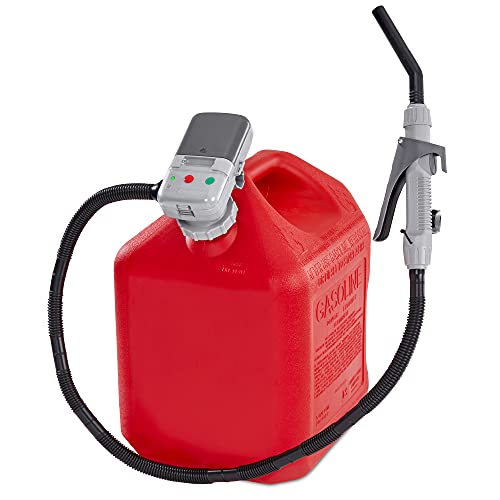
The DEWAY automatic transfer pump takes a slightly different approach to flow control. Instead of relying only on a sensor, it uses a hand nozzle with an adjustable lever, so you meter the fuel the way you would at a filling station: squeeze for full flow, ease off as the tank nears the top, and release to stop. That manual control is useful when you are topping off a portable outboard tank with a narrow neck, where a sudden surge can burp fuel back out before an auto-stop sensor reacts.
The pump runs on four AA batteries and delivers 2.2 to 2.4 gallons per minute, with the maker rating a set of batteries for up to roughly 100 gallons of transfer. The discharge hose is a long, flexible 51-inch line that holds its shape once bent, which helps when the can has to sit on the dock or the trailer fender while the nozzle reaches a filler set into the gunwale. A built-in adapter screws onto standard gas cans, and the polyethylene hose is listed for gasoline and diesel. If you like the idea of a battery pump but want to decide exactly when the flow starts and stops yourself, this is the pick built around that preference.
Specs
- :
- ASIN: B09HR282N2
- Brand: DEWAY
- Model: WAYPUMP11
- Pump type: Battery-powered transfer pump with hand nozzle
- Power: 4 AA batteries
- Flow rate: 2.2–2.4 GPM
- Hose length: 51 inches, flexible no-kink polyethylene
- Control: Adjustable flow-control lever on the nozzle
- Fuels: Gasoline, diesel, and other listed non-potable liquids
3. FlowJoe GasTapper Standard 12V Fuel Transfer Pump

The FlowJoe GasTapper Standard takes its power from a 12-volt source instead of disposable batteries, which makes it a natural fit on a boat that already has a battery on board. Clip it to the boat or tow vehicle battery and the pump moves fuel at a steady 30 gallons per hour. That works out to a slower, steadier stream than the AA-powered stick pumps, but steadiness is the point here: the Standard is built for controlled transfers, including pulling fuel through its long hose run from a can sitting well away from the filler.
The headline number for boat use is reach. The kit uses a total of 16 feet of fuel-grade hose and is rated for a 6-foot dry lift, so a can can stay down in the cockpit sole or on the dock while fuel climbs to a raised tank. An in-line filter is included to catch debris before it reaches your tank, a thoughtful touch when fuel comes from cans that live in truck beds and garages. The pump is made in the USA and is listed for gasoline, diesel, and light oils. Choose this one if your fueling routine happens at the boat, you have 12-volt power within reach, and you would rather have a durable, hose-based system than a can-top pump.
Specs
- :
- ASIN: B00QSPU0NS
- Brand: FlowJoe
- Model: GasTapper Standard 12V
- Pump type: 12-volt electric transfer pump
- Power: 12V battery connection
- Flow rate: 30 gallons per hour
- Lift: 6-foot dry lift
- Hose: 16 feet total, fuel-grade tubing
- Extras: Red nylon in-line filter, vehicle access kit
- Fuels: Gasoline, diesel, light oils
4. GasTapper Fuel Transfer Pump, 6 Ft Siphon Pump

At the other end of the complexity scale, the GasTapper 6 Ft Siphon Pump is a manual squeeze-bulb siphon that needs no batteries, no clips, and no charging. A few squeezes of the in-line bulb start the fuel moving, and the bulb design can push liquid uphill over a short rise — the maker rates it for about a 3-foot lift — so you are not entirely dependent on setting the can above the tank, although gravity still helps once the siphon is running.
The six-foot hose is long enough to run from a can on the dock down into a portable tank in the boat, and the kit includes a hose clip to hold the discharge end in place so it cannot pop out of the filler mid-transfer, plus a universal filter for the intake. The whole kit weighs only a few ounces and coils into a small bundle, which is why siphons like this earn a permanent spot in so many boat kits: they work when batteries are dead, when a powered pump is back in the truck, or when you need to move fuel between two boats at the sandbar. It is slower and more practical than the powered picks, but as an always-ready transfer tool it is hard to beat.
Specs
- :
- ASIN: B00TA5ECJQ
- Brand: GasTapper
- Model: Power Equipment / Sports Siphon
- Pump type: Manual squeeze-bulb siphon pump
- Power: None, hand-primed
- Hose length: 6 feet
- Lift: Squeeze-bulb priming, about 3-foot uphill lift
- Extras: Patented hose clip, universal intake filter, narrow access line
- Fuels: Gasoline, diesel, and low-viscosity fluids
5. HORUSDY Multi-Use Siphon Fuel Transfer Pump Kit

The HORUSDY multi-use siphon kit is the budget-friendly, do-everything option in this lineup. It is a manual hand pump kit built around a siphon pump with intake and discharge hoses: prime it by hand, and it moves gasoline and other liquids from a can into your tank without any power source. The maker specifically points it at small-tank fueling jobs, naming boats and personal watercraft among the equipment it suits, which matches the portable-tank reality of smaller outboards.
What separates the kit from a plain siphon hose is the extras in the box. Alongside the transfer hoses, it includes fittings that let the same pump move air, so it can inflate the tow tube or fenders after fueling duty, plus a dipstick tube for tight openings. On a small boat where storage is precious, one compact kit that covers fuel transfer and a few odd jobs earns its keep. Keep expectations in line with the format: you provide the pumping effort, flow is modest, and it suits topping off portable tanks better than filling a large built-in tank from empty.
Specs
- :
- ASIN: B075C3NNZF
- Brand: HORUSDY
- Model: Multi-Use Siphon Fuel Transfer Pump Kit (item 97205)
- Pump type: Manual siphon hand pump kit
- Power: None, hand-operated
- Hoses: Intake and discharge transfer hoses included
- Extras: Air hose and adapters for inflation, dipstick tube
- Fuels: Gasoline, oil, and other liquids
- Dimensions: 9.9 x 2.1 x 9 inches
How to Choose a Fuel Transfer Pump for Your Boat
Start with power source, because it decides how and where you fuel. Battery stick pumps like the TERA PUMP and DEWAY models are the most convenient for can-to-tank transfers at the ramp or in the driveway: they mount on the can, run on AA batteries, and need nothing from the boat. A 12-volt pump like the FlowJoe Standard makes sense when the boat’s battery is always nearby and you want long hoses and a filter in the system. Manual siphons cost the least, weigh almost nothing, and never have a dead battery, which is why many owners carry one as a backup even if a powered pump does the everyday work.
Next, look at flow rate against your tank size. Around 2.5 gallons per minute empties a portable can quickly, which matters when you are fueling a larger built-in tank from several cans in a row. Slower, steadier pumps are actually easier to manage on small portable outboard tanks, where a fast stream can foam and splash back out of a narrow filler. Match the pump to the tank you fill most often, not the biggest number on the box.
Hose length and lift matter more on boats than almost anywhere else. Fillers are often set into a gunwale or a raised console, and the can usually has to stay on a flat, stable surface below or beside it. Check that the discharge hose reaches comfortably with slack to spare, and if the tank sits above where the can can rest, confirm the pump’s rated lift covers the difference. A hose clip or a nozzle you can hold in place is worth having, because a discharge hose that slips out mid-transfer makes exactly the mess you bought the pump to avoid.
Finally, think about shutoff and fuel compatibility. An auto-stop sensor or a lever nozzle you control directly both beat guessing when a tank is full, especially when you cannot see into the filler. Confirm the pump and its hoses are rated for the fuel you run — gasoline for most outboards, diesel for auxiliary and sailboat setups — and if you run ethanol blends, check that the listing covers them. After each use, run the pump clear, coil the hose, and store it away from the fuel cans so it is ready for the next trip.
FAQ
Can I use a fuel transfer pump to fill a portable outboard tank?
Yes. Portable outboard tanks are one of the best use cases for these pumps. A battery stick pump or manual siphon lets you keep the can on the ground or dock and fill the tank in place, instead of lifting the can over the filler. Just confirm the discharge hose or nozzle fits the tank’s filler opening.
Are battery-powered transfer pumps safe to use around gasoline?
The pumps in this guide are purpose-built and listed by their makers for gasoline transfer, with sealed battery compartments and fuel-rated hoses. Follow the maker’s directions, use them outdoors or in ventilated areas, keep the work area free of ignition sources, and never run a pump that is not rated for gasoline — water-only pumps are not interchangeable.
How is a transfer pump different from an oil-change extractor pump?
A transfer pump moves clean fuel from a container into a tank. An extractor pump is designed to pull used oil or fluid out of an engine through a dipstick tube for disposal. They look similar but are built and rated for different fluids and directions of flow, so use each for its intended job.
What should I do if my siphon pump will not start flowing?
Check that the intake is fully submerged, the discharge end sits lower than the fuel level in the can when you can arrange it, and all hose connections are snug — air leaks are the usual reason a siphon refuses to prime. On a squeeze-bulb model, a few firm squeezes with the bulb’s arrow pointing in the direction of flow should get fuel moving.
How do I store a transfer pump between trips?
Drain the hoses back into the can when you finish, let the pump run clear for a moment if the maker allows it, and store the pump coiled in a dry spot out of direct sun. Remove AA batteries from battery-powered models during long storage so a leaking cell cannot damage the pump before your next outing.
More from Amazon
Programs that pair well with the guide above. Offers and eligibility are set by Amazon and may change.
Free shipping on eligible items, Prime Video and more. Eligible new members can start with a free trial.
Start a Prime free trialA Prime membership for ages 18-24 with a trial period. Eligibility is set by Amazon.
See Prime for Young AdultsAudiobooks and podcasts to listen to on the go. Eligible new members can start with a free trial.
Try Audible freeAd-free music streaming. Eligible new subscribers can start with a free trial.
Try Music Unlimited freeAs an Amazon Associate we earn from qualifying purchases.



Write Your Review
No reviews yet. Be the first to share your experience!