

Key takeaways
- Compare the best artificial fish habitat structures for ponds, from brush trees and grass beds to log and rock caves that shelter koi, bass, and bluegill.
As an Amazon Associate we earn from qualifying purchases.
Disclosure: This article contains affiliate links. If you buy through them, we may earn a commission at no extra cost to you.
A pond without cover is a pond where fish have nowhere to hide, rest, or ambush prey. Natural brush, fallen trees, and weed beds do that job in the wild, but they rot, shift, and disappear over time. Artificial fish habitat structures solve the problem permanently: they stay put, they do not decay, and they give every size of fish a place to live. The best artificial fish habitat structures for ponds cover the full range of needs, from dense brush-style trees that hold baitfish to grass beds that mimic shallow vegetation and solid caves that shelter koi and goldfish from herons and raccoons.
The five structures below work in different depths and pond types. Brush trees and grass beds suit larger ponds and lakes where game fish patrol open water, while caves and tunnel shelters suit garden ponds and koi ponds where predator protection matters most. Combining two or three types, placed at different depths, creates the layered cover that a healthy pond fishery needs.
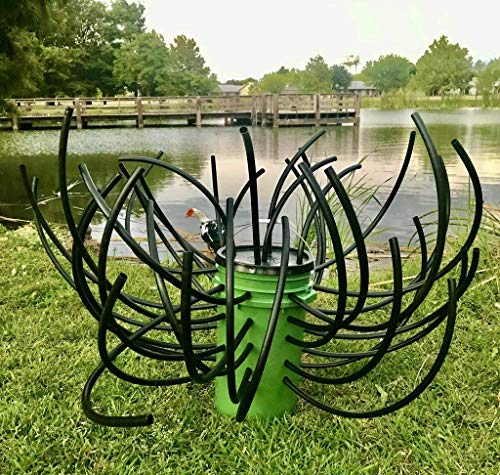
1. Green Blob Outdoors Fish ‘N A Barrel Artificial Fish Habitat Tree
Specs
- :
- ASIN: B071KYG691
- Brand: Green Blob Outdoors
- Coverage: 7 ft diameter by 4 ft height of dense structure
- Limbs: 32 limbs at 30 inches and 5 limbs at 16 inches
- Assembly: limbs insert into pre-drilled holes; bucket weighted with concrete, rocks, or pea gravel
- Package dimensions: 22 x 21.5 x 17 inches
The Green Blob Outdoors Fish ‘N A Barrel is a brush-style habitat tree that simulates buck brush and cedar, two of the most productive forms of natural cover in ponds and lakes. Once assembled, it spreads into a dense, roughly 7-foot-wide tangle that baitfish use as a refuge and that bass, crappie, catfish, and bluegill patrol for food. The plastic limbs are flexible enough that lures and hooks slide through them rather than snagging, which matters when you actually want to fish the structure you just sank.
Assembly takes only a few minutes and needs no tools. Each limb pushes into a pre-drilled hole in the bucket, and the bucket itself is weighted with ready-mix concrete, rocks, or pea gravel before the unit is lowered into the water with a rope through the lid handle. Because the structure is made from durable plastic rather than wood, it will not rot, shed branches, or slowly reduce the depth of your pond the way a sunken Christmas tree does.
This is the right pick for anglers who want a single large piece of cover in a farm pond, a lake cove, or along a dock. Cluster several units together to build a bigger brush reef, or place one near a drop-off so that fish moving between shallow feeding flats and deep water have a stopping point along the way.
2. Pond King Honey Hole Grass Artificial Fish Habitat

Specs
- :
- ASIN: B079P7S7Q4
- Brand: Pond King, Inc.
- Height: 4 ft tall
- Bases: 3 galvanized metal bases with 9 grass stems
- Material: High-density polyethylene (HDPE)
- Ideal water depth: 4 to 6 ft
- Package dimensions: 47.5 x 6.7 x 6 inches
The Pond King Honey Hole Grass is part of the company’s Live Series, a line of artificial habitat designed by fisheries biologists to mimic the structure and movement of natural cover. Its flexible, dual-colored HDPE leaves and limbs imitate live grass without the maintenance problems of real vegetation: the material resists snags, decay, and the slow breakdown that turns natural brush into silt.
Deployment is unusually flexible. The three galvanized metal bases can be left separate, arranged into an S-curve, or connected in a circular pattern to cover a large area of the pond bottom. At 4 feet tall, the grass suits water 4 to 6 feet deep, which is exactly the shallow zone where juvenile baitfish feed and where bass and bluegill hunt. The high limb count gives periphyton somewhere to colonize, and that thin layer of algae and microorganisms is what draws in small fish first, followed by the larger fish that eat them.
This pick suits pond owners who want vegetation-style cover in a pond that lacks natural weed beds, or who want to add a shallow-water layer to a habitat plan that already includes deeper brush. It also pairs well with the other Honey Hole models, since grass, reeds, and brush each cover a different depth band.
3. Aquascape Faux Log Fish Cave
Specs
- :
- ASIN: B083QV8Z9S
- Brand: Aquascape
- Model: 78324
- Dimensions: 19 x 12 x 10 inches
- Material: Heavy-duty polyresin
- Weight: 2.27 kg
- Design: Realistic faux wood log with openings for fish to swim through
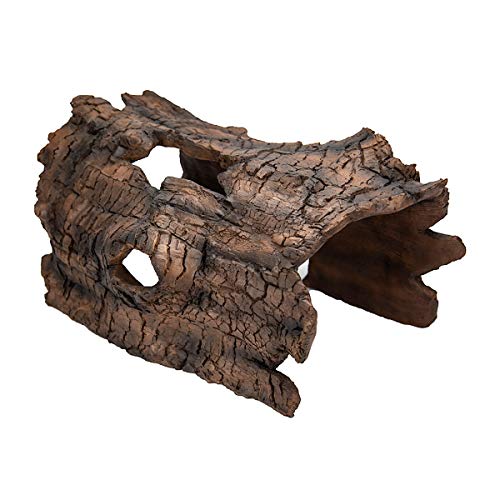
The Aquascape Faux Log Fish Cave is a solid shelter built for garden ponds and koi ponds, where the main job of a habitat structure is protection rather than attracting game fish. Its hollow, log-shaped body gives koi and goldfish a place to retreat when herons, egrets, raccoons, or other predators appear at the water’s edge. Fish enter through openings in the sides and rest inside, out of sight from above.
The heavy-duty polyresin construction is fish-safe, weather resistant, and heavy enough to stay where it is placed on the pond bottom. At 19 inches long, it fits comfortably in a typical backyard pond without dominating the layout, and the realistic faux wood finish blends in with rocks and planting far better than a plain plastic box would. It can be added to a new pond during construction or simply sunk into an existing pond, and it also works as a decorative garden accent when used outside the water.
This is the best choice in this roundup for anyone keeping koi or goldfish in a smaller pond, especially where wading birds are a regular problem. For larger ponds, placing two or three caves at different points around the edge gives fish an escape route no matter which side a predator approaches from.
4. Vicenpal Koi Castle Cave for Pond

Specs
- :
- ASIN: B0FHQF3T3Z
- Brand: Vicenpal
- Size: About 24 x 14 x 9 inches
- Material: Aluminum tube and fiberglass mesh
- Color: Black
- Design: Tunnel-style cave shelter for ponds
The Vicenpal Koi Castle Cave takes a different approach from the solid resin caves: it is a tunnel built from aluminum tube and fiberglass mesh, forming a roomy, dark refuge about 24 inches long. The mesh walls let water flow through freely while still breaking up the outline of the fish inside, so koi, goldfish, shrimp, and other pond life can hide, rest, and even spawn inside with less disturbance from larger fish.
Beyond shelter, the structure helps the pond itself. Set on the bottom, it holds down silt and reduces the stirring of bottom mud, which keeps the water clearer, and its surfaces provide habitat for small benthic animals such as shrimp and snails that form part of the pond’s food web. The black finish keeps the interior dim, which is what shy fish look for in a hiding place, and the lightweight frame is easy to position before it settles onto the pond floor.
This pick suits pond owners who want a larger shelter than a single log cave, or who keep a mix of fish sizes and want fry and eggs to have a protected space. It also works in aquariums and terrariums, but its size and pond-first design make it most at home in an outdoor pond.
5. Koi Pond Cave Extra Large Resin Fish Cave for Pond

Specs
- :
- ASIN: B0D8P23HVX
- Brand: bretoes
- Size: 20 x 13.4 x 7.5 inches
- Material: Resin
- Weight: 7.9 pounds
- Color: Birch
- Design: Large resin cave with a natural rock-like appearance
The Koi Pond Cave is a large resin shelter sized for outdoor ponds, measuring 20 inches long and 13.4 inches wide. Its hollow interior gives pond fish a comfortable hiding place away from predators, while its rock-like exterior blends into the pond and garden landscape rather than looking like an obvious piece of equipment. The resin body is durable in water and will not soften, rot, or leach the way untreated natural materials can.
At 7.9 pounds, the cave is heavy enough to sit firmly on the pond bottom once placed, yet light enough for one person to position by hand. The extra-large opening suits koi and larger goldfish that would struggle to use a small aquarium-style cave, and the interior space is generous enough for several fish to shelter together during a heron visit or a cold snap. The birch coloration keeps the structure looking like a natural feature among stones and planting at the pond’s edge.
This is a straightforward pick for pond owners who want maximum shelter volume from a single unit. Place it near the deepest part of the pond, or beside a planting shelf, so fish can move between open water, plants, and solid cover without crossing a long stretch of exposed bottom.
How to Choose Artificial Fish Habitat Structures for Ponds
Start with depth. Brush trees and grass beds are designed for specific depth bands, usually printed on the packaging, and a structure placed too deep or too shallow will not be used the way you expect. Measure the water where you plan to sink each piece, then match the structure to that band. Shallow shoreline cover protects fry and baitfish, mid-depth brush holds feeding game fish, and deeper structures give fish a winter refuge.
Think in layers rather than single pieces. A pond with only one type of cover funnels all of its fish into one spot, which helps predators as much as prey. A mix of dense brush for baitfish, open-limbed trees for ambush predators, grass for shallow feeding, and solid caves for escape cover spreads fish through the pond and supports more of them. In a large pond or lake, cluster structures together to create a reef; in a small garden pond, space two or three caves around the edge so fish always have a nearby retreat.
Consider the fish you keep. Game-fish ponds benefit most from brush and grass structures that build a food chain from periphyton up to bass and crappie. Koi and goldfish ponds benefit most from solid caves and tunnels that block a heron’s view from above. If your pond serves both purposes, split the difference and install one of each type.
Finally, check the practical details before you buy. Some structures need a concrete block or gravel for ballast, some are self-weighted, and some need to be anchored so they do not drift in a current or after heavy rain. Make sure you can reach the placement spot from a dock or boat, that the structure will sit flat on the bottom, and that it does not sit in a swimming or boating area.
Frequently Asked Questions
How many habitat structures does a pond need?
It depends on the size of the pond and how much natural cover already exists. A small garden pond may only need one or two caves, while a larger farm pond benefits from several brush and grass structures spread across different depths. Adding cover gradually and watching where fish gather is a sensible approach.
Will artificial habitat structures harm water quality?
Structures made from fish-safe plastic, HDPE, polyresin, or fiberglass mesh are designed to sit underwater without breaking down. Unlike natural brush, they do not rot and consume oxygen as they decay, and their surfaces give beneficial microorganisms somewhere to grow.
Where should habitat structures be placed?
Place shoreline structures in 3 to 6 feet of water near feeding flats, deeper brush near drop-offs and points, and caves near the pond edge or the deepest area where fish retreat. Avoid swimming areas, boat lanes, and spots where a structure could interfere with a pump intake or drain.
Do artificial structures work in winter?
Yes. Fish use deeper structures as winter refuge, and because artificial materials do not decompose, the cover is still there in spring when fish return to shallow water to feed and spawn.
Artificial habitat is one of the simplest upgrades a pond owner can make. Whether you choose a brush tree for a fishing pond or a cave for a koi pond, the principle is the same: give fish somewhere to hide, feed, and rest, and the pond will support more of them, more of the time.
More from Amazon
Programs that pair well with the guide above. Offers and eligibility are set by Amazon and may change.
Free shipping on eligible items, Prime Video and more. Eligible new members can start with a free trial.
Start a Prime free trialA Prime membership for ages 18-24 with a trial period. Eligibility is set by Amazon.
See Prime for Young AdultsAudiobooks and podcasts to listen to on the go. Eligible new members can start with a free trial.
Try Audible freeAd-free music streaming. Eligible new subscribers can start with a free trial.
Try Music Unlimited freeAs an Amazon Associate we earn from qualifying purchases.
Write Your Review
No reviews yet. Be the first to share your experience!