

Key takeaways
- Most kayak anglers never think about a compass until fog rolls across a bay, a wind shift pushes them off a drift line.
Most kayak anglers never think about a compass until fog rolls across a bay, a wind shift pushes them off a drift line, or the shoreline they were watching disappears behind a haze. At that moment the question stops being “do I need one” and becomes “which one actually holds a heading on a small boat that rocks, tilts and sits inches above the water.” The decision behind “best kayak compasses” is about mounting style, dial size, readability and how the compass behaves when the deck moves.
This guide is for paddlers and kayak anglers who want a deck-mounted heading reference for coastal, big-lake and river-mouth trips, as well as those who simply want a backup to a phone or GPS. All details come from the listed product titles, which mention dial sizes, mounting approaches, hood designs and intended use, and where a title is thin the advice is to confirm on the listing. As more anglers plan longer crossings in 2026, a dependable, glanceable compass remains a small, inexpensive piece of insurance.
Quick Picks
Our top picks

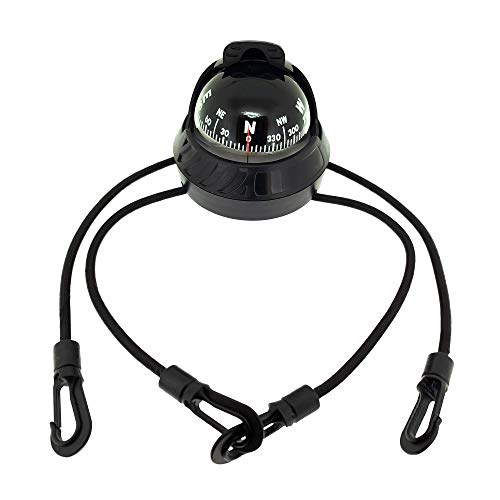


As an Amazon Associate we earn from qualifying purchases at no extra cost to you.
| Product | Best for | Key spec from the title |
|---|---|---|
| Silva 58 Kayak Compass | A recognized brand built for kayaks | Kayak-specific design |
| Sun Company SeaTurtl | Easy reading in glare | Full-size mountable, adjustable hood |
| Gearlab DeckNavi | Mounting without drilling | No-drill deck mount, high-visibility |
| Ritchie X-11Y Sport | Compact, bright, easy to spot | 2-inch dial, yellow |
| Autonautic C3001 | Small boats and dinghies | Surface mount, 2 1/3 inch dial, made in Europe |
| Seattle Sports Sea Rover | Kayaks and paddle boards | Deck compass for kayaks and paddle boards |
| Ritchie V-57.2 Explorer | Larger dial on a stable surface | Dash mount, black dial |
How to Choose
Mounting style comes first
A compass that cannot be mounted where you can see it is useless. Surface-mount designs use screws or adhesive and sit flush with a flat deck, no-drill designs strap or clip onto existing hardware, and some are made for a dash. On a rotomolded kayak, drilling through the hull is a leak risk, so no-drill, adhesive or bungee-style mounts are often better. Choose a position directly in front of your hips, within easy view even while you hold a rod.
Dial size and readability
Dial size ranges from about two inches for compact kayak compasses to larger marine dials intended for powerboats. A two-inch dial is easy to glance at within an arm’s length, and bigger dials add a little precision but also bulk. Look for high-contrast markings, a clear lubber line, and a hood or shade that cuts glare. If you plan to paddle at dawn or dusk, find out whether the dial is lit or glow-marked before buying.
Fluid damping and tilt tolerance
A liquid-filled capsule dampens swing so the card does not spin with every wave. Cheaper compasses can lag or bounce, which is more annoying than helpful. A good marine compass tolerates tilt of about 15 to 20 degrees without sticking. Look for words like gimbal, damped or liquid-filled in the listing, and avoid hiking compasses meant to be held flat in your hand.
Magnetic interference and placement
A fishfinder, speaker, trolling motor battery or steel tackle box can pull the needle off by several degrees. Keep the compass at least a foot away from electronics and metal, and check it by comparing against a known direction before heading offshore. If the compass offers adjustable compensation, that is a plus, but most kayak units rely on careful placement instead.
It also helps to think about how you will actually use the instrument. Most paddlers do not steer by compass continuously; they take a bearing before leaving the shore, glance down every few minutes, and correct. A big, clear card and a visible lubber line matter more than fancy features. Learn to account for drift from wind and current too, because a compass tells you where the bow points, not where the boat is actually traveling. Practicing a short crossing on a calm day, with a visible landmark as a check, builds the habit before you need it in poor visibility.
The 7 Best Options
Silva 58 Kayak Compass
Silva is a name many paddlers associate with navigation, and this model is titled specifically as a kayak compass. The listing is short, so confirm mounting hardware, dial size and any lighting on the page. It suits anglers who value a known name and want a compass designed for a rocking deck instead of a handheld hiking tool. Expect a simple, dependable approach rather than a feature-heavy gadget, which is exactly what many paddlers want from a backup that must work after a swim or a soggy day.
- Strength: purpose-built for kayaks and associated with a respected navigation brand.
- Strength: a plain design with few parts to fail.
- Trade-off: the title gives few details about mounting and dial size.
Skip it if you need to know exact specs before buying.
Sun Company SeaTurtl Kayak Compass
The SeaTurtl is described as a full-size mountable marine compass with an adjustable hood. The hood matters because sun glare on a liquid dome can make a bare compass unreadable at midday. Full-size suggests a larger dial than the smallest options, which helps if your eyes are not what they were. It fits anglers who paddle in bright open water and want a readable face.
- Strength: adjustable hood reduces glare.
- Strength: full-size dial is easier to read at a glance.
- Trade-off: larger bodies take up more deck space.
Skip it if your deck is crowded with rod holders and electronics.
Gearlab DeckNavi Kayak Compass
This one targets paddlers who do not want to drill into their boat. The title highlights a no-drill deck mount, an adjustable high-visibility display and compatibility with any kayak, in a black finish. Installation tends to be simpler, which suits rental-style boats, inflatables and anglers who change decks often. Because it is meant for any kayak, you can move it from one boat to another when you upgrade, which is a quiet advantage over a screwed-down unit. Confirm the mount method and surface requirements on the listing.
- Strength: no-drill mounting protects the hull.
- Strength: adjustable high-visibility design.
- Trade-off: no-drill mounts may shift if not secured on the right surface.
Skip it if you prefer a permanent screw-down installation.
Ritchie X-11Y Sport Kayak Compass (Yellow)
Ritchie is a well-known name in marine compasses, and this model has a two-inch dial in yellow. The bright color makes it easy to find on a cluttered deck and easy to spot if it comes loose. A compact dial suits kayaks where space is tight. It is a practical pick for paddlers who want a small, sporty compass that fits next to a fishfinder or rod holder, though remember to keep it far enough from electronics that the needle is not pulled off course. Check the listing for the mounting method, since the title only names the dial size and color.
- Strength: two-inch dial in a compact body.
- Strength: high-visibility yellow color.
- Trade-off: smaller dial means finer detail is harder to read.
Skip it if you want a large dial for quick reading at distance.
Autonautic Surface Mount Compass C3001
Autonautic positions this compass for kayaks, ribs and dinghies, with a 2 1/3 inch black dial and surface mounting. The title also notes it is made in Europe, which some buyers see as a quality signal. A slightly bigger dial than the smallest sport compasses gives a bit more precision. It suits anglers who want a no-nonsense, flat-mount instrument that works on small inflatable boats too.
- Strength: 2 1/3 inch dial offers good readability.
- Strength: designed for kayaks and small boats.
- Trade-off: surface mounting requires a flat location.
Skip it if your deck is curved or textured with no flat spot.
Seattle Sports Sea Rover Deck Compass
Seattle Sports builds gear for paddlers, and the Sea Rover is marketed for kayaks and paddle boards. That dual use makes it a flexible choice if you own both craft. It is a straightforward deck compass, and the listing is brief, so confirm details such as mounting hardware and dial size on the page. For anglers who move between a kayak and a stand-up board depending on the water, a single compass that suits both craft means less gear to buy and keep track of.
- Strength: made by a paddle-sports brand and aimed at both kayaks and boards.
- Strength: simple deck-mounted concept.
- Trade-off: few specs in the title.
Skip it if you need lit-dial or hood details confirmed first.
Ritchie Navigation V-57.2 Explorer Compass
The Explorer is a dash-mount marine compass with a black dial, aimed at small boats rather than kayaks specifically. It suits bigger fishing kayaks with a flat console area or anglers who also run a small skiff. Larger marine compasses can offer smoother damping, but they take more room and often need a stable, flat base. If your kayak has a molded console or a mounting plate near the seat, this could be an upgrade over a tiny sport dial. The title does not give the dial diameter, so confirm it on the listing before measuring your deck.
- Strength: established marine compass maker.
- Strength: dash mount fits a console or stable surface.
- Trade-off: not purpose-built for a small kayak deck.
Skip it if you have limited deck space or no place for a dash mount.
Which One Fits Your Situation
You paddle a rented or shared kayak
The Gearlab DeckNavi’s no-drill mount can come off without leaving holes. Keep the mounting surface clean and dry before applying.
You fish open water in bright sun
The Sun Company SeaTurtl with its adjustable hood keeps glare under control. Mount it where spray will not hit it constantly.
You have a crowded deck
The Ritchie X-11Y keeps the footprint small, and its bright yellow makes it easy to find.
You paddle a small inflatable or a multi-boat setup
The Autonautic C3001 works across kayaks, ribs and dinghies, while the Seattle Sports Sea Rover covers paddle boards too.
Common Mistakes
- Mounting the compass beside a fishfinder or battery and getting a false heading.
- Choosing a hiking compass that needs to be held flat.
- Drilling the hull when a no-drill option would have worked.
- Never checking the compass against a known landmark before a crossing.
- Ignoring glare and then being unable to read the dial at noon.
Related guides
- Shimano Stradic Fl Vs Daiwa Bg Spinning Reel
- Polarized Sunglasses For Kayak Fishing
- Battery Chargers For Marine Batteries
Frequently Asked Questions
Do I need a compass if I have a GPS?
A compass does not need batteries or a signal, so it works as a reliable backup when electronics fail or the phone dies.
Where should I mount it?
Mount it on the centerline of the deck where you can see it without turning your head, and keep it a foot or more from metal and electronics.
Can I use a hiking compass on a kayak?
You can in a pinch, but it will swing with every wave. A damped marine compass is far easier to read.
How do I know if my compass is accurate?
Compare it to a known bearing, such as a chart or a landmark, and recheck after adding new gear near it.
More from Amazon
Programs that pair well with the guide above. Offers and eligibility are set by Amazon and may change.
Free shipping on eligible items, Prime Video and more. Eligible new members can start with a free trial.
Start a Prime free trialA Prime membership for ages 18-24 with a trial period. Eligibility is set by Amazon.
See Prime for Young AdultsAudiobooks and podcasts to listen to on the go. Eligible new members can start with a free trial.
Try Audible freeAd-free music streaming. Eligible new subscribers can start with a free trial.
Try Music Unlimited freeAs an Amazon Associate we earn from qualifying purchases.



Write Your Review
No reviews yet. Be the first to share your experience!