

Key takeaways
- Kayaks take abuse that other boats never see. They scrape over oyster bars, get dragged across gravel ramps, ride on roof racks, and sit in the sun for years.
Kayaks take abuse that other boats never see. They scrape over oyster bars, get dragged across gravel ramps, ride on roof racks, and sit in the sun for years. A crack in a polyethylene hull, a gouge in a keel, or a pinhole in an inflatable tube is not a question of if, but when. The right repair kit depends almost entirely on what your kayak is made of, and that is the first decision to make before looking at any product.
This guide covers the three families of repair that show up for this keyword: plastic welding kits for rigid polyethylene hulls, a PVC patch kit for inflatables, and adhesive or epoxy options for smaller fixes. The six listings below are described only by their titles. Planning a 2026 season, the useful questions are whether you want to weld or glue, whether you have a power source at the launch, and how permanent you need the fix to be. Listings for a generic air mattress patch were left out because they are not aimed at kayaks.
Quick Picks
Our top picks




As an Amazon Associate we earn from qualifying purchases at no extra cost to you.
| Product | Best for | Key spec from the title |
|---|---|---|
| 220W Plastic Welder Kit | Welding rigid plastic hulls | 220W, 2 in 1, hot stapler, 100 welding rods |
| JOUNJIP Standard Plastic Welding Kit | Car, kayak, and tank repairs | UL-certified welder and repair kit |
| Heavy Duty PVC Repair Kit | Inflatable boats and kayaks | Large PVC patches, adhesive, tools, gloves |
| Allturn Plastic Welder Kit | Hotter welds with extra tips | 110V 100W, heats to 800 F, 75 rods |
| West System 655-K Boat Repair Kit | Epoxy repairs on plastic boats | G/flex epoxy repair kit |
| AquaPro Liquid Patch | Quick patch for SUPs and kayaks | Ready in 3 hours, waterproof, UV-resistant |
How to Choose
Start with your hull material
Rotomolded polyethylene, the stuff most sit-on-tops are made from, resists glue and paint, which is why plastic welding is a favorite. Inflatable kayaks made of PVC or similar fabric need patches and adhesive made for flexible vinyl. Composite, fiberglass, and thermoformed hulls use epoxy. Use the wrong repair on the wrong material and the fix will peel in weeks. If you are unsure, check the manufacturer’s label near the stern or the original manual, which usually names the plastic. Roto-molded polyethylene is often described as the soft, waxy kind of plastic that nothing seems to stick to.
Check the power and heat specs
Plastic welders list wattage and temperature, such as 100W heating up to 800 F or a 220W unit. Higher wattage heats faster and holds temperature in cool air, but all of them need a wall outlet or inverter. If you plan to repair at a remote launch, you will need a portable power source, which makes epoxy and liquid patches more practical. A cordless gas or battery heat tool exists, but none of the listed kits mention one, so assume a plug is required. Keep an extension cord and a work light in the garage so the repair does not stall halfway through.
Count the consumables
Welding kits include rods and tips, and the number can range from dozens to hundreds. A large rod count is not important if you only fix one or two cracks, while a small kit may run short on a big gouge. For patches and epoxy, look for curing time and temperature range, because many adhesives refuse to set below a certain temperature. Keep spare rods in a labeled bag, since different plastics need matching rod types, and mixing them yields a weak joint.
Look for certifications and instructions
UL certification on an electric welder, as one listing mentions, gives some assurance about electrical safety. Clear instructions matter because a poor weld can leave a hull weaker than before. Take the time to practice on scrap plastic and keep a respirator or ventilation handy, since welding plastic gives off fumes.
The 6 Best Options
220W Plastic Welder Kit
This upgraded 2 in 1 kit combines a 220W plastic welder with a hot stapler and includes 1000 staples and 100 welding rods. The hot stapler technique is popular for cracks in polyethylene, since the staples reinforce the weld from the inside of the crack. For a deep gouge, a typical approach is to groove the damage, stitch it with staples, then fill with melted rod until the surface is level. Sand it smooth afterward, and the hull will look and feel close to its original shape, though cosmetics matter less than strength.
- Strength: the high wattage should heat quickly.
- Strength: a large supply of rods and staples covers many repairs.
- Trade-off: it needs a mains power source, so it is a garage tool rather than a launch-ramp tool.
Skip it if you have no workshop or outlet, or if your kayak is inflatable.
JOUNJIP Standard Plastic Welding Kit
The Standard kit is a UL-certified plastic welder and repair set that the title says can fix car bumpers, kayaks, plastic tanks, and headlight tabs. That versatility makes it attractive for households that need to fix other plastic items too. A welder that earns its keep on a bumper crack in spring and a kayak scrape in summer is easier to justify than a single-purpose tool. It is also sold in a Deluxe version, so compare the two listings before choosing.
- Strength: UL certification appears in the title.
- Strength: it is described as suitable for kayaks and other plastics.
- Trade-off: the title is truncated, so confirm the included rods and tips.
Skip it if you want a full professional-grade kit, which the Deluxe version targets.
Heavy Duty PVC Repair Kit
This repair kit is made for inflatable boats and kayaks and includes large PVC patches, adhesive, tools, and gloves. It is the logical choice for anyone with an inflatable hull, since plastic welders cannot repair vinyl or fabric tubes. Carry a small version of a patch kit on every trip with an inflatable, because a slow leak is far easier to fix on the bank than in the middle of a lake. Clean the area with the right solvent first, and press out air bubbles under the patch.
- Strength: it includes patches, adhesive, tools, and gloves in one package.
- Strength: the title mentions permanent, waterproof patch repair.
- Trade-off: it does not suit rigid polyethylene hulls.
Skip it if your kayak is a hard shell sit-on-top.
Allturn Plastic Welder Kit
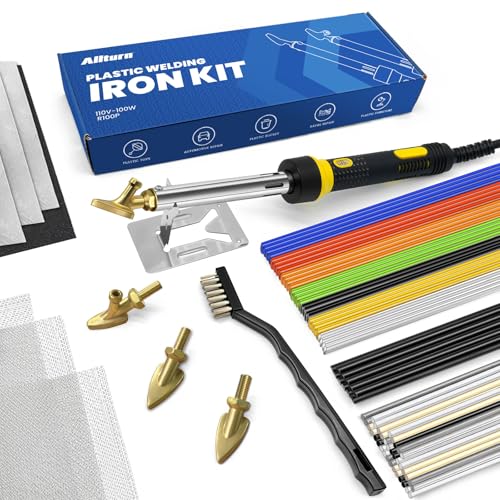
The Allturn is a 110V 100W plastic welder that heats to 800 F and ships with T2 and T3 tips and 75 welding rods. It is a middle-of-the-road choice that offers temperature range for varied plastics. The extra tips allow you to work flat surfaces and tight corners alike, and a 110V plug fits standard household outlets in North America. It is a fine fit for a hobbyist who repairs a couple of boats each season.
- Strength: two tip styles add flexibility on different crack shapes.
- Strength: 75 rods are enough for several repairs.
- Trade-off: 100W may heat more slowly than the larger 220W kit.
Skip it if you need a cordless or portable solution for remote launches.
West System 655-K Boat Repair Kit
This G/flex epoxy kit is designed to repair plastic boats with lasting strength. Epoxy does not require power, which suits repair work away from a garage, and G/flex is formulated to bond to difficult surfaces. Kayak shops and boatbuilders often reach for epoxy when a crack is near a fitting or on a thick area where a weld would be awkward. Mix only what you need, mind the temperature on the label, and clamp or tape the repair until it cures.
- Strength: a complete epoxy kit with no electricity needed.
- Strength: it is made by a known marine epoxy brand.
- Trade-off: epoxy needs careful surface prep and cure time, which can take longer than welding.
Skip it if you want a quick fix at the waterline.
AquaPro Liquid Patch
The Liquid Patch is a heavy duty kit for paddle boards and kayaks that the listing says is ready in 3 hours and offers waterproof, UV-resistant repair. It suits quick fixes on inflatable boards and similar craft. A liquid patch is easy to toss in a dry bag, and it stays useful on long trips where a failed seam or a small tear would otherwise end the outing early. Apply it in warm, dry conditions for the best result.
- Strength: the 3 hour turnaround is fast for a bonded patch.
- Strength: UV-resistant and waterproof are stated in the title.
- Trade-off: the title is truncated, so confirm what hull materials it supports.
Skip it if you need to repair a large structural crack on a rigid hull.
Which One Fits Your Situation
You own a rotomolded sit-on-top with a gouge
The 220W welder kit or the Allturn kit lets you fuse new plastic into the damage. Do the work in the off-season, when the hull can sit in the garage and cool completely between passes, and you will end up with a repair that handles the next summer of launches.
You have an inflatable kayak
The Heavy Duty PVC Repair Kit is the straightforward match for a tube puncture. Find the leak with soapy water first, mark it, and let the tube fully deflate and dry before you apply the patch.
You need a repair at a remote campsite
Choose the West System epoxy or the AquaPro Liquid Patch, since neither needs mains power. Pack gloves, a small mixing cup, sandpaper, and masking tape alongside so you can prep and shape the repair even when you are far from home.
You fix many plastic things
The JOUNJIP Standard kit is designed to handle car bumpers, tanks, and kayaks, so one purchase can serve the whole household and a few neighbors who need a favor.
Common Mistakes
- Using adhesive on polyethylene without a welding or primer system.
- Skipping surface prep and cleaning.
- Welding without ventilation.
- Buying a PVC kit for a rigid hull.
- Waiting too long to fix a small crack until it spreads, or drilling a tiny stop hole at its end to prevent that spread.
Related guides
- Shimano Stradic Fl Vs Daiwa Bg Spinning Reel
- Polarized Sunglasses For Kayak Fishing
- Battery Chargers For Marine Batteries
Frequently Asked Questions
Can I fix a polyethylene kayak with glue?
Standard glues rarely bond to polyethylene. Plastic welding or a specialty epoxy is the safer path.
Is a plastic welder hard to use?
It takes practice. Try it on scrap first so you learn the right speed and heat. Too hot and the plastic burns and turns brittle; too cool and the rod sits on the surface without bonding. A few practice runs on an old bucket lid pay off quickly.
What is the best way to patch an inflatable?
Use a PVC patch with the matching adhesive, clean the area thoroughly, and let it cure fully before inflating.
Do I need a respirator?
Plastic fumes are best avoided. Work outside or in a ventilated space and consider a respirator. Also wear eye protection and gloves, and keep the hot tip on a stand when you set it down.
More from Amazon
Programs that pair well with the guide above. Offers and eligibility are set by Amazon and may change.
Free shipping on eligible items, Prime Video and more. Eligible new members can start with a free trial.
Start a Prime free trialA Prime membership for ages 18-24 with a trial period. Eligibility is set by Amazon.
See Prime for Young AdultsAudiobooks and podcasts to listen to on the go. Eligible new members can start with a free trial.
Try Audible freeAd-free music streaming. Eligible new subscribers can start with a free trial.
Try Music Unlimited freeAs an Amazon Associate we earn from qualifying purchases.

Write Your Review
No reviews yet. Be the first to share your experience!