

Key takeaways
- Blank and reel seat fit: the reel seat bore must match the blank diameter; kits are matched, but separate components need checking against the maker’s chart.
- Guide spacing: follow the guide spacing chart or the maker’s instructions, and tape guides on and test the bend before wrapping.
- Epoxy: work in a ventilated area, wear gloves and follow the epoxy maker’s directions and cure times.
- Alcohol burner: if your kit includes one, keep it away from flammables and never refill while lit.
- Blade safety: razor blades are sharp, so cut away from your body and store them covered.
- Handle prep: a tape reamer helps shape cork or EVA bores; go slowly and test fit often.
For a first rod, the most complete route is Mud Hole’s All-In-One kit in the rod type you fish most, builders who already own basic tools and want a cheaper start should look at Rod-Zilla’s Xi series, and people who only need a wrapping setup and supplies for several rods can start with a tool and supply kit such as the CRB Starter Supply Kit FSB-2 and buy blanks separately. The right kit depends on whether you want everything in one box, how many rods you plan to build, and how much you value a drying motor and wrapper over a lower entry cost.
This guide compares kit types using the contents the makers and sellers publish, plus what independent roundups say about instructions and completeness. Where a source is a generic marketplace listing or an affiliate-style list, that is noted so you can weigh it accordingly.
Our top picks



As an Amazon Associate we earn from qualifying purchases at no extra cost to you.
At a Glance: Rod Building Kits Compared
| Kit | What it includes (as stated) | Best for | Main limit |
|---|---|---|---|
| Mud Hole All-In-One Spinning Rod Kit | 7 ft medium two-piece blank, reel seat with EVA grips, guide set, hand wrapper, drying motor, epoxy, thread, tools, instruction book | Complete first build | Locked to one blank and design |
| Mud Hole All-In-One Casting, Fly and Ice kits | Same all-in-one approach for casting, fly and ice rods (ice kit builds three rods) | Builders targeting a specific rod type | Fewer options than component shopping |
| Mud Hole Core and Advanced Start-Up Kits | Essential tools and supplies for building multiple rods | Builders planning several rods | Blank and components bought separately |
| CRB Starter Supply Kit FSB-2 | AHWS-1 hand wrapper, 9RPM drying motor, ProKote finish, Mud Hole rod building book | Tool-and-supply start | No rod blank or components |
| Rod-Zilla Xi series kits | Graphite blank, Fuji VSS reel seat, cork grip parts, guides (Fuji or AmTac), basic supplies | Lower-cost complete rod, hand-turned | No drying motor, extra items to supply |
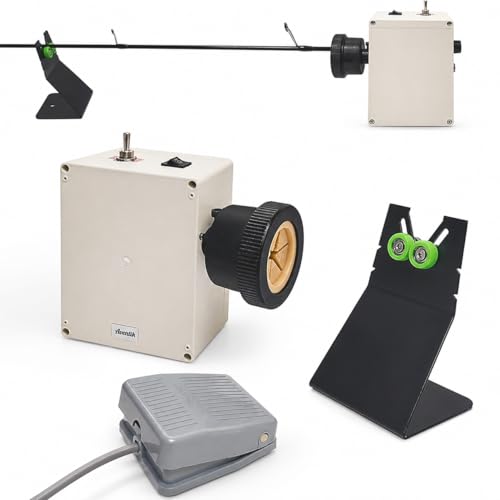
| Generic wrapping-machine kits | Motorized wrapper, stand, foot pedal, thread, epoxy | Repairs and light builds | Minimal instructions per reviewers |
What a Rod Building Kit Actually Needs
A fishing rod has a blank, handle grips, a reel seat, a butt cap, a winding check, guides, a tip top, thread and a protective finish. To assemble these you need epoxy for gluing components and a separate thread finish to coat the wraps, plus tools such as razor blades, masking tape, a handle reamer, mixing cups and sticks, small brushes and a rotating jig or drying motor that turns the rod while the finish cures. Several retailers state that their component-only kits do not include thread, epoxy or tools, so read the contents list carefully.
All-in-one kits versus supply kits
An all-in-one kit is a complete box: it removes the guesswork of choosing compatible parts. A start-up or supply kit gives you tools and consumables so you can buy any blank and components you like. All-in-one wins on simplicity; start-up kits win if you plan many builds or want a specific blank.
Motor and wrapper versus hand turning
A drying motor turns the rod slowly while epoxy cures, which helps the finish level out and avoids drips. Hand turning works but takes patience and attention for the first hour or more. A hand wrapper holds the blank and keeps thread tension steady. Most beginners find the motor and wrapper worth having.
Best Complete Kit: Mud Hole All-In-One
ShopSavvy names the Mud Hole Custom Tackle kit its overall best, citing step-by-step instructions that make it accessible even to beginners. Mud Hole offers all-in-one kits for spinning, casting, fly and ice rods, and describes its starter kits as designed for beginners to avoid the overwhelm of choosing individual items. The spinning kit won an ICAST 2025 new product award according to Mud Hole, and a retailer listing says it won Best of Category.
The spinning kit as listed includes a 7 foot medium power IS702M two-piece blank, an American Tackle reel seat with EVA grips, an SSR guide set with matching tip top and a black rubber winding check. For tools and supplies, it lists a Core Hand Wrapper, a CRB 9RPM drying motor with rod support, ProKote finish packets, ProPaste epoxy, a tip top adhesive stick, a tape reamer, a thread burnishing tool, an alcohol burner, masking tape, guide tubing, razor blades, a china marker, three spools of ProWrap thread, mixing cups, sticks and brushes, and a How to Build a Custom Fishing Rod book. The ice kit is marked as building three rods.
The limits are mostly about flexibility. You get one blank and a fixed guide layout, which is fine for a first build but less so if you want a specific action or length. If you already know you love the hobby, consider moving to a start-up kit and picking components yourself next time.
Tool-and-Supply Route: Start-Up Kits and the CRB FSB-2
Mud Hole’s Core Rod Building Start-Up Kit is an intermediate option with essential tools and supplies, the Advanced kit suits builders ready to progress, and a Global Edition focuses on supplies for international buyers. The CRB Starter Supply Kit FSB-2 is another top pick in roundups for supplies and tools. It includes the AHWS-1 Hand Wrapper, a 9RPM drying motor, ProKote finish and the Mud Hole rod building book, and one site calls it the safest entry point for complete beginners. It is a supply and tool kit, so you still need to buy a blank, reel seat, grips and guides.
This route costs more up front across components but makes the most sense if you plan to build three or more rods, because the tools carry from project to project. It also lets you match blank power and action to specific fishing, such as a light inshore spinning rod or a heavier casting rod.
Lower-Cost Complete Rod: Rod-Zilla Xi Series
Rod-Zilla sells complete component kits in its Xi series, as stocked by The Hook and Hackle Company. The spinning options include a 6 foot light power four-piece blank and 7 foot medium-light and medium-heavy three-piece blanks. Guide choices include genuine Fuji guides, AmTac Microwave guides or a Cerecoil upgrade, and the kits use a Fuji VSS reel seat with split-grip cork components. The spinning kit page lists a cork reamer, thread, flat finishing brushes, a tape measure, clear tape, glue, finish, measuring syringes, scissors and instructions. The FAQ says you supply masking tape, a marking pen, toothpicks, paper towels or rags and denatured alcohol.
Because there is no drying motor, you turn the rod by hand while the finish sets, which is cheaper and more basic. The blank carries a lifetime unlimited warranty according to the maker, with a fee to submit a claim. This is a good pick for a budget-conscious first project if you are comfortable improvising a rotating setup or already own one.
Generic Wrapping-Machine Kits
Center of Outdoor’s list is mostly generic 15-piece repair and building kits. A common version has a motorized wrapping machine, an adjustable rod stand, a foot pedal and consumables such as thread and epoxy. One reviewer said the instructions are minimal. These are better for repairs, replacing a guide or learning wrapping technique than for a full custom build, and they require you to supply the blank and components.
Pick X If: Decision Table
| If you… | Pick | Why |
|---|---|---|
| Want one box to finish your first rod | Mud Hole All-In-One kit | Blank, parts, tools and book included |
| Fish ice and want several rods | Mud Hole All-In-One Ice Kit | Marked as building three rods |
| Plan many builds with your own blanks | Core or Advanced Start-Up Kit | Reusable tools and supplies |
| Need just a wrapper, motor and finish | CRB Starter Supply Kit FSB-2 | Tool-focused, includes book |
| Want a cheaper complete rod | Rod-Zilla Xi kit | Fuji or AmTac guides, graphite blank |
| Mainly repair guides and wraps | Generic wrapping-machine kit | Wrapper and stand for small jobs |
Fit, Compatibility and Safety Notes
- Blank and reel seat fit: the reel seat bore must match the blank diameter; kits are matched, but separate components need checking against the maker’s chart.
- Guide spacing: follow the guide spacing chart or the maker’s instructions, and tape guides on and test the bend before wrapping.
- Epoxy: work in a ventilated area, wear gloves and follow the epoxy maker’s directions and cure times.
- Alcohol burner: if your kit includes one, keep it away from flammables and never refill while lit.
- Blade safety: razor blades are sharp, so cut away from your body and store them covered.
- Handle prep: a tape reamer helps shape cork or EVA bores; go slowly and test fit often.
Alternatives Worth Considering
- Buying components individually: gives complete freedom but needs research on blank power and guide size.
- Fly rod and casting kits from Mud Hole: the same all-in-one approach for different rod types.
- Local rod-building classes: many tackle shops and clubs run workshops where you can learn technique first.
- Rod repair kits: a lower-commitment way to learn wrapping on an old rod before building a new one.
Frequently Asked Questions
Is building a fishing rod cheaper than buying one?
Not always. A first build includes tools you will reuse, so the real savings come on later rods. The main benefit is custom fit, choice of components and a rod made exactly for your fishing.
How long does a first rod take?
Plan on a weekend or several evenings, since epoxy needs curing time between steps. Rushing the finish is the most common error. Follow the epoxy maker’s cure times in the instructions.
Do I need a drying motor?
It is not strictly required, but it turns the rod while the finish cures and helps it level out. Hand turning works if you are patient, as with the Rod-Zilla approach. Most all-in-one kits include a motor for this reason.
Can a beginner build a good rod?
Yes, with a well-matched kit and clear instructions. Reviewers single out Mud Hole’s step-by-step book and kit design for beginners. Expect your first wraps to look rougher than later ones.
What should I look for in a blank?
Check length, power, action, line rating and number of pieces against the fish and lures you use. Makers list these on the product page. If unsure, pick a medium power, fast action spinning blank as a versatile first rod.
What if a component breaks or I make a mistake?
Many mistakes can be fixed by removing a wrap or guide before the epoxy fully cures. Makers such as Rod-Zilla list warranty terms on blanks, so read them. For damaged blanks, contact the maker before attempting repairs.
More from Amazon
Programs that pair well with the guide above. Offers and eligibility are set by Amazon and may change.
Free shipping on eligible items, Prime Video and more. Eligible new members can start with a free trial.
Start a Prime free trialA Prime membership for ages 18-24 with a trial period. Eligibility is set by Amazon.
See Prime for Young AdultsAudiobooks and podcasts to listen to on the go. Eligible new members can start with a free trial.
Try Audible freeAd-free music streaming. Eligible new subscribers can start with a free trial.
Try Music Unlimited freeAs an Amazon Associate we earn from qualifying purchases.




Write Your Review
No reviews yet. Be the first to share your experience!