

Key takeaways
- Warm sleepers: choose lighter cotton sateen, avoid very dense finishes, and consider a fitted sheet in sateen with a more breathable flat sheet or blanket.
- Cold sleepers: choose midweight or heavyweight cotton sateen, especially in a cool room. A brushed finish can add warmth but may pill faster.
- Couples with different preferences: select a medium-weight cotton sateen around 130–150 GSM and adjust warmth with separate blankets instead of buying extremely heavy sheets.
- Humid climates: prioritize cotton or lyocell, moderate GSM, and a washable mattress protector that does not use a thick waterproof membrane unless needed.
Best Sateen Sheets for Soft, Smooth Comfort
The best sateen sheets for most sleepers are made from long-staple cotton, woven in a four-over, one-under pattern, sized with a 16-inch or deeper pocket, and weighted around 120–160 GSM; choose lighter cotton sateen for warm rooms and heavier cotton, Tencel, or bamboo sateen when you prefer a warmer, silkier bed.
Sateen is a weave, not a fiber. Its smooth surface comes from placing more threads on the top face of the fabric than in a standard percale weave. That creates the characteristic soft hand, subtle sheen, and fluid drape. The fiber underneath matters just as much: cotton, rayon made from bamboo, Tencel, linen blends, and polyester can all be woven as sateen, but they do not feel or wear the same way.
Our top picks


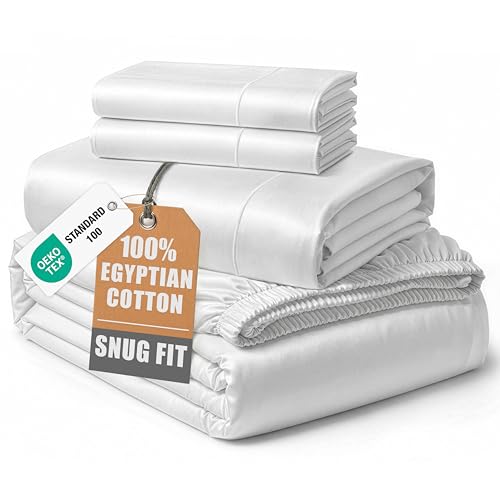

As an Amazon Associate we earn from qualifying purchases at no extra cost to you. Ratings are shown as listed on Amazon.
Best sateen sheet choice by sleeping situation
| Sleeping situation | Best specification | Why it fits | Trade-off |
|---|---|---|---|
| Warm sleeper or humid bedroom | Long-staple cotton, 110–135 GSM, 300–400 thread count | More air movement and less trapped heat than dense sateen | Less plush and may wrinkle more |
| Cold sleeper | Cotton sateen, 140–180 GSM, or a smooth lyocell blend | Heavier fabric and a close weave retain warmth | Can feel too warm in summer |
| Very soft, drapey feel | Tencel or bamboo-derived rayon sateen, about 120–170 GSM | Silky hand and fluid drape | May pill, snag, or lose shape sooner if washed roughly |
| Frequent washing | Long-staple cotton, 300–500 genuine thread count, reinforced elastic | Handles repeated laundering and becomes softer over time | Usually less sleek than regenerated-cellulose fabrics |
| Deep mattress or topper | Pocket depth at least 2 inches greater than the total mattress height | Leaves room for shrinkage and movement | Excessively deep sheets can bunch on a thin mattress |
| Lowest initial cost | Standard cotton sateen, roughly 100–130 GSM | Usually offers the best entry price | Shorter fibers and thin elastic may wear first |
Fiber type: cotton versus rayon-based sateen
Long-staple cotton
Long-staple cotton is the safest all-purpose choice. Longer fibers can be spun into smoother, stronger yarn with fewer exposed ends, so the fabric tends to resist fuzzing and remains comfortable after repeated washing. Egyptian cotton and Pima cotton describe cotton categories, but the label alone does not guarantee superior sheets. Look for clear fiber percentages, a credible manufacturer, and construction details rather than relying on the cotton name.
Cotton sateen is moderately breathable. It generally feels warmer and smoother than percale because the dense surface reduces air exchange, but it is less clammy than many synthetic fabrics. For most climates, 120–160 GSM is a useful middle range.
Tencel and bamboo-derived rayon
These regenerated cellulose fibers are known for a cool, slippery hand and strong drape. They are appealing if you dislike crisp bedding or want fabric that follows the contours of the mattress rather than sitting stiffly on top. Their smoothness can also make them feel less abrasive during movement.
The weakness is care sensitivity. High heat, harsh detergent, overloading the washer, and tumble-drying until completely dry can shorten their useful life. They may develop surface fuzz or weakened elastic sooner than well-made cotton, especially when the fabric is lightweight.
Polyester and microfiber sateen
Polyester sateen is inexpensive, wrinkle-resistant, and often warm. It can be a practical choice for guest rooms or a limited budget, but it usually has less moisture and air management than cotton or lyocell. A low price is less attractive if you sleep hot, dislike static, or want sheets that soften naturally instead of relying on a slick finish.
Weave, GSM, and thread count: what the numbers really mean
Traditional sateen uses a four-over, one-under structure, although manufacturers may use related variations. A higher float on the surface creates softness and sheen, but it also leaves more yarn exposed to abrasion. This is why a very smooth, dense sheet can show pilling or dull patches at the center of the bed before the seams fail.
GSM means grams per square meter and describes fabric weight. It is more useful than thread count for comparing lightweight and heavyweight sheets, provided the fibers and finishes are also disclosed. Around 100–130 GSM usually feels light; 130–170 GSM feels substantial; above 170 GSM may feel notably warm and heavy. GSM is not a quality score. A heavy polyester sheet can weigh more than a breathable cotton sheet without being more durable.
Thread count is the number of threads per square inch, but inflated figures can count individual plies inside a yarn. A sheet advertised as 900 thread count may use three-ply yarns and contain a much lower number of actual warp and weft threads. For practical comparison, a genuine 300–500 thread count in single-ply, long-staple cotton is often a more meaningful target than an unusually large number.
Warmth and breathability: match the sheet to the sleeper
- Warm sleepers: choose lighter cotton sateen, avoid very dense finishes, and consider a fitted sheet in sateen with a more breathable flat sheet or blanket.
- Cold sleepers: choose midweight or heavyweight cotton sateen, especially in a cool room. A brushed finish can add warmth but may pill faster.
- Couples with different preferences: select a medium-weight cotton sateen around 130–150 GSM and adjust warmth with separate blankets instead of buying extremely heavy sheets.
- Humid climates: prioritize cotton or lyocell, moderate GSM, and a washable mattress protector that does not use a thick waterproof membrane unless needed.
Sateen is not automatically hot, but its smooth, dense construction normally holds more warmth than percale. The mattress, protector, duvet, room humidity, and sleepwear can have as much effect as the sheet fiber.
Fit the pocket depth, not just the mattress size
Measure the mattress from the base to the highest sleeping surface, including a permanent topper and any thick protector. Then add at least 2 inches for tuck and shrinkage. For example, a 12-inch mattress, 3-inch topper, and 1-inch protector create a 16-inch stack. A fitted sheet with a 16-inch maximum pocket may technically fit but can pull loose; an 18-inch pocket is the safer choice.
| Mattress stack height | Recommended fitted-sheet pocket | Fit guidance |
|---|---|---|
| 8–10 inches | 10–12 inches | Use standard-depth sheets; oversized pockets may bunch |
| 11–14 inches | 14–16 inches | Best range for many modern mattresses |
| 15–17 inches | 17–19 inches | Check corner elastic and shrinkage allowance |
| 18 inches or more | 20 inches or specialty deep pocket | Confirm the actual fitted-sheet maximum, not just “deep pocket” wording |
Wash durability and ownership costs
The first parts to wear are commonly the fitted sheet’s center panel, corner elastic, and areas that rub against rough mattress protectors. Flat sheets often last longer because they experience less stretching. A smooth sateen finish can also lose some shine after washing; that is normal and does not necessarily mean the fabric has failed.
Wash sheets separately or with similarly lightweight items so zippers and heavy towels do not abrade the surface. Use cool or warm water, a modest amount of liquid detergent, and avoid chlorine bleach unless the care label specifically permits it. Fabric softener can coat fibers and reduce absorbency. Remove sheets promptly, dry on low or medium heat, and take them out while slightly damp if you want fewer wrinkles.
A useful ownership calculation is to compare cost per wash rather than purchase price alone. A $120 set washed once per week for three years is used about 156 times, or approximately $0.77 per wash. A $60 set that lasts one year costs about $1.15 per wash at the same schedule. Actual value depends on fit, comfort, and whether the set needs replacing early because of pilling or failed elastic.
What to look for before buying
- Fiber percentages stated clearly, rather than only a marketing name.
- GSM or a useful fabric-weight description.
- Realistic thread count, preferably with single-ply construction identified.
- Fitted-sheet pocket depth and whether it is a maximum or recommended mattress height.
- Full elastic around the fitted-sheet edge, not only elastic at the corners.
- Care instructions that match your washing routine.
- A return or replacement policy for sizing problems, loose threads, or early defects.
For the best balance of softness, durability, and year-round use, start with long-staple cotton sateen in the 120–160 GSM range, a credible 300–500 thread-count specification, and a pocket sized at least 2 inches beyond your complete mattress stack. Choose lyocell or bamboo-derived rayon for a silkier, more fluid feel, lighter cotton for warm sleepers, and heavier sateen only when added warmth is worth reduced breathability.


Write Your Review
No reviews yet. Be the first to share your experience!