

Our Top Picks
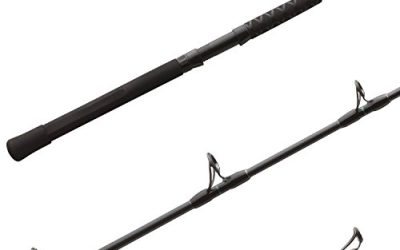
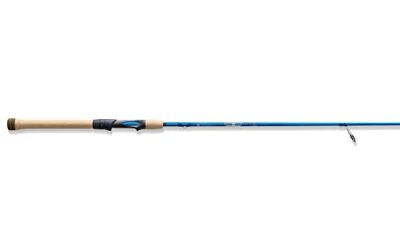
The best saltwater fishing rod for most inshore anglers is the St. Croix Mojo Inshore Spinning 7-foot medium-heavy: a one-piece SCIII carbon rod rated for 10- to 20-pound line that covers redfish, speckled trout, snook and flounder on a single setup, with corrosion-resistant guides and a 5-year warranty behind it. Anglers who want the lowest tier boat rod should look at the Ugly Stik Bigwater 7-foot medium, a graphite and fiberglass rod built to take abuse on a boat at the entry tier. Anglers who want the strongest boat rod here should look at the PENN Carnage III Boat 7-foot medium-light, built on PENN’s SLS3 blank with Fuji K-series guides. Anglers who want a dedicated jigging rod should look at the Okuma Cedros Jigging 7-foot medium-heavy, an E-glass rod built to absorb the shock of vertical jigging with braid. Anglers who want two rods in one should look at the KastKing Perigee II twin-tip 7-foot spinning rod, which ships with a medium tip and a medium-heavy tip on one butt section.
This guide compares five saltwater rods on the figures that decide whether a rod survives the salt and fits the fishing: length and power, blank material, guide and reel-seat hardware, and the line and lure ratings printed on the blank. Every figure below comes from the manufacturers’ published specification data and listing data, so you can match a rod to the water you fish without guessing.
As an Amazon Associate, we earn from qualifying purchases.
Table of Contents
- Why a Saltwater Rod Is Different
- How to Choose a Saltwater Fishing Rod
- Quick Comparison
- The 5 Best Saltwater Fishing Rods
- Safety and Checks Before You Order
- Frequently Asked Questions
- Conclusion
- Product and ASIN Reference
Why a Saltwater Rod Is Different
A saltwater rod is judged on corrosion resistance first and sensitivity second, because salt water attacks every metal part on a rod: guides, reel seats, reel-seat hoods and the blank itself. A freshwater rod can use standard chrome guides and a plain reel seat, and it will last for years on a lake. The same rod fished in salt water will show rust on the guide frames within a season, and a seized reel seat will lock a reel to the rod. The five rods in this guide are all built for salt water, with stainless steel guide frames, corrosion-resistant reel seats and blanks rated for the line weights saltwater fish demand.
Length is the second difference. Saltwater fishing splits into distinct uses that need different lengths. Inshore rods run about 7 feet, because that length casts accurately around docks, grass flats and mangrove edges while still giving enough leverage to turn a redfish. Boat rods run 7 to 7 feet 6 inches, because a boat rod works close to the boat and needs lifting power more than casting distance. Jigging rods run 6 feet 6 inches to 7 feet, because a short rod moves a jig with less effort and fights a fish straight up and down. The rods here run from 6 feet 6 inches to 7 feet 6 inches in the wider family, and every one of them is sized for its use rather than for a generic freshwater length.
The third difference is power and line rating. Saltwater fish pull harder than freshwater fish of the same size, and the line ratings show it. The rods in this guide run from 10-pound line on the lightest inshore pick up to 80-pound line on the jigging pick, and the lure ratings run from half an ounce to 7 ounces. A rod rated for 10- to 20-pound line is the inshore answer for trout and redfish. A rod rated for 20- to 40-pound line is the boat answer for snapper, grouper and kingfish. A rod rated for 30- to 80-pound line is the jigging answer for reef fish and amberjack. Match the rating to the fish, not to the rod you already own, because a rod fished above its line rating will break at the worst moment.
How to Choose a Saltwater Fishing Rod
Start With the Use: Inshore, Boat or Jigging
Inshore rods are the all-purpose saltwater rod, and two of the five picks here are inshore rods for that reason. An inshore rod is a 7-foot spinning rod in medium or medium-heavy power, built to cast soft plastics, jigs and topwater lures to redfish, speckled trout, snook and flounder around structure. The St. Croix Mojo Inshore and the KastKing Perigee II twin-tip in this guide are the inshore picks, and they cover the widest range of saltwater fishing between them. If the angler fishes from shore, from a kayak, or from a flats boat, an inshore rod is the right starting point.
Boat rods are built for fishing from a boat, where the rod works vertically more than it casts. A boat rod is shorter and stronger than an inshore rod, with a heavier line rating and a gimbal butt that sits in a rod holder or against a fighting belt. The Ugly Stik Bigwater and the PENN Carnage III Boat in this guide are the boat picks, and they are the right answer for bottom fishing, live bait and trolling from a boat. The trade is casting distance: a boat rod does not cast as far as an inshore rod, and it is not the pick for sight-casting to fish on a flat.
Jigging rods are built for vertical jigging, where the rod lifts a metal jig off the bottom and the fish hits on the fall. A jigging rod is short, stiff and strong, with a blank that absorbs the shock of braid, which does not stretch. The Okuma Cedros Jigging rod in this guide is the jigging pick, and it is the right answer for reef fishing and offshore jigging. The trade is versatility: a jigging rod is a specialist tool, and it is not the pick for casting lures or fishing live bait on a flat.
Length and Power Decide the Setup
Rod length is measured in feet, and the length decides casting distance and leverage. A 7-foot rod casts farther and more accurately than a 6-foot rod, and it is the standard inshore length. A 6-foot 6-inch rod gives more lifting power and less tip movement, which is why jigging rods run short. A 7-foot 6-inch rod gives more reach for casting from a boat, which is why some boat rods run long. The rods in this guide cover the range from 6 feet 6 inches to 7 feet 6 inches across the family, and every pick is sized for its use.
Power is how much force it takes to bend the rod, and it runs from light to extra heavy. A medium power rod bends easily and casts light lures well, which suits inshore fishing for trout and redfish. A medium-heavy power rod bends less and lifts more, which suits boat fishing and larger fish. A heavy power rod is the answer for the largest inshore fish and for offshore jigging. Action is where along the blank the rod bends: a fast action bends near the tip, which gives a quick hookset, and a moderate action bends deeper, which cushions a hard run. The rods here are fast or moderate fast, which is the right action for setting a hook on a saltwater fish that hits hard.
Blank Material and Guides Decide Durability
Blank material is the material the rod blank is built from, and it decides weight, sensitivity and durability. Graphite and carbon blanks are light and sensitive, so the angler feels the bite, but they are brittle and can break if the rod is high-sticked, which is pulling the rod past vertical under load. Fiberglass blanks are heavier and less sensitive, but they bend deeply without breaking, which is why boat rods and jigging rods use fiberglass or a fiberglass blend. The St. Croix Mojo Inshore and the KastKing Perigee II use carbon blanks for sensitivity. The Ugly Stik Bigwater uses a graphite and fiberglass blend for toughness. The PENN Carnage III uses a thin-diameter SLS3 blank for strength at low weight. The Okuma Cedros uses an E-glass blank for shock absorption under braid.
Guides are the rings the line runs through, and they decide whether the line flows freely and whether the rod survives the salt. Stainless steel guide frames resist corrosion, and ceramic inserts protect the line from wear. Fuji guides are the standard on premium rods: the PENN Carnage III uses Fuji K-series guides with silicon carbide inserts, which are tangle-free and hard enough to handle braid. The St. Croix Mojo Inshore uses aluminum-oxide rings in stainless frames. The Ugly Stik Bigwater uses one-piece stainless steel guides, which have no insert to crack and no frame joint to corrode. The Okuma Cedros uses ALPS stainless steel guides with Zirconium inserts. Rinse the guides with fresh water after every saltwater trip, because even stainless steel will pit if salt is left to dry on it.
Spinning, Casting or Conventional
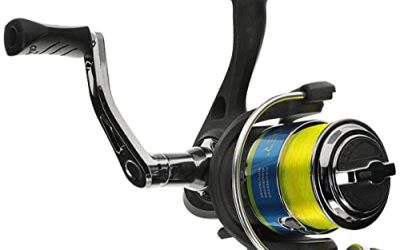
Spinning rods hang the reel under the rod, and four of the five picks here are spinning rods for that reason. A spinning rod casts light lures farther than a casting rod, handles a wider range of line weights, and is the rod type that most saltwater anglers learn first. The Mojo Inshore, the Bigwater, the Carnage III Boat and the Perigee II twin-tip are all spinning rods, and they cover inshore, boat and general saltwater fishing between them.
Casting and conventional rods carry the reel on top of the rod, and they are the answer for heavy lures, for trolling and for offshore jigging with a conventional reel. The Okuma Cedros Jigging rod in this guide is listed as a spinning jigging rod, and it is the pick for anglers who jig with a spinning reel. An angler who fishes a conventional reel should look for the conventional version of the same series rather than forcing a spinning rod to carry a conventional reel, because the guide layout and reel seat are built for one reel type.
Quick Comparison
| Product | Length | Power | Blank | Tier |
|---|---|---|---|---|
| St. Croix Mojo Inshore Spinning | 7 ft | Medium heavy | SCIII carbon | Premium |
| Ugly Stik Bigwater Spinning | 7 ft | Medium | Graphite and fiberglass | Budget |
| PENN Carnage III Boat Spinning | 7 ft | Medium light | SLS3 | Premium |
| Okuma Cedros Jigging Spinning | 7 ft | Medium heavy | E-glass | Mid-range |
| KastKing Perigee II Twin-Tip Spinning | 7 ft | Medium and medium heavy | Toray 24-ton carbon | Budget |


The 5 Best Saltwater Fishing Rods
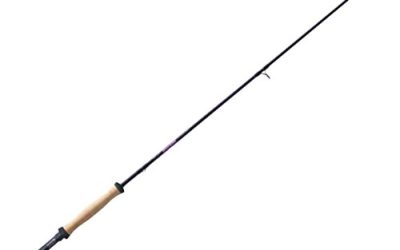
1. St. Croix Mojo Inshore Spinning 7-Foot Medium-Heavy — Best Overall
Tier: Premium
The St. Croix Mojo Inshore Spinning 7-foot medium-heavy is the best overall saltwater rod in this guide, and it is the rod most inshore anglers should start with. It is a one-piece spinning rod built on a premium SCIII carbon blank, with a fast action, a 10- to 20-pound line rating and a half-ounce to 1-and-a-quarter-ounce lure rating. The SCIII carbon blank is light and sensitive, so the angler feels a trout tap a soft plastic on a grass flat, and the fast action sets the hook before the fish spits the lure. The rod weighs 6.4 ounces, which is light enough to cast all day without tiring the wrist.
The premium case is the blank and the build quality at a tier an inshore angler can justify. St. Croix builds the Mojo Inshore with Integrated Poly Curve mandrel technology, which removes transitional points in the blank for smoother loading, and Advanced Reinforcing Technology, which adds strength without adding weight. The guides are aluminum-oxide rings in stainless steel frames, which resist salt corrosion and protect the line. The Fuji DPS reel seat holds the reel firmly, the cork and EVA grip is comfortable in a wet hand, and the rubber gimbal protects the butt end. The 5-year warranty is backed by St. Croix’s Superstar Service, which is the strongest warranty in this guide.
The trade against the budget picks below is the tier. The Mojo Inshore costs more than the Bigwater or the Perigee II, and an angler who fishes salt water twice a year may not feel the difference in sensitivity that the SCIII blank gives. The rod is also a one-piece rod, so it does not break down for travel, and it needs a 7-foot rod tube or a truck bed to transport. For an angler who fishes inshore regularly, or who wants one rod that will still be the right tool a year from now, those are the right trades.
One flag to note: the Amazon listing description says SCII carbon while its bullets say SCIII, and this guide uses St. Croix’s own SCIII figure from the maker’s model table. The listing is sold by Amazon.com, and a roundup that checked it on November 12, 2026 found it new and in stock with a featured offer. Confirm the exact model on the listing before ordering, because St. Croix makes the 7-foot medium-heavy in fast and moderate actions.
Choose the St. Croix Mojo Inshore if you want the best all-around inshore rod in this guide, fish redfish, trout, snook and flounder on one setup, and value a sensitive carbon blank with a strong warranty. Skip it if you want the lowest tier rod available, where the Ugly Stik Bigwater below is the budget boat answer, or if you want two powers in one rod, where the KastKing Perigee II twin-tip below is the two-tip pick.
Specs
- Type: spinning rod
- Length: 7 ft
- Power: medium heavy
- Action: fast
- Pieces: 1
- Line rating: 10 to 20 lb
- Lure rating: one half to 1 and one quarter oz
- Blank: SCIII carbon
- Guides: aluminum-oxide rings, stainless steel frames
- Reel seat: Fuji DPS
- Grip: cork and EVA with rubber gimbal
- Rod weight: 6.4 oz
- Warranty: 5 years
- Best for: inshore redfish, trout, snook and flounder
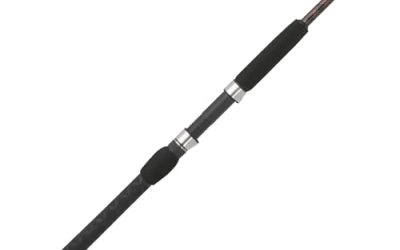
2. Ugly Stik Bigwater Spinning 7-Foot Medium — Best Budget Boat Rod
Tier: Budget
The Ugly Stik Bigwater Spinning 7-foot medium is the budget boat rod in this guide, and it is the pick for anglers who want a saltwater rod that can take abuse. It is a one-piece spinning rod built on Ugly Stik’s Ugly Tech construction, which is a combination of graphite and fiberglass, with one-piece stainless steel Ugly Tuff guides and a Fuji reel seat. The graphite and fiberglass blend is the point: graphite gives the rod sensitivity, and fiberglass gives it the toughness to survive being stepped on, dropped on a deck, or bent hard by a fish under the boat. Ugly Stik’s Clear Tip design adds sensitivity to the tip without giving up the toughness of the blank.
The budget case is durability at the entry tier. A boat rod lives a hard life: it is stored in a rod holder in the sun, it is banged against the gunwale, it is fished by guests who do not know how to treat a rod, and it is rinsed in a hurry or not at all. The Bigwater is built for that life, with a 10-year rod warranty behind it. The 7-foot medium model is rated for 10- to 20-pound line, which covers bottom fishing for sea bass and triggerfish, live bait for snapper, and general boat fishing on the inshore and nearshore grounds. An outdoor publication’s reviewer keeps a set of 7-foot medium-heavy Bigwater rods on his boat for bottom fishing, and the series is the low-cost boat rod that working boats reach for.
The trade against the Mojo Inshore above is sensitivity and weight. A graphite and fiberglass blank is heavier and less sensitive than a pure carbon blank, and the same reviewer lists “less sensitive than graphite” as the rod’s con. The Bigwater family also has many lengths and powers on one parent listing, so confirm the exact model on the selector before ordering: this pick is the 7-foot medium spinning rod, and other variants run from 7 feet to 9 feet in spinning and casting versions. The listing record for this model shows an Amazon price record from February 2026, so confirm the live offer before ordering.
Choose the Ugly Stik Bigwater if you want the toughest rod in this guide at the entry tier, fish from a boat with guests or in rough conditions, and value a rod that survives abuse over one that feels light in the hand. Skip it if you want the most sensitive inshore rod available, where the St. Croix Mojo Inshore above is the premium answer, or if you want the strongest boat rod here, where the PENN Carnage III Boat below is the heavier pick.
Specs
- Type: spinning rod
- Length: 7 ft
- Power: medium
- Pieces: 1
- Line rating: 10 to 20 lb
- Blank: graphite and fiberglass
- Guides: one-piece stainless steel
- Reel seat: Fuji
- Tip: Clear Tip design
- Warranty: 10 years
- Best for: boat fishing and bottom fishing at a budget tier
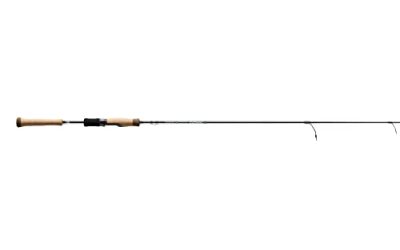
3. PENN Carnage III Boat Spinning 7-Foot Medium-Light — Best Premium Boat Rod
Tier: Premium
The PENN Carnage III Boat Spinning 7-foot medium-light is the premium boat rod in this guide, and it is the pick for anglers who want a thin, strong boat rod that still feels light in the hand. It is a one-piece spinning rod built on PENN’s SLS3 blank construction, which is a thin-diameter blank that stays light while holding up to heavy boat fishing. The 7-foot medium-light model is rated for 20- to 40-pound line, which covers snapper, grouper, kingfish and cobia on live bait and bottom rigs, and it carries Fuji K-series tangle-free guides with silicon carbide inserts, which handle braid without grooving and shed wind knots on the cast.
The premium case is the blank and the guides at a tier a serious boat angler can justify. The SLS3 blank is thinner than the Bigwater’s graphite and fiberglass blank, so the rod weighs less in the hand on a long day, and the Fuji K-series guides are the best guides in this guide: silicon carbide inserts are harder than aluminum oxide, so they last longer under braid, and the K-frame shape keeps line from wrapping the guide on a slack cast. The rod is sold as a boat rod, not an inshore rod, and its 20- to 40-pound line rating is the right range for nearshore boat fishing, where the fish are bigger and the structure is heavier than on the flats.
The trade against the Bigwater above is the tier and the line rating. The Carnage III costs more than the Bigwater, and its 20- to 40-pound rating is heavier than the Bigwater’s 10- to 20-pound rating, so it is not the pick for light inshore fishing. The freshness flag is also real: the most recent listing record for this model shows a third-party offer from December 2025, with older Amazon prices from 2024, so confirm the live offer and the seller before ordering. PENN’s own store lists the model in stock, which supports the listing, but the live page is the final check.
Choose the PENN Carnage III Boat if you want the strongest boat rod in this guide, fish nearshore for snapper, grouper and kingfish, and value a thin blank with premium guides. Skip it if you want the lowest tier boat rod available, where the Ugly Stik Bigwater above is the budget answer, or if you fish light inshore tackle, where the St. Croix Mojo Inshore above is the 10- to 20-pound pick.
Specs
- Type: spinning rod
- Length: 7 ft
- Power: medium light
- Pieces: 1
- Line rating: 20 to 40 lb
- Blank: SLS3 construction
- Guides: Fuji K-series, silicon carbide inserts
- Best for: nearshore boat fishing for snapper, grouper and kingfish
4. Okuma Cedros Jigging Spinning 7-Foot Medium-Heavy — Best Jigging Rod
Tier: Mid-range
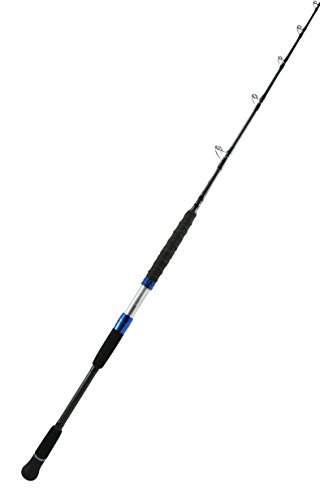
The Okuma Cedros Jigging Spinning 7-foot medium-heavy is the jigging rod in this guide, and it is the pick for anglers who fish metal jigs vertically from a boat. It is a one-piece spinning rod built on a rugged E-glass blank, with ALPS high-rise 316 stainless steel guide frames and low-friction Zirconium inserts. The E-glass blank is the point: glass bends deeply and absorbs shock, which matters when jigging with braid, because braid does not stretch and the rod has to absorb the strike. A graphite rod fished the same way will snap on a hard hit; an E-glass rod bends and holds.
The jigging case is shock absorption and pulling power. The Cedros jigging series is built for big saltwater fish, with a split-grip EVA handle that gives leverage under load and a pyramid-shaped anodized aluminum reel seat that locks the reel in place. The high-rise ALPS guides keep the line off the blank on the lift, which reduces line slap and tangling, and the Zirconium inserts handle braid without grooving. The rod carries a limited lifetime warranty from the maker. The family is rated for 15- to 50-pound line, which covers reef fishing for snapper and grouper, jigging for amberjack, and trolling for mahi and wahoo.
The trade against the inshore and boat rods above is versatility. A jigging rod is a specialist tool: it is short, stiff and heavy, and it is not the pick for casting lures to fish on a flat or for fishing live bait under a float. The freshness flag is also real: the listing record for this model shows an Amazon price from June 2025, with the last tracked date in August 2024, so confirm the live offer before ordering. The rod is also a one-piece rod, so it needs a 7-foot rod tube or a truck bed to transport.
Choose the Okuma Cedros Jigging rod if you fish metal jigs vertically from a boat, target reef fish and amberjack, and value a shock-absorbing E-glass blank over a sensitive carbon blank. Skip it if you want one rod for all saltwater fishing, where the St. Croix Mojo Inshore above is the all-around answer, or if you fish light inshore tackle, where the KastKing Perigee II twin-tip below is the lighter pick.
Specs
- Type: spinning jigging rod
- Length: 7 ft
- Action: medium heavy
- Pieces: 1
- Line rating: 15 to 50 lb, family range
- Blank: E-glass
- Guides: ALPS 316 stainless steel, Zirconium inserts
- Handle: split-grip EVA
- Reel seat: anodized aluminum
- Warranty: limited lifetime
- Best for: vertical jigging from a boat
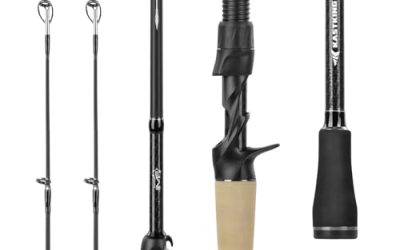
5. KastKing Perigee II Twin-Tip Spinning 7-Foot Medium and Medium-Heavy — Best Twin-Tip Value
Tier: Budget
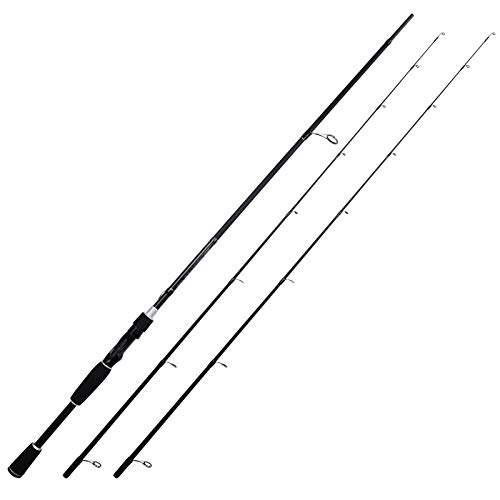
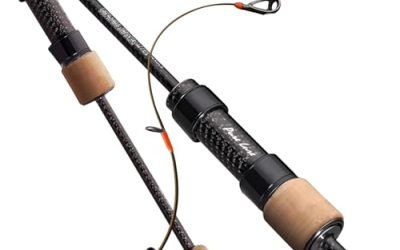
The KastKing Perigee II Twin-Tip Spinning 7-foot rod is the two-rods-in-one pick in this guide, and it is the pick for anglers who want one rod that covers two powers. It is a two-piece spinning rod built on a Toray 24-ton carbon matrix blank, with Fuji O-ring line guides, and it ships with two tips on one butt section: a medium tip and a medium-heavy tip. Swap the tip and the rod changes power without changing the reel, the line or the setup. The medium tip is the inshore answer for trout and redfish on light lures, and the medium-heavy tip is the answer for larger fish and heavier lures on the same trip.
The value case is two powers at the budget tier. A twin-tip rod is the cheapest way to cover two fishing styles with one reel and one rod tube, and the Perigee II is the lowest tier rod in this guide. The Toray 24-ton carbon blank is light for its tier, and the Fuji O-ring guides handle braid and monofilament without grooving. KastKing rates the Perigee II for saltwater and freshwater use, which is why it belongs in a saltwater guide: the guides and reel seat are built to handle salt, and the rod is rated for bass, trout, walleye, catfish and saltwater species. The two-piece design breaks down for travel, which is the one transport advantage in this guide: the other four rods are one-piece rods that need a long tube.
The trade against the Mojo Inshore above is sensitivity and build quality. A two-piece rod has a ferrule joint that adds weight and reduces sensitivity, and a budget carbon blank is less refined than a premium SCIII blank. The twin-tip design also asks the angler to carry a spare tip, which is one more part to lose. The listing record for this model is an Amazon listing block from about 201 days ago, so confirm the live offer and the exact variant before ordering, because the Perigee II family runs to 42 sizes and the listing covers many of them on one page. This pick is the 7-foot spinning twin-tip with a medium tip and a medium-heavy tip.
Choose the KastKing Perigee II twin-tip if you want two powers in one rod at the budget tier, travel with your rod, and value versatility over sensitivity. Skip it if you want the most sensitive inshore rod available, where the St. Croix Mojo Inshore above is the premium answer, or if you want a one-piece rod with no ferrule joint, where the Ugly Stik Bigwater above is the budget one-piece pick.
Specs
- Type: spinning rod, twin-tip
- Length: 7 ft
- Power: medium tip and medium-heavy tip
- Action: fast
- Pieces: 2 plus extra tip
- Blank: Toray 24-ton carbon
- Guides: Fuji O-ring
- Best for: inshore fishing with two powers in one rod
Safety and Checks Before You Order
No CPSC recall covers saltwater fishing rods as a product class, and none of the five rods in this guide is subject to a recall. The fishing recalls on record are narrow, and they are worth knowing about precisely so their scope is not confused with the picks here. In 2018, Shimano recalled the Stella FJ spinning reel, a premium reel built for a different class of angler, because of a defect in that model only. The Stella FJ is not in this guide, and none of the rods here shares its design. In 2013, Orvis recalled Battenkill and Mirage fly reels, which are fly reels with a completely different mechanism from a spinning rod, and none of the picks here is a fly rod.
The children’s fishing recalls are also worth scoping, because rods are often bought for young anglers. In April 2023, Lil Anglers recalled about 78,500 children’s fishing rods sold with Kid Casters No Tangle Combos, because the rods contained lead above the federal limit. In April 2005, Zebco recalled children’s fishing poles with cartoon-character reels, because the paint on the rods contained lead, and in March 2009, Zebco recalled about 2,700 Advanced Youth rod-and-reel combo sets with orange reels, for the same reason. In June 2005, Shakespeare recalled about 438,000 children’s fishing kits with bright red and yellow rods, because the paint on the rods contained lead, and in March 2009, Shakespeare recalled about 2,600 Casting Game and Fishing Kits, because a surface coating on the rod contained high levels of lead. Every one of those recalls covers a children’s rod or combo sold years ago. The five rods in this guide are adult saltwater rods sold on their own, and none of them is covered by any of those recalls.
The other fishing recalls on record are for different products entirely. In 2021, Rapala recalled its rechargeable fillet knives, because the batteries could overheat, which is a fillet knife issue, not a rod issue. In March 2023, YETI recalled its Hopper M30 and M20 soft coolers and its SideKick Dry gear case, because the magnet closures could fail, which is a cooler issue. In February 2025, Igloo recalled its 90-quart Flip and Tow rolling cooler, because the tow handle could pinch a finger, which is a cooler issue. None of those products is a rod, and none of the rods in this guide is covered.
The standing safety issue with a saltwater rod is not a recall but the salt itself. Salt water corrodes guides, reel seats and reel-seat hoods, and a rod that is not rinsed will seize up within a season. Rinse every rod with fresh water after every saltwater trip, dry it before storing it, and check the guides for pitting and the reel seat for corrosion before the next trip. Before ordering, run three checks. First, rods are sold in multi-variant listings with many lengths and powers on one page, so confirm the exact length, power and action on the variant you select against the figures in this guide: the Mojo Inshore 7-foot medium-heavy, the Bigwater 7-foot medium, the Carnage III Boat 7-foot medium-light, the Cedros Jigging 7-foot medium-heavy, and the Perigee II twin-tip 7-foot medium and medium-heavy are each one variant among many. Second, confirm the live offer on the Carnage III Boat and the Cedros Jigging rod, because their listing records rest on older or third-party evidence. Third, never high-stick a carbon rod, which is pulling the rod past vertical under load, because a carbon blank will snap where a fiberglass blank will bend.
Frequently Asked Questions
What is the best all-around saltwater fishing rod?
A 7-foot medium-heavy spinning rod is the all-around answer for saltwater fishing, and the St. Croix Mojo Inshore in this guide is that rod: 7 feet, medium-heavy power, fast action, rated for 10- to 20-pound line, which covers redfish, speckled trout, snook and flounder on one setup. Pair it with a 3000- or 4000-class spinning reel, spool it with 15- to 20-pound braid and a fluorocarbon leader, and it covers inshore fishing from shore, from a kayak and from a flats boat. A boat angler who fishes vertically should look at the PENN Carnage III Boat instead, and a jigging angler should look at the Okuma Cedros Jigging rod.
Should I buy a one-piece or a two-piece saltwater rod?
A one-piece rod is the better fishing tool, because it has no ferrule joint to add weight or reduce sensitivity, and four of the five rods in this guide are one-piece rods for that reason. A two-piece rod is the better travel tool, because it breaks down to half its length and fits in a car trunk or a rod tube, and the KastKing Perigee II twin-tip in this guide is the two-piece pick. If the rod lives in a truck bed or a boat rod holder, buy one-piece. If the rod flies in a suitcase or rides in a car trunk, buy two-piece and accept the small loss in sensitivity.
How do I keep a saltwater rod from corroding?
Rinse the rod with fresh water after every saltwater trip, paying attention to the guides, the reel seat and the reel-seat hoods, where salt collects. Dry the rod before storing it, and store it out of the sun, because ultraviolet light degrades the blank finish and the grip. Check the guides for pitting by running a cotton ball through each guide: if the cotton snags, the guide insert is chipped and will cut line, and the guide should be replaced. Loosen the reel-seat hoods before storing the rod, because a reel seat left tight in salt air can seize.
What line should I use on a saltwater rod?
Braid is the standard mainline for saltwater fishing, because it is thin for its strength and casts far, and the rods in this guide are all rated for braid as well as monofilament. Spool braid in the test the rod is rated for, then tie on a fluorocarbon leader of about 3 feet, because fluorocarbon is harder for fish to see and more resistant to abrasion around oyster shells and dock pilings. Monofilament is the right first line for a beginner, because it is cheap, forgiving and easy to knot, and it stretches enough to cushion a sudden run. Fluorocarbon as a mainline is stiffer and needs more careful spooling, so it is a second-season line rather than a first-season line.
Conclusion
Each of these five rods solves a different saltwater problem. The St. Croix Mojo Inshore is the best overall pick, a sensitive SCIII carbon inshore rod at the premium tier with a 5-year warranty. The Ugly Stik Bigwater is the budget boat answer, a tough graphite and fiberglass rod at the entry tier with a 10-year warranty. The PENN Carnage III Boat is the premium boat answer, a thin SLS3 blank with Fuji K-series guides rated for 20- to 40-pound line. The Okuma Cedros Jigging rod is the jigging answer, an E-glass rod built to absorb the shock of braid. The KastKing Perigee II twin-tip is the value pick, two powers in one rod at the budget tier. Pick by the water you fish and the fish you target, confirm the exact variant and the live offer before you order, and any of them will arrive ready to be rigged and fished.
More from Amazon
Programs that pair well with the guide above. Offers and eligibility are set by Amazon and may change.
Free shipping on eligible items, Prime Video and more. Eligible new members can start with a free trial.
Start a Prime free trialA Prime membership for ages 18-24 with a trial period. Eligibility is set by Amazon.
See Prime for Young AdultsAudiobooks and podcasts to listen to on the go. Eligible new members can start with a free trial.
Try Audible freeAd-free music streaming. Eligible new subscribers can start with a free trial.
Try Music Unlimited freeAs an Amazon Associate we earn from qualifying purchases.
Write Your Review
No reviews yet. Be the first to share your experience!