

Key takeaways
- 300–800 lumens: suitable for steps, paths, and small doors.
- 800–1,500 lumens: useful for porches, sheds, and compact work areas.
- 1,500–3,000 lumens: a versatile range for docks, ramps, and medium yards.
- 3,000–8,000 lumens: better for large yards, boat storage, and broad security coverage.
The best dusk to dawn outdoor lights for most homes and fishing properties are hardwired LED fixtures with at least 1,500 lumens, a sealed weather-resistant housing, and an adjustable photocell or motion sensor; solar models suit remote paths, while low-lumen pathway lights work better for navigation than security.
Choosing by brightness alone is a mistake. A useful outdoor light must match the area it covers, the available power, the mounting surface, and how much maintenance you are willing to accept. Around a dock, shed, boat ramp, or tackle-storage area, sensor reliability and weather protection matter as much as raw output.
Our top picks
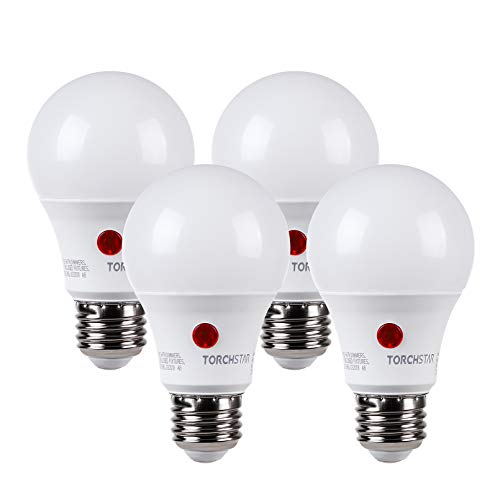


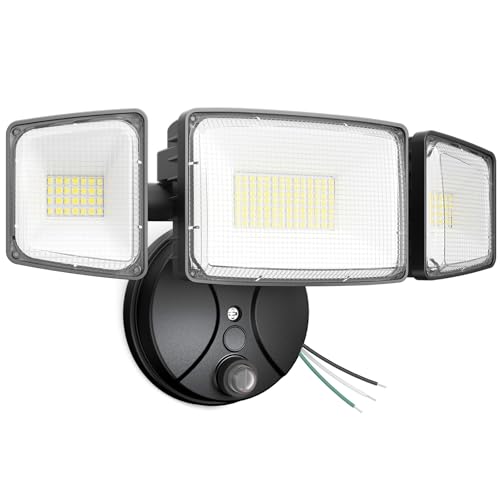
As an Amazon Associate we earn from qualifying purchases at no extra cost to you. Ratings are shown as listed on Amazon.
Best dusk to dawn outdoor lights by situation
| Situation | Best light type | Recommended output | Why it fits | Typical market range |
|---|---|---|---|---|
| Small porch, doorway, or tackle shed | Hardwired wall lantern or compact security light | 800–1,500 lumens | Enough light for keys, locks, and close-range movement without excessive glare | $30–$100 |
| Boat ramp or dock approach | Hardwired floodlight with adjustable heads | 2,000–4,000 lumens | Wide, controllable coverage and dependable all-night operation | $60–$180 |
| Large yard, fish-cleaning station, or equipment area | LED area light or dusk-to-dawn security floodlight | 3,000–8,000 lumens | Projects light across a broad working area and reduces dark corners | $100–$350 |
| Remote trail or shoreline without wiring | Solar LED fixture with separate panel | 300–1,500 lumens | Installation is flexible, but performance depends on sun exposure and battery size | $25–$150 |
| Path, steps, or low-glare dock edge | Shielded pathway or bollard lights | 100–500 lumens per fixture | Guides footing and preserves night vision better than a bright floodlight | $20–$120 per fixture |
Hardwired floodlights: the dependable choice for critical areas
For a frequently used dock, boat ramp, or outbuilding, a line-powered LED floodlight is usually the strongest choice. It does not depend on daily sunlight, and its brightness remains consistent during long winter nights. Look for a fixture rated at least IP65: the first 6 indicates dust protection, while the 5 indicates protection from water jets. IP66 provides stronger water-jet resistance. Fixtures installed directly over exposed water benefit from a gasketed housing and corrosion-resistant aluminum or high-impact polycarbonate construction.
A 2,000- to 4,000-lumen fixture with two adjustable heads is a practical range for many fishing properties. Aim one head along the approach and the other across the working area. Two medium heads often produce more useful coverage than one very bright, fixed beam because they reduce shadows behind boats, coolers, and gear.
Sensor performance matters more than advertised range
A photocell turns the light on at night and off in daylight. A motion sensor adds a second function: it can increase brightness when someone approaches or reduce the light when the area is empty. For all-night lighting, confirm that the fixture offers a true dusk-to-dawn mode rather than motion-only operation.
Sensor range is commonly listed as 40 to 70 feet, but mounting height, temperature, movement direction, and obstructions change the result. A person walking directly toward a passive infrared sensor may be detected later than someone crossing its field of view. Mount a sensor about 6 to 10 feet high, point it across the expected walking route, and keep it away from heaters, dryer vents, reflective water surfaces, and moving tree branches.
Solar lights: convenient, but size the battery for the season
Solar lighting avoids trenching and is useful along remote shoreline paths or at a detached storage area. Its weakness is energy storage. A fixture that performs well after a sunny summer day may dim early after several cloudy days, especially in winter when nights are longer and the panel receives less direct light.
For dependable overnight operation, compare battery capacity rather than lumens alone. A 1,500-lumen solar light may advertise that output as a brief motion-triggered maximum, while its all-night setting may be only 100 to 300 lumens. A separate panel, lithium battery, and replaceable battery compartment are valuable advantages. Position the panel toward the strongest available sunlight, not necessarily in the same direction as the light beam.
As a rough example, a 20-watt hardwired LED used for 12 hours consumes 0.24 kilowatt-hours per night. At an electricity rate of $0.18 per kilowatt-hour, that costs about 4.3 cents per night, or approximately $16 per year. A solar fixture has almost no electricity cost, but its battery may need replacement every two to five years, and the panel can lose output when dirty or shaded.
Coverage, color, and glare: the overlooked buying decisions
Lumens describe total light output, not how evenly the light reaches the ground. Beam angle is equally important. A narrow 40-degree beam can throw light far down a ramp but leave the sides dark. A 100- to 120-degree beam spreads light across a yard or work area but may not reach a distant gate.
- 300–800 lumens: suitable for steps, paths, and small doors.
- 800–1,500 lumens: useful for porches, sheds, and compact work areas.
- 1,500–3,000 lumens: a versatile range for docks, ramps, and medium yards.
- 3,000–8,000 lumens: better for large yards, boat storage, and broad security coverage.
Color temperature also affects usability. Warm white light around 2,700–3,000K is comfortable near a house and produces less harsh glare. Neutral white around 3,500–4,000K gives a clearer working appearance without the stark blue cast of many 5,000–6,500K fixtures. Near water, avoid aiming an unshielded high-output light directly across the surface; reflections can reduce visibility and disturb neighbors or wildlife.
Mounting and weather details that determine service life
Wall mounting is simplest when a junction box and suitable wiring already exist. Eave mounting protects the fixture from direct rain and often gives the sensor a better view. Pole or post mounting covers open yards but requires a stable foundation and a weatherproof cable route. For solar models, a split-panel design lets you mount the lamp under an eave while placing the panel in full sun.
Look for stainless-steel or coated mounting hardware, sealed cable entries, and a fixture designed for outdoor temperatures. A high IP rating does not automatically mean the light can withstand salt spray, impact from gear, or constant condensation. At coastal or lakeside locations, rinse exposed fixtures periodically with fresh water and inspect for white corrosion around screws and cable glands.
Decision matrix: which specification deserves priority?
| Your priority | Give priority to | Accept a compromise on |
|---|---|---|
| Lowest installation cost | Solar panel, integrated battery, simple bracket | Winter runtime and peak brightness |
| Reliable lighting every night | Hardwired power, photocell, IP65 or better housing | Installation time and cable-routing expense |
| Large open property | Wide beam, adjustable heads, 3,000+ lumens | Small fixture size and low purchase price |
| Low glare near a home | Shielded optics, warm or neutral color, pathway fixtures | Maximum long-distance throw |
| Minimal maintenance | Replaceable driver or battery, corrosion-resistant housing | Lowest initial price |
Installation and maintenance checklist
- Map the coverage. Mark the doorway, ramp, steps, and equipment area that must be visible. Avoid lighting only the center of a space while leaving its edges dark.
- Choose the mounting height. Higher mounting broadens coverage but can weaken motion detection. Start around 6 to 10 feet for wall-mounted sensor lights.
- Set the photocell and timer. Test at dusk and cover the sensor briefly to confirm activation. If the light cycles on and off, move the sensor away from its own beam or nearby reflective surfaces.
- Adjust the beam. Aim light at the walking surface and work area rather than directly at eye level or across a neighbor’s property.
- Clean twice yearly. Wipe lenses and solar panels with a soft damp cloth. Salt, pollen, dust, and insects can reduce output substantially.
- Inspect after storms. Check loose brackets, cracked seals, water inside the lens, and damaged wiring. Replace a fixture showing repeated condensation rather than relying on a failing seal.
What wears out first?
LED emitters usually last longer than the electronics around them. Heat is a major cause of premature failure, particularly in very bright fixtures mounted where airflow is blocked. Photocells can become unreliable, motion sensors may lose sensitivity, and solar batteries gradually lose capacity. Integrated fixtures are compact, but a failure may require replacing the entire unit. If long-term repairability matters, choose a model with a replaceable lamp module, driver, or battery.
For most fishing properties, the best overall arrangement is a hardwired 1,500- to 4,000-lumen LED floodlight at the main access point, supplemented by lower-output shielded path lights. Use solar fixtures where wiring is impractical, but judge them by battery capacity, panel placement, and winter runtime—not by their highest advertised lumen figure.

Write Your Review
No reviews yet. Be the first to share your experience!