

Key takeaways
- Find the best fly rods for bass, from short 7'11" bass sticks to 9-foot 7-weights built for poppers, streamers, frogs and heavy cover work alike.
As an Amazon Associate we earn from qualifying purchases.
Bass on the fly is a different game from trout fishing. The flies are bigger, heavier and far more wind-resistant, the casts are usually short and aimed at a specific piece of cover, and the fish often need to be moved away from that cover in the first few seconds of the fight. A general-purpose trout rod can lob a small popper on a calm pond, but it runs out of answers when a deer-hair frog has to land tight against a laydown or a weighted streamer has to punch through an afternoon breeze.
That is why the rods in this guide are all bass tools first. Every pick is a 7-weight, the size rod makers themselves point to most often for largemouth and smallmouth work, and every model here is one its maker names for bass, bass bugs or big streamers in that exact size. Four of the five are 9 feet or shorter, because a shorter lever picks line up faster, casts more accurately at the 20- to 50-foot ranges where most bass are caught, and gives you more pulling power once a fish is hooked. Two are short, purpose-built bass sticks, one is a short big-fly freshwater rod, and two are standard 9-footers for anglers who wade or fish more open water.
Disclosure: This article contains affiliate links. If you buy through them, we may earn a commission at no extra cost to you.
1. St. Croix Mojo Bass Fly Rod MBF7117.2
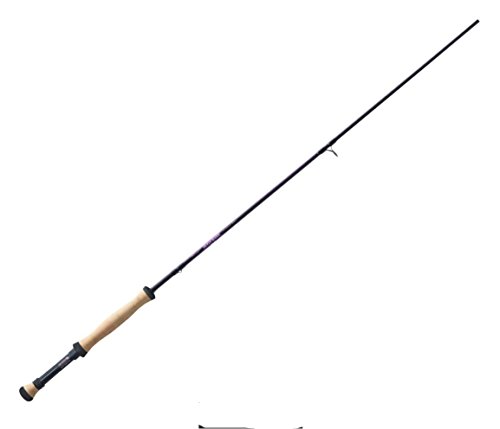
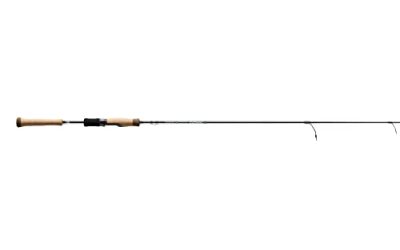
The Mojo Bass Fly is the rod that defined the modern short bass stick. At 7 feet 11 inches it slides in just under the rod-length limit used in bass tournaments, and that missing foot-plus of length is the whole point: the tip stays closer to your hand, so short pick-up-and-lay-down casts to pockets in the pads, dock corners and gaps in a weed line are quicker and more accurate than with a standard 9-footer.
St. Croix builds the rod on a premium SCII carbon fiber blank with a medium-fast action tuned for exactly the flies bass anglers throw most: deer-hair poppers, heavy streamers, frog patterns and bulky crayfish imitations. The 7-weight loads easily at short range, so you do not need a long back cast or a lot of line out to get a big bug moving, yet the butt section has the backbone to steer a hooked fish away from timber. Hardware is fishing-focused rather than decorative: Kigan Master Hand 3D stripper guides with aluminum-oxide rings, hard chrome snake guides, an uplocking machined-aluminum reel seat, a premium-grade full-wells cork handle and a fighting butt. It is a two-piece rod, which keeps the blank simple and strong but makes it the least travel-friendly pick here, and it comes with a cloth rod sack rather than a hard tube.
Choose the Mojo Bass if most of your bass fishing happens from a boat, kayak or float tube, at targets you can see, with floating or sink-tip lines and flies that need accuracy more than distance.
Specs
- :
- ASIN: B014V2V2E0
- Brand: St. Croix
- Model: Mojo Bass Fly MBF7117.2
- Length: 7’11”
- Line weight: 7-weight
- Pieces: 2
- Action: Medium-fast
- Blank: SCII carbon fiber
- Handle: Full-wells premium-grade cork with fighting butt
- Guides: Kigan Master Hand 3D strippers with aluminum-oxide rings, hard chrome snake guides
2. Echo 84-B Fly Rod 784-4

The 84-B is Echo’s direct answer to the short bass rod idea, designed by Tim Rajeff with bass anglers in mind and tested extensively on smallmouth and largemouth. The B stands for bass, and at 8 feet 4 inches it splits the difference between the tournament-length sticks and a full 9-footer: still short enough for quick line pickup and minimal false casting, but with a little more reach for mending and for keeping a back cast above a boat deck or bankside brush.
Echo gives the 84-B a progressive taper with a light tip. That combination loads the rod at short range for tight shots along the bank, then lets the powerful lower half take over when a cast has to stretch out or a heavy streamer needs to be lifted off the water. The 7-weight is rated by Echo for moderate-sized bass flies, and the series’ fast-action, high-power positioning on Echo’s own action chart suits it to poppers, divers and weighted patterns that would stall a softer rod. Every 84-B is a four-piece rod with an olive blank, a full-wells cork grip, a small cork fighting butt and a black uplocking aluminum reel seat, and it ships in a rod tube with a sock, so it packs down far better than the two-piece Mojo Bass.
Choose the 84-B if you want the short-rod bass feel in a travel-friendly four-piece build, especially for river smallmouth where you alternate between close bank work and longer streamer casts.
Specs
- :
- ASIN: B0DJZNHJ8V
- Brand: Echo
- Model: 84-B 784-4
- Length: 8’4″
- Line weight: 7-weight
- Pieces: 4
- Action: Fast-leaning progressive taper (shown on Echo’s action chart)
- Rod weight: 3.8 oz
- Handle: Full-wells cork with small cork fighting butt
- Includes: Rod tube and sock
3. Redington Big Game Fly Rod 783-4

Redington built the Big Game series as its freshwater big-fly rod family, the freshwater counterpart that took over the role the older Predator series used to fill. The 783-4 is the short model in the line, and Redington describes it in plain terms: it is the right choice for casting light poppers and streamers to bass with accuracy and in tight quarters. If your bass water is a maze of docks, cypress knees, laydowns and pad edges, this is the Redington aimed at it.
The blank is Nano Resin-impregnated graphite with a powerful, deep-loading fast action. Where a conventional fast rod can feel like it only works at long range, the Big Game’s taper is made to load with heavy lines: Redington rates the 783-4 for lines in the 240- to 275-grain window, which covers the short, heavy-headed bass and streamer lines most anglers actually fish. The maker lists the rod for big flies, streamers, topwater work and sinking lines alike, so one rod can start the morning with a floating popper line and finish it dredging a sink-tip along a channel edge. Fittings include chrome guides with ceramic-insert stripping guides, a hidden hook keeper machined into the reel seat, a corrosion-resistant anodized seat, a full-wells handle and a cork composite fighting butt.
Choose the Big Game 783-4 if you fish the heaviest flies of the group, lean on sinking lines, and want a short, fast graphite rod with a published grain window to match your line to.
Specs
- :
- ASIN: B0GJTX79FN
- Brand: Redington
- Model: Big Game 783-4
- Length: 8’3″
- Line weight: 7-weight
- Pieces: 4
- Action: Fast, deep-loading
- Blank: Nano Resin-impregnated graphite
- Recommended line: 240-275 grains
- Handle: Full-wells with cork composite fighting butt
- Guides: Chrome with ceramic-insert stripping guides
4. Douglas DXF Gen2 Fly Rod 7904

Not every bass angler wants a short rod. If you wade rivers, fish from the bank, or need to mend line over current seams between you and a smallmouth lie, a standard 9-footer earns its length back. Douglas lists the DXF in a 9-foot 7-weight on its own bass rod page, and the Gen2 version of that rod is the pick here: a moderate-fast, multi-modulus blank that loads smoothly and turns over big flies in reasonable conditions without demanding a perfect casting stroke.
At 3.78 ounces it is light for a 9-foot 7-weight, which matters when a day of bass fishing means hundreds of short casts rather than a few long ones. The moderate-fast action is a deliberate middle ground for bass work. Very fast rods can feel harsh with the short, heavy-headed lines used for poppers and can bounce a fly off target at close range; the DXF’s deeper loading stroke makes it easier to feel the line load on a quick back cast, aim, and deliver in one motion. It uses Douglas’s B-style handle configuration for this size and breaks down into four pieces for transport.
Choose the DXF Gen2 if your bass fishing mixes open water, wading and longer casts, and you want one 9-foot 7-weight that a maker explicitly lists for bass rather than a trout rod pressed into service.
Specs
- :
- ASIN: B0F1M2Y12M
- Brand: Douglas
- Model: DXF Gen2 7904
- Length: 9’0″
- Line weight: 7-weight
- Pieces: 4
- Action: Moderate-fast
- Blank: Multi-modulus graphite
- Rod weight: 3.78 oz
- Handle: Douglas handle B configuration
5. Douglas Sky G Fly Rod 7904

The Sky G is Douglas’s premium take on the same 9-foot 7-weight slot, and like the DXF it is a size Douglas lists on its bass page, even pairing that listing with video of the 7-weight in use. If you fish floating lines and streamers for bass most days and want the lightest, most refined rod in this guide, this is the one.
The blank is a multi-modulus construction built with G-Tec platelets, a graphite technology Douglas uses to add strength without adding the weight that usually comes with it. The result is a 3.50-ounce rod, the lightest pick here, with a moderate-fast action that loads deep into the middle of the blank. That smooth, deeper flex suits the rhythm of bass fishing well: pick up, one back cast, and lay a popper or a baitfish pattern down on a seam, a shadow line or the edge of a grass mat. Owners of this size note that it fishes best close to its true line rating, so pair it with a standard or half-size-heavy bass line rather than overlining it aggressively. It is a four-piece rod, so it travels like the other 9-foot pick despite the premium build.
Choose the Sky G if you want a premium, lightweight 9-foot 7-weight for floating-line bass work and streamers, and you value low swing weight over the extra lifting grunt of the short rods.
Specs
- :
- ASIN: B0F1LZXGN1
- Brand: Douglas
- Model: Sky G 7904
- Length: 9’0″
- Line weight: 7-weight
- Pieces: 4
- Action: Moderate-fast
- Blank: Multi-modulus graphite with G-Tec platelets
- Rod weight: 3.50 oz
How to Choose a Fly Rod for Bass
Start with line weight. A 7-weight is the most common recommendation for bass because it turns over poppers, frogs and mid-sized streamers while staying light enough to cast all day. Step down to a 6-weight only for small ponds and small flies in calm weather, and step up to an 8- or 9-weight for the biggest deer-hair bugs, heavy sinking lines or constant wind. All five rods above are 7-weights, so the choice between them comes down to length, action and build rather than power class.
Match length to your water. Short rods under 8 feet 6 inches, like the Mojo Bass, 84-B and Big Game 783-4, are the traditional bass tools. They pick line up quickly, need fewer false casts, are more accurate at the short ranges where bass are usually targeted, and give you leverage to pull fish out of grass and timber. Their trade-off is distance and line mending. A 9-foot rod, like the two Douglas picks, mends better, keeps more line off the water while wading, and reaches farther, at the cost of some close-quarters quickness.
Pick an action you can feel. Bass fishing rewards moderate-fast to fast actions. The rod has to load with a short amount of heavy-headed line out, then recover quickly enough to drive a bulky fly. If you cast mostly at 20 to 40 feet, a moderate-fast rod that loads deeply is easier to time. If you throw the largest flies or sinking lines, a faster, stronger butt section helps.
Use a bass line, not a trout line. Whatever rod you choose, pair it with a weight-forward floating line built for bass bugs or big flies, with a short, heavy front head. These lines carry wind-resistant flies far better than a standard trout taper. Where a maker publishes a grain window, as Redington does for the Big Game, match your line’s head weight to it. Add a short, stout leader; long, fine trout leaders will not turn over a foam popper.
Do not forget the fighting butt. Bass rods in this class should have a full-wells grip and a fighting butt. You will use the butt against your forearm when a good fish surges at the boat, and it keeps the reel out of the water and mud when the rod is laid down.
FAQ
What weight fly rod is best for largemouth bass?
A 7- or 8-weight covers most largemouth fishing. The 7-weight handles poppers and moderate streamers and is easier to cast all day; the 8-weight adds margin for the largest bugs, heavy cover and wind.
What weight fly rod is best for smallmouth bass?
A 7-weight is the standard river smallmouth choice, with enough power for crayfish patterns and streamers in current. On small, calm creeks a 6-weight can work, but the 7 is the safer single-rod pick.
Why are so many bass fly rods shorter than 9 feet?
Short rods came out of tournament bass fishing, where rod length was capped, and anglers kept using them because the format works: faster line pickup, fewer false casts, better accuracy at close range and more leverage for pulling fish from cover.
Can I use my 5-weight trout rod for bass?
For small poppers on a calm pond, yes, briefly. For the deer-hair frogs, divers and weighted streamers that make bass fishing productive, a 5-weight lacks the mass and backbone to cast the flies and move the fish, which is why this guide sticks to bass-designated 7-weights.
What fly line should I pair with a bass rod?
A weight-forward floating line with a short, aggressive head made for bass bugs or large flies, matched to the rod’s line weight or its published grain window. Carry a sink-tip line as a second option for streamers along deeper edges.
More from Amazon
Programs that pair well with the guide above. Offers and eligibility are set by Amazon and may change.
Free shipping on eligible items, Prime Video and more. Eligible new members can start with a free trial.
Start a Prime free trialA Prime membership for ages 18-24 with a trial period. Eligibility is set by Amazon.
See Prime for Young AdultsAudiobooks and podcasts to listen to on the go. Eligible new members can start with a free trial.
Try Audible freeAd-free music streaming. Eligible new subscribers can start with a free trial.
Try Music Unlimited freeAs an Amazon Associate we earn from qualifying purchases.
Write Your Review
No reviews yet. Be the first to share your experience!