

Key takeaways
- The best Olympic barbells depend on your lifts: choose a 28–28.5 mm bearing bar with moderate knurling and noticeable whip for the snatch and clean and jerk, or a stiffer 28.5–29 mm power bar with aggressive knurling for squats, bench…
The best Olympic barbells depend on your lifts: choose a 28–28.5 mm bearing bar with moderate knurling and noticeable whip for the snatch and clean and jerk, or a stiffer 28.5–29 mm power bar with aggressive knurling for squats, bench presses, and deadlifts.
Our top picks


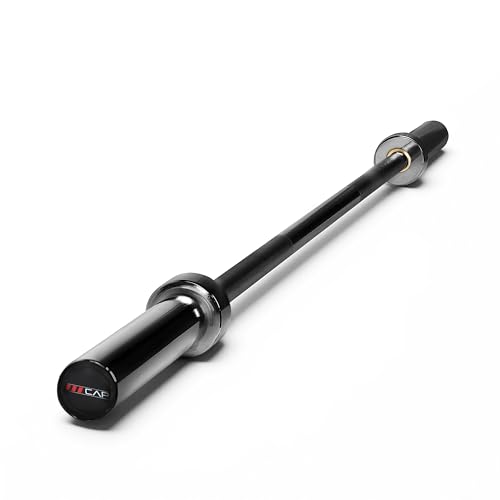
As an Amazon Associate we earn from qualifying purchases at no extra cost to you. Ratings are shown as listed on Amazon.
Best Olympic Barbells at a Glance
| Barbell | Best for | Weight and shaft | Tensile strength | Knurling and whip | Sleeve system |
|---|---|---|---|---|---|
| Eleiko IWF Weightlifting Competition Bar | Serious Olympic lifting and competition preparation | 20 kg; 28 mm | About 215,000 psi | Competition knurl; high whip | Needle bearings |
| Rogue Ohio Bar | One-bar home gyms and mixed training | 20 kg; 28.5 mm | About 190,000 psi | Medium knurl; moderate whip | Bushing sleeves |
| Rogue Ohio Power Bar | Heavy squats, bench presses, and deadlifts | 20 kg; 29 mm | About 205,000 psi | Aggressive knurl; very low whip | Bushing sleeves |
| Texas Power Bar | Powerlifting-focused training | 20 kg; 29 mm | About 190,000 psi | Deep, aggressive knurl; low whip | Bushing sleeves |
| REP Fitness Colorado Bar | Budget-conscious general strength training | 20 kg; 28.5 mm | About 190,000 psi | Moderate knurl; moderate whip | Bushing sleeves |
Specifications can vary by finish and production version, so verify the manufacturer’s current specification sheet before ordering. Tensile strength is only one durability measure: sleeve construction, surface finish, straightness, and quality control also determine how a bar performs over years of use.
Best Overall for a Mixed Home Gym: Rogue Ohio Bar
The Rogue Ohio Bar is the most adaptable choice for lifters who train Olympic lifts, squats, presses, deadlifts, and rows with one bar. Its 28.5 mm shaft sits between the thinner diameter preferred for fast Olympic lifting and the thicker shaft common on power bars. The moderate knurl gives enough grip for heavy pulls without feeling excessively sharp during high-repetition work.
Bushing sleeves are quieter, simpler, and generally less expensive to maintain than a competition bearing system. The bar has enough whip for recreational cleans and snatches, but it is not as quick or specialized as an IWF competition bar. Choose a stainless-steel or hard-chrome version when available if corrosion resistance and a consistent hand feel matter more than the lowest price.
Best for Olympic Weightlifting: Eleiko IWF Weightlifting Competition Bar
The Eleiko IWF Weightlifting Competition Bar is designed around the snatch and clean and jerk rather than maximum powerlifting attempts. Its 28 mm shaft, precise Olympic knurling, flexible shaft, and needle-bearing sleeves help the bar rotate smoothly and respond predictably during fast turnover and receiving positions.
That performance comes at a premium. General market pricing for high-end competition weightlifting bars is commonly several hundred to more than $1,000, depending on certification, finish, and whether the bar is intended for training or competition. A dedicated weightlifting bar is a sensible investment for frequent technical practice, but it is not automatically the best bar for a home gym that mainly performs slow strength lifts.
Best for Powerlifting: Rogue Ohio Power Bar
The Rogue Ohio Power Bar is the better choice when your main lifts are the squat, bench press, and deadlift. Its 29 mm shaft is stiff, the center knurl helps prevent movement during squats, and its aggressive knurl provides a secure deadlift grip. Low whip keeps the bar from visibly flexing and unloading before the plates leave the floor.
Those strengths become limitations for Olympic lifting. A stiff 29 mm bar can feel less comfortable in the clean and less responsive in the snatch, while aggressive knurling may punish repeated high-volume technique work. Do not buy a power bar simply because its tensile-strength number is higher; a power bar’s geometry is optimized for a different job.
Best Value for General Strength Training: REP Fitness Colorado Bar
The REP Fitness Colorado Bar offers a practical middle ground for beginners and intermediate lifters who want a 20 kg bar for common gym movements without paying competition-bar prices. Its 28.5 mm diameter, moderate whip, and bushing sleeves suit presses, squats, deadlifts, rows, and occasional Olympic-lift practice.
Expect general market pricing in the low-to-mid hundreds depending on the steel and finish. At this level, inspect the return policy and warranty as carefully as the advertised tensile strength. A bar that arrives straight, spins consistently, and has well-defined sleeves is more valuable than a marginally higher strength rating that does not reflect overall manufacturing quality.
How the Key Specifications Affect Your Decision
Tensile strength
Tensile strength describes the stress a steel sample can withstand before failure, usually reported in pounds per square inch. Around 190,000 to 215,000 psi is ample for normal training when the bar is used correctly. It does not mean a 215,000 psi bar can safely absorb every drop from every height. Repeated uncontrolled drops, poor-quality plates, and impact on hard flooring can bend or damage any bar.
Shaft diameter
A 28 mm shaft is common for Olympic weightlifting because it is easier to grip securely during the snatch and allows more visible whip. A 28.5 mm shaft is the versatile compromise. A 29 mm shaft feels stiffer and can be more comfortable for some powerlifting movements, but it is less specialized for fast lifts. Women’s competition weightlifting bars are commonly 15 kg and 25 mm, while standard men’s bars are 20 kg and 28 mm; do not confuse a women’s competition bar with a lighter recreational bar.
Knurling
Fine, moderate knurling works well for frequent cleans, snatches, and mixed training. Deep, sharp knurling maximizes security for heavy deadlifts but can irritate the hands during high repetitions. Center knurling is useful for squats, although some weightlifters prefer a smooth center to reduce contact during cleans.
Whip
Whip is the shaft’s controlled flex and rebound. More whip can help a skilled weightlifter use timing and bar momentum, while less whip makes a heavy squat or deadlift feel immediate and stable. A bar can be strong and durable while still having the wrong whip for your lifting style.
Bearings versus bushings
Needle bearings usually provide fast, smooth sleeve rotation, which is valuable when the bar changes direction rapidly in a snatch or clean. Bronze or composite bushings rotate more slowly but are simpler, quieter, and usually cheaper. For most mixed-use lifters, good bushings are sufficient. For frequent Olympic lifting, bearings justify their extra cost when they remain properly maintained.
Decision Matrix: Match the Bar to Your Situation
| Your situation | Recommended type | Useful target specifications | Why |
|---|---|---|---|
| Beginner, limited budget, varied workouts | General-purpose Olympic bar | 20 kg, 28.5 mm, 180,000–190,000 psi, moderate knurl | Handles most movements without specialized compromises |
| Olympic lifts three or more times weekly | Weightlifting bar | 20 kg, 28 mm, bearing sleeves, moderate knurl, high whip | Better rotation and feedback for fast lifts |
| Powerlifting-focused training | Power bar | 20 kg, 29 mm, bushing sleeves, aggressive knurl, low whip | Stable setup for slow maximum-strength lifts |
| Small space with one bar for everything | Versatile multipurpose bar | 28.5 mm, moderate whip, medium knurl, durable finish | Reduces the need to store two specialized bars |
| Outdoor, humid, or poorly ventilated storage | Corrosion-resistant bar | Stainless steel shaft or robust coating, plus regular oiling | Finish and maintenance matter more than a small tensile-strength difference |
Finish Durability and Ownership Costs
Stainless steel usually offers the best corrosion resistance and a natural grip, but it often costs more. Cerakote provides strong exterior protection and many color options, although the coating can eventually wear at contact points. Chrome and hard chrome are practical and economical, but scratches or chips can expose steel. Black oxide has a pleasant initial feel yet needs more frequent oiling because it offers less corrosion protection.
The sleeves, not the shaft, are often the first area to require attention. Wipe chalk and sweat from the bar after training, brush the knurl with a nylon brush, and apply a very light coat of suitable oil when the manufacturer permits it. Keep the bar off damp concrete and avoid storing it with plates mounted for long periods. Never use a steel brush on a coating unless the manufacturer specifically allows it.
A simple cost-per-use calculation
Suppose a $300 multipurpose bar is used four times per week for three years. That is approximately 624 sessions, making the purchase cost about $0.48 per session before maintenance. A $900 competition bar used five times per week for five years equals about 1,300 sessions, or roughly $0.69 per session. The expensive bar only makes financial sense if its specialized rotation, whip, and finish will actually be used.
Final Buying Advice
Choose a bearing weightlifting bar for serious snatch and clean-and-jerk practice, a 29 mm power bar for powerlifting, and a 28.5 mm bushing bar for most mixed home gyms. Prioritize the correct diameter, knurl, whip, and sleeve behavior before chasing the highest tensile-strength figure. Also confirm the bar’s true 20 kg or 15 kg weight, sleeve length, coating, warranty, and whether the manufacturer permits repeated drops onto your type of platform.

Write Your Review
No reviews yet. Be the first to share your experience!