

Key takeaways
- Plastic: Easy to wipe clean, resistant to rot, and usually quick to assemble. It can fade, warp, or become brittle after prolonged ultraviolet exposure.
- Cedar or other outdoor-rated wood: More natural-looking and repairable, but it needs periodic sealing or painting and careful inspection for splinters.
- Composite or engineered panels: Often provide consistent surfaces and lower maintenance, but replacement panels may be harder to source.
- Fabric play tents: Portable and inexpensive, but generally unsuitable as a permanent outdoor structure because seams, floors, and fabric deteriorate faster in rain and sun.
The best playhouses for most families are weather-resistant wooden models with at least 25 square feet of usable floor space, a clear age rating, ventilation, and an assembly plan that fits your available time and yard access.
Our top picks


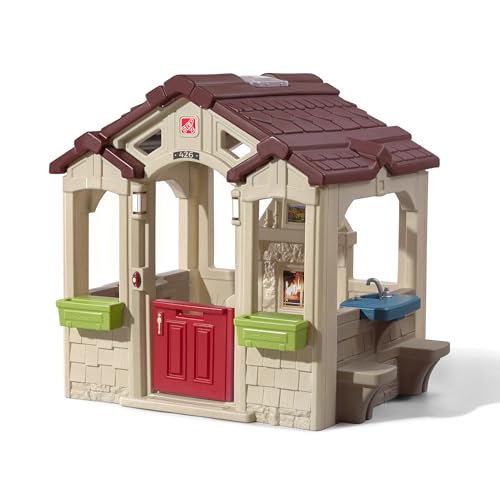
As an Amazon Associate we earn from qualifying purchases at no extra cost to you. Ratings are shown as listed on Amazon.
Best playhouses by yard, budget, and play style
| Best for | Recommended playhouse type | Typical footprint | Typical age range | Typical price range | Main trade-off |
|---|---|---|---|---|---|
| Small yards or patios | Compact plastic playhouse | 4 x 4 to 5 x 6 feet | 18 months to 5 years | $150-$500 | Less interior space and shorter useful life |
| Lowest-maintenance ownership | Molded plastic house with floor | 4.5 x 5 to 6 x 6 feet | 2 to 6 years | $250-$700 | Can fade or become brittle in intense sun |
| Growing children | Wooden cottage-style playhouse | 5 x 6 to 8 x 8 feet | 3 to 10 years | $500-$1,500 | More assembly, sealing, and maintenance |
| Frequent imaginative play | Larger wooden house with windows and accessories | 7 x 8 to 8 x 12 feet | 3 to 12 years | $1,000-$3,000 | Needs a level site and substantial clearance |
| Rental homes or temporary use | Lightweight plastic house | 4 x 4 to 5 x 7 feet | 18 months to 6 years | $150-$600 | Usually less stable in strong wind unless anchored |
Our top choices by situation
Best for a small yard: compact plastic playhouse
A compact plastic playhouse is the sensible choice when the available area is under about 100 square feet. Models from established brands such as Little Tikes and Step2 commonly use molded polyethylene or similar weather-resistant plastic, which does not require repainting or annual sealing. They are also easier to move if you need to mow, rearrange a patio, or move house.
Check the assembled dimensions rather than the box dimensions. A house measuring 5 x 6 feet occupies 30 square feet, but you should reserve at least another 2 feet on each accessible side for entry, cleaning, and supervision. That turns the practical planning area into roughly 9 x 10 feet, or 90 square feet.
Best for long-term value: a wooden cottage playhouse
Wooden playhouses from brands such as Backyard Discovery and KidKraft are usually better suited to families who want several years of use and enough room for furniture, pretend kitchens, or more than one child. Wood panels can be repainted, repaired, or modified, while plastic houses generally have fewer practical repair options.
Look for cedar or treated wood panels, rounded or sanded edges, shatter-resistant window material, and roof overhangs that keep rain away from the walls. A wooden house is not maintenance-free: expect to inspect it each spring, tighten hardware, and refresh the exterior finish according to the manufacturer’s instructions.
Best for toddlers: a low plastic house with an open layout
For children under about 3 years old, a simple house with a low threshold, wide doorway, open windows, and no elevated deck is easier to supervise. Some toddler-oriented models from Step2 and Little Tikes include molded floors and small openings designed for young children. Avoid choosing a larger house solely because it has more features; climbing walls, ladders, balconies, and heavy doors add supervision requirements.
Best for older children: a larger wooden house with usable headroom
For children aged 6 and above, floor area and interior height matter more than decorative details. A house with 35 to 50 square feet of interior space can accommodate a small table, two chairs, and several children more comfortably than a tiny cottage with elaborate trim. Check the manufacturer’s maximum user age and weight guidance, particularly if the playhouse includes a loft, porch, or elevated platform.
What to compare before buying
Floor space and usable dimensions
Manufacturers often advertise the exterior footprint, which includes wall thickness, roof overhangs, porches, or steps. Compare the interior floor dimensions separately. As a practical guide, allow about 10 square feet per child for seated imaginative play and closer to 15 square feet per child if children will move around or use toys inside.
For example, a 6 x 6-foot interior provides 36 square feet. It may work well for three children sitting or playing quietly, but it will feel crowded with a play kitchen, chairs, and active movement. A 4 x 5-foot interior provides only 20 square feet and is better treated as a one- or two-child hideaway.
Age range and access
Age labels are not interchangeable with size. A child may fit physically but still lack the coordination to use a raised platform, narrow ladder, or stiff door safely. Look for a doorway at least 20 inches wide for easier access, windows that provide cross-ventilation, and openings without pinch points.
For younger children, choose ground-level entry and a clear view through the structure. For older children, prioritize headroom, stronger flooring, and a design that will not be outgrown after one season.
Materials and weather resistance
- Plastic: Easy to wipe clean, resistant to rot, and usually quick to assemble. It can fade, warp, or become brittle after prolonged ultraviolet exposure.
- Cedar or other outdoor-rated wood: More natural-looking and repairable, but it needs periodic sealing or painting and careful inspection for splinters.
- Composite or engineered panels: Often provide consistent surfaces and lower maintenance, but replacement panels may be harder to source.
- Fabric play tents: Portable and inexpensive, but generally unsuitable as a permanent outdoor structure because seams, floors, and fabric deteriorate faster in rain and sun.
Assembly time and site preparation
Plastic houses may take roughly 1 to 3 hours for two adults. Wooden houses commonly require 6 to 12 hours, and larger designs can take a full weekend once leveling, unpacking, and cleanup are included. Assembly time depends on tools, not just the number of parts: a drill, level, tape measure, step ladder, and socket set may be necessary.
Do not assemble directly on uneven grass. A low area can collect water under the floor, while a slope can twist the frame and make doors bind. A compact house may need a leveled area of crushed stone, pavers, or a small outdoor-rated platform. Follow the manufacturer’s foundation instructions rather than assuming a concrete slab is suitable.
Safety features worth paying for
- Rounded or sanded edges on doors, windows, and roof trim
- Shatter-resistant glazing or open windows rather than ordinary glass
- Ventilation on at least two sides to reduce heat buildup
- Door hardware that cannot trap small fingers
- Secure anchoring for lightweight plastic structures and elevated wooden designs
- Slip-resistant steps and a stable handhold where climbing is involved
- A floor that is raised enough to drain but not so high that entry becomes difficult
Place the playhouse where an adult can see inside from the usual seating area. Keep it away from pools, ponds, driveways, fences that children could climb, and low branches. Do not add ropes, swings, heaters, electrical lighting, or improvised climbing equipment unless the structure was designed and approved for those additions.
Ownership costs and common mistakes
The purchase price is only part of the cost. A wooden playhouse may need stain, exterior paint, replacement felt or shingles, and occasional hardware. Plastic models avoid most of those expenses but may eventually need replacement doors, connectors, or a sun-damaged roof panel.
The parts that wear first are usually door hinges, latches, roof coverings, floor edges, and exposed fasteners. Inspect them at the start and end of each season. Tighten loose screws without overtightening plastic, clean roof gutters or channels, and remove leaves that hold moisture against wooden walls.
Avoid placing cushions or fabric toys inside permanently. They retain moisture, encourage mildew, and reduce usable floor space. Wash plastic surfaces with mild soap and water, allow them to dry fully, and use only cleaning products approved for the material. For wood, do not pressure-wash aggressively because it can roughen the surface and force water into joints.
A simple decision matrix
| Your situation | Choose | Why |
|---|---|---|
| Under 80 square feet available | Plastic model under 30 square feet | Fits more easily and can be repositioned |
| One or two toddlers | Low, ground-level house | Best visibility and simplest entry |
| Three or more children | Wooden model with at least 35 square feet inside | More usable room and longer growing capacity |
| Limited tools or assembly experience | Preassembled or molded plastic house | Fewer alignment and leveling problems |
| Hot, sunny climate | Ventilated house with shade and light-colored surfaces | Reduces heat buildup and color fading |
| Permanent backyard installation | Anchored wooden cottage | Better repairability and long-term play value |
Bottom line
Choose a compact plastic playhouse when space, quick setup, and easy cleaning are the priorities. Choose a wooden cottage when you have a level site, several children, and the willingness to perform seasonal maintenance. Whichever style you buy, measure the interior floor, verify the age and weight guidance, allow clearance around the structure, and budget time for anchoring and site preparation. Those details have more influence on safe, satisfying use than decorative features alone.

Write Your Review
No reviews yet. Be the first to share your experience!