

Key takeaways
- 0.25 to 0.5 cup: spices, minced garlic, garnish, baking powder and small sauce portions.
- 0.75 to 1 cup: one chopped onion, a dressing, a beaten egg mixture or measured dry ingredients.
- 1.5 to 2 cups: chopped vegetables, grated cheese, prepared salsa or a small amount of leftovers.
- 3 to 4 cups: pancake batter, a marinade, rinsed grains or ingredients for a family-size recipe.
- 5 to 6 cups: useful for storage, but often too large for a compact prep-bowl set.
The best prep bowl set with lids for most home cooks is a nesting glass set with four to six bowls ranging from about 1 to 4 cups, leak-resistant vented lids, and dishwasher-safe parts; choose stainless steel instead if you mainly need lightweight mise en place rather than reheating or long-term storage.
Our top picks
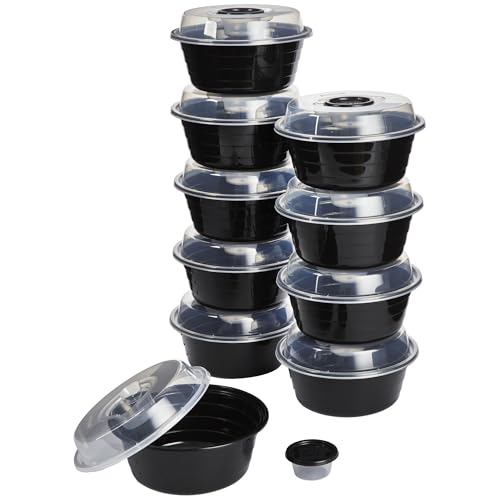


As an Amazon Associate we earn from qualifying purchases at no extra cost to you. Ratings are shown as listed on Amazon.
Best prep bowl sets with lids by cooking situation
| Situation | Best choice | Useful capacity range | Why it fits | Main compromise |
|---|---|---|---|---|
| One-person cooking or a small kitchen | Compact glass or plastic nesting set | 0.5, 1, 1.5 and 2 cups | Handles chopped aromatics, sauces, toppings and leftovers without occupying a full drawer | Small bowls cannot hold large batches or bulky ingredients |
| Frequent weeknight cooking | Six-piece glass set with individual lids | 0.5 to 4 cups | Good range for measured ingredients, marinades and prepared components | Glass is heavier and can break if mishandled |
| Meal prep and refrigerator storage | Glass containers with locking or silicone-gasket lids | 1 to 6 cups | More practical for storing finished portions and seeing contents at a glance | These are usually deeper and less convenient for whisking |
| Children, outdoor cooking or frequent transport | BPA-free polypropylene or silicone set | 0.5 to 3 cups | Lightweight and less likely to shatter | Plastic may stain, retain odors or warp with high heat |
| Professional-style mise en place | Stainless-steel prep bowls with separate lids | 0.25 to 4 cups | Durable, light, odor-resistant and easy to stack | Contents are not visible and metal cannot go in a microwave |
What capacity do you actually need?
Capacity matters more than the number of bowls. A set made entirely of tiny 1-cup bowls can look generous in a product photograph but become frustrating when you need to hold a whisked egg, a can of beans or a cup of chopped vegetables.
- 0.25 to 0.5 cup: spices, minced garlic, garnish, baking powder and small sauce portions.
- 0.75 to 1 cup: one chopped onion, a dressing, a beaten egg mixture or measured dry ingredients.
- 1.5 to 2 cups: chopped vegetables, grated cheese, prepared salsa or a small amount of leftovers.
- 3 to 4 cups: pancake batter, a marinade, rinsed grains or ingredients for a family-size recipe.
- 5 to 6 cups: useful for storage, but often too large for a compact prep-bowl set.
A practical six-bowl configuration is approximately 0.5, 0.75, 1, 1.5, 2 and 3 cups. If you regularly cook double batches, replace the smallest bowl with a 4-cup bowl. Also check the usable capacity below the rim: a nominal 2-cup bowl may safely hold only 1.5 cups if its lid needs clearance.
Glass, plastic, silicone or stainless steel?
Glass
Glass is the most versatile choice when bowls must move from preparation to refrigerator or microwave. It does not readily absorb curry, tomato or garlic odors, and its transparency makes stored ingredients easy to identify. Borosilicate glass generally tolerates temperature changes better than ordinary soda-lime glass, but neither should be moved directly from a cold refrigerator into a hot oven unless the manufacturer specifically permits it.
Glass bowls are heavier than alternatives. A six-bowl set can add roughly 4 to 8 pounds before ingredients, which matters if you carry food to work or have limited cabinet shelving.
Plastic
Polypropylene is a sensible choice for lightweight storage and lower shelves. Confirm that both the bowl and lid are labeled microwave-safe; a lid may need to be loosened or removed during heating. Plastic is more likely than glass to scratch, cloud, stain or retain strong odors. Avoid using scratched containers for very hot foods if the manufacturer’s instructions advise against it.
Silicone
Food-grade silicone is flexible, quiet and often collapsible, making it useful where drawer space is scarce. Its softness can make whisking less stable, and thin silicone lids may collect grease around folds. Look for a reinforced rim if you expect to carry liquid contents.
Stainless steel
Stainless steel is the durability leader for prep work. It resists stains, does not shatter and usually nests tightly. It is not microwave-safe, hides the contents and can be noisier when utensils hit the sides. Separate plastic lids are convenient, but they are often the first parts to warp or disappear.
Lid seals: airtight, leak-resistant and vented are not the same
For chopped ingredients, a simple snap-on lid is usually enough. For soup, dressing or a marinade, look for a continuous silicone gasket and four-sided locking tabs. “Airtight” typically describes reduced air exchange during storage; it does not guarantee that a container will remain leak-free when shaken in a bag.
Vented lids are useful for microwave heating because steam can escape without removing the lid entirely. They are not automatically better for dry ingredients: a vent can admit refrigerator odors and adds another crevice to clean.
Before buying, check these details:
- The lid should sit flat rather than rocking on the rim.
- The gasket should be removable for washing but not so loose that it falls out during normal use.
- Locking tabs should require firm pressure without needing excessive force.
- Replacement lids or gaskets should be available, especially for an expensive glass set.
- Nested lids should stack separately; storing them sealed on wet bowls encourages odors and mildew.
Microwave and dishwasher compatibility
“Dishwasher-safe” should cover the bowl, lid and gasket separately. Lids often belong on the top rack only, and some are dishwasher-safe only after removing a vent or seal. A bowl that is microwave-safe may still require its lid to be removed or vented.
For microwave use, avoid thermal shock: do not microwave a frozen glass bowl immediately after taking it from the freezer, and do not place a hot bowl on a wet or very cold surface. Do not microwave stainless steel, metal-trimmed bowls or lids with metallic components.
Dishwashers clean most smooth glass and stainless steel well, but the underside of a locking lid can trap oil. Put lids at an angle so spray reaches the channels, remove silicone gaskets periodically, and allow every part to dry fully before nesting.
Storage efficiency: measure the closed stack, not just the bowls
Nesting efficiency is determined by the bowl bodies, while storage efficiency is determined by the lids. A set can nest beautifully but occupy almost twice as much space when every lid is stacked separately.
As a practical benchmark, measure the cabinet before buying. A compact four-bowl set may occupy roughly 8 by 8 inches of shelf space and 5 to 7 inches of height when nested. A larger six-piece glass set can approach 10 by 10 inches and 8 to 10 inches high, depending on lid design. Leave at least 1 inch above the stack so it can be removed without scraping the shelf.
For a narrow drawer, choose flat lids with a common footprint. For a cabinet, bowls with progressively smaller diameters usually nest better than sets with identical-width, different-depth bowls. If lids do not nest, store them vertically in a file-style divider rather than piling them beneath the bowls.
Ownership costs and common failure points
General market pricing is approximately $15–$30 for basic plastic or stainless sets, $25–$55 for better-quality glass sets, and $50–$90 for larger sets with locking lids, multiple sizes or replacement-part support. A cheaper set can be the better value if you use it daily and its lids are replaceable.
Consider a simple cost-per-use calculation. A $36 set used four times per week for three years gets about 624 uses. That works out to roughly six cents per set-use before replacement costs. If two lids fail after the first year and cannot be replaced, the effective value falls sharply even if the bowls remain perfect.
The parts most likely to wear first are thin lid hinges, silicone gaskets, snap tabs and plastic surfaces exposed to oily foods. Do not force a lid onto an overfilled bowl, cut food inside plastic, or stack hot containers while sealed. These habits deform rims and trap condensation. Replace a cracked bowl, badly warped lid or gasket that no longer seats evenly rather than relying on a partial seal.
Bottom line
Choose a glass nesting set with at least one small bowl, two medium bowls and one 3- or 4-cup bowl if you cook often and want microwave-to-refrigerator flexibility. Choose plastic when portability and weight matter most, stainless steel when durability and compact nesting outrank visibility, and silicone when drawer space is the main constraint. The best prep bowl set with lids is not the one with the most pieces; it is the one whose capacities match your recipes, whose lids seal the foods you actually carry, and whose complete stack fits the storage space you have.

Write Your Review
No reviews yet. Be the first to share your experience!