

Key takeaways
- Length: Longer rods can increase casting distance and keep line above waves, but they require more room and physical effort.
- Power: Medium-heavy suits general surf work. Heavy power is better for large sinkers, strong current, thick leaders, and large fish.
- Action: Moderate-fast rods load smoothly and tolerate bait rigs. Fast rods feel crisp and improve lure control but can be less forgiving during power casts.
- Casting weight: The printed range is a working design range, not a target to exceed. A 2–6-ounce rating does not mean 8 ounces is safe.
The best surf fishing rods for long, powerful casts are usually 10–12 feet long, rated for roughly 2–6 ounces, built with medium-heavy or heavy power, and fitted with corrosion-resistant guides that can tolerate saltwater use.
The right choice depends on more than maximum distance. A 12-foot heavy rod may launch a sinker farther from an open beach, but a 9- or 10-foot rod is easier to control on a jetty, in tight parking areas, or when casting repeatedly for hours. The most useful comparison is between casting range, lure or sinker weight, fish-fighting control, saltwater durability, and how much rod you are willing to transport.
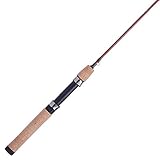
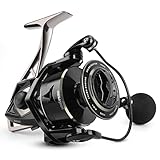
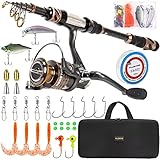
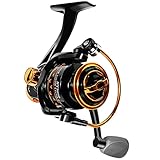
Our top picks


As an Amazon Associate we earn from qualifying purchases at no extra cost to you. Ratings are shown as listed on Amazon.
Quick comparison: which surf rod fits your situation?
| Fishing situation | Recommended length | Power and action | Useful casting range | Best line class |
|---|---|---|---|---|
| Small beaches, bays, and frequent lure casting | 8–10 ft | Medium or medium-heavy; moderate-fast | 50–100 yd | 15–30 lb braid |
| General beach fishing | 10–11 ft | Medium-heavy; fast or moderate-fast | 70–120 yd | 20–40 lb braid |
| Long-distance bait fishing | 11–12 ft | Heavy; moderate-fast | 90–140 yd | 30–50 lb braid |
| Heavy surf, strong current, and large sinkers | 11–13 ft | Heavy or extra-heavy; moderate-fast | 80–130 yd | 40–65 lb braid |
| Jetties, rocks, and limited casting space | 8–10 ft | Medium-heavy; fast | 50–100 yd | 20–40 lb braid |
These distances are practical planning ranges rather than guarantees. Casting technique, wind, leader knots, reel spool design, sinker shape, and bait drag can change the result considerably.
Best surf fishing rod categories
Best all-around choice: a 10- or 11-foot medium-heavy rod
For most anglers, a 10- or 11-foot medium-heavy spinning rod is the best compromise. Look for a lure rating around 1–4 ounces or 2–5 ounces, depending on whether you fish with plugs, bait rigs, or both. This length gives useful line clearance over breaking waves without becoming awkward on a crowded jetty.
A medium-heavy blank has enough lifting power for striped bass, redfish, drum, school-size sharks, and similar inshore surf species while remaining comfortable for repeated casts. A moderate-fast action is particularly versatile: the upper section loads during a cast, while the deeper bend helps keep treble hooks pinned and cushions sudden runs.
Good examples of this general style include established surf ranges such as the Penn Prevail III Surf, Okuma Rockaway Surf, and Tsunami Airwave Elite. Match the exact model’s printed lure rating to your terminal tackle rather than choosing by brand name alone.
Best for maximum distance: an 11- or 12-foot heavy rod
Choose a longer heavy rod when you routinely need to carry a bait rig beyond a shore break or hold bottom with 4–8 ounces of weight. The added length increases the potential casting arc and keeps more line above waves, which can reduce drag in rough water.
The tradeoff is fatigue. A 12-foot rod with a heavy blank can become tiring after dozens of casts, especially when paired with a large reel and thick leader. It also needs a wider casting area and more clearance behind the angler. Long rods are most useful on open beaches, not automatically everywhere.
For heavy surf, prioritize a moderate-fast action over an extremely fast tip. A very stiff, fast rod can cast well in skilled hands, but it loads over a smaller section and is less forgiving of mistimed casts, shock leaders, and sudden surges close to shore.
Best for jetties and mobile fishing: an 8- or 9-foot medium-heavy rod
Shorter surf rods are easier to maneuver around rocks, railings, groins, and nearby anglers. They also reduce leverage against your wrists when you are walking and casting from changing positions. An 8- or 9-foot rod rated for about 1–3 ounces is a strong option for metal jigs, soft plastics, plugs, and moderate bait rigs.
You give up some line clearance and long-range potential, particularly when waves are steep. However, the shorter length can produce more accurate casts and better control when fish run toward structure. For many jetty anglers, that practical control matters more than an extra 20 yards of theoretical distance.
How length, power, and action affect casting
- Length: Longer rods can increase casting distance and keep line above waves, but they require more room and physical effort.
- Power: Medium-heavy suits general surf work. Heavy power is better for large sinkers, strong current, thick leaders, and large fish.
- Action: Moderate-fast rods load smoothly and tolerate bait rigs. Fast rods feel crisp and improve lure control but can be less forgiving during power casts.
- Casting weight: The printed range is a working design range, not a target to exceed. A 2–6-ounce rating does not mean 8 ounces is safe.
A simple setup example illustrates the difference. Suppose your rig weighs 5 ounces in total: a 4-ounce sinker, baited hook, swivel, and leader. A rod rated 2–6 ounces leaves only about 1 ounce of headroom. That may be acceptable for smooth overhead casting, but it leaves little margin for a forceful pendulum cast or a waterlogged bait. A rod rated 3–8 ounces gives more safety margin for that same rig.
Guides and saltwater corrosion: what matters first
Guide frames and inserts often show saltwater damage before the blank does. Look for stainless-steel frames with corrosion-resistant inserts, such as aluminum oxide or other saltwater-suitable ceramic materials. On premium rods, titanium frames resist corrosion and reduce weight, but they cost more and are not essential for most anglers.
Guide size also affects casting. Larger stripper guides allow bulky shock-leader knots to pass more easily and are helpful with heavy bait rigs. Smaller guides can make a lure rod feel lighter and more precise, but they may catch a thick knot or create friction during a hard cast.
Do not assume “stainless” means maintenance-free. Salt crystals can remain under guide feet, around reel seats, and inside ferrule joints. After every saltwater trip, rinse the rod gently with fresh water, wipe it down, and let it dry before storing it in a sleeve. Avoid blasting the rod with a high-pressure hose, which can force salt and grit deeper into fittings.
Two-piece rods, travel rods, and storage
A two-piece 10- or 11-foot rod is usually the best portability compromise. It can fit in many vehicles and is easier to store than a one-piece rod, while modern ferrule designs are strong when properly seated. Check the connection before every trip: push the sections together firmly, align the guides, and inspect for cracks or looseness.
Telescopic surf rods are convenient for occasional anglers with limited storage, but their numerous joints need more cleaning and can collapse or seize when sand enters the sections. They are best chosen for convenience rather than maximum casting performance.
For a 12-foot rod, measure your vehicle and storage rack before buying. A rod that technically fits diagonally may still interfere with seats, doors, or passengers. A two-piece rod with a transport length around 5–6.5 feet is much easier to live with than a full-length blank.
Buying decision matrix
| Your priority | Choose | Avoid | Why |
|---|---|---|---|
| Lowest sensible cost | 9–10 ft medium-heavy, 2–5 oz | Oversized heavy rod | Less reel and line capacity are needed, lowering the total setup cost. |
| Beginner learning surf casting | 10 ft moderate-fast rod | Extra-heavy fast rod | The smoother blank is easier to load and less punishing when timing is imperfect. |
| Frequent open-beach fishing | 11–12 ft heavy, 3–8 oz | Short light lure rod | More line clearance and sinker capacity help in waves and current. |
| Small vehicle or apartment storage | Two-piece 9–10 ft rod | One-piece 12 ft rod | Shorter transport length reduces storage problems without eliminating surf capability. |
| Jetty and structure fishing | 8–9 ft medium-heavy fast rod | Very long soft rod | Shorter length improves accuracy and control around rocks. |
Ownership costs and common mistakes
A budget surf rod may cost roughly $60–$130, a sturdier mid-range rod about $130–$250, and a premium blank commonly $250 or more. The rod is only part of the system: a suitable saltwater reel, braid, leader, shock leader, sinkers, and replacement guide or tip-top repairs can exceed the rod’s price over time.
One practical calculation helps explain why durability matters. If a $160 rod lasts four seasons with 20 trips per season, its rod cost is about $2 per trip. A $75 rod that lasts one season across the same 20 trips costs $3.75 per trip before repairs. This does not make a premium rod automatically better, but it shows why guide quality and warranty support deserve attention.
- Do not cast beyond the printed weight rating, especially with bait that absorbs water.
- Use a shock leader when casting heavy sinkers; braid alone can cut fingers and fail suddenly.
- Check the tip-top insert for grooves before each trip. A damaged insert can abrade line quickly.
- Keep sand out of reel seats and ferrules. Sand acts like grinding compound and can loosen connections.
- Store the rod dry and out of direct heat. Avoid leaving it in a hot vehicle for long periods.
Bottom line
For one rod that covers most beaches, start with a 10- or 11-foot medium-heavy spinning rod rated around 2–6 ounces, with a moderate-fast action and saltwater-resistant guides. Choose an 11- or 12-foot heavy model if long bait casts and heavy surf are your normal conditions. Choose an 8- or 9-foot rod for jetties, lures, limited casting space, and better all-day maneuverability. The best surf fishing rods are not the longest or heaviest; they are the ones whose rating matches your actual rig, shoreline, and casting space.



Write Your Review
No reviews yet. Be the first to share your experience!