

Key takeaways
- Best budget learning setup: a 6-foot-10-inch to 7-foot medium-heavy fast-action combo with a 6.3:1 or 7.1:1 reel and 30–40 lb braided line.
- Best all-around bass setup: a 7-foot medium-heavy fast rod, 150-size reel, and 12–15 lb fluorocarbon or 30–40 lb braid with a leader.
- Best walleye baitcasting setup: a 6-foot-8-inch to 7-foot medium or medium-light rod, 6.3:1 reel, and 8–10 lb fluorocarbon or 10–15 lb braid.
- Best inshore setup: a 7-foot to 7-foot-6-inch medium-heavy rod, 7.1:1 reel, and 20–30 lb braid, provided the reel is rated for saltwater use and rinsed after every trip.
- Best upgrade path: purchase the rod and reel separately if you fish weekly; a Shimano SLX or SLX DC reel, Daiwa Tatula 100, Lew’s Speed Spool LFS, or Abu Garcia Revo-level reel gives more useful long-term refinement than a very inexpensive bundled outfit.
The best baitcasting combos for most anglers are a 7-foot medium-heavy, fast-action rod paired with a low-profile reel in the 6.3:1 to 7.3:1 range and loaded with 12–17 lb line; lighter bass and walleye techniques call for a medium rod and lighter line, while inshore fishing demands corrosion resistance and heavier terminal tackle.
Our top picks


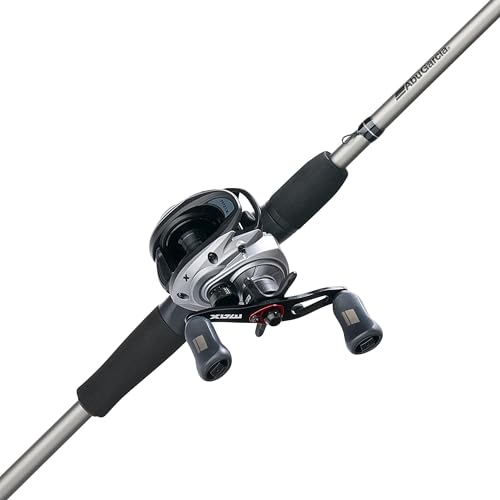

As an Amazon Associate we earn from qualifying purchases at no extra cost to you. Ratings are shown as listed on Amazon.
Quick picks by fishing situation
- Best budget learning setup: a 6-foot-10-inch to 7-foot medium-heavy fast-action combo with a 6.3:1 or 7.1:1 reel and 30–40 lb braided line.
- Best all-around bass setup: a 7-foot medium-heavy fast rod, 150-size reel, and 12–15 lb fluorocarbon or 30–40 lb braid with a leader.
- Best walleye baitcasting setup: a 6-foot-8-inch to 7-foot medium or medium-light rod, 6.3:1 reel, and 8–10 lb fluorocarbon or 10–15 lb braid.
- Best inshore setup: a 7-foot to 7-foot-6-inch medium-heavy rod, 7.1:1 reel, and 20–30 lb braid, provided the reel is rated for saltwater use and rinsed after every trip.
- Best upgrade path: purchase the rod and reel separately if you fish weekly; a Shimano SLX or SLX DC reel, Daiwa Tatula 100, Lew’s Speed Spool LFS, or Abu Garcia Revo-level reel gives more useful long-term refinement than a very inexpensive bundled outfit.
What actually makes a baitcasting combo suitable?
A baitcaster is only as well matched as its weakest major component. Rod power determines how much force is needed to load the blank and control a fish. Action describes where the rod bends. Reel gear ratio determines how quickly line is recovered. Spool capacity and braking determine whether the reel handles your lure weight without constant backlash.
For a beginner, a medium-heavy fast-action rod is often the safest starting point because it casts common bass lures from roughly 3/8 to 1 ounce, drives single hooks effectively, and has enough backbone for cover. A medium rod is easier to load with smaller lures but may feel overpowered by heavy jigs or thick vegetation.
Comparison of the main combo types
| Use | Rod specification | Reel and gear ratio | Recommended line | Typical lure range |
|---|---|---|---|---|
| Light bass and walleye | 6’8"–7′ medium, fast | 100–150 size, 6.3:1–7.1:1 | 8–10 lb fluorocarbon or 10–15 lb braid | 1/4–5/8 oz |
| All-around largemouth and smallmouth | 7’–7’3" medium-heavy, fast | 150 size, 6.3:1–7.3:1 | 12–17 lb fluorocarbon or 30–40 lb braid | 3/8–1 oz |
| Heavy cover and frogs | 7’–7’6" heavy, fast | 150–200 size, 7.1:1–8.1:1 | 50–65 lb braid | 1/2–1 1/4 oz |
| Inshore redfish and snook | 7’–7’6" medium-heavy, fast | 150–200 saltwater-capable, 7.1:1 | 20–30 lb braid with 20–40 lb leader | 3/8–1 oz |
These are starting ranges, not universal limits. Check the lure and line ratings printed on the rod. A rod labeled medium-heavy by one manufacturer can feel closer to another brand’s medium or heavy model.
Best baitcasting combos by budget
Entry level: roughly $100–$180
In this range, prioritize a usable rod blank and an adjustable magnetic or centrifugal braking system over cosmetic features. Bundled outfits from Abu Garcia, Lew’s, and similar established fishing brands can be sensible for occasional bass fishing. Expect more noticeable handle flex, noisier bearings, and less refined drag performance than on a premium reel.
Choose a 7-foot medium-heavy rod if you mainly throw spinnerbaits, Texas rigs, swim jigs, and lipless crankbaits. Avoid pairing a very cheap reel with a heavy rod if you are learning: the heavier spool and inconsistent braking can make light lures frustrating to cast.
Midrange: roughly $180–$350
This is usually the value sweet spot. A separate rod and reel can provide a lighter spool, better bearings, stronger frame construction, and a smoother drag without entering premium pricing. The Shimano SLX and SLX DC families, Daiwa Tatula 100, and Lew’s Speed Spool LFS are examples of established reel lines to compare, while rods from the same manufacturers can be matched by length, power, and action.
For a first serious bass combo, select a 7-foot medium-heavy fast rod and a 150-size reel around 6.3:1 for crankbaits and moving baits or around 7.1:1 for worms, jigs, and topwater. A midrange combo is typically the better ownership choice for someone fishing several times per month.
Premium: roughly $350–$700 or more
Premium reels such as the Shimano Curado MGL 150 or higher-tier Daiwa and Abu Garcia models generally reduce fatigue through lighter frames and spools, improve casting control, and offer more consistent gearing. They do not remove the need to set spool tension and brakes correctly, and they will not compensate for an unsuitable rod.
Spend extra here when you fish weekly, make hundreds of casts per trip, or need specialized outfits. For occasional use, the performance gain may not justify the price difference. A quality midrange reel paired with a well-matched rod usually beats an expensive reel on an unsuitable blank.
Gear ratio: match speed to the presentation
- 6.3:1 to 6.8:1: versatile for crankbaits, spinnerbaits, swimbaits, and general-purpose bass fishing. It offers useful torque and is less likely to retrieve a lure too quickly.
- 7.1:1 to 7.4:1: the best all-around fast range for Texas rigs, jigs, topwater, and pitching. It quickly picks up slack after a fish moves toward the boat.
- 8.0:1 and higher: useful for frogs, flipping, and burning search baits, but it can feel less powerful under heavy load.
Gear ratio alone does not tell you retrieve speed. A larger spool retrieves more line per turn. For example, a reel collecting approximately 30 inches per handle turn retrieves 90 feet in 36 turns, while one collecting 25 inches needs about 43 turns for the same distance. Manufacturers usually list inches per turn, which is more useful than ratio when comparing models.
Line choice and a simple capacity check
Fluorocarbon gives a relatively unobtrusive presentation and sinks, but thick line can reduce casting distance and make backlash harder to clear. Braid is thinner for its strength and performs well around vegetation, yet it can dig into the spool under heavy pressure. A fluorocarbon leader can combine braid’s casting efficiency with abrasion resistance near rocks or docks.
For a typical bass spool rated around 110 yards of 12 lb mono, do not automatically fill it with 20 lb fluorocarbon: the thicker line may reduce practical capacity substantially. If you fish braid, backing is economical and prevents spool slip. Add enough inexpensive monofilament backing to cover the arbor, connect it to the braid with an improved Albright or similar compact knot, and fill the braid to about 1/8 inch below the spool lip. Overfilling increases overruns; underfilling reduces casting distance.
Beginner setup in five steps
- Match lure weight first. Use a rod whose printed range includes your most common lure, preferably near the middle of that range.
- Fill the spool correctly. Leave approximately 1/8 inch between line and spool lip and wind under steady tension.
- Set spool tension. Hold the rod at about 45 degrees, disengage the spool, and adjust until the lure drops smoothly with minimal side-to-side spool play.
- Start with more braking. Set magnetic or centrifugal brakes near the middle-to-high part of their range. Reduce braking gradually only after the spool stops overrunning.
- Practice with a heavier plug. A 3/8- to 1/2-ounce practice weight loads a typical medium-heavy rod more easily than a small lure. Use short side-arm casts before attempting long overhead casts.
Durability and ownership costs
The parts that commonly wear first are line guides, spool bearings, levelwind pawls, drag washers, handle knobs, and thumb bars. Salt, sand, and dried fish slime accelerate that wear. After inshore use, lightly rinse the assembled reel with fresh water, wipe it dry, and let it air-dry before storage. Do not blast water directly into the spool bearings or drag stack.
Replace damaged line rather than repeatedly cutting away short sections. A practical annual budget for a regularly used combo may include $15–$35 for new monofilament or fluorocarbon, $15–$30 for braid top-up or replacement, and occasional cleaning supplies. A $250 combo used 30 times costs about $8.33 per trip before line; a $120 combo used only six times costs $20 per trip. Frequency of use matters more than the initial price.
Final buying decision
Choose the inexpensive combo if you fish a few times each season and want to learn baitcasting without a large investment. Choose a midrange 7-foot medium-heavy combo if you fish for bass regularly and want one outfit that covers the greatest number of techniques. Choose a specialized heavy or inshore combo only when your cover, lure weight, or saltwater exposure requires it. The best baitcasting combos are not the ones with the highest gear ratio or most bearings; they are the combinations whose rod power, lure range, line strength, and reel braking match how and where you fish.


Write Your Review
No reviews yet. Be the first to share your experience!