

Key takeaways
- Best Rod and Reel Combos for Every Fishing Style The best rod and reel combo is the one whose power, action, reel size, line capacity, and construction match the species, water, lure weight, and amount of travel you expect. For…
Best Rod and Reel Combos for Every Fishing Style
The best rod and reel combo is the one whose power, action, reel size, line capacity, and construction match the species, water, lure weight, and amount of travel you expect. For most beginners, a 6-foot 6-inch to 7-foot medium-power fast-action spinning rod paired with a 2500- or 3000-size reel is the most versatile starting point; larger saltwater fish require heavier power, corrosion-resistant components, and more line capacity.
Quick Picks by Fishing Situation
| Fishing situation | Recommended rod | Reel size | Line and capacity target | Why it fits |
|---|---|---|---|---|
| General freshwater | 6’6″–7′, medium, fast action | 2500–3000 spinning | 8–10 lb braid; 150–200 yd | Handles bass, walleye, trout, panfish, and common lures |
| Light trout and panfish | 5’6″–6’6″, light or ultralight, moderate-fast | 1000–2000 spinning | 2–6 lb line; 100–150 yd | Loads small lures easily and protects light line |
| Freshwater bass and heavier lures | 6’10″–7’3″, medium-heavy, fast | 2500–3000 spinning or low-profile baitcaster | 10–15 lb braid; 150–200 yd | Provides hook-setting power around weeds and cover |
| Inshore saltwater | 7’–7’6″, medium or medium-heavy, fast | 3000–5000 spinning | 15–30 lb braid; 200–300 yd | Balances casting distance, drag strength, and line reserve |
| Surf and larger saltwater | 9’–12′, medium-heavy or heavy, moderate-fast | 5000–8000 spinning | 30–50 lb braid; 250–400 yd | Supports long casts, heavier sinkers, and larger fish |
| Travel and compact storage | 4-piece, 6’–7′, medium-light or medium | 2500–3000 spinning | 8–15 lb braid; 150–200 yd | Fits luggage while retaining useful all-around range |
Best All-Around Freshwater Combo
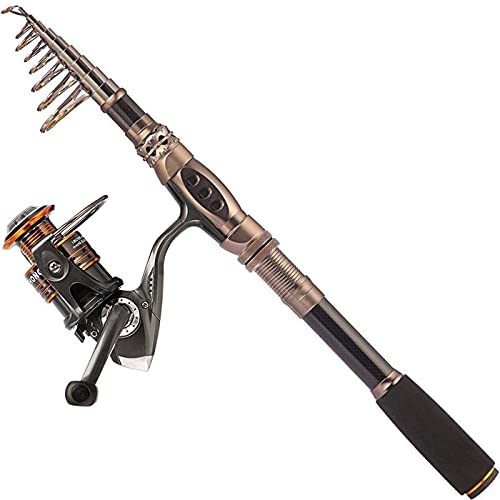
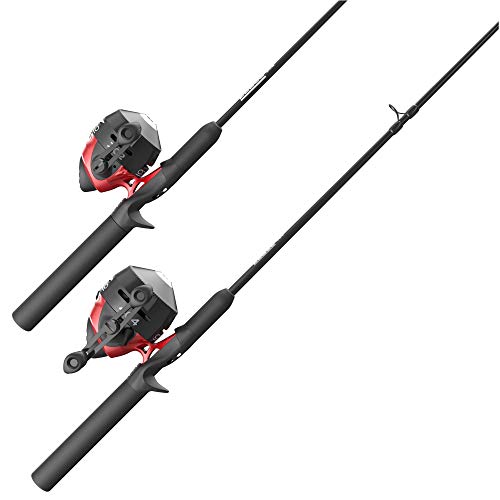
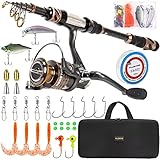
A medium-power, fast-action spinning combo around 6 feet 6 inches to 7 feet is the safest choice for someone who fishes several freshwater environments. It can cast small jerkbaits, soft plastics, spinnerbaits, live bait rigs, and light crankbaits without becoming specialized.
Our top picks


As an Amazon Associate we earn from qualifying purchases at no extra cost to you. Ratings are shown as listed on Amazon.
A 2500-size reel is usually enough for ponds, rivers, and most lakes. Choose a 3000-size reel when you want a slightly longer spool, more line capacity, or a longer rod for bank fishing. A braid main line in the 8- to 10-pound range with a 6- to 12-pound fluorocarbon leader covers many common applications.
Examples of established combo families in this category include the Ugly Stik GX2 spinning combos, the Pflueger President spinning setups, and Shimano Sedona-based combinations. Exact rod power, length, and included line vary, so check the individual specifications rather than buying by series name alone.
Best Combo for Beginners
Beginners benefit more from forgiveness and reliability than from maximum sensitivity. Look for a two-piece rod with medium power, moderate-fast action, stainless or aluminum-oxide guides, and a reel with a front drag that turns smoothly through its adjustment range.
The Ugly Stik GX2 is a common beginner-oriented option because its composite construction tolerates accidental impacts better than many lightweight high-modulus graphite rods. It is not the lightest or most sensitive choice, but durability can matter more when a first setup is transported in a vehicle, stored in a garage, or handled by several family members.
A 6’6″ medium combo is easier to control than a long surf rod, while still casting far enough for most shorelines. Pair it with 8- or 10-pound monofilament if simplicity is the priority. Monofilament is inexpensive, floats, and is less likely to dig into the spool than thin braid when a new angler makes a mistake.
Best Combo for Bass and Heavier Freshwater Fishing
For largemouth bass around vegetation, docks, or submerged timber, choose a 7-foot medium-heavy rod with fast action. The heavier butt section moves a fish away from cover, while the fast tip helps transmit lure movement and set single hooks.
A 3000-size spinning reel works well for weightless plastics, finesse jigs, and small topwater lures. For repeated casting of heavier jigs, frogs, or spinnerbaits, a low-profile baitcasting reel can provide better thumb control and accuracy, but it has a steeper learning curve. A rod labeled for roughly 10- to 17-pound line and lures around 3/8 to 1 ounce is a useful middle ground.
Do not choose medium-heavy power solely because it sounds stronger. If most of your lures weigh less than 1/4 ounce, a medium rod may cast them farther and load more naturally. Rod power and lure rating should agree with the techniques you actually use.
Best Inshore Saltwater Combo
Inshore fishing for species such as redfish, snook, striped bass, and smaller tarpon calls for a 7- to 7-foot 6-inch medium or medium-heavy spinning rod paired with a 3000- to 5000-size reel. The longer rod helps cast across flats and current, while the larger spool reduces line memory and provides additional capacity.
Saltwater changes the buying decision. Look for sealed or shielded bearings, a corrosion-resistant body or side plate, an anodized spool, and a drag designed to remain smooth under sustained pressure. These features do not make a reel maintenance-free, but they improve its margin for error.
The Daiwa BG and Penn Battle III are widely recognized reel families that are often matched with separate inshore rods. Combo availability and specifications change, so confirm the stated reel size, gear ratio, drag rating, and rod lure range before purchase. A 15- to 20-pound braid main line with a fluorocarbon leader is a practical starting point for many inshore situations.
Best Combo for Surf and Larger Saltwater Fish
Surf fishing requires more than a powerful reel. A 9- to 12-foot medium-heavy or heavy rod helps launch bait or lures beyond breaking waves, and its rating must accommodate the sinker weight you intend to cast. A reel in the 5000 to 8000 range should hold at least 250 yards of suitable braid or monofilament, with more capacity preferred where strong fish can make long runs.
For example, if a rig uses a 4-ounce sinker plus bait, select a rod whose lure rating includes that combined casting weight. Exceeding the rating can damage the blank and reduces casting control. A moderate-fast action is often more forgiving with bait rigs than an extremely fast action, which can make shock loads harsher on knots and hooks.
Best Travel Combo
A four-piece travel rod is the best choice when storage space matters more than the last few percent of casting performance. A 6- to 7-foot medium-light or medium travel rod will fit in many suitcases or vehicle compartments while handling general freshwater species and modest coastal fishing.
Inspect the packed length, not just the fishing length. A 7-foot four-piece rod may pack to roughly 22 to 24 inches, while a two-piece rod of the same length may pack to about 42 inches. Bring a protective tube because broken ferrules are a common travel failure.
Match the rod with a 2500- or 3000-size spinning reel. Remove the reel or protect it separately during transport, and loosen the drag before storage to reduce unnecessary compression on the drag washers.
How to Size the Combo Without Guessing
- Start with the lure or bait weight. Choose a rod whose printed lure range places your normal lure weights near the middle, not at the extreme upper limit.
- Choose power for fish and cover. Light suits small fish and open water; medium is versatile; medium-heavy and heavy are better for strong fish, thick vegetation, current, and heavy sinkers.
- Choose action for technique. Fast action gives a quicker tip response for jigs, soft plastics, and single hooks. Moderate action bends deeper and can keep treble-hooked lures pinned.
- Size the reel to the line. A 1000- or 2000-size reel suits light line; 2500–3000 covers general freshwater; 4000–5000 is a practical inshore range; 6000 and above are for larger line and heavier work.
- Check the capacity rather than the number alone. Spool sizes differ between brands. Confirm that the reel holds your target line length with room for a long run and several reties.
Ownership Costs and Durability Realities
The parts that commonly wear first are line, bail springs, roller bearings, drag washers, and rod guides. Line should be replaced when it becomes visibly abraded, heavily coiled, or weakened by repeated contact with rocks and dock edges. Braid can last multiple seasons in freshwater, but its terminal section may need frequent replacement.
Saltwater requires a rinse after every trip. Use a gentle freshwater spray rather than a high-pressure jet, wipe the rod and reel dry, and inspect the line roller, bail, and handle after the reel has dried. High-pressure water can force salt and grit deeper into bearings and seals. Do not immerse a reel unless the manufacturer specifically permits it.
As a simple ownership comparison, a $120 combo used 12 times per year for three years costs about $3.33 per fishing day before line and terminal tackle: $120 divided by 36 uses. A cheaper combo that needs replacement after one season may cost more per use than a better-sealed setup used regularly. Frequency, maintenance, and saltwater exposure matter as much as the initial price.
Final Buying Recommendation
Choose a 6’6″–7′ medium fast-action spinning combo with a 2500- or 3000-size reel for the broadest freshwater usefulness. Move to a 7’–7’6″ medium-heavy setup and a 3000–5000 reel for inshore saltwater, and choose a 9’–12′ surf combo only when long casts and heavy sinkers are part of the plan. For beginners, prioritize forgiving construction and simple monofilament; for frequent saltwater anglers, prioritize corrosion resistance, line capacity, and a smooth drag over a small reduction in weight.




Write Your Review
No reviews yet. Be the first to share your experience!