

Key takeaways
- A rim that overlaps the lower pot by at least 1–2 cm.
- Perforations distributed across the base, not concentrated only in the centre.
- Holes small enough to retain hydrated couscous grains, usually around 1–2 mm.
- Two sturdy handles that remain cool enough to lift with oven mitts.
- A lid that closes over the basket without pressing into the couscous.
The best couscoussier for traditional couscous is a 5–7 litre stainless-steel pot with a tightly fitting perforated steamer basket, a heavy base, and enough headroom for the grains to expand without touching the lid.
For most home cooks, choose a 24 cm, 6-litre stainless-steel couscoussier. It is large enough for four to six portions, distributes heat more reliably than thin aluminium, and gives the upper basket a secure fit. Smaller 3–4 litre pots suit one or two people, while an 8–10 litre model is better for frequent family meals or entertaining.
Our top picks
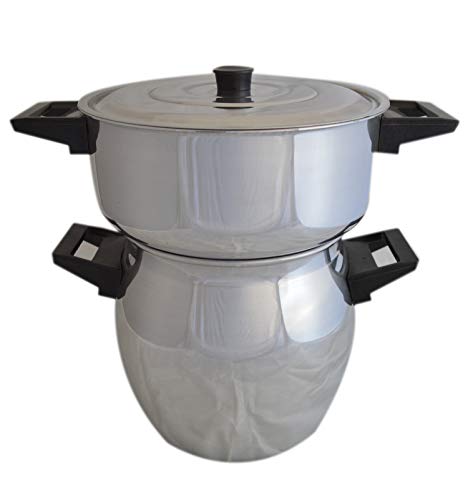


As an Amazon Associate we earn from qualifying purchases at no extra cost to you. Ratings are shown as listed on Amazon.
Top couscoussier choices by cooking situation
| Best for | Recommended specification | Typical capacity | Why it works | General market range |
|---|---|---|---|---|
| Most households | Stainless steel, encapsulated base, 22–24 cm diameter | 5–7 litres | Balanced size, durable construction, even simmering | $50–$120 |
| One or two servings | Compact stainless steel or thick aluminium, 18–20 cm diameter | 3–4 litres | Quicker to heat and easier to store | $25–$65 |
| Large family meals | Heavy stainless steel, reinforced handles, wide steamer | 8–10 litres | Holds more grains and vegetables without crowding | $80–$180 |
| Traditional low-cost cooking | Thick-gauge aluminium with snug steamer | 5–8 litres | Fast heat response and low purchase price | $25–$70 |
| Induction cooking | Magnetic stainless steel with a flat encapsulated base | 5–7 litres | Reliable hob detection and steadier heat transfer | $60–$150 |
What makes a couscoussier good for authentic couscous?
Capacity and usable space
Capacity figures can be misleading because they usually describe the entire lower pot, not the room available for broth or the volume of the steamer basket. A 6-litre couscoussier may hold only 3.5–4 litres below the perforated insert once the basket and lid are fitted.
As a practical guide, allow approximately 1 litre of total couscoussier capacity per serving when the pot is also used for meat and vegetables. This does not mean filling it completely. The broth should simmer freely, and the basket should leave at least 5 cm of space above the liquid. Crowding the upper section encourages wet, compact grains rather than light couscous.
Material and heat distribution
Stainless steel is the safest all-purpose choice for durability and easy cleaning, but thin stainless steel can develop hot spots. Look for an encapsulated or bonded base, ideally around 3–5 mm thick, containing aluminium or another conductive layer. The cooking surface remains stainless while the conductive core spreads heat across the base.
Aluminium heats quickly and is common in traditional-style couscoussiers. Thick-gauge aluminium generally performs better than very lightweight metal, which can warp around the base or dent at the rim. Untreated aluminium may react with strongly acidic ingredients and can darken during washing, so it requires more careful maintenance.
Copper offers excellent heat control but is uncommon in affordable couscoussiers and needs a compatible lining. For most kitchens, a heavy stainless-steel base provides nearly all the practical advantage without the extra upkeep.
The steamer fit matters more than decorative features
The upper basket should sit firmly on the lower pot rather than balancing loosely on its rim. A good fit prevents steam from escaping around the sides and keeps the grains exposed to moist, even heat. Check for:
- A rim that overlaps the lower pot by at least 1–2 cm.
- Perforations distributed across the base, not concentrated only in the centre.
- Holes small enough to retain hydrated couscous grains, usually around 1–2 mm.
- Two sturdy handles that remain cool enough to lift with oven mitts.
- A lid that closes over the basket without pressing into the couscous.
A loose basket can sometimes be sealed with a strip of clean cotton cloth or a traditional dough seal around the joint. Do not use plastic wrap, adhesive tape, or synthetic fabric near steam and heat.
Head-to-head: stainless steel versus aluminium
| Feature | Stainless steel | Aluminium |
|---|---|---|
| Heat response | Moderate; best with a bonded conductive base | Fast and responsive |
| Heat evenness | Very good with a thick base; variable when thin | Good when thick-gauge; prone to hot spots when thin |
| Durability | Resists corrosion and denting better | Can dent, warp, or scratch more easily |
| Cleaning | Usually dishwasher-safe, depending on handles and finish | Often hand-wash only |
| Induction compatibility | Only if the base contains magnetic stainless steel | Not compatible unless it has a magnetic base |
| Best reason to choose it | Long-term ownership and easy maintenance | Lower cost and quick heat control |
Decision matrix: which size should you buy?
| Your situation | Best choice | Reason |
|---|---|---|
| First couscoussier, two to four people | 5-litre stainless steel | Forgiving capacity without taking over the kitchen |
| Four to six people, regular cooking | 6–7-litre model, 22–24 cm wide | Enough space for fluffy grains and a substantial broth |
| Weekly cooking for a large household | 8–10-litre heavy stainless steel | Reduces crowding and prevents repeated batches |
| Small cupboards or limited hob space | 3–4-litre model with nesting handles | Easier storage and faster heating |
| Induction hob | 5–7-litre magnetic-base model | Ensures the lower pot is detected by the hob |
| Occasional use on a strict budget | Thick aluminium with a well-fitted basket | Prioritises steam circulation without paying for premium steel |
How to use the pot for lighter couscous
- Check the water level. Add broth or water to the lower pot, keeping the liquid below the steamer basket. Direct contact with boiling liquid makes the lower grains soggy.
- Seal the joint. If steam escapes around the rim, use a damp cotton strip or traditional dough seal. Steam should travel through the grains, not around them.
- Spread the grains loosely. Do not compress couscous into the basket. Leave room for steam to move through the layer.
- Steam in stages. Traditional preparation commonly involves steaming, removing the grains, separating them with a fork or hands when cool enough, and returning them for another steaming. The repeated aeration is more important than simply increasing the heat.
- Keep the simmer moderate. A violent boil wastes water and can force liquid into the steamer. You want a continuous column of steam, not splashing broth.
Ownership details that affect the buying decision
The first parts likely to fail are usually the lid knob, riveted handles, and the fit between the basket and lower pot—not the cooking metal itself. Inspect rivets and handle mounts before buying. A basket that is slightly undersized may leak steam from the beginning, while a lid with a loose knob becomes awkward when the pot is full.
Measure your storage space as well as your hob. A 24 cm pot can be more than 35 cm tall with the basket and lid attached. If the upper section must be stored separately, confirm that the basket can sit inside the lower pot without damaging the cooking surface.
After cooking, empty the broth promptly and soak stuck grains in warm water. Avoid scouring pads on polished stainless steel and avoid harsh alkaline cleaners on aluminium. Dry the basket upside down so water does not remain in the perforations. For induction users, keep the base flat: dropping or overheating an empty pot can permanently reduce contact with the hob.
Bottom line
Choose a 5–7 litre stainless-steel couscoussier with a bonded base and a snug, generously perforated basket if you want the best balance of authentic steaming, durability, and easy maintenance. Move down to 3–4 litres for compact kitchens or one-to-two-person cooking, and up to 8–10 litres when you routinely cook for a crowd. The basket fit and steam control matter more than polished finishes, brand decoration, or the largest advertised capacity.

Write Your Review
No reviews yet. Be the first to share your experience!