

Key takeaways
- For most people with braces, the Waterpik Cordless Advanced 2.0 offers the best balance of a roughly 7-ounce tank, adjustable pressure, waterproof construction, and brace-friendly accessories. For the smallest packed size, choose the Panasonic EW-DJ11 and accept a likely refill. For sensitive gums, make three…
The best cordless water flossers for travel and braces are the Waterpik Cordless Advanced 2.0 for the most capable all-round use, the Panasonic EW-DJ11 for compact packing, and a cordless pulse flosser with at least a 7-ounce tank and three pressure levels if you need frequent brace cleaning. The right choice depends less on maximum pressure than on tank capacity, controllability, charging, and whether the tip can reach around brackets without irritating your gums.
Our top picks

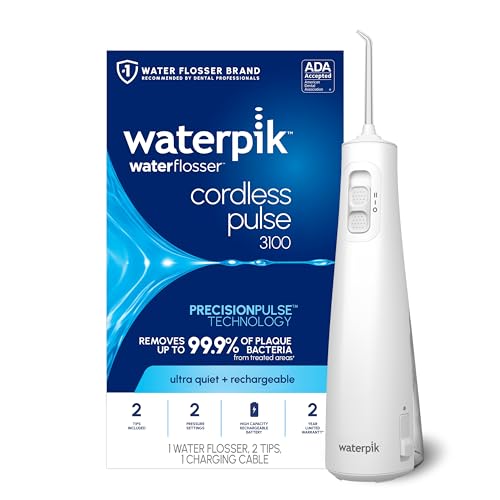


As an Amazon Associate we earn from qualifying purchases at no extra cost to you. Ratings are shown as listed on Amazon.
Quick picks by situation
| Best for | Recommended type or model | Why it fits | Main compromise |
|---|---|---|---|
| Braces and daily home use | Waterpik Cordless Advanced 2.0 | 7-ounce reservoir, three pressure settings, orthodontic tip, waterproof design | Bulkier than a basic travel flosser |
| Small luggage and occasional use | Panasonic EW-DJ11 | Approximately 5-ounce collapsible tank and compact body | Shorter refill interval and fewer controls |
| Sensitive gums | Low-pressure cordless pulse flosser with three or more levels | Allows a gradual start instead of forcing a high-pressure stream | Usually costs more than two-setting models |
| Long trips without convenient charging | Battery-powered model with a USB charging case or long stated runtime | Easier to recharge away from a bathroom outlet | Charging standards and included adapters vary |
What matters most when choosing the best cordless water flossers
Tank capacity: the overlooked travel calculation
A cordless flosser typically uses between 5 and 7 ounces of water per complete session. A 5-ounce tank may be adequate for a quick once-daily routine, but braces often require slower passes around brackets and under the wire. That can turn one nominal session into a refill.
For example, if your flosser uses about 6 ounces per minute and you take 75 seconds to clean both arches, the required volume is approximately:
6 ounces per minute × 1.25 minutes = 7.5 ounces.
That is why a 7-ounce tank is more convenient for braces than a 5-ounce tank, even when both products advertise a similar operating time. A smaller tank is not a problem if you accept one refill, but it saves little space if you must carry a separate bottle of water and stop mid-routine.
Pressure settings: control beats the highest number
Pressure settings are more useful than a headline maximum-pressure figure. New users, people with sensitive gums, and anyone returning to flossing after a break should be able to begin gently and increase gradually. Three settings provide a useful low, medium, and higher range; two settings can work, but leave less room for adjustment.
For braces, look for an orthodontic tip or a narrow jet tip and a tank large enough to let you work methodically. A strong setting does not replace correct positioning. Aim the stream at the gumline and around each bracket rather than blasting directly into the gums at close range.
Battery life and charging
Manufacturers describe battery life in different ways, so compare sessions rather than days. If a device provides 45 to 60 seconds of operation per charge cycle and you use it once daily, that may represent roughly 30 to 45 sessions. In practice, battery performance declines with charging habits, water temperature, storage conditions, and battery age.
USB charging is convenient in hotels, but a proprietary magnetic charger can be easier to use near a wet sink. Check whether the model supports the voltage and plug arrangement used at your destination. Do not put a charger or non-waterproof handle where it can be splashed.
Head-to-head: the strongest cordless choices
Waterpik Cordless Advanced 2.0: best overall for braces and travel
The Cordless Advanced 2.0 is a sensible pick when you want one device for home and travel. Its approximately 7-ounce reservoir is larger than many compact flossers, and its three pressure settings make it easier to start gently. The waterproof handle is designed for shower use, and the model is commonly sold with multiple tips, including an orthodontic tip.
Its practical advantage is not simply pressure: the larger reservoir reduces interruptions while cleaning around brackets. The trade-off is a thicker, heavier travel package than a collapsible model, and the rechargeable battery requires planning before a long trip.
Panasonic EW-DJ11: best for limited luggage space
The Panasonic EW-DJ11 uses a collapsible reservoir of approximately 5 ounces, allowing the body to shrink for packing. That makes it attractive for short trips, a gym bag, or anyone with a very small toiletry case. Its simpler control layout is easy to understand, but the smaller capacity means you should expect a refill for a careful braces routine.
Choose it when packed size is the priority. Choose a larger three-setting model when you are still learning technique, have sensitive gums, or want a one-tank session.
Waterpik Cordless Plus: a simpler middle ground
The Waterpik Cordless Plus is aimed at people who want a cordless, waterproof flosser without the larger feature set of premium travel models. Its compact reservoir is generally around 5 ounces, and it is suited to quick daily cleaning. It can be convenient for routine interdental care, but users with braces should confirm that the package includes the tip they need or purchase a compatible replacement.
Its appeal is simplicity and portability. Its limitations are the smaller tank and less adjustment than models with three pressure levels.
Decision matrix: match the flosser to your routine
| Your situation | Prioritize | Minimum useful specification | Best fit |
|---|---|---|---|
| First water flosser | Gentle control and easy filling | Three pressure levels, removable or wide-fill tank | Waterpik Cordless Advanced 2.0 or similar |
| Fixed braces | Capacity and specialized tip | 7-ounce tank, orthodontic tip, waterproof handle | Larger cordless model |
| Sensitive gums | Low starting pressure | Clearly differentiated low setting and pulsed stream | Three-setting model |
| Weekend travel | Small packed dimensions | Collapsible 5-ounce tank or compact body | Panasonic EW-DJ11 or similar |
| Daily international travel | Charging compatibility and drying | USB charging or a destination-compatible charger, travel case | Model with documented charging specifications |
How to use a cordless water flosser around braces
- Fill with lukewarm water. Very hot water can damage some components, while cold water may be uncomfortable for sensitive teeth.
- Insert the tip before switching on. Start at the lowest pressure setting over the sink.
- Lean forward and keep your mouth partly open. This reduces splashing while allowing water to drain.
- Trace the gumline first. Then pause briefly around each bracket, moving along the front and back of the wire.
- Clean between brackets and teeth. A narrow or orthodontic tip can make this easier, but it does not eliminate the need for other cleaning recommended by your dental professional.
- Empty and air-dry the reservoir. Do not leave standing water inside between uses.
Water flossers remove loose debris and can support an oral-hygiene routine, but they do not replace brushing or professional advice. If your gums bleed persistently, hurt, swell, or become irritated after use, stop increasing the pressure and ask a dentist or orthodontist for guidance.
Ownership realities: what wears out first
The tip is usually the first consumable. Replace it according to the manufacturer’s schedule or sooner if the jet becomes uneven, the tip is damaged, or the bristles on a specialized tip become worn. Seals and the small reservoir valve can also accumulate mineral deposits, especially with hard water.
After each use, empty the tank, run the device briefly if the instructions permit, and leave the reservoir open to dry. Periodically clean removable parts according to the manual. Avoid poking the nozzle with a needle or using abrasive cleaners; either can damage the jet opening or seals. A travel case is useful, but the device should be dry before being zipped inside it.
Bottom line
For most people with braces, the Waterpik Cordless Advanced 2.0 offers the best balance of a roughly 7-ounce tank, adjustable pressure, waterproof construction, and brace-friendly accessories. For the smallest packed size, choose the Panasonic EW-DJ11 and accept a likely refill. For sensitive gums, make three pressure levels and a genuinely gentle low setting non-negotiable. Whichever model you buy, compare usable tank volume, charging arrangements, replacement-tip availability, and cleaning requirements—not just the maximum pressure printed on the box.


Write Your Review
No reviews yet. Be the first to share your experience!