

Key takeaways
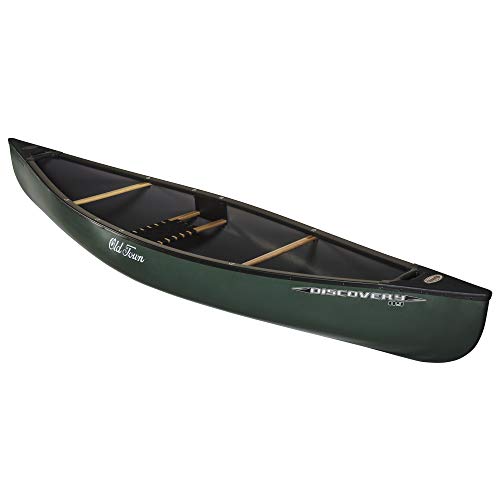
- Best all-around family and lake canoe: a 16-foot polyethylene tandem canoe with a 900- to 1,100-pound capacity, such as the Old Town Discovery 158.
- Best lighter tandem for frequent carrying: a composite or thermoformed 16- to 17-foot canoe weighing about 45 to 60 pounds, such as the Wenonah Spirit II in a composite layup.
- Best solo-and-tandem compromise: a 14- to 16-foot canoe with a center seat or symmetrical hull, such as the Old Town Penobscot 164.
- Best maneuverability for rivers: a rockered 15- to 16-foot whitewater-oriented canoe, such as the Esquif Prospecteur 16, rather than a long, straight-tracking touring hull.
- Best budget and abuse tolerance: a rotomolded polyethylene canoe. It is heavy, but it handles beach landings, gravel, and occasional dragging better than lightweight composites.
The best canoes for most buyers are stable, durable tandem models in the 15- to 17-foot range, but the right choice depends on whether you prioritize flat-water efficiency, river maneuverability, low carrying weight, or family capacity.
Our top picks



As an Amazon Associate we earn from qualifying purchases at no extra cost to you. Ratings are shown as listed on Amazon.
Quick picks by paddling situation
- Best all-around family and lake canoe: a 16-foot polyethylene tandem canoe with a 900- to 1,100-pound capacity, such as the Old Town Discovery 158.
- Best lighter tandem for frequent carrying: a composite or thermoformed 16- to 17-foot canoe weighing about 45 to 60 pounds, such as the Wenonah Spirit II in a composite layup.
- Best solo-and-tandem compromise: a 14- to 16-foot canoe with a center seat or symmetrical hull, such as the Old Town Penobscot 164.
- Best maneuverability for rivers: a rockered 15- to 16-foot whitewater-oriented canoe, such as the Esquif Prospecteur 16, rather than a long, straight-tracking touring hull.
- Best budget and abuse tolerance: a rotomolded polyethylene canoe. It is heavy, but it handles beach landings, gravel, and occasional dragging better than lightweight composites.
The most important canoe trade-offs
Hull material: weight versus toughness
Polyethylene is usually the least expensive material and the most forgiving around rocky shorelines. Its disadvantages are weight and gradual deformation if it is stored in strong heat or supported incorrectly. A 15- to 16-foot polyethylene canoe commonly weighs 75 to 90 pounds, so two adults can carry it, but solo loading onto a vehicle may be awkward.
Thermoformed ABS or similar laminates reduce weight while retaining better impact resistance than many traditional composites. These canoes often fall in the 55- to 75-pound range. They are a useful middle ground for families who carry the boat regularly but still launch on imperfect shorelines.
Fiberglass, Kevlar, carbon, and other composite constructions deliver the best weight-to-performance ratio. A 16-foot composite canoe may weigh approximately 40 to 60 pounds, making roof loading and portages much easier. The trade-off is a higher purchase price and greater care around sharp rocks. Scratches are normal; repeated hard impacts can require patching.
Royalex is no longer produced as a new hull material, although used canoes made from it remain available. Modern ABS-based constructions fill a similar role in many new canoes, but material names and durability vary by manufacturer.
| Hull material | Typical 16-foot weight | General price range | Best use | Main compromise |
|---|---|---|---|---|
| Polyethylene | 75–90 lb | $900–$1,800 | Families, rentals, rocky shorelines | Heavy to load and portage |
| Thermoformed ABS-style laminate | 55–75 lb | $1,500–$3,000 | Frequent recreational use | More expensive than plastic |
| Fiberglass composite | 45–65 lb | $2,500–$4,500 | Lakes and efficient touring | Less tolerant of severe impacts |
| Kevlar or carbon composite | 35–55 lb | $3,500–$6,500+ | Portaging and long-distance trips | High cost and careful handling required |
These are broad 2026 market ranges for new recreational canoes, not fixed prices. Seats, yokes, outfitting, shipping, and regional availability can change the final cost substantially.
Lake canoes versus river canoes
Choose a lake-oriented hull for distance
For large lakes, reservoirs, and calm coastal water, look for a relatively long waterline, moderate rocker, and a narrower or moderate beam. A 16- to 18-foot touring canoe tracks efficiently, maintains speed, and carries camping equipment without excessive paddling effort. A sharper entry also helps the canoe glide through wind chop.
The downside is maneuverability. A long, straight-tracking canoe takes more paddle strokes to turn and can feel demanding on a winding river. Narrow touring designs may also feel less reassuring when children move around, even when their overall capacity is high.
Choose a river-oriented hull for control
Rivers with bends, current, gravel bars, and occasional rapids favor rocker: an upward curve at the bow and stern. Rocker shortens the effective waterline and lets the paddler pivot the canoe more easily. A 14- to 16-foot recreational river canoe is often easier to turn than a 17-foot lake cruiser.
More rocker reduces straight-line efficiency and can make a heavily loaded canoe feel less planted in wind. For moving water, prioritize a secure seating position, flotation or bulkheads appropriate to the intended difficulty, and a hull specifically designed for that environment. A general-purpose family canoe is not automatically suitable for whitewater.
Capacity: calculate the real load, not the advertised maximum
Manufacturers’ capacity figures are useful limits, but a canoe performs better when loaded well below its maximum. Add people, paddles, seats or accessories, coolers, dry bags, food, water, and safety equipment before choosing a hull.
For example, consider two adults weighing 175 and 150 pounds, two children weighing 70 and 45 pounds, and 100 pounds of equipment:
175 + 150 + 70 + 45 + 100 = 540 pounds.
A canoe advertised for 900 pounds technically exceeds that load, but a practical target is to use no more than roughly 60% to 70% of the published capacity when you want freeboard for waves and shifting passengers. At 60% of 900 pounds, the comfortable planning load is about 540 pounds. If the family adds camping equipment or a dog, move to a canoe rated closer to 1,100 or 1,200 pounds rather than relying on the bare minimum.
Capacity is not the same as stability. A long, wide canoe may carry more weight, while a narrower hull may paddle more efficiently. Keep heavy items low and centered, and never allow children or pets to move suddenly from one end to the other.
Solo, tandem, or family seating?
A tandem canoe is the safest default for two adults and children because it provides useful capacity and efficient paddling. A center seat or removable center bench makes a 15- to 16-foot tandem more versatile for solo outings. However, a tandem canoe paddled from the center may sit higher than a purpose-built solo canoe, making it more affected by wind.
A dedicated solo canoe is easier to control alone and usually weighs less, but it may not have enough room for a second paddler or a family load. If solo use will exceed half of your outings, compare a solo canoe with a symmetrical tandem before buying a heavy family model that you will rarely use as intended.
| Your situation | Recommended design | Why |
|---|---|---|
| Occasional family lake trips | 15–16 ft polyethylene, 850–1,100 lb capacity | Stable, affordable, and tolerant of rough handling |
| Frequent roof loading or portages | 16–17 ft composite, under 60 lb | Lower lifting effort and better cruising efficiency |
| Mostly solo, sometimes tandem | 14–16 ft symmetrical hull with center seat | One boat supports both paddling arrangements |
| Winding rivers and moving water | 14–16 ft hull with moderate to substantial rocker | Turns more readily and responds to corrective strokes |
| Long lake tours with camping gear | 16–18 ft touring hull, 900 lb or greater capacity | Tracks well and carries gear with useful freeboard |
Ownership details that affect the decision
The parts that commonly wear first are seat hardware, carrying yokes, skid plates, gunwale fasteners, and protective hull areas at the bow and stern. Inspect these after trips, especially if the canoe is dragged over gravel. A composite hull may need a small epoxy or fiberglass repair; polyethylene usually needs heat-based or plastic-specific repair methods.
Rinse the canoe after saltwater use, remove sand from seat tracks and fittings, and let the interior dry before storage. Store it upside down on padded supports near the strong points, not flat on the ground or suspended from the handles. Keep it out of prolonged direct sunlight where possible. Do not strap a canoe tightly to narrow supports for an entire season, since localized pressure can distort some hulls.
Transport also changes the ownership calculation. A 45-pound canoe that costs more can be easier to use than an 85-pound bargain model. If you carry the boat 20 times per year and a lighter hull saves 15 minutes of difficult lifting each outing, that is five hours of reduced handling effort annually. Conversely, if the canoe only travels from a trailer to a nearby dock, paying a large premium for minimum weight may not provide much practical value.
Final buying recommendation
Choose a stable 15- or 16-foot polyethylene tandem if affordability, family use, and impact resistance matter most. Step up to thermoformed or composite construction when you regularly load the canoe onto a vehicle or carry it over land. For lakes, favor length and efficient tracking; for rivers, favor rocker and maneuverability. Finally, select capacity with your fully loaded trip in mind and leave room for freeboard rather than treating the maximum rating as the target.




Write Your Review
No reviews yet. Be the first to share your experience!