

Key takeaways
- Compare five fishing lanterns for night fishing, from a budget Coleman 400L to the Streamlight Super Siege, with runtimes, batteries and waterproofing.
The best fishing lantern for most anglers is the Coleman 400L LED Lantern: a battery-powered lantern that puts out 400 lumens, runs up to 70 hours on low, resists water, and carries a carabiner handle for hanging at the rigging station or on the boat. Anglers who want to stop buying batteries should look at the Coleman Classic Rechargeable 400 Lumens LED Lantern, a rechargeable lantern with a USB charging port and a 400 lumen output that suits a bank angler who fishes close to the truck. Anglers who want the toughest mid-size lantern should look at the Streamlight Siege 540-Lumen Compact Lantern, a waterproof lantern with 360 degrees of light, five output modes, and a battery level indicator built into the button. Anglers who want the brightest light in this guide should look at the Streamlight Super Siege 1100-Lumen Rechargeable Lantern, a rechargeable lantern that reaches 1,100 lumens, floats, and doubles as a USB charger for a phone. Anglers who want the smallest lantern that still does the job should look at the Streamlight Siege AA 200-Lumen Lantern, a compact lantern that runs on three AA batteries, weighs under half a pound, and fits in a tackle bag pocket.
A fishing lantern is the light that stays in one place while the angler moves. A headlamp follows the head, and a flashlight follows the hand, but a lantern sits on the bank, on the boat deck, or on the tailgate and lights the whole working area at once. That is what night fishing needs most. Tying knots, changing lures, unhooking a fish, and sorting tackle all take two hands, and none of them can be done well while holding a flashlight between the teeth or aiming a headlamp at the hands. A lantern frees both hands and lights the area around the angler, so the work gets done faster and with fewer dropped hooks and tangled lines. The five lanterns in this guide are chosen for the different ways anglers fish at night: the bank angler who walks between spots, the boat angler who rigs on a deck, the kayak angler who needs a light that floats, and the dock angler who fishes the same spot all evening.
This guide compares the five lanterns on the figures that decide whether a lantern gets used all night or left in the truck: the lumen output, the runtime and power source, the water resistance and whether it floats, the red light mode, and the size and weight. Every figure below comes from the manufacturers’ published specification data and listing data, so you can match a lantern to the way you fish without guessing. This guide covers freestanding area lanterns only. Lights that go under the water to attract fish, lights that clip to a rig, and headlamps are different tools, covered in the site’s other lighting guides.
As an Amazon Associate, we earn from qualifying purchases.
Table of Contents
- Why a Fishing Lantern Matters
- How to Choose a Fishing Lantern
- Quick Comparison
- The 5 Best Fishing Lanterns
- Care and Cleaning After the Trip
- Safety and Checks Before You Order
- Frequently Asked Questions
- Conclusion
- Product and ASIN Reference
Why a Fishing Lantern Matters
A fishing lantern matters because night fishing is close work done in the dark, and close work needs light that stays put. Tying a knot takes two hands and a clear view of the line. Changing a lure takes two hands and a clear view of the split ring and the hook point. Unhooking a fish takes two hands and a clear view of the hook and the mouth. None of that works with a light that has to be held, aimed, or worn, because the moment the hands move, the light moves with them. A lantern sits on the ground or the deck and throws light in every direction, so the hands are free and the work area stays lit no matter which way the angler turns. The Coleman 400L in this guide hangs from its carabiner handle at the rigging station, the Streamlight Siege lanterns stand on the boat deck with 360 degree light, and the Super Siege lights a whole campsite from a single spot on the tailgate.
The second reason a lantern matters is safety on the bank and the boat. A dark bank hides roots, rocks, holes, and tackle boxes, and a dark boat deck hides rods, nets, and loose line. An angler who steps on a hook or trips over a tackle box in the dark loses fishing time at best and ends the trip at worst. A lantern on the deck or the bank marks the safe ground and shows where the gear is, so the angler moves with confidence instead of feeling the way with a foot. A lantern that floats, such as the Streamlight Super Siege and the Streamlight Siege AA, adds one more layer of safety, because a lantern that goes over the side can be seen on the water and pulled back instead of sinking out of sight.
The third reason is that a lantern keeps the night vision of everyone nearby. A bright white flashlight aimed across the boat ruins the night vision of every angler on board, and it takes many minutes for the eyes to recover. A lantern with a red light mode, such as the Streamlight Siege lanterns in this guide, gives enough light to see the tackle and the hands without flooding the area with white light. The red mode is the light to use when the bite is on and the rods are in the water, because it lets the angler check a bait or re-tie a rig without blinding the angler on the next rod. A lantern with a dimmable white mode does the same job in a smaller way, because the angler can turn the light down to the lowest setting that still shows the work.
A fishing lantern matters because it lights the working area while the headlamp and the flashlight do their own jobs on the same trip: the headlamp lights what the angler looks at while walking to the spot, the flashlight lights what the angler points at, and the lantern lights where the angler works. Most night anglers carry two of the three, and the lantern is the one that stays behind at the working area while the angler walks to the water. This guide stays with lanterns built to sit, stand, or hang in one place and light the area around them, and every lantern here is judged on how well it lights a working area through a long night of fishing.
How to Choose a Fishing Lantern
Start With Brightness and Lumens
Brightness is the first decision, because it fixes how much of the working area the lantern lights and how far the light reaches. Lumens measure the total light a lantern puts out, and the lanterns in this guide run from 200 lumens to 1,100 lumens. A 200 lumen lantern, such as the Streamlight Siege AA, lights a tackle box, a rod, and the hands at arm’s length, which suits a kayak angler or a bank angler who works close to the light. A 400 lumen lantern, such as the two Coleman lanterns in this guide, lights a rigging station, a cooler, and the ground around the angler, which suits a bank angler or a boat angler who needs a working circle a few steps across. A 540 lumen lantern, such as the Streamlight Siege, lights a boat deck and the water beside it, which suits a boat angler who rigs on deck and watches rods from a chair. A 1,100 lumen lantern, such as the Streamlight Super Siege, lights a whole campsite or a whole dock, which suits a group of anglers or a long night at a fixed spot.
Check the beam pattern as well as the lumen number. A lantern throws light in every direction, which is the point of a lantern, but the way the light spreads still matters. A lantern with a 360 degree pattern lights the whole area evenly, and it suits a lantern that sits in the middle of the working area. A lantern with a glare guard, such as the Streamlight Super Siege, lets the angler block the light on one side and turn the lantern into a task light, which suits rigging at a table or working under a canopy. A lantern with a dimmable output lets the angler turn the light down when the work is close and turn it up when the area is wide, and the Streamlight Siege lanterns in this guide offer several output modes for exactly that reason. Choose the brightness by the area, not by the number alone, because a lantern that is too bright for a small kayak lights the whole shoreline and ruins the night for everyone on it.
Runtime and Power Source
Runtime is the second decision, because a lantern that dies at midnight ends the night early. The runtime of a lantern is tied to its power source, and the three power sources in this guide each suit a different kind of trip. Battery lanterns, such as the Coleman 400L and the Streamlight Siege 540, run on D batteries and keep going for long hours on a single set of cells, which suits a multi-night trip or a spot far from a charger. The Coleman 400L runs up to 30 hours on high and up to 70 hours on low, and the Streamlight Siege lists battery life of 295 hours, which covers many nights before the batteries need changing. Rechargeable lanterns, such as the Coleman Classic Rechargeable and the Streamlight Super Siege, run on a built-in lithium-ion battery and charge from a USB port or an AC charger, which suits an angler who fishes near the truck or the house and can top the lantern up between trips. The Coleman Classic Rechargeable lists 12.5 hours of battery life, and the Super Siege lists 5.75 hours on high and 36.25 hours on low. AA lanterns, such as the Streamlight Siege AA, run on three AA batteries and list 7 hours of battery life, which suits a backup lantern or a short evening session where a spare set of AA cells is easy to carry.
Check the runtime at the brightness that will actually be used. A lantern that lists a long runtime on low and a short runtime on high will die much sooner if it runs on high all night, and the angler who plans around the low number will be surprised at midnight. The Streamlight Super Siege makes this clear in its listing, with 5.75 hours on high, 11.5 hours on medium, and 36.25 hours on low, so the angler can plan the night around the mode. The Coleman 400L does the same, with 30 hours on high and 70 hours on low. Carry spare batteries for a battery lantern, and charge a rechargeable lantern fully before the trip, because a lantern that starts the night half charged will not finish it. A rechargeable lantern with a USB port that charges a phone, such as the Super Siege, is worth having on a long trip, because the phone is the camera, the map, and the weather check.
Water Resistance and Floating
Water resistance is the third decision, because a fishing lantern lives beside the water and will get wet. Spray from the bow, rain on the bank, and a splash from a landed fish all reach the lantern, and a lantern that is not built for water will fail at the worst moment. The lanterns in this guide carry water resistance or waterproof ratings that suit fishing. The Coleman 400L is water resistant with an IPX4 rating, which sheds spray and light rain. The Coleman Classic Rechargeable is water resistant, which suits a bank angler who keeps the lantern under a canopy or on a tailgate. The Streamlight Siege 540 is waterproof, which suits a boat angler who takes spray over the deck. The Streamlight Super Siege is waterproof to 1 meter of submersion with an IPX7 rating, which suits a kayak angler and a boat angler who expect the lantern to get dunked. The Streamlight Siege AA is waterproof, which suits a small lantern that rides in a tackle bag and gets pulled out in the rain.
Floating is the feature that saves a lantern that goes over the side, and it matters more on a boat and a kayak than on the bank. A lantern that floats stays on the surface where it can be seen and grabbed, and a lantern that sinks is gone. The Streamlight Super Siege floats, and the Streamlight Siege AA floats, which makes them the right picks for a kayak or a small boat where the lantern sits on the deck and the water is never far away. A lantern that does not float needs a lanyard or a carabiner to keep it attached to the boat, and the Coleman 400L carries a carabiner handle that clips to a rail, a bag, or a branch. Check the impact resistance as well, because a lantern that gets knocked off a tailgate or dropped on a rocky bank needs to survive the fall. The Super Siege is tested to 2 meters of impact resistance, which covers most drops on a fishing trip.
Red Light and Night Vision
A red light mode is the feature that separates a fishing lantern from an ordinary camping lantern, and it deserves attention before the purchase. Red light preserves night vision, because the eye adapts to red light without losing its sensitivity to the dark, and an angler who switches from red light to darkness can still see the rod tips, the water, and the bank. White light destroys night vision, and it takes many minutes for the eyes to recover after a bright white light is switched off. The Streamlight Siege lanterns in this guide carry red LED modes for this reason: the Siege 540 has red LEDs among its five output modes, the Super Siege has four red LEDs with high and low settings and a flashing SOS mode, and the Siege AA has white and red LEDs in one compact body. The Coleman lanterns in this guide do not carry a red mode, so the angler who fishes with them should run them on the lowest white setting when the rods are in the water.
Use the red mode when the bite is on and the rods are fishing, and use the white mode when the work needs full light. Rigging a new leader, tying a knot, and unhooking a fish need white light, because the angler has to see the line, the hook, and the fish clearly. Watching the rods, waiting for a bite, and moving around the bank need red light, because the angler has to see without blinding the others. A lantern with a battery level indicator, such as the Streamlight Siege 540 and the Super Siege, helps here too, because the indicator shows how much charge is left before the lantern is switched on for the night, and the angler can plan around it instead of guessing. Check the modes before ordering, because a lantern with only one white mode cannot be turned down, and a lantern that is too bright for the rods will scare the fish and annoy the other anglers.
Size, Weight and Carry
Size and weight decide whether the lantern travels well, and they matter more for a fishing lantern than for most outdoor gear, because the lantern rides in a tackle bag, a boat locker, or a kayak hatch between trips. The lanterns in this guide run from under half a pound to nearly two pounds, and the difference shows up on a long walk to the spot. The Streamlight Siege AA weighs 0.4 pounds and fits in a tackle bag pocket, which suits a kayak angler and a bank angler who walks between spots. The Coleman 400L weighs 1.4 pounds and carries a carabiner handle, which suits a bank angler who clips the lantern to a bag and hangs it at the spot. The Coleman Classic Rechargeable weighs 1.75 pounds, which suits a lantern that rides in the truck and sits on the tailgate. The Streamlight Siege 540 is a compact lantern that stands on the deck, and the Super Siege weighs 1 pound 14 ounces, which suits a lantern that lives in the boat and lights a fixed spot.
Check the carry handle and the base before ordering. A carabiner handle, such as the one on the Coleman 400L, lets the lantern hang from a branch, a rail, or a canopy. A flat base with a rubber grip, such as the one on the Super Siege, lets the lantern stand on a slippery deck without sliding. A hook mount, such as the one on the Siege AA, lets the lantern hang from a line or a branch. Measure the tackle bag and the boat locker before ordering, because a lantern that does not fit the space it will live in will not make the trip.
Quick Comparison
| Product | Light Output | Power Source | Water Protection | Red Light Mode | Weight |
|---|---|---|---|---|---|
| Coleman 400L LED Lantern | 400 lumens | 4 D batteries | Water resistant, IPX4 | No | 1.4 pounds |
| Coleman Classic Rechargeable 400 Lumens LED Lantern | 400 lumens | Rechargeable lithium-ion, USB charging | Water resistant | No | 1.75 pounds |
| Streamlight Siege 540-Lumen Compact Lantern | 540 lumens | 3 D batteries | Waterproof | Yes | Compact, D-cell size |
| Streamlight Super Siege 1100-Lumen Rechargeable Lantern | 1,100 lumens | Rechargeable lithium-ion, AC charger | Waterproof, IPX7, floats | Yes, plus SOS | 1 pound 14 ounces |
| Streamlight Siege AA 200-Lumen Lantern | 200 lumens | 3 AA batteries | Waterproof, floats | Yes | 0.4 pounds |
The 5 Best Fishing Lanterns
1. Coleman 400L LED Lantern — Best All-Around Fishing Lantern
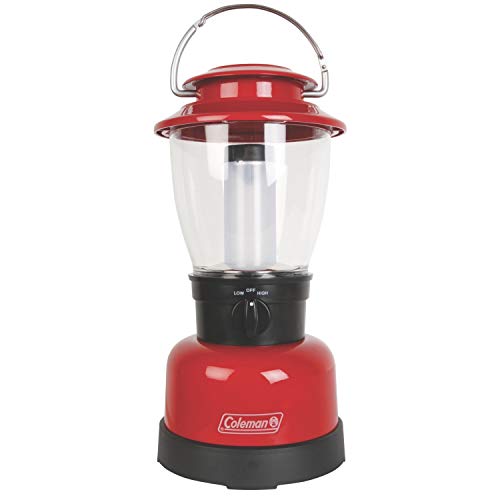
The Coleman 400L LED Lantern is the best all-around fishing lantern because it answers the three hardest lantern problems at once: it puts out enough light for a working area, it runs long enough for a full night, and it survives the spray and rain that come with fishing. The lantern shines 400 lumens up to 12 meters on its high setting, which lights a rigging station, a cooler, and the ground around the angler without flooding the whole bank. The light runs up to 30 hours on high and up to 70 hours on low, so a single set of batteries covers many nights before it needs changing. The water-resistant body carries an IPX4 rating, which sheds spray and light rain, and the LED lasts a lifetime, so it never needs replacing and it runs cool enough to touch, even after hours of use.
The Coleman 400L is a battery-powered lantern that runs on 4 D-cell alkaline batteries, and that power source is its strength on a long trip. A rechargeable lantern needs a charger and a power source to top up, but a battery lantern needs only a spare set of cells in the tackle bag, which suits a multi-night trip or a spot far from the truck. The carabiner handle lets the lantern hang from a branch, a boat rail, a canopy, or a tackle bag, so it can be placed exactly where the work happens instead of sitting on the ground. The lantern weighs 1.4 pounds, which is light enough to carry to the spot and heavy enough to sit steady on a tailgate or a flat rock. The lifetime LED means there is no bulb to break and no bulb to replace, and the cool-running light means the lantern can be handled and moved while it is on without burning the hand.
The Coleman 400L has no red light mode, so it should be run on the lowest white setting when the rods are in the water. The lantern is water resistant rather than waterproof, so it should not be dunked, and a kayak angler should keep it clipped to a rail or a bag rather than loose on the deck. The 400 lumen output lights a working area well, but it will not light a whole dock, and an angler who fishes with a group should look at the Streamlight Super Siege in this guide. For the angler who wants one lantern that does the whole job on most trips, the Coleman 400L is the right pick, because it lights, lasts, and travels well.
Specs
- Light output: 400 lumens
- Beam distance: up to 12 meters on high
- Runtime: up to 30 hours on high, up to 70 hours on low
- Power source: 4 D-cell alkaline batteries
- Water resistance: water resistant, IPX4
- Handle: carabiner handle for hanging
- Weight: 1.4 pounds
- Design: lifetime LED, runs cool to the touch
2. Coleman Classic Rechargeable 400 Lumens LED Lantern — Best Rechargeable Lantern

The Coleman Classic Rechargeable 400 Lumens LED Lantern is the best rechargeable lantern in this guide because it gives the same 400 lumen output as the battery Coleman without the need to buy cells. The lantern charges from a USB charging port, so it tops up from a truck, a power bank, or a wall outlet between trips, and the built-in lithium-ion battery lists 12.5 hours of battery life, which covers a full night of fishing on a single charge. The 400 lumen output lights a rigging station and the ground around the angler, and the touch switch lets the angler change the brightness with a tap instead of fumbling for a dial in the dark. The carry handle makes the lantern easy to move from the truck to the bank, and the water-resistant body sheds spray and light rain.
The Classic Rechargeable suits the angler who fishes close to the truck and can charge the lantern between trips. A bank angler who drives to the spot, a dock angler who fishes near the car, and a camper who fishes from a site with power all benefit from a lantern that charges from USB, because the lantern is always ready and there are no batteries to buy, carry, or throw away. The lantern weighs 1.75 pounds, which is heavier than the battery Coleman, but the weight sits in the base, so the lantern stands steady on a tailgate or a flat rock. The touch switch is a small feature that matters in the dark, because the angler can find the switch by feel and change the light without looking at the lantern. The lantern measures 11 by 5.62 by 5.75 inches, which fits in a tackle bag or a boat locker without taking the space of a tackle box.
The Classic Rechargeable has no red light mode, so it should be run on a low setting when the rods are in the water, and it is water resistant rather than waterproof, so it should not be dunked. The 12.5 hour battery life covers a night, but it does not cover a multi-night trip without a recharge, and an angler who fishes far from power should look at the battery Coleman or the Streamlight Siege in this guide instead. The lithium-ion battery is built in, so it cannot be swapped for a fresh set of cells on the water. For the angler who fishes near the truck and wants to stop buying batteries, the Classic Rechargeable is the right pick, because it charges from USB and lights the working area well.
Specs
- Light output: 400 lumens
- Battery life: 12.5 hours
- Power source: rechargeable lithium-ion battery, USB charging port
- Switch: touch switch
- Water resistance: water resistant
- Handle: carry handle
- Weight: 1.75 pounds
- Dimensions: 11 by 5.62 by 5.75 inches
3. Streamlight Siege 540-Lumen Compact Lantern — Best Waterproof Mid-Size Lantern
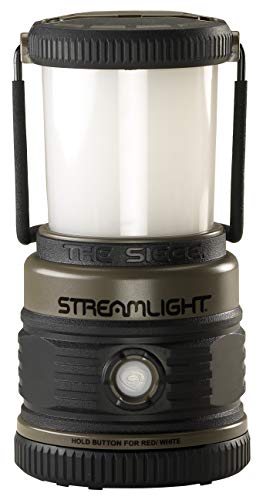
The Streamlight Siege 540-Lumen Compact Lantern is the best waterproof mid-size lantern in this guide because it pairs a bright 360 degree light with a rugged, waterproof body and a red light mode that the Coleman lanterns do not offer. The lantern puts out 540 lumens of soft, even light in every direction, which lights a boat deck and the water beside it from a single spot. The five output modes cover white light at several levels plus red light, and the battery level indicator built into the on/off button shows how much charge is left before the lantern is switched on for the night. The polycarbonate body is waterproof, which suits a boat angler who takes spray over the deck, and the 360 degree pattern means the lantern does not need to be aimed, because it lights the whole area at once.
The Siege 540 runs on 3 D alkaline batteries, and that power source suits a lantern that needs to last many nights without a charger. The listing gives battery life as 295 hours, which covers a long run of evenings before the batteries need changing, and a spare set of D cells in the tackle bag is all the backup the lantern needs. The lantern is compact for a D-cell lantern, and it stands on the deck or the bank without taking much space, which suits a boat angler who needs light without losing deck room. The five output modes let the angler turn the light down to the lowest setting that still shows the work, which saves battery and keeps the light from flooding the water. The battery level indicator is a small feature that matters on a long night, because the angler can check the charge before the trip and plan around it instead of guessing.
The Siege 540 is a mid-size lantern, so it will not light a whole dock the way the Super Siege does, and an angler who fishes with a group should look at the bigger lantern. The D batteries add weight compared with the AA lantern in this guide, so the Siege 540 rides in the boat or the truck rather than in a tackle bag pocket. It is waterproof, but it is not listed as floating, so it should be kept on the deck or clipped to a rail. For the boat angler and the dock angler who want a tough, waterproof lantern with a red mode and a long battery life, the Siege 540 is the right pick, because it lights the deck, protects night vision, and keeps going night after night.
Specs
- Light output: 540 lumens
- Light pattern: 360 degrees of soft, even light
- Output modes: five modes, including red light
- Battery life: 295 hours as listed
- Power source: 3 D alkaline batteries
- Water protection: waterproof
- Material: polycarbonate thermoplastic
- Indicator: battery level indicator built into the on/off button
4. Streamlight Super Siege 1100-Lumen Rechargeable Lantern — Best Premium Fishing Lantern

The Streamlight Super Siege 1100-Lumen Rechargeable Lantern is the best premium fishing lantern in this guide because it is the brightest, the toughest, and the most useful lantern here, and it does three jobs at once. The lantern puts out 1,100 lumens on high, 550 lumens on medium, and 125 lumens on low, which lights a whole dock, a whole campsite, or a whole stretch of bank from a single spot. The built-in 10,400 milliamp-hour lithium-ion battery runs 5.75 hours on high, 11.5 hours on medium, and 36.25 hours on low, and the USB port charges a phone or another device from the lantern, so the lantern is also a power bank on a long trip. The four red LEDs give high and low red light plus a flashing SOS mode, which preserves night vision and signals for help if the trip goes wrong.
The Super Siege is built for water. The body is waterproof to 1 meter of submersion with an IPX7 rating, it floats, and it is tested to 2 meters of impact resistance, which covers a drop on a rocky bank or a knock off a tailgate. The removable glare guard turns the lantern into a task light by blocking the light on one side, which suits rigging at a table or working under a canopy. The lantern weighs 1 pound 14 ounces and stands 7.5 inches tall with a 3.8 inch base diameter, which is compact for a lantern of this output, and the rubber base holds the lantern steady on a slippery deck. The AC charge cord is included, and the lantern fully recharges in 7 hours, so it can be charged overnight and fished the next night. The ergonomic handle makes the lantern easy to carry, and the unbreakable polycarbonate lens survives a drop that would crack a glass lens.
The Super Siege is the heaviest lantern in this guide, and the 5.75 hour runtime on high means the angler should plan the night around the medium or low setting if the trip runs long. The rechargeable battery is built in, so it cannot be swapped for a fresh set of cells on the water, and an angler who fishes far from power for several nights should carry a battery lantern as well. The 1,100 lumen output is more light than a small kayak needs, so it should be run on low or medium. For the angler who fishes with a group, fishes from a boat, or fishes a fixed spot all night and wants the brightest, toughest lantern that also charges a phone, the Super Siege is the right pick.
Specs
- Light output: 1,100 lumens on high, 550 on medium, 125 on low
- Runtime: 5.75 hours on high, 11.5 hours on medium, 36.25 hours on low
- Red light: four red LEDs, high and low, plus flashing SOS mode
- Battery: 10,400 milliamp-hour rechargeable lithium-ion battery
- Charging: AC charge cord included, USB port charges other devices
- Water protection: waterproof to 1 meter, IPX7, floats
- Impact resistance: tested to 2 meters
- Weight: 1 pound 14 ounces
- Design: removable glare guard, rubber base, ergonomic handle
5. Streamlight Siege AA 200-Lumen Lantern — Best Compact Fishing Lantern

The Streamlight Siege AA 200-Lumen Lantern is the best compact fishing lantern in this guide because it gives a real lantern in a body that fits in a tackle bag pocket. The lantern puts out 200 lumens of bright, even light, which is enough to tie knots, change lures, and sort tackle at arm’s length, and it runs on three AA alkaline batteries that are easy to carry as spares. The lantern weighs 0.4 pounds, which is the lightest pick in this guide by a wide margin, and it mounts on a floor stand or a hook, so it can stand on a rock or hang from a branch at the spot. The white and red LEDs cover both jobs: white light for the close work, and red light for watching the rods without ruining night vision.
The Siege AA is waterproof and it floats, which makes it the right pick for a kayak angler and a bank angler who fishes close to the water. A lantern that goes over the side of a kayak stays on the surface where it can be seen and grabbed, and a lantern that gets caught in the rain keeps working, because the waterproof body is built for it. The listing gives battery life as 7 hours, which covers an evening session on a single set of AA cells, and a spare set of cells weighs almost nothing in a tackle bag. The compact body fits in a pocket, a cup holder, or a small hatch, which suits an angler who walks between spots and wants light without carrying a full-size lantern. The lantern is built for camping and emergencies as well as fishing, which means it is a useful light to keep in the truck or the tackle bag between trips.
The Siege AA is a small lantern, so it will not light a whole deck, and an angler who fishes with a group should look at the Siege 540 or the Super Siege in this guide. The 7 hour battery life covers an evening, but it does not cover a multi-night trip without spare cells. The lantern has no battery level indicator, so the angler should start the night with fresh cells. For the kayak angler, the bank angler, and the angler who wants a backup lantern that weighs almost nothing and fits anywhere, the Siege AA is the right pick, because it lights the work, floats if it goes over, and travels in a pocket.
Specs
- Light output: 200 lumens
- Light modes: white and red LEDs
- Battery life: 7 hours as listed
- Power source: 3 AA alkaline batteries
- Water protection: waterproof, floats
- Mounting: floor stand, hook
- Weight: 0.4 pounds
- Design: compact, impact resistant
Care and Cleaning After the Trip
A fishing lantern does not clean itself, and the routine after the trip matters more than the lantern. Take the lantern off the bank or the boat as soon as the trip ends, shake out sand and grit, and wipe the body and the lens with a damp cloth if it has been in salt spray or mud. Rinse the lantern under fresh water if it has been splashed with saltwater, because salt dries on the lens and the seals and wears them faster than sun alone. Dry the lantern in a shaded, ventilated place before it goes back in the bag, and check the battery compartment for moisture, because a damp compartment corrodes the contacts and kills the lantern on the next trip.
Check the lantern itself on the same routine. Look at the seals and the lens for cracks, because a cracked seal lets water in and a cracked lens scatters the light. Check the handle, the carabiner, and the base for wear, because a handle that fails on the water means a lost lantern. Check the battery contacts for corrosion, and clean them with a dry cloth if they show a white or green film. Store the lantern with the batteries removed if it will sit for weeks, because batteries left in a lantern can leak and ruin the contacts. Store the lantern dry and open between trips, not sealed in a damp tackle bag.
Safety and Checks Before You Order
Check the power source before ordering, because a lantern that cannot be powered on the trip is a lantern that stays dark. A battery lantern needs the right cells, and the Coleman 400L needs D cells, the Streamlight Siege 540 needs D cells, and the Streamlight Siege AA needs AA cells, so check the tackle bag for the right spares before the trip. A rechargeable lantern needs a full charge before the trip, and the Coleman Classic Rechargeable charges from USB while the Streamlight Super Siege charges from the included AC cord, so check the charger and the cable before leaving the house. A lantern with a battery level indicator, such as the Streamlight Siege 540 and the Super Siege, shows the charge before the night starts, and the angler should check it rather than guessing.
Check the lantern against the way it will be used. A lantern that will ride in a kayak or on a small boat should float, and the Streamlight Super Siege and the Streamlight Siege AA in this guide float, while the Coleman lanterns should be clipped to a rail or a bag. A lantern that will be used on a dock or a bank should stand steady, and the Super Siege has a rubber base for a slippery deck while the Coleman 400L has a carabiner handle for hanging. A lantern that will be used around other anglers should have a red mode or a low setting, and the Streamlight Siege lanterns in this guide carry red LEDs for that reason. Read the specification block for the lantern being bought, not the specification block for a similar-looking lantern from the same brand, because light output, runtime, and power source change between models.
The lanterns in this guide are battery and rechargeable LED lanterns, not the liquid-fuel or propane lanterns covered by older recalls. The Coleman Northstar liquid fuel lantern recall from 2014 covers a small number of liquid-fuel lanterns with an incorrect gas feed tube, and the Wenzel and Ozark Trail propane lantern recall from 2001 covers propane-fueled camping lanterns; neither covers the LED lanterns in this guide. Check the model name and the fuel type on the listing before ordering, because a liquid-fuel or propane lantern needs different handling and different safety checks than an LED lantern.
Frequently Asked Questions
How many lumens do I need in a fishing lantern?
A lantern of 200 lumens lights the hands and the tackle at arm’s length, which suits a kayak angler or a bank angler who works close to the light. A lantern of 400 to 540 lumens lights a rigging station and a boat deck, which suits most night fishing. A lantern of 1,100 lumens, such as the Streamlight Super Siege in this guide, lights a whole dock or campsite, which suits a group of anglers or a fixed spot. Choose the lumens by the area, because a lantern that is too bright for a small kayak lights the whole shoreline.
Should I buy a battery lantern or a rechargeable lantern?
A battery lantern suits a multi-night trip or a spot far from power, because a spare set of cells in the tackle bag is all the backup it needs, and the Coleman 400L and the Streamlight Siege 540 in this guide run for many nights on D batteries. A rechargeable lantern suits an angler who fishes near the truck and can charge between trips, because the Coleman Classic Rechargeable charges from USB and the Streamlight Super Siege charges from an AC cord, and neither needs cells bought or carried. Carry a battery lantern as a backup on a long trip, because a rechargeable lantern that runs out cannot be refilled on the water.
Do I need a red light mode on a fishing lantern?
A red light mode is worth having when the rods are in the water and other anglers are nearby, because red light preserves night vision while white light destroys it. The Streamlight Siege 540, the Super Siege, and the Siege AA in this guide all carry red LEDs, so the angler can check a bait or re-tie a rig without blinding the angler on the next rod. A lantern without a red mode, such as the Coleman lanterns in this guide, should be run on the lowest white setting when the rods are fishing, and switched to high only when the work needs full light.
Will a fishing lantern survive getting wet?
A water-resistant lantern, such as the Coleman 400L with its IPX4 rating, sheds spray and light rain, which suits a bank angler who keeps the lantern under a canopy. A waterproof lantern, such as the Streamlight Siege 540, the Super Siege with its IPX7 rating, and the Siege AA, survives a dunk, which suits a boat angler and a kayak angler who expect the lantern to get wet. The Super Siege and the Siege AA also float, so a lantern that goes over the side can be seen and grabbed. Rinse the lantern under fresh water after salt spray, and dry it before it goes back in the bag.
Conclusion
The best fishing lantern is the one that matches the way the angler fishes at night. The Coleman 400L LED Lantern is the best all-around pick, because it lights a working area, runs for many nights on D batteries, and hangs anywhere from its carabiner handle. The Coleman Classic Rechargeable 400 Lumens LED Lantern is the best rechargeable pick, because it charges from USB and gives the same 400 lumen output without buying cells. The Streamlight Siege 540-Lumen Compact Lantern is the best waterproof mid-size pick, because its 360 degree light, red mode, and long battery life suit a boat deck. The Streamlight Super Siege 1100-Lumen Rechargeable Lantern is the best premium pick, because its bright output, floating waterproof body, and USB charging suit a group or a fixed spot. The Streamlight Siege AA 200-Lumen Lantern is the best compact pick, because it weighs under half a pound, floats, and fits in a tackle bag pocket. Check the power source, the water protection, and the red mode before ordering.
More from Amazon
Programs that pair well with the guide above. Offers and eligibility are set by Amazon and may change.
Free shipping on eligible items, Prime Video and more. Eligible new members can start with a free trial.
Start a Prime free trialA Prime membership for ages 18-24 with a trial period. Eligibility is set by Amazon.
See Prime for Young AdultsAudiobooks and podcasts to listen to on the go. Eligible new members can start with a free trial.
Try Audible freeAd-free music streaming. Eligible new subscribers can start with a free trial.
Try Music Unlimited freeAs an Amazon Associate we earn from qualifying purchases.
Write Your Review
No reviews yet. Be the first to share your experience!