

Key takeaways
- Compare the best musky rods by length, power, and blank build, with five casting picks for bucktails, big rubber, glide baits, and figure eights.
- Top Pick: Quick Comparison
- Runner-up: Quick Comparison
- Also consider: Quick Comparison
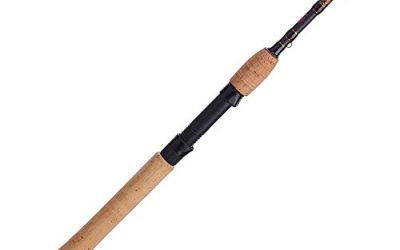
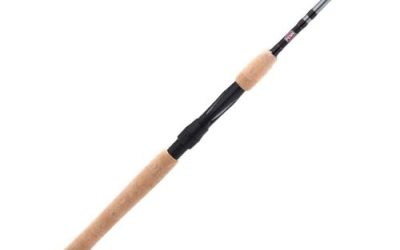
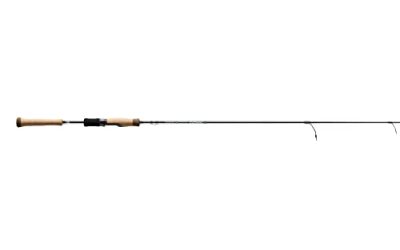
The best musky rod for most anglers is the St. Croix Legend Tournament Musky in the 7 ft 6 in heavy power, fast action casting model: a handcrafted SCIV+ carbon blank with Fuji K-Series guides and a super-grade cork handle, sized for the bucktails, jerkbaits, and mid-size rubber that make up most musky fishing. Anglers who cast from open decks and live by the boatside figure eight should look at the Okuma EVx in the 9 ft 3 in extra-heavy model, the longest rod in this guide, while the Okuma Psycho Stick Musky covers the classic 8 ft 6 in extra-heavy configuration in between. The Abu Garcia Veritas Toro is the light-in-hand 8 ft heavy option, and the St. Croix Triumph Musky is the budget pick, a 7 ft extra-heavy rod on the maker’s proven SCII carbon blank.
This guide compares five dedicated musky casting rods on the specifications that decide whether a rod fits your fishing: length, power, action, blank construction, guide trains, grips, and the line and lure ratings where the makers publish them. Every figure below comes from the manufacturers’ published specification charts and listing data, so you can match a rod to the baits you throw most without guessing.
As an Amazon Associate, we earn from qualifying purchases.
Table of Contents
- Why Musky Rods Are Their Own Category
- How to Choose a Musky Rod
- Quick Comparison
- The 5 Best Musky Rods
- Safety and Checks Before You Order
- Frequently Asked Questions
- Conclusion
- Product and ASIN Reference
Why Musky Rods Are Their Own Category
Musky fishing breaks the rules that govern the rest of freshwater tackle. The baits come first: a musky lure box holds double-bladed bucktails, soft-plastic swimbaits the size of a keeper walleye, glide baits, and topwaters that run from two ounces to well past ten, and a rod has to load and launch that weight thousands of times a season without folding, twisting, or fatiguing the angler into sloppy casts. A heavy bass rod rated for one ounce is not a light musky rod; it is an overloaded bass rod, and the gap between the two categories is exactly why dedicated musky series exist.
The fish come second. Muskies are the largest member of the pike family, built long and toothy, and the fight is only half the problem. The other half is the boatside: muskies follow baits to the hull and strike during the figure eight, the wide oval turn an angler sweeps with the rod tip buried at the side of the boat. That maneuver is why musky rods run long, why their rear grips are built for two-handed leverage, and why a rod that casts beautifully but cannot steer a bait in a deep, controlled eight is the wrong rod no matter how good its specification sheet looks.
The third reason is repetition. Musky anglers measure success in follows per day and fish per season, and a typical outing is hundreds of casts with baits that would be a bass angler’s heaviest lure, retrieved fast enough to keep big blades turning. Rod weight, balance, and grip shape stop being comfort details and become the difference between a full day of clean casts and a shoulder that quits by noon. Every rod in this guide is a purpose-built musky casting rod from a maker’s dedicated musky series, picked to cover a different point on the length, power, and budget map.
How to Choose a Musky Rod
Start With the Baits You Throw Most
Decide the rod around your three most-fished baits, not around the biggest fish you hope to meet. Bucktails and smaller jerkbaits in the one to four ounce range fish best on heavy power, where the blank loads with a normal casting stroke and the tip keeps blades working without tearing the bait out of its rhythm. Big rubber, oversized glide baits, and the heaviest topwaters belong on extra-heavy power, which carries the load through the cast and still has the backbone to drive large hooks home at the end of a long line. Every pick in this guide is heavy or extra-heavy, because that is where musky fishing actually lives; if your box is mostly small bucktails and twitch baits, take the heavy models seriously before defaulting to the stiffest rod on the list.
Power and Action Decide the Hookset
Power describes how much force it takes to bend the rod; action describes where it bends. Musky hooks are large, often heavy-wire, and they are set into a bony, tooth-lined jaw, which is why fast actions dominate this category: the tip loads quickly, the blank reaches its power early in the stroke, and a sharp sweep at boatside range moves the hook before the fish feels the bait is wrong. A moderate action keeps treble-hooked baits pinned more forgivingly, and trolling rods use it for that reason, but for casting work the five rods here are all fast action, matched to the single-hook and large-treble baits that dominate a musky box.
Length Is Figure-Eight Control
Length trades casting distance and boatside control against handling and fatigue. Rods from 8 ft 6 in to 9 ft 3 in cast farthest, pick up the most line on the hookset, and let you run a deep, wide figure eight without lifting the tip out of the water or crouching at the gunwale; the 9 ft 3 in Okuma EVx in this guide is built for exactly that game. Rods from 7 ft to 7 ft 6 in give up some of that reach and gain accuracy in tight quarters, easier storage, and less leverage working against your shoulder over a long day; the 7 ft St. Croix Triumph is the extreme of that trade here. The 8 ft class, represented by the Veritas Toro and the 8 ft 6 in Psycho Stick, is the compromise most musky anglers settle on: long enough for a proper eight, short enough to fish all day.
Read the Line and Lure Ratings Together
The printed ratings are the maker’s statement of the load range the blank was designed around, and they predict behavior better than the power label alone, because one maker’s heavy is not identical to another’s. Where a maker publishes a lure rating, match the middle of the window to the baits you throw most; a rod whose ceiling sits below your standard rubber bait will feel overloaded on every cast, and a rod whose floor sits above your bucktails will not load at all. Line ratings work the same way: musky fishing runs on braided line in the 65 to 100 lb class for casting, finished with a heavy fluorocarbon or wire leader, so a rod’s guides, reel seat, and blank all have to be built for that load path. Some musky listings publish full ratings and some publish only length, power, and action; where a figure is not published, this guide says so rather than estimating one, and the checks section below explains how to confirm the rating on the variant page before you order.
Guides, Grips, and Reel Seats Take the Abuse
Musky tackle lives a harder life than most freshwater gear. Heavy braid under load saws at guide inserts, big baits slam into tip tops on missed hooksets, and rods ride in lockers and truck beds between long drives. Look for named guide families with hard insert materials, which the picks here supply through Fuji K-Series frames with Alconite rings, stainless frames with zirconium inserts, and hard aluminum-oxide rings. Grip choice is a genuine fork: cork, fitted to both St. Croix rods, transmits vibration with a traditional feel and ages into the hand, while the EVA on the Veritas Toro shrugs off water, sunscreen, and fish slime and wipes clean. Split grips cut weight and expose the blank; full grips give two-handed casting more purchase. Either is correct, and the right answer is the one your hands prefer after the two hundredth cast.
One Piece, Telescopic, or Two
One-piece blanks have no ferrule to interrupt the bend, and they are the default for boat anglers who can transport a long rod; four of the five picks here are one-piece designs. The complication is arithmetic: a one-piece rod over 8 ft does not fit most vehicles, rod lockers, or stairwells, which is why several musky series offer telescopic models that collapse the butt section for storage while keeping a one-piece feel on the water. If a rod will live in a long locker or a dedicated rack, buy one piece and enjoy the uninterrupted power curve. If it will live in a sedan or a short-bed truck, check whether the series you like offers the same configuration in a telescopic build before you shorten your ambitions to fit the car.
Quick Comparison
| Product | Type | Length | Power / Action | Line Rating | Lure Rating | Tier |
|---|---|---|---|---|---|---|
| St. Croix Legend Tournament Musky Casting Rod | Casting | 7 ft 6 in | Heavy / Fast | Not stated | Not stated | Premium |
| Okuma EVx Musky Casting Rod | Casting | 9 ft 3 in | Extra Heavy / Fast | Not stated | Not stated | Mid-range |
| Okuma Psycho Stick Musky Casting Rod | Casting | 8 ft 6 in | Extra Heavy / Fast | Not stated | Not stated | Mid-range |
| Abu Garcia Veritas Toro Casting Rod | Casting | 8 ft 0 in | Heavy / Fast | 40-60 lb | 4-10 oz | Mid-range |
| St. Croix Triumph Musky Casting Rod | Casting | 7 ft 0 in | Extra Heavy / Fast | Not stated | Not stated | Budget |


The 5 Best Musky Rods
1. St. Croix Legend Tournament Musky Casting Rod — Best Overall
Tier: Premium
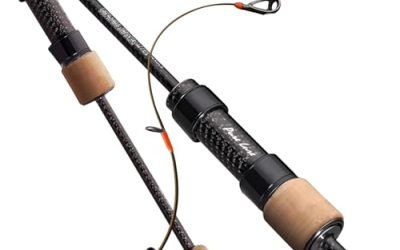
The Legend Tournament Musky is the flagship of St. Croix’s dedicated musky program, and the specification sheet reads like the checklist serious musky anglers recite. The blank is the maker’s SCIV+ carbon, a strategic lay-up of its SCIV and SCVI carbons, cured with the Fortified Resin System and built on Integrated Poly Curve mandrels, which eliminate the transition points where lesser blanks develop flat spots and stress risers. Onto that blank St. Croix fits Fuji K-Series tangle-free guides with Alconite rings, a super-grade cork handle with a cork butt cap, and the kind of finish work you expect from a rod handcrafted in Park Falls, Wisconsin, in the middle of North America’s musky belt.
The 7 ft 6 in heavy power, fast action configuration is the thinking angler’s musky rod. Heavy power is the correct ceiling for the baits that produce most muskies: double-bladed bucktails, jerkbaits, glide baits, and mid-size rubber, all of which load a heavy blank with a normal casting stroke instead of demanding the lob cast an extra-heavy rod imposes on light baits. The shorter length, relative to the 8 ft 6 in and 9 ft models in the same series, buys accuracy around docks, timber, and shoreline cover, and it takes leverage off your shoulder across a full day of casting. St. Croix backs the rod with a fifteen-year transferable warranty, the longest published coverage in this guide by a wide margin.
Choose the Legend Tournament Musky if you want the most refined musky rod in this guide and your fishing centers on bucktails and hard baits rather than the heaviest rubber. Skip it if you throw pound-class soft plastics all day, where the extra-heavy picks below carry the load better, or if you fish big open water and want every inch of figure-eight depth, where the 9 ft 3 in Okuma is the specialist tool.
Specs
– Length: 7 ft 6 in, one piece
– Power / Action: Heavy / Fast
– Blank: SCIV+ carbon fiber, a lay-up of SCIV and SCVI carbons, with Fortified Resin System
– Guides: Fuji K-Series tangle-free guides with Alconite rings
– Handle: super-grade cork with cork butt cap
– Construction: handcrafted in Park Falls, Wisconsin, USA
– Warranty: fifteen-year transferable, per St. Croix
– Line and lure ratings: not stated in the listing data checked; confirm on the variant page
2. Okuma EVx Musky Casting Rod — Best for Long Casts and Figure Eights
Tier: Mid-range
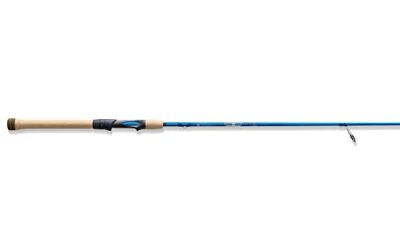
Length is a technique, and the EVx in its 9 ft 3 in extra-heavy configuration is the length specialist of this guide. Nine feet three inches of casting rod moves more line on the hookset than any standard musky stick, launches big baits with a slower, more powerful stroke that suits heavy rubber and oversized bucktails, and runs the deepest figure eight here: with the tip buried at boatside, that blank sweeps a wide, low oval that keeps a following fish looking at the bait instead of at the boat. For anglers who fish big northern lakes and live for the last ten feet of every retrieve, that geometry is the whole argument.
The EVx series is Okuma’s long-running musky line, and the current B-series build centers on a carbon blank with the maker’s UFR tip reinforcement, a unidirectional fiber treatment Okuma applies to strengthen the tip section where musky rods take their worst abuse, finished with Sea Guide RS ring guides chosen for durability under heavy braided line. The listing configuration is a one-piece rod with a split grip, which keeps the long blank’s weight manageable and leaves the rear grip long enough for two-handed casting. Okuma builds the series across a wide spread of lengths and powers, so the same family also answers shorter-rod briefs, but the 9 ft 3 in extra-heavy is the configuration that justifies the series’ reputation.
Choose the EVx if your water is big, your baits are heavy, and your figure eight is where fish are won or lost. Skip it if you fish from a kayak, a small boat, or tight shoreline cover, where nine feet of rod is a liability on every cast, or if your storage and transport cannot swallow a one-piece rod of this length; the 8 ft 6 in Psycho Stick below covers similar power in a shorter package.
Specs
– Length: 9 ft 3 in, one piece
– Power / Action: Extra Heavy / Fast
– Blank: carbon fiber with UFR tip reinforcement (current B-series build)
– Guides: Sea Guide RS ring guides (current B-series build)
– Handle: split grip
– Line and lure ratings: not stated on the listing; confirm on the variant page
3. Okuma Psycho Stick Musky Casting Rod — The 8 ft 6 in All-Rounder
Tier: Mid-range
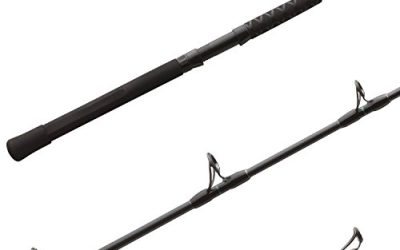
The Psycho Stick Musky takes the middle road of this guide: 8 ft 6 in of extra-heavy, fast-action graphite, the configuration musky anglers reach for when one rod has to cast bucktails in the morning, drag big rubber after lunch, and still run a proper figure eight at the end of every retrieve. The Psycho Stick family is built around light, responsive carbon blanks with reinforced construction, and the musky models scale that formula up to predator weights; the listing data puts this rod at 322 grams, a figure that matters more than it looks, because the difference between a rod you cast six hundred times and a rod you cast four hundred times is measured in exactly those grams.
The extra-heavy rating at this length is the big-bait sweet spot. It carries soft plastics and glide baits that would overload a heavy blank, drives large hooks home at distance, and still has enough tip to work a bucktail without tearing it out of its retrieve rhythm. The fast action keeps the working part of the blank in the top section, so hooksets at boatside range stay immediate, which is where the 8 ft 6 in length earns its keep: long enough for a deep eight, short enough to change direction quickly when a fish materializes behind the bait. In a guide with a 7 ft budget rod at one end and a 9 ft 3 in specialist at the other, this is the rod that splits the difference most convincingly.
Choose the Psycho Stick Musky if you want one extra-heavy rod at the classic musky length and you fish a mixed box of blades, rubber, and hard baits. Skip it if your fishing is mostly smaller bucktails and twitch baits, where the heavy-power Legend Tournament and Veritas Toro load more naturally, or if you want a published line and lure window to plan around before buying; the listing data checked for this rod is thinner than the Abu Garcia’s below.
Specs
– Length: 8 ft 6 in
– Power / Action: Extra Heavy / Fast
– Blank: graphite
– Rod weight: 322 g, per the listing data
– Color: black
– Guides, handle, and ratings: not stated in the listing data checked; confirm on the variant page
4. Abu Garcia Veritas Toro Casting Rod — Lightest in Hand
Tier: Mid-range
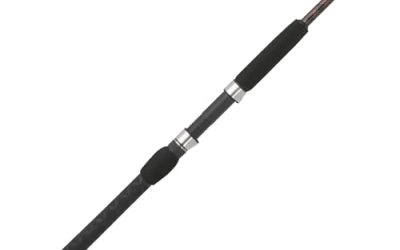
The Veritas Toro is Abu Garcia’s dedicated big-bait rod family, built for exactly the swimbait and musky work this guide covers, and the 8 ft heavy power model is its most versatile configuration. The blank is 30-ton graphite reinforced with the maker’s SubLayer Armor, a construction aimed at impact resistance, because musky rods fail from knocks and high-sticking more often than from fish. The fittings are stainless steel guides with zirconium inserts, a Fuji reel seat, and a high-density EVA split grip, a component list that reads a tier above the rod’s station and explains the family’s following among anglers who fish hard and travel harder.
The published ratings are the most complete in this guide: 40 to 60 lb line and lures from 4 to 10 oz. That window is honestly chosen. The 4 oz floor tells you this is not a small-bucktail rod; the 10 oz ceiling tells you it will carry genuine big rubber and the largest glide baits without the blank feeling like it is negotiating. Heavy power with a fast action at 8 ft is the workhorse geometry of musky casting, and the Toro’s light in-hand feel is its differentiator: Abu Garcia builds the Veritas name on low blank weight, and over a day of ten-ounce casts, the ounces a rod does not weigh are the casts you still make cleanly in the last hour. A limited three-year warranty backs the rod, per the maker’s published terms.
Choose the Veritas Toro if you throw baits in the 4 to 10 oz class, want published ratings to plan around, and prefer EVA and a light blank over cork tradition. Skip it if your box leans to bucktails and jerkbaits under 4 oz, where the rod will feel underloaded and the heavy-power St. Croix above is the better-matched tool, or if a long warranty is a deciding factor, where the Legend Tournament’s fifteen-year coverage stands apart.
Specs
– Length: 8 ft 0 in, one piece
– Power / Action: Heavy / Fast
– Line rating: 40-60 lb
– Lure rating: 4-10 oz
– Blank: 30-ton graphite with SubLayer Armor reinforcement
– Guides: stainless steel frames with zirconium inserts
– Reel seat: Fuji
– Handle: high-density EVA split grip
– Warranty: three-year limited, per Abu Garcia
5. St. Croix Triumph Musky Casting Rod — Best Budget
Tier: Budget
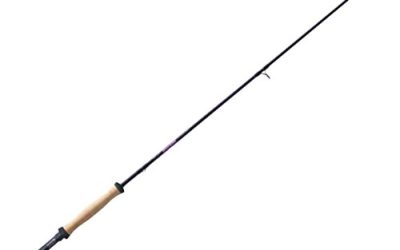
The Triumph Musky is where St. Croix’s musky program starts, and it earns its place here on the strength of the blank rather than the fittings. The rod is built on the maker’s SCII carbon fiber, the same carbon family that anchors several of its better-known series, with hard aluminum-oxide guides, a premium-grade cork handle, and a five-year warranty behind it. What the budget tier gives up is refinement: the component set is workmanlike rather than premium, and the series offers fewer configurations than the Legend Tournament line above it. What it does not give up is the taper design and quality control of a maker that has built its reputation in musky country.
The 7 ft extra-heavy, fast action configuration is a deliberate tool, not a compromise. Seven feet is short for a musky rod, and that is the point: this is the rod for smaller water, river fishing, tight shoreline cover, and boats where a long rod is always in someone’s way, and the extra-heavy power means the short blank still launches big rubber and sets large hooks with authority at the short ranges where this rod fishes. It is also the easiest rod in this guide to store and transport, the one that fits the truck cab and the apartment closet. Anglers buying a first dedicated musky rod, or a second rod dedicated to close-quarters work, will find the specification sheet covers the brief without charging for polish they will not use.
Choose the Triumph Musky if you want a genuine musky rod at the budget tier, fish smaller water or tight cover, or need a shorter rod that stores anywhere. Skip it if you fish big open lakes and long casts all day, where the 8 ft 6 in and 9 ft 3 in rods above will outcast it and run deeper figure eights, or if premium guides and a long warranty matter to you more than the savings.
Specs
– Length: 7 ft 0 in, one piece
– Power / Action: Extra Heavy / Fast
– Blank: SCII carbon fiber
– Guides: hard aluminum-oxide rings
– Handle: premium-grade cork
– Warranty: five-year, per St. Croix
– Line and lure ratings: not stated in the listing data checked; confirm on the variant page
Safety and Checks Before You Order
No CPSC recall covers adult musky rods as a product class, and none of the five rods in this guide is subject to a recall. The rod recalls on record are children’s products, and they are worth knowing about precisely so their scope is not confused with adult tackle. In April 2023, Lil Anglers recalled its children’s fishing rods sold with Kid Casters No Tangle combos, sold from January 2021 through March 2023, because the ceramic guide at the tip contained lead above the federal limit for children’s products; the recall covers those 34 inch children’s combo rods only. Older actions were narrower still: a 2009 recall of certain Zebco youth combos for lead paint on the reel handles, and 2005 and 2009 Shakespeare children’s kit recalls for lead in surface coatings. None of these touches an adult musky rod, and none names any maker or model in this guide; the practical lesson is to keep children’s tackle checked against recall lists separately, because that is where the rod-class risk has actually appeared.
The standing safety issue with modern musky rods is not a recall at all. Carbon fiber conducts electricity, and every rod in this guide is built on a carbon or graphite blank between 7 ft and 9 ft 3 in long, lengths that reach toward overhead lines from a boat deck or a raised bank. Never cast under or near overhead power lines, and treat a wet line and a tall rod as a combination that shortens the safe distance further; if a lure hangs up in a line or a tree near wires, cut the line rather than pulling against it. The same length that makes a 9 ft 3 in rod a figure-eight tool makes it the least forgiving rod here around bridges, dock lights, and marina wiring.
Before ordering, run three checks. First, musky rods are sold in multi-variant listings with many lengths and powers on one page, so confirm the exact length, power, and action on the variant you select against the ratings in this guide, and where a listing does not publish line and lure ratings, check the maker’s specification chart for that configuration before you buy. Second, one-piece rods over 8 ft ship in long tubes and take the worst of freight handling at the tip; inspect the tip top and every guide insert on arrival, and flex the rod lightly before the return window closes. Third, note the warranty terms where they are published, from the five-year coverage on the Triumph to the fifteen-year transferable coverage on the Legend Tournament, and keep the receipt with the rod’s paperwork.
Frequently Asked Questions
What length musky rod is best if I can only buy one?
Buy 8 ft to 8 ft 6 in in heavy or extra-heavy power with a fast action, which is why the middle of this guide sits in exactly that configuration. That length casts far enough for open water, moves enough line for a solid hookset at distance, and runs a deep, controlled figure eight without gymnastics at the gunwale. The exceptions are the angler who fishes small rivers and tight cover, where the 7 ft Triumph trades reach for handling that matters more cast after cast, and the big-water specialist, where the 9 ft 3 in EVx turns length itself into the technique.
How much power do I need for big rubber baits?
Extra-heavy, and the lure rating matters more than the label. Big soft plastics and oversized glide baits run from about 4 oz to well past 10 oz, and a rod has to load that weight through the cast without the blank feeling like it is folding, then keep enough backbone in reserve to set large hooks at the end of the cast. The Veritas Toro publishes the clearest window in this guide, 4 to 10 oz, and the extra-heavy Okuma and St. Croix picks are built for the same class of bait. Heavy power is the right tool for bucktails, jerkbaits, and mid-size baits; asking a heavy rod to live at the top of the rubber box is how tips get broken.
What line and leader should I run on a musky rod?
Braid, and heavier than bass instincts suggest. Musky casting runs on braided line in the 65 to 100 lb class: the no-stretch construction sets hooks at long range, the diameter stays manageable on a large baitcasting reel, and the strength is insurance against the rocks, timber, and boat hulls a hooked musky heads for. Finish it with a leader, because braid against a musky’s teeth and gill plates is a short fight: heavy fluorocarbon in the 100 to 150 lb class or a wire leader, connected with a quality ball-bearing swivel that keeps bucktail blades from twisting the line. Stay inside the rod’s published line rating where one is given, and let the leader, not the main line, take the abuse at the fish end.
Can I use a musky rod for pike or catfish?
Yes, and the overlap is genuine rather than a stretch. A heavy or extra-heavy musky rod is an excellent big-pike rod, because northern pike take the same bucktails, jerkbaits, and swimbaits on the same water, and many anglers fish one rod for both. The same blanks also cross over to flathead and blue catfish work with heavy baits, and to light saltwater duty where casting heavy lures to strong fish is the brief. What a musky rod will not do is fish down: smallmouth, walleye, and panfish presentations are far below these lure ratings, and no adjustment of line or leader turns a 4 to 10 oz rod into a finesse tool.
Conclusion
Each of these five rods solves a different musky problem. The St. Croix Legend Tournament Musky is the premium all-rounder, a handcrafted SCIV+ carbon rod with Fuji K-Series guides and a fifteen-year warranty. The Okuma EVx is the length specialist, 9 ft 3 in of extra-heavy blank for big water, long casts, and deep figure eights. The Okuma Psycho Stick Musky is the classic 8 ft 6 in extra-heavy compromise, light enough to cast all day and strong enough for big rubber. The Abu Garcia Veritas Toro is the light-in-hand workhorse with the most complete published ratings here, 4 to 10 oz of lure window on a reinforced graphite blank. The St. Croix Triumph Musky is the budget answer, a short extra-heavy rod on a proven SCII blank for smaller water and tight cover. Pick by the baits you throw most and the water you fish, confirm the exact variant before you order, and any of them will arrive ready to be matched with a reel and fished.
More from Amazon
Programs that pair well with the guide above. Offers and eligibility are set by Amazon and may change.
Free shipping on eligible items, Prime Video and more. Eligible new members can start with a free trial.
Start a Prime free trialA Prime membership for ages 18-24 with a trial period. Eligibility is set by Amazon.
See Prime for Young AdultsAudiobooks and podcasts to listen to on the go. Eligible new members can start with a free trial.
Try Audible freeAd-free music streaming. Eligible new subscribers can start with a free trial.
Try Music Unlimited freeAs an Amazon Associate we earn from qualifying purchases.
Write Your Review
No reviews yet. Be the first to share your experience!