

Key takeaways
- Compare the best trolling rods for downriggers, planer boards and offshore trolling, with lengths, line ratings, blanks and guide types checked.
- Top Pick: Okuma Classic Pro GLT Lake Trolling Rod (CP-LT-762M)
- Runner-up: Daiwa Accudepth Trolling Rod (ACDPB86TMHFB)
- Also consider: Okuma Classic Pro GLT Trolling Rod (8 ft 6 in, Medium)
Quick answer: For most freshwater trolling, the Okuma Classic Pro GLT Lake Trolling Rod (CP-LT-762M) is the simplest place to start: a 7 ft 6 in, medium power E-glass rod rated for 10 to 20 lb line, built for walleye, trout and pike pulled behind the boat. Anglers who run longer spreads should look at the 13 Fishing Omen Gold Trolling Rod at 10 ft 6 in, while offshore crews trolling for tuna, wahoo and mahi need the short, roller-guided Fiblink Offshore Trolling Rod. This guide covers trolling rods only. Trolling reels are a separate product, and this site already covers them in its trolling reels guide, so pair the rod you pick here with a conventional or line-counter reel matched to your line rating.
As an Amazon Associate, we earn from qualifying purchases.
Table of Contents
- What Is a Trolling Rod?
- How to Choose
- Quick Comparison
- 1. Okuma Classic Pro GLT Lake Trolling Rod (CP-LT-762M)
- 2. Daiwa Accudepth Trolling Rod (ACDPB86TMHFB)
- 3. Okuma Classic Pro GLT Trolling Rod (8 ft 6 in, Medium)
- 4. 13 Fishing Omen Gold Trolling Rod (OGLDT106-2)
- 5. Fiblink Offshore Trolling Rod (6 ft, 30 to 50 lb)
- Fit and Compatibility Checks
- FAQ
- Conclusion
- Product and ASIN Reference
What Is a Trolling Rod?
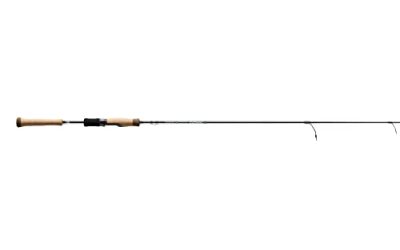
A trolling rod is built to fish from a moving boat with the rod sitting in a holder, not in your hands. Because the boat supplies the motion, the rod spends hours bent under the steady pull of a diving crankbait, a flasher and fly, a planer board, a dipsy diver or a downrigger ball. That job shapes the design. Trolling rods are longer than casting rods, usually from 7 ft to more than 10 ft, so lines can be spread apart behind and beside the boat. They use moderate actions that flex deep into the blank, which absorbs the surge of a strike and keeps pressure steady while a fish runs. Most are two-piece or telescopic so they fit in a boat locker, and most are conventional rods meant for baitcasting-style or line-counter reels mounted on top of the blank.
Freshwater and saltwater trolling rods solve the same problem at different scales. A walleye rod for inland lakes might be rated for 10 to 20 lb line and weigh under 11 oz. An offshore stand-up rod is short, stiff and fitted with roller guides so heavy line can move under load without cutting into a ring insert. The five rods below cover that range, from lake trolling to offshore work, and each entry sticks to the specifications the maker publishes.
How to Choose
Start with the method, because the method sets the length and power. Downrigger rods are usually 7 ft 6 in to 8 ft 6 in with a soft, loading tip that shows the bend of the release clip. Planer board and long-line rods run longer, 8 ft 6 in to 10 ft 6 in, to push lines wide of the boat. Dipsy diver and leadcore or copper setups add constant drag, so they call for medium-heavy power and a blank that will not fatigue under a permanent bend. Offshore trolling is the opposite end of the scale: short rods around 6 ft, heavy line ratings and roller guides.
Next, match the line rating to the line you actually run. The rating printed for each rod below is the working window the maker publishes. Running 30 lb line on a rod rated to 20 lb risks the blank; running 8 lb line on a rod rated from 12 lb dulls the tip’s ability to show strikes. Blank material matters for durability. E-glass and fiberglass composite blanks are the traditional trolling choice because they bend deeply and shrug off knocks in a rod holder. Graphite composite blanks are lighter and crisper, which helps on long rods that would otherwise feel sluggish.
Finally, check the guide style and the hardware. Ring guides suit monofilament, braid and fluorocarbon for freshwater work. Wire line, leadcore and heavy offshore line are kinder to roller guides or oversized rings. A metal or hooded reel seat that locks a line-counter reel down without wobble is worth more than cosmetic trim, because the reel seat takes the load every time the rod loads up in the holder.
Quick Comparison
| Product | Tier | Length | Line Rating | Best For |
|---|---|---|---|---|
| Okuma Classic Pro GLT Lake Trolling Rod (CP-LT-762M) | Budget | 7 ft 6 in | 10 to 20 lb | Walleye, trout and pike on inland lakes |
| Daiwa Accudepth Trolling Rod (ACDPB86TMHFB) | Budget | 8 ft 6 in | 10 to 20 lb | Telescopic storage, downriggers and divers |
| Okuma Classic Pro GLT Trolling Rod (8 ft 6 in, Medium) | Mid-range | 8 ft 6 in | 12 to 27 lb | Salmon, striper and leadcore spreads |
| 13 Fishing Omen Gold Trolling Rod (OGLDT106-2) | Premium | 10 ft 6 in | Not published for this model | Long planer board and downrigger spreads |
| Fiblink Offshore Trolling Rod (6 ft, 30 to 50 lb) | Mid-range | 6 ft | 30 to 50 lb | Offshore stand-up trolling for tuna and wahoo |
1. Okuma Classic Pro GLT Lake Trolling Rod (CP-LT-762M)

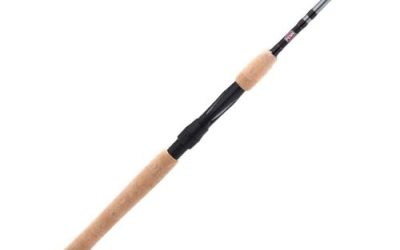
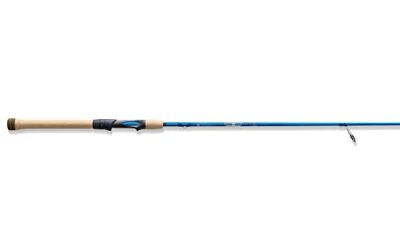
The Classic Pro GLT series is Okuma’s long-running line of purpose-built trolling rods, and the CP-LT-762M is the lake model in that family. It measures 7 ft 6 in, breaks into two pieces for storage, and carries a medium power rating with a 10 to 20 lb line window. That window matches the monofilament and light braid most walleye, trout, bass and northern pike anglers troll with, and the Amazon listing data names exactly those species as the target for this model. The blank is E-glass, the traditional trolling material, chosen because it loads smoothly under a planer board or a diving plug and tolerates being knocked around in a holder season after season. At a published weight of 10.9 oz, it is light enough that a full spread of four rods does not turn the rod rack into a chore. If your trolling is inland lakes and reservoirs and you want a rod designed for the technique rather than adapted to it, this is the straightforward pick, and it anchors the Budget tier of this roundup.
Specs
- Model: CP-LT-762M
- Length: 7 ft 6 in
- Pieces: 2
- Power: Medium
- Line rating: 10 to 20 lb
- Blank material: E-glass
- Weight: 10.9 oz
- Target species (per listing): walleye, trout, bass, northern pike
- Guide count: not published in the listing data checked
2. Daiwa Accudepth Trolling Rod (ACDPB86TMHFB)
Daiwa’s Accudepth rods are designed to pair with line-counter reels for controlled-depth trolling, and the ACDPB86TMHFB is the telescopic medium-heavy model. It extends to 8 ft 6 in and collapses down for transport, which makes it the easiest rod in this group to store in a small boat or a car trunk. The listing data rates it for 10 to 20 lb line. Daiwa publishes a graphite composite blank for the Accudepth series, a step up in crispness from plain fiberglass, along with cut-proof aluminum oxide guides that stand up to braid and wire better than basic inserts. Air Foam grips and a hook keeper round out the series specification. Daiwa positions the series for downriggers, side planers and dipsy divers, so one rod covers the three standard freshwater presentations. It sits in the Budget tier here because the Accudepth line is Daiwa’s value trolling family, even though the blank material reads a class higher.
Specs
- Model: ACDPB86TMHFB
- Length: 8 ft 6 in
- Construction: Telescopic, 1 piece
- Power: Medium Heavy
- Line rating: 10 to 20 lb
- Blank material: Graphite composite
- Guides: Cut-proof aluminum oxide
- Grips: Air Foam, with hook keeper
- Rod weight: not published in the listing data checked
3. Okuma Classic Pro GLT Trolling Rod (8 ft 6 in, Medium)

The second Okuma in this roundup is the bigger Classic Pro GLT, an 8 ft 6 in medium power rod rated for 12 to 27 lb line. That higher window is the difference between a walleye rod and a salmon rod: it covers the monofilament, leadcore and copper presentations Great Lakes and Pacific anglers use for salmon and steelhead, plus striper trolling in salt water. The blank is E-glass, the published weight is 13.1 oz, and the reel seat is a stainless steel hooded design that resists corrosion when the rod lives on an open boat. The two-piece build uses a tip-over-butt ferrule layout typical of the series. Choose this model over the lake version when your spread includes heavier divers, longer coppers or fish that run harder, and keep it in the Mid-range tier: it costs more than the lake rod in the maker’s lineup structure and covers heavier work, without moving into specialty territory.
Specs
- Length: 8 ft 6 in
- Pieces: 2
- Power: Medium
- Line rating: 12 to 27 lb
- Blank material: E-glass
- Weight: 13.1 oz
- Reel seat: Stainless steel hooded
- Model code: not printed in the listing data checked for this size
4. 13 Fishing Omen Gold Trolling Rod (OGLDT106-2)

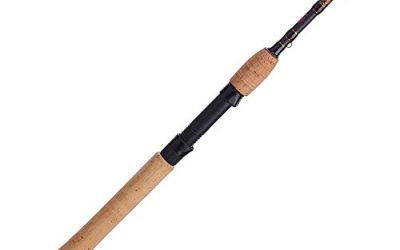
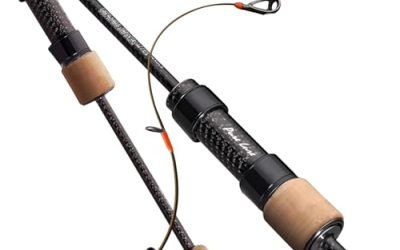
The Omen Gold Trolling series is 13 Fishing’s attempt to make trolling rods feel less like fiberglass broomsticks. The OGLDT106-2 is the 10 ft 6 in, two-piece model, the longest rod in this roundup, built for wide planer board spreads and downrigger work where line separation matters. For the series, 13 Fishing publishes a soft taper composite blank, Fuji K-Frame guides with Alconite inserts and an SiC tip, and a Portuguese 3A cork handle with a rubberized reargrip. Those are component choices from the Premium end of the trolling market: Fuji frames and an SiC tip are parts freshwater trolling rods rarely get. The cork handle also separates it from the EVA and foam grips on the other rods here. One caution for buyers: 13 Fishing does not publish a power or line rating for this exact model in the listing data checked, so confirm the rating on the product page against the line you plan to run before ordering.
Specs
- Model: OGLDT106-2
- Length: 10 ft 6 in
- Pieces: 2
- Blank material: Soft taper composite (series specification)
- Guides: Fuji K-Frame with Alconite inserts and SiC tip (series specification)
- Handle: Portuguese 3A cork with rubberized reargrip (series specification)
- Power: not published in the listing data checked for this model
- Line rating: not published in the listing data checked for this model
5. Fiblink Offshore Trolling Rod (6 ft, 30 to 50 lb)
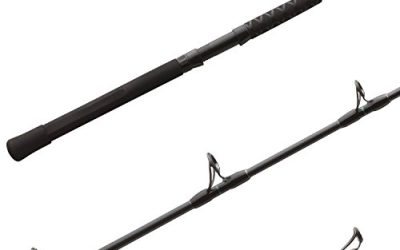
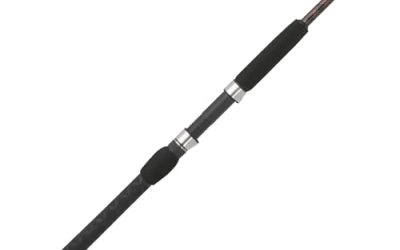
Fiblink’s offshore trolling rod is the saltwater entry in this group, and it is built to a different brief: a 6 ft, one-piece conventional rod with a solid E-glass graphite composite blank, rated at 30 to 50 lb line in this size. Stainless steel roller guides replace ring guides, because offshore trolling pulls heavy line under load for hours and rollers cut the friction and heat that wear line out. The reel seat is aluminum, and Fiblink names dolphin (mahi), wahoo and tuna as the target species for the rod. The short length is deliberate: stand-up offshore fishing is a leverage game played from a harness or against the gunnel, and a 6 ft rod keeps the fight in the angler’s legs and back rather than in the tip. The same Fiblink page family also sells heavier 50 to 80 lb versions and a two-piece option under separate listings, so the ASIN in the reference table is for the 6 ft, 30 to 50 lb, one-piece configuration described here. It lands in the Mid-range tier.
Specs
- Length: 6 ft
- Pieces: 1 (a 2-piece version is sold under a separate listing)
- Line rating: 30 to 50 lb for this size
- Blank material: Solid E-glass graphite composite
- Guides: Stainless steel roller guides
- Reel seat: Aluminum
- Grip: EVA
- Target species (per maker): dolphin (mahi), wahoo, tuna
Fit and Compatibility Checks
Before you order, run through these checks. First, reel type: all five rods are conventional overhead-reel designs, so they pair with baitcasting, conventional or line-counter reels, not spinning reels. Second, size selection: several of these Amazon pages cover multiple lengths and ratings under one product family, and the ASIN in the reference table below belongs to the exact configuration named in each section. Confirm the size shown on the product page matches before checkout, especially on the Fiblink, where 30 to 50 lb and 50 to 80 lb versions sit side by side. Third, rod holders: the 10 ft 6 in Omen Gold and the telescopic Daiwa need holders with enough spread and tube length to seat the butt securely. Fourth, line type: if you plan to run wire line, the aluminum oxide guides on the Daiwa and the rollers on the Fiblink are the safer matches in this group. Fifth, storage: the two-piece Okumas and the telescopic Daiwa break down for transport, while the one-piece Fiblink needs a full-length space in the boat or truck.
FAQ
How long should a trolling rod be?
Most freshwater trolling rods fall between 7 ft 6 in and 10 ft 6 in. Shorter rods suit downriggers and small boats, longer rods spread planer board lines wider and keep more line out of the water. Offshore stand-up trolling reverses the logic and uses rods around 6 ft for leverage during the fight.
Can I troll with a regular casting rod?
You can, but a casting rod is built for repeated casting, with a faster action and a shorter butt that sits awkwardly in a rod holder. A trolling rod’s moderate action, longer handle and holder-friendly build keep a lure working properly under hours of steady load, which is why the rods in this guide are technique-specific models.
What is the difference between a downrigger rod and a planer board rod?
A downrigger rod is shorter, with a soft tip that loads into a visible bend against the release clip and springs the line free on a strike. A planer board rod is longer and stiffer through the midsection, so it can hold a board out to the side and telegraph when the board surges or a fish pulls it back.
Do trolling rods work in saltwater?
Yes, with the right hardware. Look for corrosion-resistant guides and reel seats, such as the stainless steel hooded seat on the larger Okuma or the stainless roller guides and aluminum seat on the Fiblink. Freshwater models with basic hardware will still fish in salt water, but they need a freshwater rinse after every trip to protect the guides and seat.
Conclusion
The right trolling rod is the one matched to your method and your line. For inland walleye, trout and pike work, the Okuma Classic Pro GLT Lake Trolling Rod covers the standard 10 to 20 lb window in a light, durable E-glass build. The Daiwa Accudepth adds telescopic storage and a graphite composite blank for anglers short on space. The larger Classic Pro GLT steps up to salmon and leadcore duty at 12 to 27 lb, the 13 Fishing Omen Gold brings premium Fuji components and the length for wide spreads, and the Fiblink takes the same job offshore with roller guides and a 30 to 50 lb rating. Check the exact size on the product page against the reference table below, pair the rod with a conventional or line-counter reel in the same line class, and the spread will fish the way it was designed to.
More from Amazon
Programs that pair well with the guide above. Offers and eligibility are set by Amazon and may change.
Free shipping on eligible items, Prime Video and more. Eligible new members can start with a free trial.
Start a Prime free trialA Prime membership for ages 18-24 with a trial period. Eligibility is set by Amazon.
See Prime for Young AdultsAudiobooks and podcasts to listen to on the go. Eligible new members can start with a free trial.
Try Audible freeAd-free music streaming. Eligible new subscribers can start with a free trial.
Try Music Unlimited freeAs an Amazon Associate we earn from qualifying purchases.
Write Your Review
No reviews yet. Be the first to share your experience!