

Key takeaways
- Choosing capacity over access: A large feeder that cannot be scrubbed is a poor long-term value.
- Filling to the top: Excess seed increases weight and gives moisture more opportunity to spoil the contents.
- Ignoring window size: A wide feeder can obstruct blinds, handles, or opening sections of the window.
- Assuming clear plastic is weatherproof: Thin plastic may cloud or crack under prolonged UV exposure.
- Mounting near a moving sash: Vibration and repeated opening can loosen the cups.
- Using the wrong food: Fine seed, suet crumbs, or oily blends can clog dispensing openings and stain acrylic.
Best Window Bird Feeders for Clear Views
The best window bird feeders combine a strong mounting system, a shallow viewing distance, weather protection, easy cleaning access, and enough capacity for the number of birds visiting your window. For most homes, a clear acrylic feeder with three or four suction cups, a removable seed tray, and a 1.5- to 2.5-cup capacity is the most balanced choice; smaller windows usually benefit from compact two-cup models, while large picture windows can accommodate wider feeders with multiple perches.
Quick Picks by Window and Use Case
| Situation | Best feeder type | Recommended specifications | Why it fits |
|---|---|---|---|
| Small apartment window | Compact suction-cup feeder | 8–10 inches wide; 1–1.5 cup capacity; two cups | Uses less glass space and places birds close to the room |
| Large picture window | Wide multi-perch feeder | 12–16 inches wide; 2–4 cup capacity; three or four cups | Provides room for several small birds without crowding |
| Frequent bird activity | Large tray feeder with roof | 3–5 cup capacity; drainage holes; removable tray | Reduces refill frequency and keeps seed reasonably dry |
| Occasional viewing | Small clear acrylic feeder | 1–2 cup capacity; hinged or slide-out tray | Less seed sits in the feeder between visits |
| Cold or wet climate | Covered polycarbonate feeder | Overhanging roof; stainless hardware; protected drainage | Handles moisture and temperature changes better than thin plastic |
Head-to-Head: What Separates the Best Window Bird Feeders?
Suction strength and mounting security
Mounting strength is the first selection criterion because even a well-designed feeder is useless if it slides down the glass. Look for large, flexible suction cups rather than small rigid cups. A feeder with three cups generally distributes the load better than a two-cup design, while four cups provide extra stability on wide models or exposed windows.
Our top picks
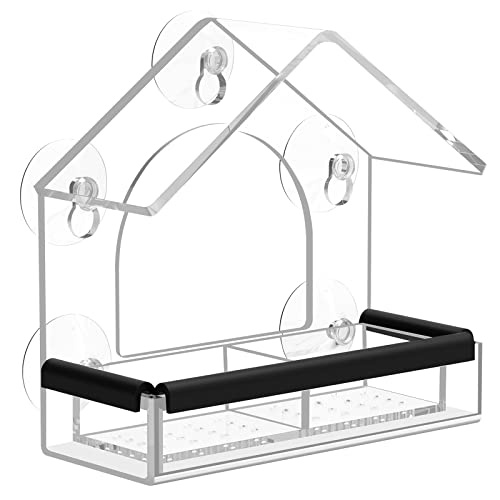
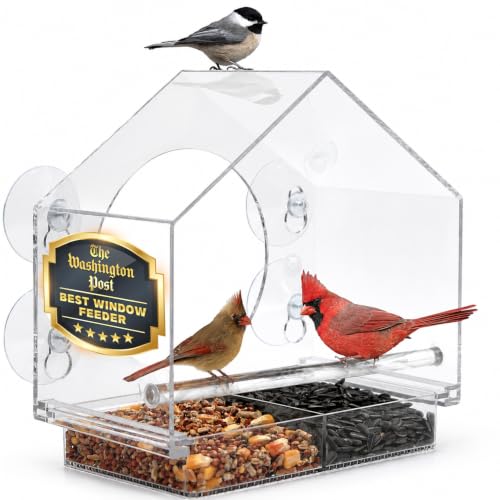

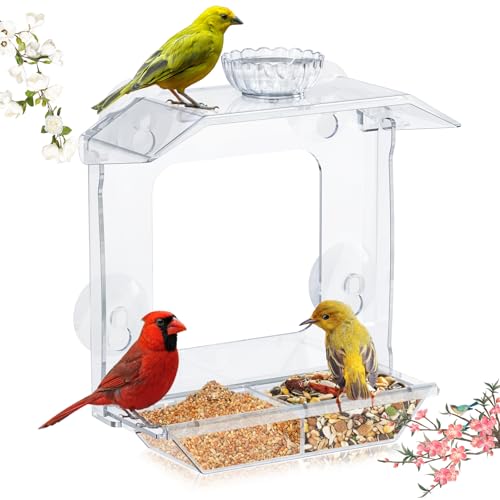
As an Amazon Associate we earn from qualifying purchases at no extra cost to you. Ratings are shown as listed on Amazon.
Capacity matters here: one cup of sunflower seed weighs roughly 5 to 6 ounces, but wet seed, a bird landing on the perch, and wind movement add force. A feeder advertised for 3 cups should not automatically be filled to the rim on a high window. Filling it to two-thirds capacity reduces leverage and makes a slow suction-cup leak less likely to cause a sudden fall.
For the most reliable attachment, clean the glass with rubbing alcohol or a residue-free glass cleaner, let it dry fully, and press each cup from the center outward. Avoid mounting over dust, condensation, textured glass, window film, or a screen. Recheck the cups after the first 24 hours and after major temperature changes.
Viewing distance and feeder shape
A feeder mounted directly on the glass gives the clearest close-up view, but the birds may be partly hidden by a tall rear wall or deep seed hopper. Shallow trays—about 3 to 5 inches from the window to the outer edge—usually offer the best balance between viewing distance and usable feeding space.
Clear acrylic improves visibility through the sides and back, but transparency alone does not guarantee a good view. A dark perch against a clear panel can help identify small birds, while a deep opaque hopper may hide the seed level. For children or viewers seated close to the window, prioritize a low front lip, a broad viewing panel, and perches positioned below the seed tray rather than far out to the sides.
Weather resistance
Window feeders are exposed to rain, sun, frost, and repeated wet-dry cycles. A roof that extends at least 1 inch beyond the front edge is more useful than a decorative shallow cover. Drainage holes in the tray are essential, but they should be small enough to retain common seed without allowing water to pool beneath it.
Polycarbonate or thick acrylic generally lasts longer than thin polystyrene. Stainless-steel screws and metal perch rods resist rust, while untreated steel can leave stains on the feeder and glass. UV exposure eventually makes some clear plastics cloudy or brittle, especially on south-facing windows. If the feeder receives direct afternoon sun, choose UV-resistant plastic and inspect it each season for cracking.
Cleaning access
Cleaning access is where many attractive feeders fall short. A narrow opening may be adequate for filling but impossible to scrub properly. The best designs have a fully removable tray or a hinged front panel that exposes the corners, drainage channels, and perch area.
Seed dust, droppings, and damp hulls can collect underneath a tray even when the visible surface looks clean. Choose a feeder that can be separated without tools, and avoid permanent internal dividers that create hidden pockets. A removable tray also lets you discard spoiled seed without taking the entire feeder off the window.
Capacity and refill frequency
Capacity should match your routine, not the largest number printed on the packaging. A 1-cup feeder may need refilling every day in a busy yard, while a 4-cup feeder can hold damp seed for too long during quiet periods.
As a practical estimate, a small window feeder may attract 0.25 to 0.75 cup of seed per day, although activity varies widely by species, season, and nearby natural food. If your feeder holds 2 cups and birds consume about 0.5 cup daily, the theoretical refill interval is:
2 cups ÷ 0.5 cup per day = 4 days.
In practice, refill sooner if rain enters the tray, seed becomes clumped, or hulls accumulate. Smaller, fresher batches are often better than maximizing capacity.
Recommended Feeder Types
Compact two-cup suction feeders
These are usually the best choice for narrow windows, renters, and first-time users. They typically measure 8 to 10 inches wide, use two or three suction cups, and hold about 1 to 2 cups of seed. Their low weight reduces stress on the mounting points, and their shallow profile keeps birds close to the glass.
The compromise is limited perch space. Larger birds may crowd the tray, and the small roof may not protect the rear corners during wind-driven rain. Choose one with a slide-out tray rather than a top-only opening.
Wide four-cup window feeders
For a broad kitchen or living-room window, a 12- to 16-inch feeder with four cups and a 2- to 4-cup capacity offers better stability and more simultaneous viewing. Multiple perches can accommodate chickadees, finches, sparrows, and similar small birds without forcing every visitor onto one narrow edge.
These feeders require more careful leveling. If one corner sits lower, rain and seed will collect there. They also create more leverage on the cups, so they should be attached to clean, smooth glass and checked more frequently.
Window-mounted tray feeders
Tray feeders are easiest to clean and let you control the exact amount of seed offered. They work particularly well for people who want to change food types often or discard wet seed promptly. Look for a removable tray with generous drainage and a roof that does not block the view from inside.
The open design exposes food to rain and squirrels more than a hopper does. It is best for sheltered windows, frequent maintenance, and modest portions rather than unattended long-term feeding.
Covered hopper-style feeders
Hopper feeders protect seed more effectively and reduce the number of daily refills. A 2- to 4-cup hopper with a clear front panel can be useful on exposed windows, provided the seed chamber opens wide enough for scrubbing.
The trade-off is cleaning complexity. Seed can lodge behind dividers or beneath the dispensing lip, and the enclosed chamber can retain moisture. Select a hopper only if the seed compartment can be emptied and washed thoroughly.
Setup and Maintenance That Prevents Most Problems
- Choose smooth, shaded glass where possible. Avoid textured surfaces and windows that become extremely hot in direct sun.
- Clean and dry the mounting area. Remove grease, dust, and old adhesive residue before attaching the cups.
- Attach the feeder empty. This lets you confirm that it sits level and that every cup is fully sealed.
- Add a partial fill first. Start with one-third to one-half capacity and observe the mounting points for a day.
- Inspect weekly. Press or replace cups that develop curled edges, hardening, or visible air pockets.
- Clean before residue builds up. Remove old seed, wash with hot soapy water, rinse completely, and dry all parts before refilling.
Replace suction cups when they remain stiff after washing, develop cracks, or no longer hold a seal. Replacement cups are usually cheaper than replacing a broken feeder or scratched window. Do not rely on suction cups alone above a walkway, patio, or fragile outdoor furniture; a secondary safety tether can limit the drop if the mounting fails.
Common Buying Mistakes
- Choosing capacity over access: A large feeder that cannot be scrubbed is a poor long-term value.
- Filling to the top: Excess seed increases weight and gives moisture more opportunity to spoil the contents.
- Ignoring window size: A wide feeder can obstruct blinds, handles, or opening sections of the window.
- Assuming clear plastic is weatherproof: Thin plastic may cloud or crack under prolonged UV exposure.
- Mounting near a moving sash: Vibration and repeated opening can loosen the cups.
- Using the wrong food: Fine seed, suet crumbs, or oily blends can clog dispensing openings and stain acrylic.
Final Buying Recommendation
For the clearest views and the fewest ownership problems, choose a shallow clear acrylic or polycarbonate feeder sized to your window, with three or four large suction cups, a removable tray, drainage holes, a protective roof, and a capacity of about 1.5 to 2.5 cups. Pick a compact two-cup model when glass space is limited, a wide four-cup design for busy large windows, and a covered hopper only when weather protection and fewer refills matter more than effortless cleaning. The best window bird feeders are not necessarily the largest; they are the ones you can mount securely, inspect easily, and clean before damp seed becomes a problem.




Write Your Review
No reviews yet. Be the first to share your experience!