

Our Top Picks
 KastKing SuperPower Braided Fishing Line327 yardFishing Braided LineLifetime WarrantyCheck on Amazon
Pros & cons
- Smooth casting comes from a twist and kink resistant build
- 8 pound break strength suits a range of light tackle
- Clear finish helps the line stay hard to spot
- 330 yard length is shorter than many bulk spools
- 8 pound test still limits use for larger gamefish

- Top Pick: PowerPro Spectra Fiber Braided Fishing Line
- Runner-up: KastKing SuperPower Braided Fishing Line
- Also consider: Daiwa J-Braid X8
Braided line and monofilament sit at opposite ends of the fishing line spectrum. Braid is a woven bundle of synthetic fibers that packs high breaking strength into a very thin diameter and transmits every bump of the bottom straight to the rod. Monofilament is a single strand of nylon that stretches under load, stays hard for fish to see, and costs less per spool at the budget tier. Neither one is universally better; each wins on different specs.
This comparison breaks the two line types down by the numbers that actually matter — diameter, stretch, visibility, abrasion behavior, and spool memory — and then lines up three braided picks and two monofilament picks that cover most freshwater and kayak fishing. If you fish from a kayak, where casts are short, cover is close, and hooksets happen at arm’s length, the differences between braid and mono show up faster than they do from a bass boat.
As an Amazon Associate, we earn from qualifying purchases.
Quick answer
Choose braided line for sensitivity, thin diameter, and power in heavy cover: it has almost no stretch and casts light lures well on kayak setups. Choose monofilament for stretch, low visibility, and easy handling at a budget tier. Many kayak anglers spool braid with a mono or fluorocarbon leader to combine both strengths on one reel.
Braid vs Mono at a Glance
| Spec | Braided line | Monofilament |
|---|---|---|
| Diameter at equal test | Much thinner | Noticeably thicker |
| Stretch | Near zero | Substantial; works as a shock absorber |
| Visibility in water | Opaque and easy for fish to see | Clear colors nearly disappear |
| Abrasion behavior | Strong, but sharp edges can cut the thin fibers | Thicker body shrugs off rubbing on wood and rock |
| Spool memory | Very low; lays flat on the spool | Coils off the spool, worse in cold weather |
| Knot behavior | Slippery; needs Palomar-style knots tied carefully | Forgiving with basic knots |
| Service life | Several seasons; color fades over time | Degrades in sunlight; respool at least yearly |
| Typical tier | Mid-range to premium | Budget to mid-range |
Diameter drives most of the other differences. A 40-pound braid is roughly as thick as a 10-pound mono, so a small kayak reel holds far more usable line with braid, and light lures pull it off the spool with less friction. Stretch drives the rest of the feel: braid telegraphs bites and sets hooks instantly at short range, while mono’s give cushions surging fish and keeps treble-hook lures pinned.
Braided Line Picks
PowerPro Spectra Fiber Braided Fishing Line

PowerPro is the braid that introduced most anglers to the category, and it is still the reference point for a four-carrier Spectra fiber weave. The listing covered here is the 40-pound test on a 1,500-yard green spool, a size aimed at anglers who fill several reels or respool often. At 0.013 inches, it matches the diameter of a typical 10-pound monofilament while delivering four times the breaking strength, which is exactly the trade that makes braid so useful on compact kayak reels. The round profile lays evenly on the spool and casts without the digging-in that flat braids can suffer under drag pressure.
Specs:
- Brand: PowerPro (Shimano American Corporation)
- Construction: Braided Spectra fiber microfilament
- Test strength: 40 lb
- Diameter: 0.013 in (0.33 mm), about the diameter of 10 lb mono
- Spool length: 1,500 yd
- Color: Green; the family also includes Moss Green, Hi-Vis Yellow, and White
- Stretch: Near zero, per the manufacturer
KastKing SuperPower Braided Fishing Line

KastKing’s SuperPower is the budget-to-mid-range braid that shows up on a huge number of kayak reels. It is woven from ultra-high-molecular-weight polyethylene fiber, with four strands in the lighter tests and eight strands in the heavy tests. The spool covered here is the 30-pound test in gray at 327 yards, a practical filler size for a baitcasting or spinning reel. KastKing rates the line at zero stretch with strong knot strength, and the low-memory weave is forgiving for anglers moving up from mono for the first time. The wide family range of tests, colors, and spool lengths makes it easy to match a second reel later.
Specs:
- Brand: KastKing
- Construction: 4-strand ultra-high-molecular-weight polyethylene braid
- Test strength: 30 lb
- Spool length: 327 yd
- Color: Gray; many other colors in the family
- Stretch: Zero stretch, per the manufacturer
- Memory: Low memory weave, per the manufacturer
Daiwa J-Braid X8
J-Braid X8 is the smooth-casting option in this group, built as an eight-strand woven braid with a rounder profile than four-carrier lines. The listing covered here is the 50-pound test filler spool in chartreuse at 300 meters, with a diameter of 0.28 mm — roughly the thickness of a 12-pound monofilament. Eight carriers give the line a slicker pass through the guides, which suits repeated casting with moving baits, and the chartreuse color makes line watching easy when you are tracking a lure from a seated position. Dark green and multi-color versions cover anglers who want the braid itself to stay less visible.
Specs:
- Brand: Daiwa
- Construction: 8-strand woven braid
- Test strength: 50 lb
- Diameter: 0.28 mm, about the diameter of 12 lb mono
- Spool length: 300 m (about 330 yd) filler spool
- Color: Chartreuse; also Dark Green and Multi-Color
- Model: JB8U50-300CH
Monofilament Picks
Berkley Trilene XL
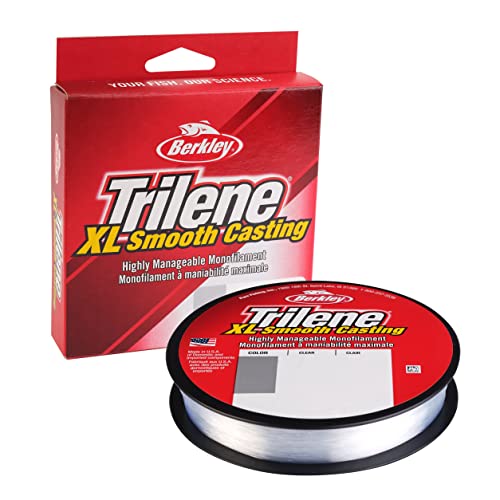
Trilene XL is the classic smooth-casting mono, and the XL name refers to its extra-limp formula. The spool covered here is the 8-pound test in clear at 330 yards, sized for a freshwater spinning reel. Berkley rates the current formula with greater knot strength and wet strength than earlier versions, and the limp construction resists the twists and kinks that make stiffer monos frustrating on spinning gear. At 0.010 inches in diameter, the 8-pound XL is a fair diameter baseline for this comparison: the 40-pound PowerPro above is only slightly thicker. For finesse presentations in clear water, this is the mono to beat at the budget tier.
Specs:
- Brand: Berkley (Pure Fishing)
- Material: Nylon monofilament
- Test strength: 8 lb
- Diameter: 0.010 in (0.25 mm)
- Spool length: 330 yd
- Color: Clear
- Design: Extra-limp formula for smooth casting, per the manufacturer
Stren Original

Stren Original has been a default monofilament since the early days of spinning reels, and its calling cards are toughness and low memory for the class. The listing covered here is the 10-pound test in Clear/Blue Fluorescent, a color that glows above the surface for line watching yet fades from view underwater. Stren describes the line as tangle resistant and designed to glide off the reel for effortless casting, and the 0.012-inch diameter keeps it manageable on both spinning and baitcasting reels. It is a sensible pick for anglers who want one forgiving mono for crankbaits, live bait, and general freshwater work.
Specs:
- Brand: Stren (Pure Fishing)
- Line type: Monofilament
- Test strength: 10 lb
- Diameter: 0.012 in (0.30 mm)
- Color: Clear/Blue Fluorescent
- Model: STFS10-26
- Memory: Low memory design, per the manufacturer
How to Choose Between Braid and Mono
Start with cover. In thick vegetation, timber, and dock pilings, braid’s thin diameter and zero stretch pull fish out before they wrap up, and it slices through soft stems on the retrieve. Mono’s stretch works against you there, giving fish time to bury themselves.
Next, look at water clarity and lure type. In clear water with wary fish, mono’s transparency is a genuine advantage, and its stretch keeps treble-hooked crankbaits and topwaters from tearing free during head shakes. Braid users solve the visibility problem with a few feet of mono or fluorocarbon leader, which keeps braid’s sensitivity while hiding the business end.
Then consider your reel and budget tier. Small kayak reels gain real capacity from braid, and braid lasts several seasons, which offsets its mid-range to premium tier over time. Mono sits at the budget tier per spool but needs replacing at least once a season because sunlight weakens it. If you fish one reel for everything, braid with a leader is the flexible setup; if you fish several technique-specific rods, dedicated mono spools stay simple and cheap to refresh.
Who Should Skip Each Type
Skip braided line if you fish very clear, shallow water and do not want to tie leaders, if you dislike managing wind knots on spinning reels, or if your spots are full of sharp rock and shell where a thin line can be cut on contact. Beginners who are still learning to tie knots also tend to fight braid’s slippery finish.
Skip monofilament if sensitivity is your priority, if you fish heavy cover where stretch loses fish, or if your reel spool is small and a thick mono would leave you short on capacity. Anglers who respool rarely should also pass on mono, since a season of sun exposure quietly weakens it even when it looks fine.
FAQ
Is braided line stronger than monofilament?
At the same diameter, yes, by a wide margin. Braid’s woven fibers deliver far more breaking strength per millimeter than a single nylon strand, which is why a 40-pound braid can match the diameter of a 10-pound mono. At the same labeled test, both lines break near their rating, but the braid does it in a much thinner package.
Can fish see braided line?
Braid is opaque, so in clear water fish can see it more easily than clear monofilament. Many anglers simply add a mono or fluorocarbon leader of a few feet to hide the end of the line. In stained water, heavy cover, or low light, braid’s visibility rarely matters, and high-visibility colors help the angler track the line instead.
Which line is better for kayak fishing?
Braid suits most kayak fishing because hooksets happen at close range, where its zero stretch drives hooks home with a short rod sweep, and its thin diameter adds capacity to compact reels. Mono still earns a place on a kayak for crankbait rods, where stretch protects treble hooks, and as an inexpensive leader material.
How often should each line be replaced?
Monofilament should be respooled at least once a season, and more often if it sits in sunlight or feels coily and rough. Braided line typically lasts several seasons; anglers often reverse it onto another reel to expose the fresh half. Replace braid when it looks frayed or fuzzy along the working length.
Final Verdict
For a single all-around spool, braided line is the better default for kayak and cover-focused freshwater fishing: the diameter, sensitivity, and service-life advantages are hard to argue with, and a short mono leader fixes its one real weakness. Monofilament remains the right call for clear-water finesse, treble-hook lures, and budget-tier setups where easy handling matters more than feel. The strongest setups in this comparison use both — braid as the main line, mono where stretch and invisibility count.
More from Amazon
Programs that pair well with the guide above. Offers and eligibility are set by Amazon and may change.
Free shipping on eligible items, Prime Video and more. Eligible new members can start with a free trial.
Start a Prime free trialA Prime membership for ages 18-24 with a trial period. Eligibility is set by Amazon.
See Prime for Young AdultsAudiobooks and podcasts to listen to on the go. Eligible new members can start with a free trial.
Try Audible freeAd-free music streaming. Eligible new subscribers can start with a free trial.
Try Music Unlimited freeAs an Amazon Associate we earn from qualifying purchases.
Write Your Review
No reviews yet. Be the first to share your experience!