

Key takeaways
- After each outing: Brush off dry grit and wipe away salt or surface grime with a barely damp cloth.
- Every 3–6 uses: Clean the item if it has contacted mud, sunscreen, fish residue, or saltwater.
- Every 1–3 months: Inspect flex points, folded edges, stitching, and areas exposed to rain. Condition only when the leather feels dry or looks dull.
- Before storage: Let the item dry at room temperature, then brush it and store it away from direct heat and sealed plastic.
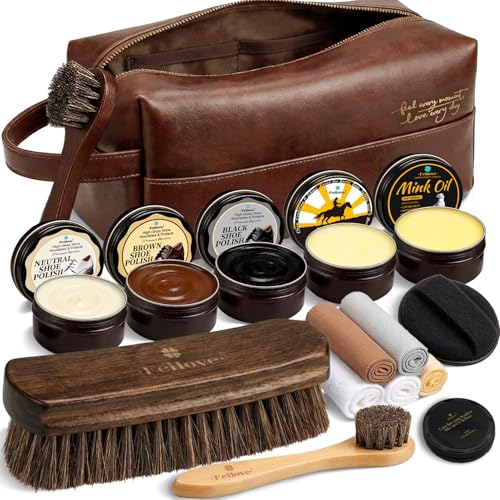
The best leather care kits are matched to the leather rather than sold as one universal solution: choose a mild cleaner and water-based conditioner for smooth finished leather, a dedicated suede kit for napped surfaces, and a polish only when you want to restore color and shine.
Our top picks


As an Amazon Associate we earn from qualifying purchases at no extra cost to you. Ratings are shown as listed on Amazon.
Best leather care kits by situation
| Situation | Best kit type | What it should include | Typical price range |
|---|---|---|---|
| Occasional care for boots, belts, or fishing accessories | Basic smooth-leather kit | Cleaner, conditioner, microfiber cloth, horsehair brush | $15–$35 |
| Frequent outdoor use and salt or dirt exposure | Large maintenance kit | Cleaner, conditioner, applicator pads, brush, storage case | $25–$60 |
| Dress shoes, gloves, or colored finished leather | Polish-focused kit | Neutral conditioner, matching cream polish, buffing cloth, horsehair brush | $30–$90 |
| Suede or nubuck footwear and accessories | Nap-safe kit | Suede cleaner, crepe or rubber brush, suede eraser, protective spray | $15–$45 |
| Mixed leather collection | Two-kit system | Smooth-leather cleaner and conditioner plus separate suede tools | $35–$100 |
For a practical general-purpose choice, look for a kit built around a pH-balanced or mild cleaner, a non-greasy conditioner, a soft horsehair brush, and lint-free cloths. Lexol, Bickmore, Fiebing’s, Leather Honey, and Saphir all make established leather-care products, but their formulas and intended uses differ. A brand name matters less than whether the label clearly identifies the product as suitable for your leather finish.
Cleaner, conditioner, and polish: what each product actually does
Cleaner removes contamination
Leather cleaner lifts sweat, dust, body oils, light grime, and residue from previous products. It does not replace conditioning, and using too much can leave leather wet or strip surface oils. For fishing gear, cleaner is especially useful after contact with sunscreen, fish slime, mud, or salt spray.
Choose a low-foam or water-based cleaner for routine maintenance. A foaming formula can be convenient, but foam is not evidence that it cleans better. Avoid household detergents, dish soap, alcohol-heavy sprays, and degreasers unless the leather manufacturer specifically permits them.
Conditioner preserves flexibility
Conditioner replenishes some lubrication in the fiber structure and helps reduce the dry, stiff feel that develops after repeated wetting and drying. The best conditioner depends on the finish. Smooth finished leather can usually tolerate a light cream, lotion, or emulsion. Very oily or wax-heavy products can darken pale leather, soften structured items excessively, or attract grit.
Leather Honey is known for a rich, concentrated conditioner, while Lexol offers lighter conditioning products intended for routine care. Either type should be applied sparingly and tested in a hidden area first. For a fishing wader belt, sheath, reel pouch, or leather handle, a thin coat is safer than trying to saturate the material.
Polish changes appearance more than structure
Polish adds color, gloss, and a degree of surface protection. Cream polish is generally easier to control than hard wax and is better for restoring an even appearance. Wax polish produces more shine but can build up in creases and reduce the natural look of heavily used gear.
Use neutral polish when color matching is uncertain. Pigmented polish can disguise scuffs, but a mismatched brown or black can permanently make an item look uneven. Polish is usually unnecessary on work gear where flexibility and grip matter more than shine.
Head-to-head: kit components that make a difference
| Component | Preferred specification | Why it matters | Watch out for |
|---|---|---|---|
| Cleaner | 100–250 ml bottle; mild, water-based formula | Enough for several maintenance cycles without excessive storage space | Strong solvents, heavy fragrance, or instructions that encourage soaking |
| Conditioner | 100–250 ml; cream or emulsion for routine use | Allows thin, even coats and easier control on seams | Very oily formulas on pale, suede, or tightly structured leather |
| Polish | 50–75 ml cream or wax; neutral for maximum versatility | Enough product for repeated touch-ups without a large jar | Using colored polish before testing for shade transfer |
| Applicator | Two or more cotton, microfiber, or closed-cell foam pads | Separate pads prevent cleaner, conditioner, and polish from contaminating one another | Rough seams, loose edges, or dyed cloth that transfers color |
| Brush | Horsehair for smooth leather; crepe or rubber for suede | Horsehair buffs without aggressive abrasion; suede brushes raise the nap | Nylon or wire bristles on delicate finished leather |
| Cloth | At least two lint-free microfiber cloths, roughly 30 × 30 cm | One can clean and one can buff, reducing cross-contamination | Fabric softener residue, loose lint, or an abrasive towel |
Match the kit to the leather
Smooth finished leather
This is the easiest category for a general kit. Remove loose dirt with a dry brush, apply a small amount of cleaner to a cloth rather than directly to the item, and follow with a thin layer of conditioner. A horsehair brush is useful for seams, stitching, and controlled buffing. Add polish only after the leather is clean and dry.
Finished leather often has a protective coating, so excessive conditioning can sit on the surface instead of absorbing. If water beads on the surface and the item remains flexible, frequent heavy treatment is more likely to create buildup than improve durability.
Suede and nubuck
Do not use ordinary smooth-leather cream, oil, or wax on suede. These products can flatten the nap, create dark patches, and make later cleaning difficult. Select a kit with a suede-specific cleaner, a crepe or rubber brush, and a suede eraser for dry marks. A protective spray may help resist future spotting, but it should be applied in ventilation and tested for color change.
Use a wire suede brush only when the manufacturer permits it and the nap is robust. For delicate suede, crepe rubber is the safer starting point. Brush in one direction after the material is fully dry, then work gently across the nap only where needed.
Unfinished or pull-up leather
Pull-up, oil-tanned, and other minimally finished leathers can darken dramatically when treated. They usually need less polish and more careful spot testing. Choose a conditioner specifically labeled for that type, and avoid assuming that a product suitable for smooth dress leather will behave the same way.
A simple maintenance schedule for outdoor leather gear
- After each outing: Brush off dry grit and wipe away salt or surface grime with a barely damp cloth.
- Every 3–6 uses: Clean the item if it has contacted mud, sunscreen, fish residue, or saltwater.
- Every 1–3 months: Inspect flex points, folded edges, stitching, and areas exposed to rain. Condition only when the leather feels dry or looks dull.
- Before storage: Let the item dry at room temperature, then brush it and store it away from direct heat and sealed plastic.
Never dry wet leather on a radiator, heater, boat engine cover, or in direct high heat. Rapid drying can shrink or stiffen it. Remove metal accessories where practical, since trapped moisture around snaps and buckles can encourage corrosion.
Worked cost-per-use example
Suppose a $30 kit contains 200 ml of cleaner and 200 ml of conditioner. If one maintenance session uses approximately 8 ml of cleaner and 6 ml of conditioner, the cleaner lasts about 25 sessions and the conditioner about 33 sessions. The kit therefore costs roughly $1.20 per full session before replacing cloths or brushes.
A cheaper kit is not automatically better value if its applicator sheds fibers or its brush loses bristles after a few uses. Reusable tools usually outlast the liquids, so prioritize a securely fitted brush, washable cloths, and bottles with caps that do not leak in a tackle bag.
Common buying and care mistakes
- Buying one formula for both smooth leather and suede.
- Applying conditioner before removing abrasive grit.
- Putting product directly on the leather instead of measuring a small amount onto an applicator.
- Skipping a hidden-area test, especially on light, dyed, or vintage leather.
- Using the same dark polish cloth on pale leather.
- Over-conditioning because the leather looks temporarily darker and shinier.
- Storing brushes damp, which can deform bristles and create odor.
For most anglers and outdoor users, the best leather care kits are not the largest sets. A compact smooth-leather kit with mild cleaner, light conditioner, two applicators, a horsehair brush, and washable microfiber cloths is the strongest everyday choice. Add a separate suede kit if you own napped leather; keeping those tools and formulas apart prevents the most expensive mistakes.




Write Your Review
No reviews yet. Be the first to share your experience!