

Key takeaways
- Wattage: More watts can support stronger heat and airflow, but wattage alone does not measure drying speed. A well-designed 1,200-watt dryer may outperform a poorly designed 1,500-watt model.
- Weight: A difference of 0.3 lb matters when holding the dryer above your head for 10 minutes. It matters less if the dryer stays in a hotel bathroom.
- Packed size: Measure the folded dryer, including the nozzle. A protruding concentrator can waste more suitcase space than the handle itself.
- Heat settings: Two heat settings plus a cool shot are enough for most travel styling. More settings are useful if several people share the dryer or if you alternate between rough-drying and smoothing.
- Folding handle: A folding handle usually saves space, but its hinge is a moving wear point. Do not force it past its stop or pack the dryer while the hinge is under sideways pressure.
- Dual voltage: Look for wording such as “110–120/220–240 V” and a voltage selector or automatic conversion. Dual voltage does not eliminate the need for a plug adapter.
The best travel hair dryers are the T3 Fit for frequent travelers who want a compact dual-voltage dryer, the BaBylissPRO Nano Titanium Travel Dryer for faster salon-style drying, and a small 1,000-watt folding dryer for the lightest, lowest-cost packing setup.
The right choice depends less on maximum wattage than on the combination of packed size, voltage compatibility, airflow, and how much hair you dry. A powerful dryer that only works at home voltage is a poor international travel tool, while an ultra-small 800-watt model may save space but add considerable drying time.
Our top picks

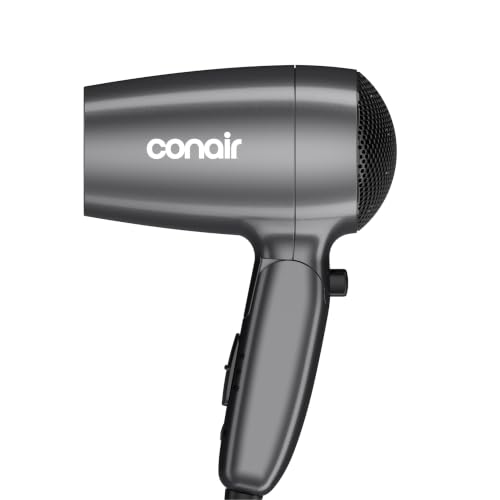

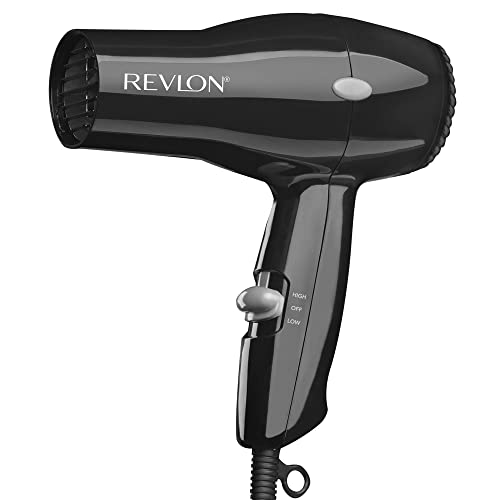
As an Amazon Associate we earn from qualifying purchases at no extra cost to you. Ratings are shown as listed on Amazon.
Best travel hair dryers at a glance
| Type or model | Approx. packed size | Approx. weight | Wattage | Dual voltage | Best for |
|---|---|---|---|---|---|
| T3 Fit Compact Hair Dryer | About 7.1 x 3.1 x 7.1 in | About 1.3 lb | Typically 1,200–1,875 W depending on market | Yes, when used with the correct voltage setting | Frequent travelers wanting a premium compact dryer |
| BaBylissPRO Nano Titanium Travel Dryer | About 6.5 x 3 x 7 in folded | About 1 lb | 1,000–1,200 W, depending on version | Yes on dual-voltage versions | Fast drying in a small package |
| Drybar Baby Buttercup | About 7 x 3 x 7 in folded | About 1 lb | 1,200 W | Yes | Compact styling with a concentrator nozzle |
| ghd Flight+ | About 6.5 x 3 x 7.5 in folded | About 1.2 lb | Typically up to 78% of full-size ghd airflow | Yes | Carry-on packing and controlled styling |
| Mini folding dryer, 800–1,000 W | About 5.5–7 x 2.5–3 x 7 in folded | About 0.7–1 lb | 800–1,000 W | Often, but verify the label | Occasional trips and the smallest luggage footprint |
Dimensions and weights are approximate because product revisions and regional versions differ. Check the rating plate and the specific manual before buying, particularly when international voltage support matters.
Head-to-head: which travel dryer fits your trip?
Best for frequent flyers: T3 Fit
The T3 Fit is a strong all-rounder for someone who travels often and still wants two heat settings, two speed settings, a cool-shot button, and a concentrator for directed airflow. Its folding handle reduces the awkward bulk that makes full-size dryers difficult to pack. The main advantage over bargain mini dryers is a more usable balance of airflow and heat control; the main disadvantage is a higher general market price, commonly around $120–$170.
Choose it if you dry your hair several times per week, have medium-to-thick hair, or want one travel dryer that can also serve as a compact home backup.
Best for faster drying: BaBylissPRO Nano Titanium Travel Dryer
BaBylissPRO’s travel models are aimed at people who do not want a tiny dryer to feel underpowered. Nano-titanium styling surfaces and concentrated airflow can help direct heat efficiently, although drying speed still depends on hair density, moisture, and the attachment used. Look specifically for a dual-voltage version: BaBylissPRO sells multiple dryers, and not every model has the same electrical specification.
This is the better pick for thick or long hair when luggage space is limited. It generally costs about $40–$80, but the extra airflow may be worth more than saving a few ounces.
Best for compact styling: Drybar Baby Buttercup
The Baby Buttercup folds into a suitcase-friendly shape and includes a concentrator nozzle, making it useful for smoothing bangs, a fringe, or sections that need directional airflow. At roughly 1,200 watts, it sits between an ultra-light mini dryer and a full-size salon dryer.
Its limitation is that compact dryers still have smaller motors and shorter handles than full-size models. If you regularly dry very dense hair from soaking wet to fully dry, expect more time than with a high-airflow professional dryer. Market pricing is generally around $100–$150.
Best for the smallest carry-on setup: ghd Flight+
The ghd Flight+ is designed around portability without reducing the controls to a single hot setting. Its dual-voltage design and folding handle are particularly useful for international travel, while its concentrator helps with controlled styling. It is a sensible middle ground for travelers who care about brand build quality but do not need maximum power.
It is less suitable for someone prioritizing the fastest possible drying of very thick hair. Expect a general market price around $100–$150, depending on region and promotions.
What the specifications mean in actual use
- Wattage: More watts can support stronger heat and airflow, but wattage alone does not measure drying speed. A well-designed 1,200-watt dryer may outperform a poorly designed 1,500-watt model.
- Weight: A difference of 0.3 lb matters when holding the dryer above your head for 10 minutes. It matters less if the dryer stays in a hotel bathroom.
- Packed size: Measure the folded dryer, including the nozzle. A protruding concentrator can waste more suitcase space than the handle itself.
- Heat settings: Two heat settings plus a cool shot are enough for most travel styling. More settings are useful if several people share the dryer or if you alternate between rough-drying and smoothing.
- Folding handle: A folding handle usually saves space, but its hinge is a moving wear point. Do not force it past its stop or pack the dryer while the hinge is under sideways pressure.
- Dual voltage: Look for wording such as “110–120/220–240 V” and a voltage selector or automatic conversion. Dual voltage does not eliminate the need for a plug adapter.
Decision matrix for common travel situations
| Your situation | Recommended specification | Best fit |
|---|---|---|
| One or two short trips per year | 800–1,000 W, under 1 lb, folding handle | Basic dual-voltage mini dryer |
| Weekly gym or business travel | 1,000–1,300 W, under 1.3 lb, two heat speeds | BaBylissPRO travel model or ghd Flight+ |
| Thick, long, or dense hair | At least 1,200 W, strong airflow, concentrator, dual voltage | T3 Fit or a higher-airflow BaBylissPRO model |
| Very limited personal-item space | Under 7 inches folded and under 1 lb | Compact mini dryer; accept longer drying time |
| Several users sharing one dryer | Two speeds, two or more heat levels, cool shot | T3 Fit or ghd Flight+ |
A simple drying-time calculation
Suppose a 1,000-watt dryer takes 14 minutes to dry your hair and a stronger 1,300-watt model takes 10 minutes. The smaller dryer uses approximately 0.233 kilowatt-hours per session: 1.0 kW multiplied by 14/60 hours. The stronger model uses approximately 0.217 kilowatt-hours: 1.3 kW multiplied by 10/60 hours.
That example shows why wattage is not the same as energy cost. At an electricity rate of $0.20 per kilowatt-hour, the difference is less than half a cent per use. The more meaningful benefit of faster airflow is usually four minutes saved and less time holding the dryer, not a lower power bill.
International voltage and adapter checklist
- Read the dryer label. Confirm that it supports both the voltage used at home and the voltage used at your destination.
- Set a manual voltage selector before plugging in. Never change the selector while the dryer is connected.
- Pack a plug adapter that matches the destination socket. An adapter changes the plug shape; it does not convert voltage.
- Do not use a high-wattage hair dryer with a small, unsuitable voltage converter unless the converter is explicitly rated for the dryer’s wattage.
- Check hotel bathroom outlets and residual-current protection. Some outlets are intended only for shavers and may not supply enough power.
Ownership details that matter after the purchase
The rear filter is usually the first part to cause trouble. Lint, hair, and dust restrict airflow, make the dryer run hotter, and can trigger overheating protection. Unplug the dryer, remove the filter cover if the manual permits it, and brush or rinse the filter only according to the manufacturer’s instructions. Let washable parts dry completely before reinstalling them.
Other common failure points include a cracked concentrator, a loose folding-handle hinge, and a power cord repeatedly bent at the handle. Store the dryer loosely rather than wrapping the cord tightly around the body. Allow the unit to cool before putting it into a pouch, and avoid operating it where towels or clothing can block the intake.
For most travelers, the best value is a dual-voltage folding dryer weighing about 1–1.3 pounds with at least 1,000 watts, two heat settings, two speeds, and a cool shot. Choose the lightest 800–1,000-watt model only when packed size is your overriding priority; choose the T3 Fit or a higher-airflow BaBylissPRO model when reducing drying time matters more than saving a few ounces.

Write Your Review
No reviews yet. Be the first to share your experience!