

Key takeaways
- Best Wooden Pepper Mills for Fresh Grinding The best wooden pepper mills for most kitchens are a medium-height beech or maple mill with a corrosion-resistant hardened-steel grinder, at least six grind settings, and a durable lacquer or food-safe oil finish;…
Best Wooden Pepper Mills for Fresh Grinding
The best wooden pepper mills for most kitchens are a medium-height beech or maple mill with a corrosion-resistant hardened-steel grinder, at least six grind settings, and a durable lacquer or food-safe oil finish; choose ceramic only if you regularly grind salt or want one tool for multiple spices.
Quick picks by kitchen situation
| Situation | Best choice | Why it fits | Typical price range |
|---|---|---|---|
| Everyday cooking and dining | 16–20 cm wooden mill | Comfortable one-handed use, good capacity, easy cupboard storage | $35–$80 |
| Frequent cooking for a family | 22–30 cm wooden mill | Holds more pepper and produces faster output with fewer refills | $50–$120 |
| Limited counter or drawer space | 10–14 cm mill | Compact footprint, though it needs more frequent refilling | $20–$55 |
| Grinding salt as well as pepper | Wooden mill with ceramic mechanism | Ceramic resists corrosion from salt crystals and moisture | $30–$90 |
| Maximum pepper aroma and precision | Steel mechanism with stepped adjustment | Consistent coarse-to-fine settings and strong cracking action | $45–$130 |
What separates a good wooden pepper mill from a decorative one?
Wood species and construction
Beech is the most common choice because it is hard, stable, readily shaped, and usually affordable. It is used in many traditional European-style mills, including models from Peugeot and Zassenhaus. Maple is similarly dense and has a relatively tight grain, making it a good option for a smooth, pale finish. Rubberwood is often used in value-priced mills; it can perform well when properly sealed, but the finish and machining matter more than the species name.
Our top picks

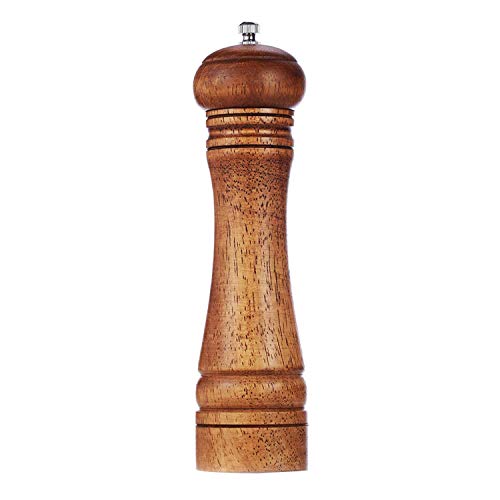
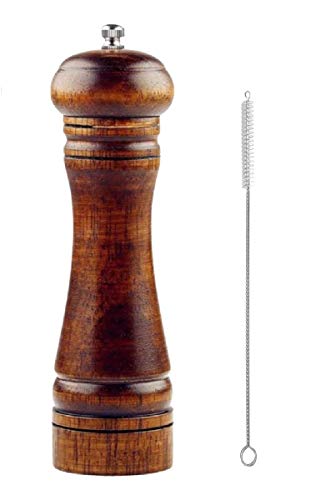
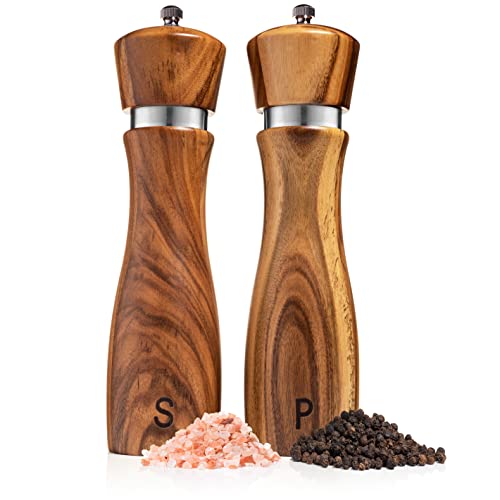
As an Amazon Associate we earn from qualifying purchases at no extra cost to you. Ratings are shown as listed on Amazon.
Walnut, olive wood, and acacia provide more distinctive grain patterns. They are attractive choices for a mill that remains on the dining table, but inspect the finish around the refill opening and adjustment hardware. Decorative wood can still split or absorb moisture if it is poorly sealed.
Look for a one-piece or well-joined body with no movement around the top and no open cracks along the grain. A heavier body is not automatically better, but extra mass can make the mill steadier while turning. Wood should be kept dry; even a well-finished mill should not be soaked or placed in a dishwasher.
Grinder material
For pepper only, hardened steel is usually the strongest all-round choice. It cracks peppercorns before grinding them, which helps produce a more aromatic result than a mechanism that simply crushes them. Steel mechanisms also tend to tolerate frequent use and hard peppercorns well.
Ceramic mechanisms are valuable when a mill will also handle salt. Salt can attract moisture and accelerate corrosion in ordinary steel mechanisms. Ceramic is not automatically superior for pepper, however: the quality of the cutting geometry and adjustment system matters more than the material label. A ceramic mechanism can also be more vulnerable to damage from grit or an over-tightened adjustment.
Avoid uncoated mild steel in a humid kitchen. It may discolor or develop surface corrosion, especially if the mill is used near a steaming cooking area. Stainless or treated steel is preferable when the manufacturer identifies the material clearly.
Head-to-head: popular wooden mill designs
| Design or example | Usual height | Mechanism | Adjustment style | Best use |
|---|---|---|---|---|
| Classic Peugeot-style wooden mill | 18–30 cm | Hardened steel | Top knob or collar; commonly 5–6+ positions | Daily pepper grinding with a traditional feel |
| Zassenhaus-style precision mill | 18–30 cm | Hardened steel | Numbered ring; often 6–12 positions | Repeatable settings for recipes and table service |
| Fletchers’ Mill-style wooden mill | 18–27 cm | Stainless or treated steel, depending on model | Top adjustment screw or knob | Simple, repairable-feeling everyday use |
| Wooden salt-and-pepper set with ceramic grinder | 10–20 cm | Ceramic | Variable screw or dial | One matching set for pepper and salt |
Peugeot’s Paris line is a well-known reference point for the traditional wooden pepper mill: the familiar rounded body, steel pepper mechanism, and compact top adjustment. Zassenhaus is particularly associated with numbered adjustment systems, which are useful when you want to return to the same setting. Fletchers’ Mill offers traditional wooden forms in several sizes and finishes. Exact settings, wood species, and mechanism specifications vary by model, so check the individual product description rather than assuming every mill in a brand’s range is identical.
How much adjustment do you really need?
A mill with four broad settings can be perfectly adequate for table use, but a wider range is useful for cooking. Fine pepper is suitable for sauces and soups, medium pepper works for general seasoning, and coarse pepper is better for steaks, salads, and finishing. The important distinction is whether the settings are repeatable.
Numbered positions or positive clicks make it easier to move from fine to coarse and back again. A simple threaded top knob offers infinite adjustment, but it can drift during use and gives no reference point. Check that the finest position still produces pepper rather than choking the mechanism, and that the coarsest setting does not release large uncracked pieces.
Do not tighten an adjustment screw until it stops the grinder completely. Over-tightening can put unnecessary stress on the burrs and makes the next adjustment difficult. Adjust in small increments while turning the mill, rather than forcing the mechanism while it is stationary and full of pepper.
Capacity, height, and the cost of refilling
Capacity is rarely listed consistently, so body height is a useful practical guide. A 10–14 cm mill commonly holds around 15–25 grams of peppercorns, a 16–20 cm mill around 25–40 grams, and a 22–30 cm mill around 40–70 grams. The actual amount depends on the internal chamber and the shape of the body.
For a worked example, suppose two people use 0.5 gram of freshly ground pepper at each dinner. A 30-gram chamber provides approximately:
30 grams ÷ 1 gram per day = 30 days of capacity.
A larger 55-gram mill would last about 55 days under the same use, but its taller body may be less convenient beside a small stove. If you cook for guests or season large pots frequently, the larger mill saves interruptions. If you mostly grind a little at the table, a 16–18 cm model is usually the better balance.
Finish durability matters more than decorative grain
A lacquered finish generally provides the strongest barrier against fingerprints, cooking splashes, and humidity. It is a practical choice for a mill that lives beside the stove, although deep scratches can be conspicuous and are difficult to repair invisibly.
Oil-finished wood feels warmer and can be refreshed more easily, but it needs more care. Wipe it with a barely damp cloth, dry it immediately, and periodically apply only the food-safe finish recommended by the manufacturer. Do not use cooking oil: it can become sticky or develop an unpleasant odor.
Painted or stained finishes can be durable, but inspect the rim of the refill opening and the area around the adjustment hardware. These are the places where abrasion and moisture usually appear first. A finish that is flaking, soft, or cracked is a reason to reject the mill, regardless of how attractive the body looks.
Setup and maintenance that extend service life
- Empty the mill before changing pepper types. A few remaining corns can alter the flavor and may jam a finer setting.
- Fill only to the recommended level. Overfilling prevents the upper mechanism from seating correctly and increases friction.
- Keep the body dry. Wipe spills immediately, especially around the base and refill opening.
- Clean the grinder without water. Turn it upside down and grind a small amount of dry rice only if the manufacturer permits it; otherwise use a dry, soft brush. Rice can be abrasive in some mechanisms.
- Store away from steam. A shelf beside the kettle or cooktop exposes wood and metal to repeated moisture.
- Replace worn parts rather than forcing the mill. If output becomes weak despite clean peppercorns, the mechanism may be worn or the adjustment may be misaligned.
The parts most likely to wear first are the grinding burrs, adjustment threads, and any small spring or collar that holds the setting. Wooden bodies can last many years when kept dry, while a mechanism used several times a day may eventually need replacement or a new mill. Peppercorns should also be stored separately in a sealed container; loading damp or oily spices is a common cause of poor grinding.
Final buying recommendation
Choose a 16–20 cm beech, maple, or walnut mill with a steel mechanism and at least six repeatable settings if pepper is its main job. Select a ceramic mechanism when salt is part of the plan, and move up to 22–30 cm if you cook for several people or dislike frequent refills. Prioritize a stable finish, clear adjustment system, and accessible replacement policy over exotic wood or unusually decorative shaping. Those details determine whether a wooden pepper mill remains useful after the initial appeal has worn off.



Write Your Review
No reviews yet. Be the first to share your experience!