

Key takeaways
- The best spinning rods for sensitive, versatile casting are usually 6 feet 10 inches to 7 feet 2 inches long, medium-light or medium power, fast action, and rated for roughly 1/8- to 1/2-ounce lures—but the right combination depends on your…
The best spinning rods for sensitive, versatile casting are usually 6 feet 10 inches to 7 feet 2 inches long, medium-light or medium power, fast action, and rated for roughly 1/8- to 1/2-ounce lures—but the right combination depends on your species, cover, casting space, and line.
A sensitive rod transmits taps through a light, responsive blank, while a versatile rod must also cast different lure weights, control fish near cover, and avoid feeling cumbersome during a full day on the water. No single model does all of those jobs equally well. Use the specifications below to match a rod to the way you actually fish.
Our top picks
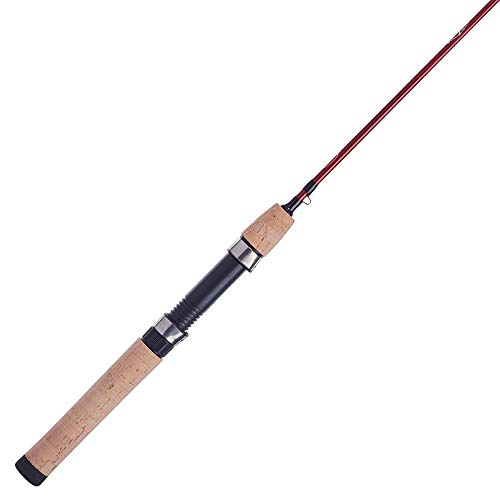


As an Amazon Associate we earn from qualifying purchases at no extra cost to you. Ratings are shown as listed on Amazon.
Quick picks by fishing situation
| Situation | Recommended rod specification | Why it fits |
|---|---|---|
| Panfish, small trout, finesse bass | 6’6″–7′, ultralight or light, fast/moderate-fast, 1/32–1/4 oz, 2–8 lb line | Loads tiny lures and protects light line |
| General bass and freshwater species | 6’10″–7’2″, medium-light or medium, fast, 1/8–1/2 oz, 6–12 lb line | Balances sensitivity, casting distance, and lure versatility |
| Walleye, small jigs, finesse plastics | 7’–7’6″, medium-light, fast, 1/8–3/8 oz, 6–10 lb line | Improves line control and hook-setting distance |
| Shore casting or open-water distance | 7’2″–8′, medium, moderate-fast, 1/4–3/4 oz, 8–15 lb line | Longer blank increases casting leverage and line pickup |
| Heavy cover, pike, inshore light tackle | 7’–7’6″, medium-heavy, fast, 3/8–1 oz, 10–20 lb line | Provides lifting power and control around vegetation or structure |
How to choose the important specifications
Length: casting distance versus control
Rod length affects leverage, lure trajectory, line management, and portability. A 6-foot 6-inch to 7-foot rod is easy to maneuver around docks, brush, kayaks, and small streams. It is also a practical choice for anglers who frequently cast one-handed.
Moving to 7 feet 2 inches or longer generally improves casting distance and makes it easier to keep line above rocks, current, and shoreline vegetation. The trade-off is reduced maneuverability in tight quarters and greater transport length. For a general-purpose freshwater setup, 7 feet is a useful middle ground.
Longer is not automatically more sensitive. Blank material, taper, guide design, total weight, and handle construction also determine how clearly a rod communicates bottom contact and light bites.
Power: the amount of force the blank can apply
Power describes how much force is needed to load the rod. Ultralight and light rods bend with small lures and small fish, making them enjoyable for panfish and trout. Medium-light power is often the most adaptable choice for finesse bass, walleye, crappie, and other moderate-sized species. Medium power adds useful backbone for larger bass, heavier hooks, and occasional pike.
Choose medium-heavy power when fish must be moved quickly away from weeds, wood, docks, or rocks. Using an ultralight rod for heavy cover can cause excessive blank stress, poor hook penetration, and prolonged fights. Conversely, a medium-heavy rod can make a 1/16-ounce jig difficult to cast and may overpower light line.
Action: sensitivity and hook-setting behavior
Fast-action rods bend mostly through the upper section. They transmit changes in bottom composition well and provide quick hook-setting response, which suits jigs, Texas-rigged plastics, drop-shot rigs, and single-hook lures.
Moderate-fast rods bend farther down the blank. They are more forgiving with treble-hook crankbaits, small hard baits, and fish that surge close to the boat. Moderate action can help prevent small hooks from tearing free, but it may feel less immediate when working a bottom-contact lure.
For one rod that must handle both finesse plastics and occasional moving baits, a fast or moderate-fast medium-light-to-medium rod is usually more practical than an extremely fast specialty blank.
Lure range and line rating: read both together
The lure rating is a loading range, not a command to fish at the maximum number all day. A rod rated for 1/8 to 1/2 ounce should cast most efficiently when the lure falls somewhere inside that range, especially around the middle. A 1/32-ounce bait may not load the blank sufficiently, while repeatedly throwing near the upper limit can shorten its service life.
Line ratings are also guidelines. Braided line has a smaller diameter than monofilament at the same breaking strength, so a rod labeled for 6–12-pound line may comfortably use 10-pound braid with a 6- to 10-pound fluorocarbon leader. Check knot strength and drag settings rather than relying only on the printed rating.
Handle materials and comfort
Cork is light, warm in cold weather, and easy to shape. Quality cork can remain comfortable for years, although it may develop pits, stains, or compression marks. EVA foam is generally more resistant to water, impact, and rough storage. It is a sensible choice for frequent shore anglers, kayak anglers, and anyone who routinely places a rod on wet surfaces.
Split-grip handles reduce weight and can improve balance, but they provide less continuous contact under the forearm. Full-length grips are often more comfortable for two-handed casting and heavier lures. A shorter rear grip is useful for technical finesse work; a longer rear grip adds leverage for distance casting.
When sensitivity is the priority, avoid choosing by handle material alone. A lighter, well-balanced rod with either cork or EVA can feel more responsive than a heavier rod with a theoretically more conductive grip.
Decision matrix: match the rod to your ownership pattern
| Your circumstances | Best starting configuration | Ownership logic |
|---|---|---|
| Occasional angler, limited budget | 7′ medium-light, fast, 1/8–1/2 oz | One affordable rod covers the widest range of freshwater techniques |
| Beginner learning multiple techniques | 7′ medium, moderate-fast, 1/8–5/8 oz | More forgiving with lure timing and fish surges |
| Frequent finesse angler | 7’–7’6″ medium-light, fast, 1/16–3/8 oz | Prioritizes bite feedback, light-lure loading, and line control |
| Small vehicle, apartment, or public transport | Two-piece 6’6″–7′ rod with a case | Shorter storage length reduces transport damage and inconvenience |
| Regular heavy-cover fishing | 7’–7’6″ medium-heavy, fast, 3/8–1 oz | Extra power is more valuable than maximum finesse sensitivity |
One-piece versus two-piece construction
A one-piece rod normally offers a continuous blank and eliminates a ferrule joint, which some anglers prefer for maximum sensitivity and a clean bend. Its drawback is transport: a 7-foot rod may require a full-size vehicle or external rod carrier.
A well-made two-piece rod is easier to store and carry. The joint adds a small amount of weight and requires inspection, but it does not automatically make a rod unsuitable for sensitive fishing. Align the sections carefully, keep the ferrule clean, and avoid forcing them together when sand or grit is present.
For anglers who fish several times a month but travel frequently, a durable two-piece rod may provide more real-world value than a slightly lighter one-piece rod that stays at home.
Worked setup: building a versatile finesse outfit
Suppose your main targets are largemouth bass, walleye, and occasional crappie. Choose a 7-foot medium-light fast rod rated for approximately 1/8–3/8 ounce and 6–10-pound line. Pair it with a 2500-size spinning reel, 10-pound braided main line, and a 6- to 10-pound fluorocarbon leader.
- Fill the spool to about 1/8 inch below the rim. Underfilling reduces casting distance; overfilling encourages loops and wind knots.
- Use a lure near 3/16 to 1/4 ounce when learning the rod. That middle range loads the blank without stressing the tip.
- Set the drag before fishing. A starting point of roughly one-quarter to one-third of the leader’s actual breaking strength is conservative, then adjust for knots, abrasion, and cover.
- Use a compact knot and inspect the leader after contact with rocks, mussels, or timber.
If the outfit costs $180 and you fish 30 times per year for three years, the rod-and-reel cost is approximately $2 per outing before line and lure expenses: $180 divided by 90 uses. A slightly higher purchase price can be worthwhile if it improves balance, survives transport, and gets used more often.
Durability and maintenance realities
The tip section and ceramic guide inserts are commonly exposed to damage. Never pull a snag by sharply bending the rod; point the rod toward the snag and pull with the line while protecting your hands. Check guides with a cotton swab. If fibers catch, the insert may be cracked and can damage line.
Rinse saltwater-exposed rods with fresh water, wipe them dry, and allow them to dry before storage. Do not leave a wet rod inside a closed case. Clean reel-seat threads and ferrules occasionally, but avoid abrasive cleaners and heavy oil on blank surfaces.
Store rods vertically or horizontally with support at several points, away from direct heat. Do not lean them for long periods against a sharp edge, and do not transport them loose where a door, cooler, or tackle box can strike the blank.
Final recommendation
For the broadest combination of sensitivity and versatility, start with a 7-foot medium-light or medium spinning rod, fast or moderate-fast action, a lure range around 1/8–1/2 ounce, and a line rating near 6–12 pounds. Move shorter and lighter for small streams and panfish, longer for shore distance and line control, and heavier when cover or powerful fish matters more than finesse.




Write Your Review
No reviews yet. Be the first to share your experience!