

Key takeaways
- Usable serving area: A board advertised as 16 inches may lose several inches to handles, grooves, or a hidden drawer. Measure the flat area where food will actually sit.
- Tool count: Four tools are not automatically better than two. A cheese knife, spreader, fork, and small tongs cover most servings; duplicate spreaders add little value.
- Board thickness: A 0.5-inch board is lighter and easier to store, while a 0.75- to 1-inch board feels more stable and resists warping.
- Cleaning method: “Easy to clean” usually means wiping the board promptly, not putting it in a dishwasher. Confirm the instructions for both the board and removable accessories.
The best charcuterie board sets depend on three decisions: choose acacia or bamboo for an attractive everyday board, slate or marble for temperature-sensitive foods, and a larger 16- to 20-inch set when you regularly serve more than four people.
Our top picks
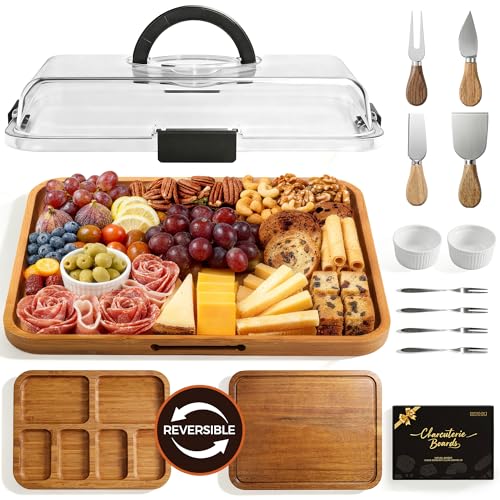
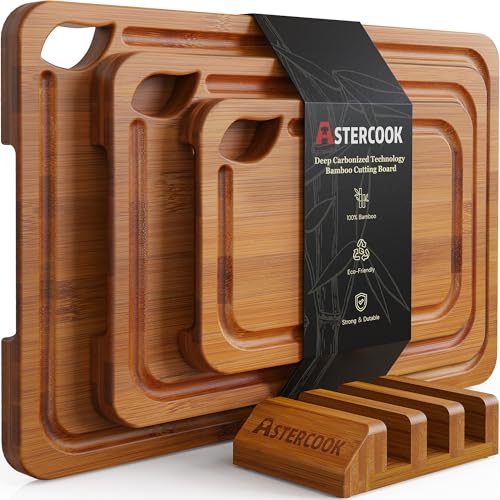


As an Amazon Associate we earn from qualifying purchases at no extra cost to you. Ratings are shown as listed on Amazon.
Quick picks by hosting situation
| Hosting need | Best board type | Useful target size | What to look for | Typical price range |
|---|---|---|---|---|
| Occasional snacks for two to four | Bamboo or acacia | 12–14 inches | One knife, two serving tools, compact storage | $25–$55 |
| Weekly family use | Acacia or walnut | 14–16 inches | Deep juice groove, removable tools, stable feet | $40–$90 |
| Dinner parties for six to eight | Large wood set with serving tools | 18–20 inches | At least four knives or utensils and room for bowls | $70–$150 |
| Low-maintenance entertaining | Food-safe slate or tempered glass | 14–18 inches | Nonporous surface and dishwasher-compatible accessories | $35–$100 |
| Small kitchen or limited storage | Reversible bamboo board | 10–13 inches | Hanging loop, nesting tools, slim profile | $20–$45 |
What makes a charcuterie board set worth buying?
A board set is more than a wooden slab with a few accessories. The useful combination is a surface that fits your table, tools suited to different foods, and storage that does not turn cleanup into a second task. Before comparing designs, check four specifications.
- Usable serving area: A board advertised as 16 inches may lose several inches to handles, grooves, or a hidden drawer. Measure the flat area where food will actually sit.
- Tool count: Four tools are not automatically better than two. A cheese knife, spreader, fork, and small tongs cover most servings; duplicate spreaders add little value.
- Board thickness: A 0.5-inch board is lighter and easier to store, while a 0.75- to 1-inch board feels more stable and resists warping.
- Cleaning method: “Easy to clean” usually means wiping the board promptly, not putting it in a dishwasher. Confirm the instructions for both the board and removable accessories.
Board materials compared
Acacia: the best all-around choice
Acacia offers attractive grain, good hardness, and a moderate price. It is a practical choice for frequent entertaining because small scratches blend into the varied grain better than they do on a very pale, uniform wood. Look for a board made from food-safe, glued panels with a smooth finish and no loose seams.
Its limitations are typical of solid wood: it can absorb odors and moisture, and repeated soaking can cause cracks or warping. Hand-wash it, dry both sides, and apply food-grade mineral oil when the surface looks dry or feels rough.
Bamboo: light, affordable, and easy to store
Bamboo sets are often thinner and lighter than hardwood sets, making them suitable for apartments, picnic tables, and occasional use. Bamboo is also less expensive, so it works well when you want a complete set without paying for a large decorative board.
The trade-off is that laminated bamboo can show swelling at the seams if it is left wet. Some bamboo surfaces are also quite hard, which can dull knives more quickly than softer wood. Choose a design with rounded edges and properly sealed seams.
Walnut and other premium hardwoods: appearance first
Walnut has a rich color and makes a polished presentation for formal entertaining. Maple and beech are other durable hardwood options, often with a lighter appearance. These boards are typically heavier and more expensive, but their weight can make them steadier when slicing cheese or spreading soft foods.
Premium wood does not mean dishwasher-safe or maintenance-free. In fact, a dark, high-end board can show white mineral residue from hard water, so wiping and drying promptly matters even more.
Slate, marble, and glass: easiest surface cleanup
Nonporous materials resist liquid absorption and are convenient for oily meats, fruit, and strong cheeses. Slate also provides a contrasting background and can be labeled with chalk. Marble stays cool for longer, which is useful for soft cheeses, but it is heavy and can stain or chip at the edges. Tempered glass is easy to wipe but can be noisy when tools are set down and may show fingerprints.
These materials are best when surface cleanup matters more than portability. They are less forgiving on delicate knives and can damage a tabletop if the underside lacks rubber feet.
Tools that matter—and tools that mostly take up space
A useful starter configuration includes one narrow cheese knife for firm cheese, one broad spreader for soft cheese or pâté, one fork-tipped tool for serving pieces, and small tongs for olives or fruit. A set with two or three of these tools is sufficient for four guests if you already own a kitchen knife.
For six to eight guests, four to six tools are more convenient because people can serve themselves without passing the same utensil around. Small ceramic or stainless-steel bowls are also valuable: they keep honey, olives, nuts, and chutney from spreading across the board.
Hidden drawers look tidy, but inspect how they work. A tight drawer can trap crumbs and moisture, while magnets may not hold heavier stainless-steel tools securely. Removable tools stored in a separate washable container are often simpler to maintain.
How much board space do you need?
Use approximately 3 to 4 inches of board perimeter per guest for a snack course, then add space for bowls and gaps between foods. A 12-inch round board generally serves two to four people; a 16-inch board is more comfortable for four to six; and an 18- to 20-inch board suits six to eight when it includes bowls or ramekins.
Here is a practical calculation. Suppose six guests each receive about 2 ounces of cheese and 2 ounces of meat. That is 24 ounces of the two main foods before adding crackers, fruit, and condiments. If roughly one-third of the board is reserved for crackers and bowls, a 16-inch board may feel crowded. An 18-inch board, or two coordinated 12-inch boards, gives better separation and makes refilling easier.
Best set format for different buyers
For occasional hosts: compact bamboo
Choose a 12- to 14-inch bamboo board with two or three tools. This is the sensible budget option when the set will be used a few times a year. A slim board fits in a cabinet, and fewer accessories mean fewer items to wash and lose.
For regular hosts: acacia with removable tools
A 14- to 16-inch acacia set is the strongest balance of appearance, durability, and cost. Prioritize a juice groove, non-slip feet, and a tool compartment that can be removed or opened fully for cleaning. This format handles family gatherings without becoming difficult to carry.
For large gatherings: oversized board or two-board setup
For six or more guests, a very large board is not always the best solution. An 18- to 20-inch board gives a generous display but can be heavy and awkward to move once loaded. Two medium boards let you separate meats from fruit and sweets, place food at opposite ends of a table, and wash one while using the other.
For the least maintenance: slate or glass
Select a nonporous board when you frequently serve oily foods or do not want to condition wood. Make sure it has a protective underside, rounded or finished edges, and accessories that can be washed separately. This is a particularly convenient choice for renters, offices, and occasional holiday use.
Ownership realities and common mistakes
- Do not soak wood: Standing water can swell joints and distort the board. Wipe it with a damp cloth, use mild soap when needed, and dry it upright.
- Do not use cooking oil as conditioner: Olive, vegetable, and other kitchen oils can become sticky or rancid. Use food-grade mineral oil or a board cream made with mineral oil and wax.
- Keep raw meat separate: A charcuterie board intended for ready-to-eat food should not also be used for raw poultry or meat unless it can be thoroughly sanitized according to its care instructions.
- Inspect glued seams: Seams, feet, and drawer hardware usually wear before the main surface. Stop using a board if a seam opens or a foot becomes loose.
- Leave breathing room: Packing every inch with food makes the board harder to carry and encourages crumbs and moisture to collect under ingredients.
Bottom line
For most households, the best charcuterie board sets are 14- to 16-inch acacia sets with three or four removable tools. Choose bamboo if low cost and storage matter most, walnut or another premium hardwood for presentation, and slate, marble, or glass when nonporous cleanup is the priority. Match the usable surface—not the advertised outside dimension—to your guest count, and buy the simplest tool set that covers the foods you actually serve.

Write Your Review
No reviews yet. Be the first to share your experience!