

Key takeaways
- Check the attachment screws regularly; loose mounts cause shifts in point of impact.
- Wipe off dirt and moisture and lightly oil pivot points.
- Noisy legs can be wrapped or padded for hunting.
- Follow all local laws and firearm safety rules; never point a rifle at anything you do not intend to shoot.
The best bipod for most rifle shooters in 2026 is the Harris S-BRM for its proven design and wide height range, with the Atlas BT10 favored in precision competition, the Magpul Bipod for M-LOK rifles and the Caldwell XLA Pivot as the budget choice. Choose a bipod based on your rifle’s mounting system, the height you shoot at and the terrain, not on brand loyalty. Weight, leg adjustment and the ability to cant or pan matter more than looks.
Our top picks

As an Amazon Associate we earn from qualifying purchases at no extra cost to you.
Quick comparison of bipod picks
| Pick | Best for | Approx. weight | Height range | Mount | Price range |
|---|---|---|---|---|---|
| Harris S-BRM | Hunting and general use | About 12 to 14 oz | 6 to 9 in | Sling stud | Mid-range |
| Atlas BT10 V8 | Precision and competition | About 11 to 12.6 oz | About 4.75 to 9 in, varies | Picatinny or ADM clamp | Upper-mid |
| Magpul Bipod | M-LOK and light rifles | About 11 oz | Check spec sheet | M-LOK or Picatinny | Mid-range |
| Caldwell XLA Pivot | Budget entry | About 12 oz | 6 to 9 in | Sling stud or Pic adapter | Budget |
| Magpul MOE Bipod | Lightweight carbine use | About 8 oz | Short travel | MOE slot | Budget to mid |
Weights are approximate and come from published manufacturer and reviewer listings, which differ by a few ounces. Verify details on the manufacturer’s spec sheet before buying.
Best overall: Harris S-BRM
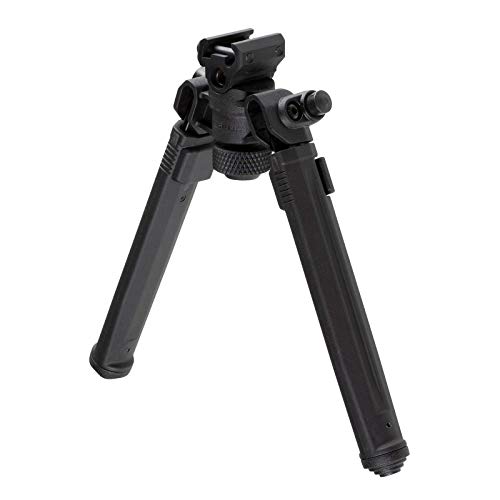
The Harris S-BRM is a long-standing standard for rifle bipods. It is a swivel-adjustable model with notched legs for height changes and a spring-loaded design. Many shooters pick the 6 to 9 inch version for prone shooting from the ground. It attaches to a sling stud, so it is simple to fit, though it can sit lower on short stocks. Its main drawback is that the legs can be loud when deployed and it lacks the quick-adjust speed of the newer designs.
Best for precision shooting: Atlas BT10 V8
The Atlas BT10 is popular among competitive shooters because of its stiff, repeatable setup and ability to cant and pan the rifle. Weight is roughly 11 to 12.6 ounces depending on the mount. Atlas offers lever and clamp mounts that attach to Picatinny rails or ADM interfaces. The cost is higher than the Harris and the learning curve slightly steeper, but the stability pays off at distance.
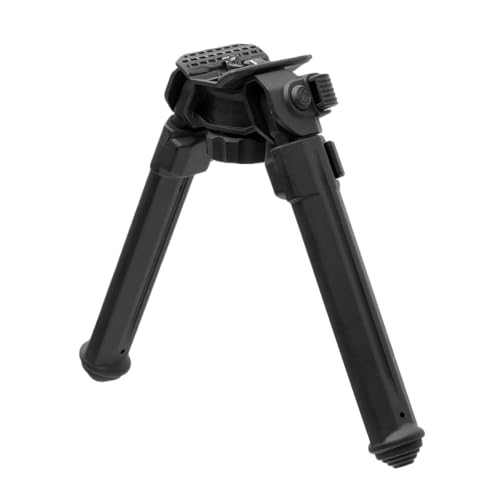
Best for M-LOK rifles: Magpul Bipod
Magpul’s bipod attaches directly to M-LOK or Picatinny and weighs around 11 ounces per published listings. It folds compactly and deploys quickly, which suits modern sporting rifles and lightweight hunting rifles. Its legs offer fewer height positions than some options, so tall shooters may find the range limited.
Best budget: Caldwell XLA Pivot
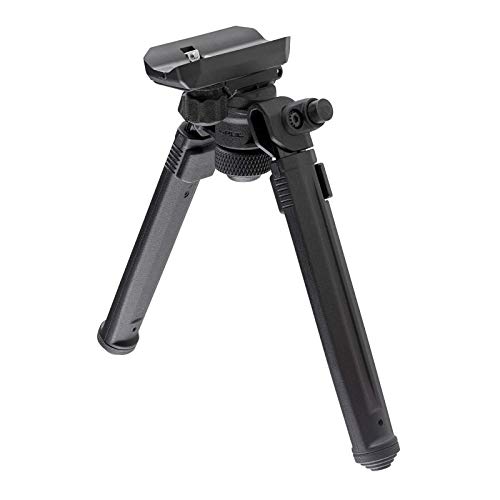
The Caldwell XLA Pivot is a widely recommended budget pick, with a swivel and about 12 ounces in the 6 to 9 inch model. The finish and tolerances are less refined than premium options, and the pivot may have some slop. It is a practical first bipod for plinking or hunting.
Best ultralight: Magpul MOE Bipod
At around 8 ounces, the MOE bipod is one of the lightest options and is suited to carbines. It lacks long legs, so it is not suited to uneven ground or long-range work.
How to choose a bipod
Match the mount
Sling stud mounts are universal on traditional stocks. M-LOK and Picatinny mounts are common on modern chassis rifles. Always check what your rifle has before choosing.
Choose the right height
For prone shooting, 6 to 9 inches is common. For sitting or shooting over brush, 9 to 13 inches. For kneeling or benchrest, 13 to 23 inch versions exist but add weight and flex.
Weight versus stability
Lighter bipods are easier to carry on long hunts, but a stiffer, heavier bipod holds the rifle steady. A difference of 4 ounces matters over miles of hiking but less at the range.
Pan and cant
The ability to swing the rifle side to side (pan) and tilt on uneven ground (cant) is valuable for field work. Models without these features keep it simple but can be limiting.
Material and durability
Aluminum and steel are common. Check the spring tension and finish. Cheap plastic parts wear first.
Worked example: bipod height for a prone shot
Measure from the ground to the bore line with you lying behind the rifle. A typical hunting rifle with a scope mounted low sits about 2 to 3 inches above the stock line. If your bipod attachment is at 1 inch and you are lying flat, a 6 to 9 inch bipod set at 7 inches will bring the line of sight to the target without lifting your head. If grass is 10 inches tall, you need a taller set or a different position.
Which bipod for which shooter
| Situation | Typical shooting position | Recommended pick | Why |
|---|---|---|---|
| Deer or varmint hunting, walking miles | Prone or sitting | Magpul or Harris S-BRM | Low weight, quick deploy |
| Precision rifle matches | Prone, barricades | Atlas BT10 | Stiff, cant and pan |
| Range plinking on a budget | Bench or prone | Caldwell XLA Pivot | Lowest cost |
| Light carbine on a modern rail | Prone | Magpul MOE Bipod | Around 8 oz |
| Tall grass or uneven ground | Sitting or kneeling | Taller 9 to 13 in version of a Harris or Caldwell | Extra clearance |
Setup steps and the reason for each
- Unload the firearm and verify it is clear, because mounting hardware means handling the rifle.
- Attach the bipod and tighten screws to the manufacturer’s torque guidance; a loose mount shifts the point of impact.
- Deploy the legs to equal lengths on level ground so the rifle does not cant.
- Load the bipod slightly by pushing the rifle forward into it; consistent forward pressure improves repeatability.
- Check zero from the bipod at the range before relying on it in the field.
Ownership realities
- Check the attachment screws regularly; loose mounts cause shifts in point of impact.
- Wipe off dirt and moisture and lightly oil pivot points.
- Noisy legs can be wrapped or padded for hunting.
- Follow all local laws and firearm safety rules; never point a rifle at anything you do not intend to shoot.
Frequently Asked Questions
Are bipods worth it for hunting?
Yes. A bipod steadies the rifle for prone shots and reduces fatigue. In thick brush or standing positions, shooting sticks may be more useful.
What height bipod do I need?
For most prone shooting, a 6 to 9 inch bipod works. If you shoot from taller grass or a sitting position, choose 9 to 13 inches.
Can I use a bipod on any rifle?
You need a compatible mount, such as a sling stud, M-LOK slot or Picatinny rail. Adapters exist for many rifles, but check fit and strength.
Is the Harris better than the Atlas?
Harris is simple and proven for hunting, and Atlas offers more adjustment for precision work. Which is better depends on how you shoot.
Do bipods affect accuracy?
They can improve stability and consistency, but a poorly mounted or flexing bipod can shift the point of impact. Zero the rifle with the bipod attached if you plan to use it regularly.
More from Amazon
Programs that pair well with the guide above. Offers and eligibility are set by Amazon and may change.
Free shipping on eligible items, Prime Video and more. Eligible new members can start with a free trial.
Start a Prime free trialA Prime membership for ages 18-24 with a trial period. Eligibility is set by Amazon.
See Prime for Young AdultsAudiobooks and podcasts to listen to on the go. Eligible new members can start with a free trial.
Try Audible freeAd-free music streaming. Eligible new subscribers can start with a free trial.
Try Music Unlimited freeAs an Amazon Associate we earn from qualifying purchases.




Write Your Review
No reviews yet. Be the first to share your experience!