

Key takeaways
- Seam leaks near the crotch and ankles are the most common failure.
- Rinse after use and hang inside out to dry out of direct sunlight.
- Do not store folded and compressed for months; hang them up.
- Patch small pinholes with wader repair kit before they spread.
- Always wear a wading belt to limit water flow if you fall.
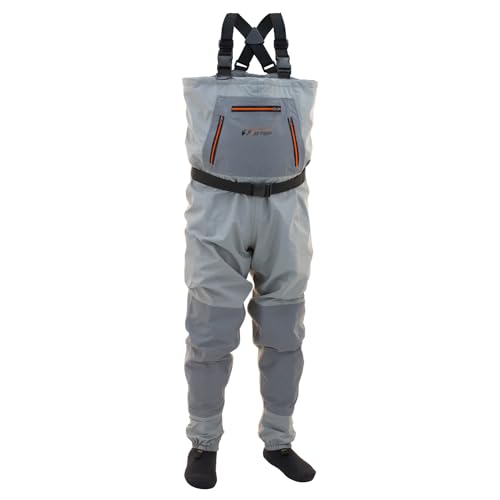
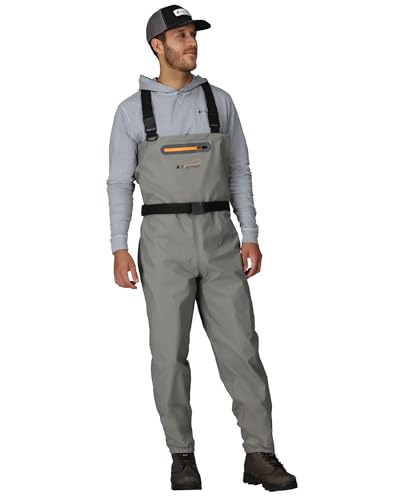
The best chest waders for most anglers are breathable stocking-foot waders with a separate wading boot, such as the Simms G3 Guide or Orvis Pro for premium use and the Frogg Toggs Hellbender or Redington Sonic-Pro HDX for value. Choose neoprene if you fish cold water in winter, and PVC or rubber only for short, wet, muddy jobs. Fit, boot compatibility and seam construction matter more than brand names.
Our top picks

As an Amazon Associate we earn from qualifying purchases at no extra cost to you.
Quick comparison of chest wader picks
| Pick | Best for | Material | Foot type | Price range |
|---|---|---|---|---|
| Simms G3 Guide | Premium durability, year-round | Multi-layer GORE-TEX breathable | Stocking-foot | Premium |
| Orvis Pro | Fit and comfort, long days | Breathable multi-layer | Stocking-foot | Premium |
| Redington Sonic-Pro HDX | Mid-range fly and trout fishing | Breathable laminate | Stocking-foot | Mid-range |
| Frogg Toggs Hellbender | Budget breathable | Breathable nylon laminate | Stocking-foot | Budget to mid-range |
| Hodgman H5 neoprene wader | Cold water, duck hunting, winter steelhead | Neoprene, about 5 mm | Bootfoot | Mid-range |
Confirm exact materials and sizing on the manufacturer’s size charts, which differ between brands.
Best premium: Simms G3 Guide
The G3 Guide is the benchmark for hard-use breathable waders, with a multi-layer GORE-TEX fabric and reinforced knees and seat. Simms builds in a front chest pocket and a gravel guard attachment point. It is the wader to buy if you spend 50 or more days a year in the water. The trade-off is cost, and the stocking-foot design needs a separate boot.
Best for fit: Orvis Pro
Orvis offers several sizing options, including extended and short lengths, which helps tall and short anglers avoid bunching at the knees. Fabric and seams are built for repeated abrasion. It is a good alternative if the Simms cut does not fit you.
Best value: Redington Sonic-Pro HDX
Redington’s wader balances breathability and durability at a lower price than the premium names. It features a reinforced seat and knee panels, and a pocket for tools. Seams may not last as long as the top models if you hike through brush, but for a weekend angler it is a sound buy.
Best budget: Frogg Toggs Hellbender
The Hellbender is a lightweight breathable wader aimed at anglers who want dependable dryness without the premium outlay. Fabric is thinner than the premium waders, so avoid thorns and barbed wire. It’s a good choice for warm-weather streams and occasional use.
Best for cold water: Hodgman H5 neoprene
Neoprene gives built-in insulation and works well in water below 50 degrees Fahrenheit, but it is heavy and hot out of the water. Bootfoot designs are quick to put on and avoid separate boots. Choose this for winter steelhead, duck hunting or float tubing in cold lakes.
How to choose chest waders
Breathable vs neoprene vs PVC
Breathable waders are the standard because they vent sweat and layer well. Neoprene suits cold water. PVC or rubber waders are cheap and hold up to mud but do not breathe and can crack with age.
Stocking-foot vs bootfoot
Stocking-foot waders need a wading boot, which gives better ankle support and traction and lets you swap soles for felt or rubber studs. Bootfoot waders are easy but heavier and less supportive for long hikes.
Sizing
Measure your chest, waist, inseam and shoe size. Size up if you plan to layer fleece underneath. Aim for room to bend your knee without the crotch riding up.
Boot size
Choose a wading boot one to two sizes larger than your street shoe to fit over neoprene booties.
Features
Look for a gravel guard, belt loops, an internal chest pocket, and articulated knees.
Worked example: cost per season
A pair of mid-range waders at about 250 that lasts three seasons of 30 days each costs roughly 2.80 per day. A budget pair at 120 that lasts one season of 30 days costs 4 per day, so the cheaper wader may cost more over time if it leaks early.
Which wader for which situation
| Situation | Water temperature | Best match | Layering |
|---|---|---|---|
| Summer trout stream, light hiking | 55 to 70 F | Breathable stocking-foot, budget to mid | Base layer and light pants |
| Spring and fall rivers | 40 to 55 F | Mid or premium breathable | Fleece mid layer |
| Winter steelhead or duck blinds | Below 40 F | 5 mm neoprene or premium breathable with heavy fleece | Thermal base plus fleece |
| Rough brush and rocky banks | Any | Premium abrasion-resistant fabric | Depends on season |
| Occasional use, one or two trips a year | Any | Budget breathable or rubber | Depends on season |
Fit checks before you commit
Put the waders on with the layers you plan to wear and squat as if reaching for a net. If the straps pull on your shoulders, the torso is too short. If fabric bunches at the knee, the inseam is too long. Walk up a few steps to check that the crotch does not bind. Stocking feet should fit snugly, without toes curled, because loose booties bunch inside the boot and cause blisters. Many brands offer short, tall and stout cuts, and picking the right cut often matters more than choosing between models.
Safety on the water
Waders do not float and a fall in fast current can be dangerous, so wade slowly, face upstream, use a staff in strong flows and never cross water you cannot see the bottom of. A belt, a wading staff and a personal flotation device in big rivers are inexpensive insurance. According to the manufacturers’ own care guides, avoid fabric softeners, bleach and dryers, which damage waterproof membranes.
Care and common failures
- Seam leaks near the crotch and ankles are the most common failure.
- Rinse after use and hang inside out to dry out of direct sunlight.
- Do not store folded and compressed for months; hang them up.
- Patch small pinholes with wader repair kit before they spread.
- Always wear a wading belt to limit water flow if you fall.
Boots to pair with stocking-foot waders
Stocking-foot waders are only as good as the boot over them. Rubber-soled boots with aluminum or steel studs grip well on algae-covered rock and are easier on the environment than felt, which can carry invasive organisms between streams and is banned in some regions. Check local rules. Boots should be one to two sizes above your street size, lace up snugly at the ankle and be dried between trips so the neoprene booties inside the waders last longer. A good set of boots often costs a third as much as the waders and affects safety more.
Frequently Asked Questions
Are breathable waders really waterproof?
Yes, they stop water from entering but let moisture vapor out. Seams and punctures are the weak points, so inspect them regularly.
Should I wear a wading belt?
Yes. A snug belt traps air and slows water entering the waders if you slip, which gives you time to get upright or reach safety.
How long do chest waders last?
Budget models often last one to two seasons of regular use, premium models three to five or longer with care. Heavy brush and rough storage shorten life.
Can I use chest waders for kayak fishing?
Yes, particularly in cold water. Keep a life jacket on and be aware that waders fill with water if you capsize, so practice self-rescue in safe conditions.
Chest waders or hip waders?
Hip waders are fine for shallow streams and bank fishing. Chest waders let you wade deeper and keep you drier when splashed, so most river anglers prefer them.
More from Amazon
Programs that pair well with the guide above. Offers and eligibility are set by Amazon and may change.
Free shipping on eligible items, Prime Video and more. Eligible new members can start with a free trial.
Start a Prime free trialA Prime membership for ages 18-24 with a trial period. Eligibility is set by Amazon.
See Prime for Young AdultsAudiobooks and podcasts to listen to on the go. Eligible new members can start with a free trial.
Try Audible freeAd-free music streaming. Eligible new subscribers can start with a free trial.
Try Music Unlimited freeAs an Amazon Associate we earn from qualifying purchases.





Write Your Review
No reviews yet. Be the first to share your experience!