

Our Top Picks
 Victorinox Fibrox 6-In Curved Boning & Fillet KnifeFibrox ProBoning KnifeStainless SteelCheck on Amazon
As an Amazon Associate we earn from qualifying purchases.
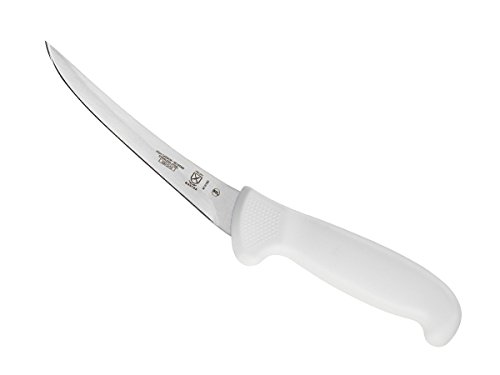
A fillet knife is built to slice along a fish. A boning knife is built to get bones out of it. That difference sounds small until you are picking pin bones out of a salmon side, lifting a rib cage away from a walleye, or trimming the bloodline and belly bones from a tuna loin. The best fish boning knives share a recognisable shape: a narrow blade around six inches long, a curve that rises toward a fine pointed tip, and enough flex to bend along a rib cage without digging into the flesh on the other side.
That curved, flexible profile is what separates a true boning knife from a fillet knife. A fillet blade is long, thin and mostly straight, made for long slicing strokes. A boning blade is shorter and more manoeuvrable, made for short, controlled cuts in tight spaces — around the Y-bones in pike, along the rib bones of a snapper, or under the pin-bone strip of a trout. If you already own a good fillet knife and still find bone work fiddly, a dedicated boning knife is the missing tool.
Disclosure: This article contains affiliate links. If you buy through them, we may earn a commission at no extra cost to you.
The five picks below are all genuine boning knives from established cutlery makers, not fillet knives relabelled for the job. They range from sealed-handle commercial workhorses for cleaning tables to a forged German blade and an all-steel Japanese design.
1. Dexter-Russell Sani-Safe S131F-6PCP 6-Inch Curved Boning Knife

Dexter-Russell supplies more commercial fish processing benches than almost any other maker, and the S131F-6PCP shows why. This is a six-inch curved boning knife with a flexible blade, built for exactly the repetitive bone work that happens at a cleaning station: rib bones out, pin bones lifted, belly flaps trimmed, fish after fish.
The blade is ground from DEXSTEEL, the maker’s proprietary high-carbon stainless steel, and it is individually honed rather than left with a coarse factory edge. In practice that means the edge arrives fine enough for delicate work around small bones, and the flexible profile lets the blade track along a rib cage instead of fighting it. The curved shape concentrates control at the tip, which is where pin-bone work actually happens.
The Sani-Safe handle is textured polypropylene, moulded with a protective finger guard and sealed to the blade so fish juices and brine have nowhere to hide. That sealed junction matters at a dock or on a boat, where a knife gets rinsed, used wet, and rinsed again all day. The white handle is also easy to spot in a cluttered tote or a sink full of frames.
Choose this one if you process a lot of fish and want a knife that treats hard use as normal. It is a working tool rather than a display piece, it sharpens quickly on a basic steel or stone, and it shrugs off the wet, salty environment that ruins fussier handles.
Specs
- :
- Brand: Dexter-Russell
- ASIN: B000LEHWCO
- Model: S131F-6PCP (Sani-Safe series)
- Blade length: 6 inches, curved, flexible
- Blade material: DEXSTEEL high-carbon stainless steel
- Handle: Textured polypropylene, white, sealed to the blade
- Certification: NSF certified
2. Victorinox Fibrox Pro 6-Inch Curved Boning Knife with Flexible Blade

Victorinox built its Fibrox Pro line for professional kitchens, and the six-inch curved boning knife with a flexible blade is one of the most widely used boning knives anywhere. For fish work, the appeal is the combination of a genuinely flexible blade and a handle that stays put in a wet, slimy hand.
The blade is high-carbon stainless steel, ice-tempered to hold its edge through long sessions, and the curve is pronounced enough to rock the tip up and out when you are freeing a line of pin bones. Because the blade flexes, you can press it flat against a rib cage and let it follow the bones, leaving the meat behind instead of carving through it. The pointed tip gets under individual bones cleanly, which is the whole point of a boning knife on species like salmon, lake trout and pike.
The Fibrox Pro handle is a thermoplastic elastomer with a textured, slip-resistant finish, shaped to fill the hand without forcing one grip. It is dishwasher tolerant and sanitary enough for commercial use, though a quick hand wash and dry will always treat the edge better. At this size the knife is light, which reduces fatigue when a cooler full of fish is waiting.
Choose this one if you want the safest all-round recommendation on the list: flexible enough for rib and pin bones, grippy enough for a wet cleaning table, and simple to maintain.
Specs
- :
- Brand: Victorinox
- ASIN: B0019WQDOU
- Model: 5.6613.15 (Fibrox Pro series)
- Blade length: 6 inches, curved, flexible
- Blade material: High-carbon stainless steel, ice-tempered
- Handle: Fibrox Pro thermoplastic, black, slip-resistant
- Certification: NSF certified
3. Mercer Culinary Ultimate White 6-Inch Curved Boning Knife
Mercer Culinary’s Ultimate White line is aimed at working kitchens that need sanitary, colour-coded, no-nonsense tools, and its six-inch curved boning knife is the value pick of this group. Do not let the simple white handle fool you: the blade geometry is exactly what fish bone work calls for.
The blade is stamped from high-carbon Japanese stainless steel, ground with a fine edge and shaped with a clear upward curve ending in a sharp point. That point is the working end for fish. It slips under a pin bone so you can lift and pull, traces the rib bones of panfish and perch without tearing the thin flesh, and trims the small bones along the belly cavity of larger fish. The blade has moderate flex, enough to follow contours while still feeling precise in short strokes.
The handle is textured polypropylene in white, with a comfortable grip and a shape that indexes naturally in the hand. White handles show fish residue clearly, which is why commercial stations like them: you can see at a glance whether the knife is actually clean. The whole knife is light and easy to control, a real advantage on small, delicate species where a heavy forged blade feels clumsy.
Choose this one if you bone a lot of panfish, trout and eating-size fish and want a proper curved boning knife that you will not hesitate to use hard, rinse off and use again.
Specs
- :
- Brand: Mercer Culinary
- ASIN: B016BRBXHY
- Model: Ultimate White series, 6-inch curved boning knife
- Blade length: 6 inches, curved
- Blade material: High-carbon Japanese stainless steel
- Handle: Textured polypropylene, white
- Certification: NSF certified
4. Global G-21 Cromova 6.25-Inch Flexible Boning Knife

The Global G-21 is the Japanese entry on this list, and it feels different the moment you pick it up. It is made from a single piece of CROMOVA 18 stainless steel — blade and hollow handle together — with the handle filled to balance the knife and dimpled for grip. There are no seams, no rivets and no handle scales to trap fish residue.
The blade is 16 centimetres, about six and a quarter inches, narrow and flexible, with the acute edge angle Japanese makers favour. That thin, keen edge is excellent for fish: it slides along bones with very little drag, separates flesh from rib cages in clean sheets, and makes precise work of the pin-bone strip on salmon and sea trout. The flexibility is real rather than decorative, so the blade bends along a backbone instead of levering chunks of flesh away.
An all-steel knife will not suit everyone. The handle is slimmer than the moulded grips above, and it rewards a lighter, more controlled touch rather than a power grip. In return you get a knife that rinses completely clean, tolerates a salty boat environment well, and keeps a very fine edge with regular honing on a ceramic rod or fine stone.
Choose this one if you mostly bone premium fish where yield matters — where leaving meat on the frame genuinely costs you — and you prefer a light, precise, seamless tool.
Specs
- :
- Brand: Global
- ASIN: B00005OL41
- Model: G-21 (G series)
- Blade length: 6.25 inches (16 cm), flexible
- Blade material: CROMOVA 18 stainless steel
- Handle: Stainless steel, hollow and dimpled, seamless construction
- Origin: Made in Japan
5. Wusthof Classic 6-Inch Flexible Boning Knife

Wusthof’s Classic line is forged in Solingen, Germany, and its flexible boning knife is the premium, buy-it-once option here. Where the stamped commercial knives above prioritise light weight and easy replacement, this one prioritises edge life, balance and a blade that still feels solid after years of steeling.
The blade is precision-forged from a single piece of high-carbon stainless steel and tempered for toughness, with a flexible profile that bends for rib work while keeping enough backbone for the heavier bones in large fish — the shoulder bones of a big salmon, the rib cage of a cod or halibut, or the tough Y-bone section of a northern pike. The full tang runs through the handle, giving the knife a centred, deliberate balance that helps on longer sessions.
The handle is a traditional triple-riveted synthetic design, smooth rather than textured. It is comfortable and durable, and it cleans up well, but it does not grip quite as aggressively as the moulded commercial handles when your hands are covered in fish slime — worth knowing if your boning happens dockside rather than in a kitchen. A finger guard adds a measure of safety when you are pushing the tip around bone.
Choose this one if the knife will live in your kitchen, get used for fish and meat alike, and you want forged construction that holds an edge through heavy use with only routine honing.
Specs
- :
- Brand: Wusthof
- ASIN: B00005NANS
- Model: Classic series, flexible boning knife
- Blade length: 6 inches, flexible
- Blade material: Forged high-carbon stainless steel
- Handle: Synthetic, triple-riveted, full tang
- Origin: Made in Solingen, Germany
How to Choose Fish Boning Knives
Start with the shape, not the brand. A fish boning knife should be narrow, curved and pointed. The curve lets the edge stay in contact with bone through a short rocking cut, and the point does the delicate work of getting under individual pin bones. A straight, wide blade — however sharp — will fight you on both jobs. If a knife is marketed mainly by its length and thinness for slicing, it is a fillet knife, whatever the listing calls it.
Match flex to your fish. Flexible blades suit most fish work: they bend along rib cages, follow the spine, and release flesh cleanly from flat and round fish alike. Semi-stiff blades give more push for heavy bones in large fish and for trimming around thick shoulder sections, but they are less forgiving on small, delicate species. If you bone mostly panfish, trout and inshore fish, choose flexible. If you regularly break down big salmon, cod or pike, a little more stiffness earns its keep.
Six inches is the sweet spot. Shorter blades run out of reach on larger fish; longer blades lose the tip control that boning is all about. All five picks here sit at or near six inches for that reason — extra length belongs on your fillet knife, not your boning knife.
Handles matter more than steel at a wet table. Textured, sealed, moulded handles — like the Sani-Safe, Fibrox Pro and Ultimate White designs — grip when wet and leave nowhere for residue to collect. Smooth riveted and all-steel handles clean beautifully and suit kitchen use, but they ask for a drier hand and a more deliberate grip. Decide where the knife will actually be used before deciding which style is better.
Plan the upkeep. Boning work constantly runs an edge along bone, which dulls any knife faster than slicing does. A boning knife should therefore be easy to restore: a few passes on a honing steel or ceramic rod before each session, and occasional work on a fine stone. For high-volume cleaning, easy resharpening usually beats maximum edge retention.
FAQ
Can I use a boning knife instead of a fillet knife for fish?
For bone work, yes — that is its job. For producing finished fillets, a boning knife can do it, especially on smaller fish, but a fillet knife’s longer, thinner blade makes cleaner slicing strokes on larger sides. Most anglers who clean a lot of fish end up using both: boning knife for ribs and pin bones, fillet knife for the slicing.
What is the difference between a curved and a straight boning knife?
A curved blade keeps the edge against bone through short, rocking cuts and gives better tip control around ribs and pin bones, which is why curved profiles dominate for fish. Straight boning knives suit trimming and cutting close along flat bones. For general fish cleaning, curved is the safer default.
How do I remove pin bones with a boning knife?
Run a fingertip along the fillet to find the pin-bone line, then slide the boning knife’s point under each bone, lift slightly, and pull the bone out with fish tweezers or pliers at the same angle it entered. The knife’s role is to free the bone without cutting through the flesh around it — flex and a fine tip matter more than force.
Should a fish boning knife be flexible or stiff?
Flexible for most fish, because the blade needs to follow rib cages and spines. Move toward semi-stiff only if you regularly work on large fish with heavy bones. A blade that is too stiff for the fish in front of you will tear flesh; a blade that is too flexible will feel vague on big bones.
How often should I sharpen a boning knife?
Hone it briefly before each cleaning session — boning dulls edges quickly because the edge rides on bone. Sharpen on a stone when honing no longer restores the bite. Rinse and dry the knife after use, especially around salt water, and store it in a sheath or on a magnetic strip rather than loose in a drawer.
More from Amazon
Programs that pair well with the guide above. Offers and eligibility are set by Amazon and may change.
Free shipping on eligible items, Prime Video and more. Eligible new members can start with a free trial.
Start a Prime free trialA Prime membership for ages 18-24 with a trial period. Eligibility is set by Amazon.
See Prime for Young AdultsAudiobooks and podcasts to listen to on the go. Eligible new members can start with a free trial.
Try Audible freeAd-free music streaming. Eligible new subscribers can start with a free trial.
Try Music Unlimited freeAs an Amazon Associate we earn from qualifying purchases.

Write Your Review
No reviews yet. Be the first to share your experience!