

Our Top Picks
 Dexter-Russell Sani-Safe 2.75" New Haven Oyster Knife2.8"9.9 x 4.5 x 0.4 inches2.4 poundsCheck on Amazon
 Melocean Professional Oyster Shucking Knife and Gloves SetSize XL6.3 x 0.6 x 0.8 inches0.72 poundsCheck on Amazon

As an Amazon Associate we earn from qualifying purchases.
Shucking oysters looks simple from across a raw bar: find the hinge, twist, sweep, done. At home, with a cold, muddy shell locked shut in your palm, it feels very different. The wrong tool — a paring knife, a screwdriver, anything thin and sharp — flexes, skates across the shell, and puts your hand at risk. A proper oyster knife is the opposite of a kitchen knife: short, thick, dull-edged, and built to take twisting force without bending or snapping. It is a lever first and a blade second.
This guide compares five purpose-built oyster shucking knives that cover the main situations shore and boat anglers actually meet. There is a commercial New Haven pattern for everyday hinge work, a simple Boston style for mixed sizes, a guarded tool set for nervous beginners, a knife-and-glove kit for serving a crowd, and a heavy Damascus shucker for people who want a traditional full-tang tool with a sheath. All five are dedicated oyster tools, not general kitchen knives pressed into service.
Disclosure: This article contains affiliate links. If you buy through them, we may earn a commission at no extra cost to you.
1. Dexter-Russell Sani-Safe S121 New Haven Oyster Knife
The Dexter-Russell S121 is the knife that sets the pattern for commercial shucking in North America, and it remains the easiest recommendation for most people. Its New Haven pattern pairs a short 2.75-inch blade with a bent, curved tip. That upturned tip is the whole trick: it points naturally into the hinge at the back of the shell, so a small twist pops the top shell without you forcing the blade straight ahead toward your holding hand.
The blade is made from Dexter’s high-carbon, stain-free DEXSTEEL, ground thick enough to take repeated twisting without flexing. This is not a blade you sharpen like a fillet knife; the edges stay comparatively dull, and the strength sits in the spine and tip. For small to medium oysters — the size most fish markets and oyster farms sell — that combination of a short blade and a bent tip gives excellent control, because your hand stays close to the shell and small movements do exactly what you intend.
The Sani-Safe handle is textured polypropylene, sealed to the blade so oyster liquor and grit cannot work into a joint. It is easy to scrub clean after a session on the dock or in the kitchen, and the texture keeps its grip when wet. The knife is NSF certified and made in the USA, which explains why the same basic design shows up in so many working raw bars: it is a tool built for volume, hygiene, and replacement-free service rather than for looks.
Choose the S121 if you shuck regularly and mostly work the hinge. Its limits are honest ones: the short blade gives less reach for sweeping under very large oysters, and carbon-rich steel should be rinsed and dried rather than left sitting wet in a sink. Neither point matters much in normal use. As a first serious oyster knife, or as the workhorse in a kit that already has a longer blade, it is hard to beat.
Specs
- :
- Brand: Dexter-Russell
- ASIN: B004NG98L4
- Model: S121 (S121PCP)
- Blade length: 2.75 inches
- Blade style: New Haven pattern, bent tip
- Blade material: High-carbon stainless DEXSTEEL
- Handle: Sani-Safe textured polypropylene
- Certification: NSF certified
2. Mercer Culinary Boston Style Oyster Knife M33028A
Mercer Culinary’s Boston style oyster knife takes the other classic approach: a longer, narrower, straighter blade. At 3 inches, the blade slides into tight hinges on smaller oysters and still has the reach to run along the inside of the top shell and cut the adductor muscle cleanly. If you shuck a mixed bag — some small and deep, some wide and flat — a Boston pattern is often the most flexible single knife to own.
The blade is high-carbon steel with ground edges, made to work quickly rather than to look polished. The profile is slim, so it enters the hinge with less wedging force than a wide blade, which helps keep fragile top shells in one piece. A clean, unbroken top shell is not just cosmetic: it means less grit and shell fragment in the oyster, and a better presentation on ice.
The white poly handle is simple, rounded at the back for palm comfort, and easy to spot in a busy prep area or a cluttered tackle-room sink. There is no guard and no texture trickery, so technique matters: keep the oyster cupped in a folded towel, keep your holding hand behind the hinge, and let the twist do the work. Mercer Culinary builds this knife as part of its clam and oyster line for food-service use, and it feels like it — plain, light, and made to be cleaned and put back to work.
Pick the Mercer if you want one straightforward knife for mixed oyster sizes, or a second knife alongside a bent-tip New Haven for side-entry work. The slim blade is not the tool for prying the heaviest, rock-like Gulf shells with brute force; for ordinary market oysters, its reach and narrow entry are exactly the point.
Specs
- :
- Brand: Mercer Culinary
- ASIN: B06ZZBH1VQ
- Model: M33028A
- Blade length: 3 inches
- Blade style: Boston style
- Blade material: High-carbon steel
- Handle: Polypropylene, white
- Use: Oysters and clams, food-service pattern
3. Zyliss Oyster Tool and Knife Set E980035U
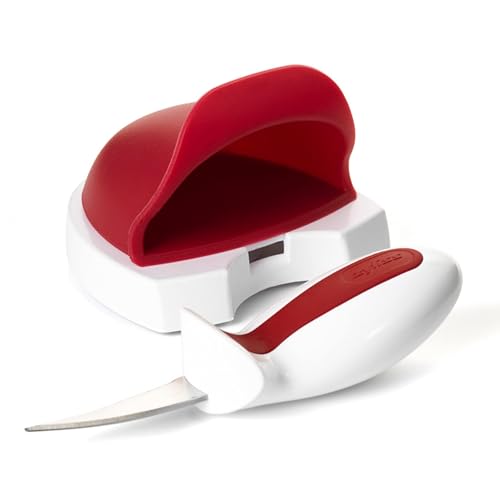
The Zyliss Oyster Tool and Knife Set is built around the problem beginners actually have: holding the oyster still and keeping the holding hand out of the blade’s path. The set pairs a stainless steel oyster knife with a silicone oyster holder — a pocket that grips the shell and shields your palm. Instead of wrapping the oyster in a towel and hoping it stays put, you seat it in the holder, which keeps it stable while you work the hinge.
The knife itself has a 3.15-inch stainless steel blade, long enough to enter the hinge and sweep under the top shell. The handle is shaped for a firm, no-slip grip, and the knife stores inside the holder between uses, which protects both the blade and anything else in the drawer. For households that shuck a dozen oysters on a special occasion rather than bushels every week, that storage detail is genuinely useful.
This is a safety-first design, and it suits first-time shuckers and anyone teaching a guest to open an oyster at a backyard gathering. The holder does add a step, and practiced shuckers working at speed will prefer a towel and a bare commercial knife. But most home shucking accidents happen in the first few attempts, with a loose shell and too much forward force — exactly the situation this set is designed to remove. It is also a sensible pick for small oysters, where the holder’s grip compensates for having less shell to hold on to.
Specs
- :
- Brand: Zyliss
- ASIN: B00WQZHF0A
- Model: E980035U, Oyster Tool and Knife Set
- Blade length: 3.15 inches
- Blade material: Stainless steel
- Handle: Non-slip handle, red and white set colours
- Included: Silicone oyster holder with knife storage
- Care: Dishwasher safe
4. Melocean Oyster Shucking Knife and Gloves Set
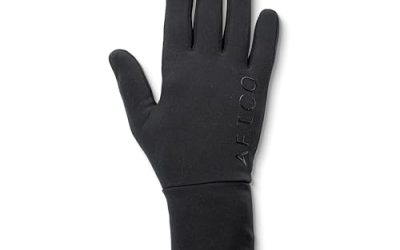
Melocean packages the two things a home shucker needs together: a wooden-handled oyster knife and a pair of cut-resistant shucking gloves. The glove is not an accessory here; it is half the system. A gloved holding hand lets you grip the shell firmly, apply steady pressure, and work the hinge without the background worry that a slip will end the evening early. For serving oysters to a group — the usual reason home cooks buy them by the bag — that confidence keeps the line moving.
The knife has a stainless steel blade and a wood handle, sized for general hinge work on small to medium oysters. The set listed here is the XL glove size, so check hand size before ordering if several people will share it; a glove that is too loose is almost as awkward as no glove at all. The kit is presented as a complete starter package, which makes it a practical choice for someone setting up for their first oyster night rather than upgrading a knife they already own.
Where a bare commercial knife rewards practiced technique, this set rewards preparation: gloves on, oysters scrubbed and chilled, a tray of ice ready. The wooden handle should be washed and dried after use rather than soaked, as with any wood-handled tool that lives around salt water. Pick the Melocean set if you shuck for gatherings or want hand protection included from the start; if you already own good cut-resistant gloves, a bare knife will suit you better.
Specs
- :
- Brand: Melocean
- ASIN: B082XKK3WN
- Model: Oyster Shucking Knife and Gloves Set, XL size
- Blade material: Stainless steel
- Handle material: Wood
- Included: Oyster knife and cut-resistant shucking gloves
- Use: Raw oysters and clams, home and gathering service
- Presentation: Gift-ready boxed set
5. Hercules Knives Premium Oyster Shucker Knife

The Hercules Knives oyster shucker is the traditionalist’s pick in this group: a full, solid-feeling tool with a Damascus steel blade, a walnut handle, and a leather sheath. The blade is made from 1095 and 15N20 steels, cryogenically heat treated and hardened to about 58 to 60 HRC, and it is about 3 millimetres thick at its widest point, tapering to a thinner bevel that slides between the shells. That thickness is what you feel in use — the blade does not flex when you twist, even on larger, heavier shells.
Damascus steel on an oyster knife is partly about looks, and the layered pattern with a camel bone and walnut handle makes this the one knife here you would hand to someone as a gift without a second thought. But the construction underneath is functional: a stiff blade, a non-slip handle shape, and a sheath that keeps the edge covered in a drawer, a boat bag, or a picnic kit. Oyster knives travel badly loose; a sheath is a real feature, not decoration.
Care is the trade-off. High-carbon Damascus steel should be rinsed, dried, and stored in its sheath after contact with salty oyster liquor, and it rewards a light wipe of food-safe oil if it will sit unused. If you want a tool you can toss in the dishwasher, choose the Dexter or the Zyliss instead. If you want one handsome, heavy-duty shucker for Pacific oysters, Gulf oysters, and clams at home, this is the pick built around that job.
Specs
- :
- Brand: Hercules Knives
- ASIN: B0BLK5NLVN
- Model: Premium Oyster Shucker Knife, walnut handle
- Blade material: Damascus steel, 1095 and 15N20
- Hardness: About 58-60 HRC
- Blade thickness: About 3 mm at the widest point
- Handle: Walnut with camel bone
- Included: Leather sheath
How to Choose an Oyster Shucking Knife
Start with blade style, because it decides how you open the shell. New Haven patterns have a short blade with a bent tip and are the easiest to learn for hinge shucking: seat the tip, twist, and the shell pops. Boston patterns are longer, narrower, and straighter, which suits mixed sizes and side entry, and gives more reach for cutting the muscle free. Providence and Galveston patterns run longer still and exist for big, heavy oysters; most home buyers do not need them unless Gulf or large Pacific oysters are the norm.
Blade stiffness matters more than blade sharpness. An oyster knife should have dull edges and a thick, rigid spine; if a blade flexes when you twist, it stores energy and then releases it unpredictably. Length is a control question, not a power question: shorter blades keep your hand close and precise, longer blades reach further under big shells. For most households, a blade between about 2.75 and 3.15 inches covers nearly everything.
Handle and hand protection decide how safe the routine feels. Look for a handle that fills your palm, stays grippy when wet, and has some flare or guard between your fingers and the blade. Then add protection for the other hand: a folded thick towel at minimum, and preferably a cut-resistant glove or a holder like the Zyliss pocket. More home shucking injuries come from the holding hand than from the knife hand.
Finally, match care to your habits. Poly and silicone handles with stainless blades tolerate a sink full of salt water and a dishwasher cycle. Wood and high-carbon Damascus ask for a rinse, a dry, and proper storage — a small effort, but one you should be honest about before choosing them for life around docks and boats.
A safe shucking routine, whichever knife you choose: scrub the oysters under cold water, chill them well, cup each one in a glove or towel with the hinge facing you, insert the tip into the hinge, twist rather than push, then slide the blade under the top shell to cut the muscle before lifting it away.
FAQ
Can I open oysters with a regular kitchen knife?
No. Kitchen knives are thin, sharp, and brittle at the tip, and they are designed to slice, not to twist against shell. They flex, chip, and skate, which is how hands get cut. A dedicated oyster knife is short, thick, and comparatively dull, and costs little — use the right tool.
Which style is best for beginners?
A short bent-tip New Haven knife, or a guarded set like the Zyliss, is easiest to learn. The bent tip finds the hinge for you, and a holder or glove removes the hardest part, which is keeping the shell still. Start with well-chilled, scrubbed oysters and twist gently rather than pushing hard.
How do I stop the knife slipping toward my hand?
Keep force rotational, not forward: once the tip is seated in the hinge, twist your wrist to pop the shell instead of driving the blade ahead. Hold the oyster in a glove, holder, or thick folded towel, keep that hand behind the hinge, and never shuck toward your palm.
Do oyster knives need sharpening?
Not in the way kitchen knives do. The working edges are meant to stay fairly dull; what matters is a sound tip and a blade that has not bent. If the tip chips or the blade takes a permanent bend, replace the knife rather than trying to grind it back into shape.
How should I clean an oyster knife after shucking?
Rinse off shell grit and oyster liquor, wash with warm soapy water, and dry the knife before storing it. Stainless and poly-handled models tolerate the dishwasher, but hand washing and immediate drying is the safer habit for wood handles and high-carbon or Damascus blades, especially after contact with salt water.
More from Amazon
Programs that pair well with the guide above. Offers and eligibility are set by Amazon and may change.
Free shipping on eligible items, Prime Video and more. Eligible new members can start with a free trial.
Start a Prime free trialA Prime membership for ages 18-24 with a trial period. Eligibility is set by Amazon.
See Prime for Young AdultsAudiobooks and podcasts to listen to on the go. Eligible new members can start with a free trial.
Try Audible freeAd-free music streaming. Eligible new subscribers can start with a free trial.
Try Music Unlimited freeAs an Amazon Associate we earn from qualifying purchases.


Write Your Review
No reviews yet. Be the first to share your experience!