

Key takeaways
- Compare the best walleye rods for jigging, rigging and casting, with the specs that matter most: length, power, action, line and lure ratings.
The best walleye rod for most anglers is the St. Croix Eyecon spinning rod in the 6 ft 3 in medium light extra fast configuration, a technique-specific jigging rod built on an SCII carbon blank with a split cork grip and a five-year warranty. Anglers who spend more time dragging live-bait rigs should look at the Okuma Dead Eye Pro in 7 ft 6 in medium, the longest rod in this roundup and the one built for rigging and slip-bobber work. The Okuma Dead Eye Classic in 6 ft 0 in medium heavy covers heavier vertical jigging from a boat at a lower tier, the KastKing Perigee II in 7 ft 0 in medium adds a two-piece blank with interchangeable tip sections for travel and versatility, and the Ugly Stik GX2 in 7 ft 0 in medium is the budget four-piece option for anglers who want a durable composite rod that stores almost anywhere. All five are spinning rods with published length, power, action, line and lure ratings, and each one is matched below to the walleye technique it actually suits.
Every rod in this roundup was checked against the maker’s published specifications and current Amazon listing data before it was included, and the exact configuration named in each section is the configuration its reference entry covers. Two widely recommended walleye series, the Fenwick HMG Walleye and the KastKing WideEye, were researched for this roundup and left out because a verifiable Amazon listing for a specific configuration could not be confirmed for either one; a rod you cannot order in the exact length and power described is not a useful recommendation. Walleye rods carry no meaningful recall history of the kind that affects powered tackle, but guide inserts, ferrules and tips are fragile in shipping, so the checks section at the end covers what to inspect when any of these rods arrives.
As an Amazon Associate, we earn from qualifying purchases.
Table of Contents
- Why Walleye Rods Are Their Own Category
- How to Choose the Best Walleye Rod
- Quick Comparison
- The 5 Best Walleye Rods
- Safety and Checks Before You Order
- Frequently Asked Questions
- Conclusion
- Product and ASIN Reference
Why Walleye Rods Are Their Own Category
Walleye are not hard-fighting fish, and that is exactly what makes their rods specialized. Most walleye techniques revolve around light jigs, live-bait rigs and small crankbaits presented slowly along bottom structure, and the bite is often a soft pressure change rather than a strike. A general-purpose bass rod in medium power will catch walleye, but its tip is usually too stiff to register a 1/8 oz jig ticking over gravel, and its backbone sets the hook harder than a walleye’s paper-thin mouth tissue tolerates. Walleye-specific rods answer with lighter powers, extra fast tips that load on very little weight, and lengths tuned to distinct jobs: short rods for vertical jigging under the boat, long rods for rigging and casting, and moderate actions for trolling.
The second reason is range. A single walleye season can involve jigging a 1/4 oz jig in current, drifting a leech on a live-bait rig, casting a shallow crankbait at dusk and trolling a bottom bouncer, and no one blank does all four well. That is why the serious walleye series from makers like St. Croix and Okuma are organized by technique rather than by length alone, with named models for jigging, rigging, slip-bobber and trolling work. This roundup stays with spinning rods, because spinning tackle handles the light lines and small jigs that dominate walleye fishing, and it picks one rod per job instead of pretending a single all-rounder beats five specialists.
The third reason is line. Walleye anglers fish light: 6 to 10 lb braid or monofilament is standard for jigging, and the rods have to protect it. Small guides, smooth inserts and a tip that absorbs head shakes are not cosmetic details on a walleye rod; they are what keep a lightly hooked fish pinned on a thin line next to the boat. Every rod below publishes its line rating, and the ratings are one of the fastest ways to tell whether a rod belongs in this category at all.
How to Choose the Best Walleye Rod
Match the Rod to the Technique First
Start with the presentation you fish most. Vertical jigging calls for a short rod, usually 5 ft 8 in to 6 ft 6 in, in medium light or medium power with an extra fast action, so the jig moves when the wrist moves and the take registers instantly. Rigging and slip-bobber fishing call for length instead: a 7 ft to 7 ft 6 in rod in medium light or medium with a fast action picks up slack line, casts light rigs without throwing the bait off, and keeps pressure on a fish that is swimming toward the boat. Casting jigs and crankbaits sits between the two, where a 6 ft 6 in to 7 ft rod in medium power is the common compromise. Trolling is the outlier, favoring longer rods with a moderate action that loads gradually under a planer board or bottom bouncer; it is covered here only where a spinning rod genuinely fits, because most dedicated trolling rods are casting models.
Power and Action Decide Sensitivity
Power describes how much force it takes to bend the rod; action describes where it bends. For walleye, medium light is the jigging standard for jigs up to about 3/8 oz, medium covers heavier jigs, snap-jigging and most casting, and medium heavy is reserved for big jigs in current, heavy bottom bouncers and pulling crankbaits. Extra fast actions concentrate the bend in the top quarter of the blank, which transmits bottom contact and light bites with the least delay, while fast actions bend a little deeper and forgive more when a fish surges at the net. If you fish one rod for everything, a fast action in medium power is the safer choice; if you jig more than anything else, extra fast in medium light is the specialist’s pick.
Read the Line and Lure Ratings Together
The printed ratings are the maker’s statement of the load range the blank was designed around, and they predict behavior better than the power label alone, because one maker’s medium can fish like another’s medium light. A jigging rod rated for 1/8 to 3/8 oz lures and 4 to 10 lb line, like the Eyecon in this roundup, is built to load on light jigs and protect light line. A rod rated to 1/2 oz or beyond gives up some of that finesse in exchange for current and depth. Check that your usual jig weights sit in the middle of the rod’s lure range rather than at its edge; a rod fished constantly at the top of its rating feels overloaded, and one fished below its range never loads enough to cast well.
Blank Material Sets the Sensitivity Ceiling
Graphite is the default for walleye rods because it transmits vibration, and higher-modulus graphite generally means a lighter, crisper blank at a higher tier. St. Croix builds the Eyecon on SCII carbon, Okuma’s Dead Eye Pro uses an IM-8 graphite blank, and the Dead Eye Classic and KastKing Perigee II use their own graphite constructions at lower tiers. Composite blanks trade some of that crispness for durability: the Ugly Stik GX2 blends graphite with fiberglass, which is why it survives truck beds and dock abuse that would snap a high-modulus blank, and why it also feels less alive with a light jig. Neither is wrong; the choice is whether your fishing rewards sensitivity or toughness more.
Guides, Reel Seats and Grips
Guide quality shows up as line wear and casting distance. Stainless-steel frames with hard, smooth inserts, whether aluminum oxide, zirconium or Fuji’s O-ring design, are the standard on every rod in this roundup, and they handle braid without grooving. Reel seats matter most on jigging rods, where an exposed-blank or locking design puts a finger directly on the blank for bite detection; St. Croix and Okuma both use designs that keep the hand in contact with the rod rather than insulated from it. Grips split between cork, which most walleye anglers prefer for feel and for cleaning up after live bait, and high-density EVA, which is tougher and cheaper. Split grips shave weight on finesse rods; full grips balance longer rigging rods and rest more comfortably against the forearm.
One Piece or Multi Piece
One-piece rods have no ferrule to interrupt the bend, and most technique-specific walleye rods, including three of the five here, are one piece. The cost is transport: a 7 ft 6 in one-piece rod needs a long vehicle or a rod locker. Two-piece rods like the Perigee II break down for travel and storage with a small sensitivity cost at the ferrule, and the four-piece GX2 packs down far enough for a suitcase or a small car. Buy the piece count your transport actually allows; the best rod in this list is worthless if it cannot get to the water.
Warranty Terms Vary More Than You Expect
Walleye rods in this roundup carry warranties from five years on the Eyecon to seven years on the GX2, with limited lifetime coverage on the Okuma Dead Eye Pro and series-dependent terms elsewhere. Because a walleye rod’s most common failure is a crushed guide or a tip broken in a car door rather than a blank defect, read what the warranty actually covers before treating it as a tiebreaker, and keep the receipt and model information somewhere other than the boat.
Quick Comparison
| Rod | Type | Length | Power / Action | Line Rating | Best For |
|---|---|---|---|---|---|
| St. Croix Eyecon Spinning Rod | Spinning, 1 piece | 6 ft 3 in | Medium Light / Extra Fast | 4 to 10 lb | Vertical jigging |
| Okuma Dead Eye Pro Spinning Rod | Spinning, 1 piece | 7 ft 6 in | Medium / Fast | 6 to 12 lb | Rigging and slip bobbers |
| Okuma Dead Eye Classic Spinning Rod | Spinning, 1 piece | 6 ft 0 in | Medium Heavy / Fast | Not stated in the data reviewed | Boat jigging in current |
| KastKing Perigee II Spinning Rod | Spinning, 2 piece, twin tips | 7 ft 0 in | Medium / Fast | 10 to 20 lb | Versatility and travel |
| Ugly Stik GX2 Spinning Rod | Spinning, 4 piece | 7 ft 0 in | Medium / Not stated in the data reviewed | 6 to 15 lb | Budget and durability |
The 5 Best Walleye Rods
1. St. Croix Eyecon Spinning Rod, 6 ft 3 in Medium Light — Best Overall

Tier: Premium
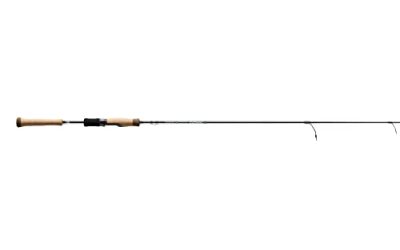
The Eyecon is St. Croix’s dedicated walleye series, built in North America on SCII carbon blanks with the company’s FRS resin system, and the 6 ft 3 in medium light extra fast model is its vertical jigging specialist. That configuration pairs the short length that keeps a jig directly under the transducer with an extra fast tip that loads on jigs from 1/8 to 3/8 oz and a 4 to 10 lb line rating matched to the light braid and fluorocarbon leaders most jigging anglers run. A split-grip premium-grade cork handle keeps the rod light in the hand, the reel seat uses a black hood over a design that leaves the blank accessible to a fingertip, and SeaGuide guides with stainless-steel frames carry the line. A five-year warranty from the maker backs the rod.
What separates the Eyecon from a generic medium light is how technique-specific the whole series is. The same lineup includes longer rigging and slip-bobber models, which means the jigging model’s action was not stretched from a general blank; it was designed for one job, and the published ratings show it. The lure range tops out at 3/8 oz, the line range at 10 lb, and the length is short enough that a hooked fish stays in front of you rather than at the end of a long lever. Anglers who vertical jig rivers and deep basins as their primary method will not find a more purpose-built rod in this roundup.
The trade-offs are the premium tier, the single-purpose design and the one-piece blank. A 6 ft 3 in extra fast rod is a poor choice for casting light rigs or trolling, and it travels like any one-piece rod. Buy it as the jigging rod in a two-rod walleye setup, not as your only rod.
Specs
- Type: Spinning rod, 1 piece
- Length: 6 ft 3 in
- Power / Action: Medium Light / Extra Fast
- Blank: SCII carbon with FRS resin
- Line rating: 4 to 10 lb
- Lure rating: 1/8 to 3/8 oz
- Guides: SeaGuide guides with stainless-steel frames
- Grip: Split-grip premium-grade cork
- Warranty: 5 years, maker
Choose the Eyecon if vertical jigging is your main walleye technique and you want the most sensitive, purpose-built rod in this roundup. Skip it if you need one rod to cover casting and rigging as well, or if a one-piece blank does not fit your vehicle.
2. Okuma Dead Eye Pro Spinning Rod, 7 ft 6 in Medium — Best for Rigging

Tier: Mid-range
Okuma’s Dead Eye Pro series is built specifically for walleye, and the 7 ft 6 in medium power model with a fast taper is its rigging and slip-bobber rod. Length is the whole argument here: at 7 ft 6 in it picks up the slack that a live-bait rig leaves behind, sweeps line off the water on the hookset, and casts a light rig and a split shot without the snap that throws a leech off the hook. The blank is IM-8 graphite, the guide frames are ALPS stainless steel with zirconium inserts, the reel seat is a Fuji design, and the grip combines cork and EVA where each does the most good. Okuma backs the series with a limited lifetime warranty.
The published ratings fit the job. A 6 to 12 lb line range covers the light monofilament and braid that rigging calls for, and the medium power has enough backbone for the slow, steady pressure that moves a rig-caught walleye to the net without tearing the hook free. Where the Eyecon is a scalpel, the Dead Eye Pro is a lever and a shock absorber, and for anglers who drift flats with live bait it is the more useful of the two. It also doubles as a slip-bobber rod, where the same length manages line above a fixed or sliding float.
The compromises are transport and finesse. A 7 ft 6 in one-piece rod is the hardest blank in this roundup to store or carry, and its fast-but-not-extra-fast tip gives up a little bite detection on light jigs compared with the Eyecon. It is a specialist in the opposite direction: superb at its job, ordinary at jigging.
Specs
- Type: Spinning rod, 1 piece
- Length: 7 ft 6 in
- Power / Action: Medium / Fast
- Blank: IM-8 graphite
- Line rating: 6 to 12 lb
- Lure rating: 1/8 to 1/2 oz
- Guides: ALPS stainless-steel frames with zirconium inserts
- Reel seat: Fuji
- Warranty: Limited lifetime, maker
Choose the Dead Eye Pro if you fish live-bait rigs and slip bobbers more than jigs and want the length those techniques reward. Skip it if vertical jigging is your main method or if a 7 ft 6 in one-piece rod cannot travel in your vehicle.
3. Okuma Dead Eye Classic Spinning Rod, 6 ft 0 in Medium Heavy — Best for Jigging in Current

Tier: Budget
The Dead Eye Classic is Okuma’s value walleye series, and the 6 ft 0 in medium heavy fast model is its heavy jigging option: the rod for 3/8 to 3/4 oz class jigs fished vertically in river current, around wing dams and in deep water where a medium light rod cannot keep a jig on bottom. The listing for this configuration specifies a graphite blank, a one-piece spinning build, walleye as the target species and a rod weight of 4.7 oz, which is light enough for a full day of wrist-snap jigging despite the heavier power. As the entry series in Okuma’s walleye range, it carries the technique-specific design language of the Dead Eye Pro at a lower tier and with simpler components.
That heavier power is a deliberate trade. In slack water with light jigs it will feel overbuilt next to the Eyecon, and it is not the rod for rigging, where its short length and stiff tip work against you. In current it earns its place: the medium heavy blank keeps contact with a heavy jig instead of bowing to the flow, drives the hook home on a sweeping set, and still has the fast action that telegraphs the difference between gravel, wood and a walleye holding the jig. For river anglers who found medium light rods underpowered, this is the correction.
Note the data limits on this one. The listing data reviewed for this configuration does not publish a line or lure rating, so match it to your jig weights by the medium heavy power class and confirm the ratings on the product page before ordering. Everything else about the rod, including its graphite construction and one-piece build, is stated in the listing itself.
Specs
- Type: Spinning rod, 1 piece
- Length: 6 ft 0 in
- Power / Action: Medium Heavy / Fast
- Blank: Graphite
- Target species, per the listing: Walleye
- Weight: 4.7 oz, per the listing
- Line rating: Not stated in the data reviewed
- Lure rating: Not stated in the data reviewed
Choose the Dead Eye Classic if you jig heavy baits in current or deep water and want a technique-specific rod at the budget tier. Skip it if most of your jigging is light and shallow, where the Eyecon’s medium light blank is the better tool.
4. KastKing Perigee II Spinning Rod, 7 ft 0 in Medium — Best Versatile Travel Rod
Tier: Mid-range
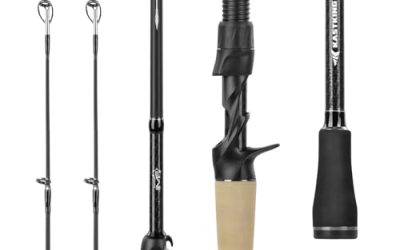
The Perigee II is KastKing’s general freshwater series rather than a walleye-only line, and it earns its place here on a design nobody else in this roundup offers: a two-piece 7 ft 0 in medium fast rod supplied with two interchangeable tip sections of different powers, so one handle and butt section fish as two related rods. The blank is a 24-ton carbon matrix construction, the guides are Fuji O-ring guides, the grips are high-density EVA, and the maker’s listing data names walleye among the target species for this configuration, alongside bass, catfish and salmon. The listed line rating is 10 to 20 lb, heavier than the finesse rods above, which suits casting jigs, soft plastics and small crankbaits more than delicate rigging.
For a walleye angler who travels, the arithmetic is attractive. The rod breaks down to half length, covers casting and light jigging with the softer tip and heavier work with the firmer one, and the carbon blank keeps sensitivity respectable for bottom contact. It is the closest thing in this roundup to a single-rod answer, and the only pick here that a bass or pike angler can share without compromise, because the series was never walleye-only to begin with.
The compromises follow from that generality. The 10 to 20 lb line rating tells you the blank is built stouter than a finesse walleye rod, so the lightest bites on a 1/8 oz jig will not register the way they do on the Eyecon, and the twin-tip system adds a second ferrule joint to keep clean and seated. Treat it as a versatile travel rod that fishes walleye well, not as a dedicated walleye instrument.
Specs
- Type: Spinning rod, 2 piece with two interchangeable tip sections
- Length: 7 ft 0 in
- Power / Action: Medium / Fast
- Blank: 24-ton carbon matrix
- Line rating: 10 to 20 lb, per the listing
- Guides: Fuji O-ring guides
- Grip: High-density EVA
- Features: Saf-T hook keeper, per the maker
Choose the Perigee II if you want one rod that travels in two pieces, covers casting and moderate jigging, and can swap tip sections instead of swapping rods. Skip it if light-jig sensitivity is your priority or if you fish live-bait rigs most of the time.
5. Ugly Stik GX2 Spinning Rod, 7 ft 0 in Medium — Best Budget Pick
Tier: Budget
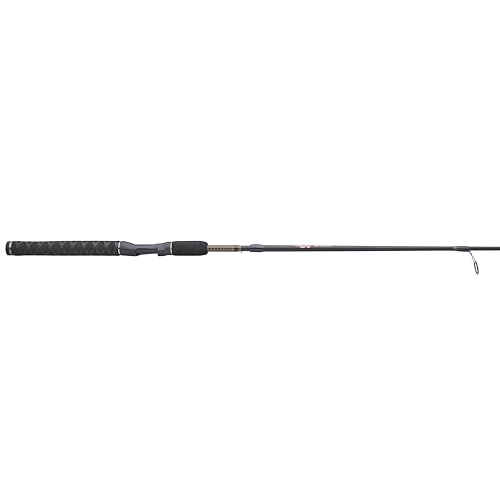
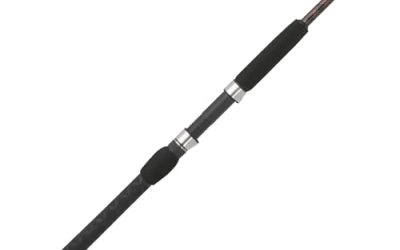
The GX2 is the rod in this roundup for anglers who would rather fish than worry about a rod. Its blank blends graphite with fiberglass in Shakespeare’s Ugly Tech construction, finished with a Clear Tip section designed for strength, one-piece stainless-steel Ugly Tuff guides with no inserts to crack or pop out, and EVA grips. The configuration covered here is the 7 ft 0 in medium power four-piece model, rated for 6 to 15 lb line and 1/8 to 5/8 oz lures, which breaks down short enough for a suitcase, a small car or a closet corner. A seven-year warranty from the maker is the longest fixed term in this roundup.
That 1/8 to 5/8 oz lure range is genuinely walleye-shaped: it covers standard jig weights, casting spoons and shallow crankbaits, and the medium power is the all-round class most walleye techniques share. What the composite blank gives back is feel. Fiberglass in the blend mutes the tick of a jig on gravel and softens the pressure change of a light bite, so a GX2 angler fishes more by watching the line and less by touch. For new walleye anglers, shore anglers and anyone equipping a second or loaner setup, that is often the right trade, especially in a rod that shrugs off the handling mistakes that break graphite.
The four-piece build is the other consideration. Each ferrule is a potential weak point if it works loose, so seat the sections firmly and check them during the day, and accept that a four-piece travel configuration will never feel as seamless as the one-piece specialists above. Within those limits, it is the most forgiving and the most packable rod in this list.
Specs
- Type: Spinning rod, 4 piece
- Length: 7 ft 0 in
- Power: Medium
- Action: Not specified in the listing data reviewed
- Blank: Graphite and fiberglass composite, Ugly Tech construction
- Line rating: 6 to 15 lb
- Lure rating: 1/8 to 5/8 oz
- Guides: Ugly Tuff one-piece stainless-steel guides
- Tip: Clear Tip design
- Grip: EVA
- Warranty: 7 years, maker
Choose the GX2 if you want the budget pick: a durable, packable walleye-capable rod for shore fishing, travel or a spare setup. Skip it if bite detection on light jigs is the reason you are buying, because the composite blank gives up exactly that.
Safety and Checks Before You Order
Match the exact configuration before ordering. Every series in this roundup is sold in several lengths, powers and piece counts under near-identical names, and a listing’s reference entry covers one configuration only. Before ordering, confirm that the length, power, action and piece count on the product page match the configuration named in the section above, because a 7 ft 0 in medium GX2 and a 6 ft 6 in medium light GX2 are different rods that happen to share a series name. This matters most for the Okuma and KastKing models, where one letter in the configuration changes the technique the rod was built for.
Seat and check ferrules on multi-piece rods. The Perigee II and the GX2 depend on friction-fit ferrules. Push the sections together firmly with a straight push rather than a twist, check that the guides align, and re-seat them after the first few casts and whenever the rod has been riding in a vehicle. A ferrule that works loose concentrates the load of a cast or a hookset on a short section of blank, and that is how multi-piece rods break. A small amount of ferrule wax, where the maker recommends it, keeps the fit snug without sticking.
Inspect guides, tip and blank on arrival. Rod tubes take impacts in shipping that the blank does not always survive. Run a cotton ball or a piece of nylon stocking through each guide to snag on cracks or rough spots, sight down the blank for bends or pale stress marks, and flex the rod gently through its range before its first trip. A damaged guide insert will fray braid and light monofilament within a few outings, and a guide replaced under warranty in the first week is a nuisance, while the same guide discovered on the water is a lost trip.
Confirm the warranty terms and keep the paperwork. The warranties in this roundup run from five years to limited lifetime, and they differ in what they cover, how a claim is shipped and whether a fee applies. Save the order confirmation and the rod’s model details when the rod arrives rather than when it breaks, and register the rod where the maker offers registration. None of these warranties covers a tip closed in a car door, so a rod tube or a simple sleeve is the cheapest insurance a one-piece walleye rod can have.
Frequently Asked Questions
What length and power rod is best for walleye jigging?
For vertical jigging, a rod between 5 ft 8 in and 6 ft 6 in in medium light power with an extra fast action is the standard choice, because the short blank keeps the jig under the boat and the light, fast tip registers soft takes on jigs from 1/8 to 3/8 oz. The St. Croix Eyecon configuration in this roundup is built exactly to that pattern. Move up to medium or medium heavy power, like the Dead Eye Classic here, when current or depth forces you to jigs of 1/2 oz and beyond, and accept that the heavier rod will feel less sensitive with light baits in calm water.
Can one walleye rod handle both jigging and rigging?
One rod can cover both, but it will be a compromise at each end. Jigging wants short and extra fast; rigging wants long and forgiving. A 7 ft 0 in medium power fast action rod, such as the KastKing Perigee II in this roundup, is the usual middle ground: long enough to manage a rig and pick up line, powerful enough to cast and work jigs, and forgiving enough not to tear hooks free. If you fish one technique far more than the other, buy the specialist for that technique first and add the second rod later; most experienced walleye anglers end up carrying exactly that pair.
Is a one-piece or two-piece rod better for walleye?
A one-piece rod has no ferrule to interrupt the bend or work loose, which is why three of the five rods in this roundup, including both technique specialists, are one piece. A two-piece rod gives up a small amount of that seamless feel in exchange for fitting in a car trunk, a closet or a travel case, and modern ferrules have narrowed the gap considerably. The four-piece GX2 goes further and packs down to suitcase length. Choose by transport first: a rod that cannot get to the lake catches nothing, and a ferrule checked at the start of the day rarely causes trouble.
What line should I pair with a walleye rod?
Most walleye anglers spool 6 to 10 lb braid for jigging, often with a short fluorocarbon leader, because braid’s thin diameter keeps a jig down in current and its lack of stretch transmits the light bites these rods are built to detect. For rigging, 6 to 8 lb monofilament is still common, since its stretch cushions a lightly hooked fish on a long rod. Whatever you choose, stay inside the rod’s published line rating: the Eyecon is rated for 4 to 10 lb, the Dead Eye Pro for 6 to 12 lb, and fishing well above a blank’s rating risks the tip on a hard hookset, while fishing far below it dulls casting and feel.
Conclusion
The best walleye rods are technique tools, and the right pick depends on the presentation you fish most. The St. Croix Eyecon in 6 ft 3 in medium light extra fast is the vertical jigging specialist and the best overall rod here. The Okuma Dead Eye Pro in 7 ft 6 in medium owns rigging and slip-bobber work, while its Dead Eye Classic sibling in 6 ft 0 in medium heavy covers heavy jigs in current at the budget tier. The KastKing Perigee II is the versatile two-piece traveler with swappable tips, and the Ugly Stik GX2 is the durable four-piece budget pick that stores anywhere. Match the rod to the technique, confirm the exact configuration on the product page, and check the ferrules and guides when it arrives, and any of the five will fish walleye the way it was designed to.
More from Amazon
Programs that pair well with the guide above. Offers and eligibility are set by Amazon and may change.
Free shipping on eligible items, Prime Video and more. Eligible new members can start with a free trial.
Start a Prime free trialA Prime membership for ages 18-24 with a trial period. Eligibility is set by Amazon.
See Prime for Young AdultsAudiobooks and podcasts to listen to on the go. Eligible new members can start with a free trial.
Try Audible freeAd-free music streaming. Eligible new subscribers can start with a free trial.
Try Music Unlimited freeAs an Amazon Associate we earn from qualifying purchases.
Write Your Review
No reviews yet. Be the first to share your experience!