

Key takeaways
- Leafy greens: Choose a raised basket and moderate ventilation. Remove wilted leaves, dry the greens well, and avoid compressing them.
- Berries: Use a shallow vented container. Soft fruit benefits from a single or double layer rather than a deep pile. Moldy berries should be removed immediately.
- Grapes: A medium vented container works well, but leave room around the bunches. Excessively airtight storage can trap condensation.
- Carrots and celery: Drainage and a stable, cool environment matter more than a carbon filter. A container with a removable rack is convenient.
- Mushrooms: Avoid sealing them in a wet, airtight box. A breathable container or paper packaging is often more suitable.
- Cut vegetables: Use a clean, leak-resistant container and refrigerate promptly. Produce savers are not a substitute for safe food-handling practices.
- Bananas, apples, and avocados: These can produce or respond to ethylene, so storing them beside sensitive greens may shorten the greens’ useful life. Separate them when possible.
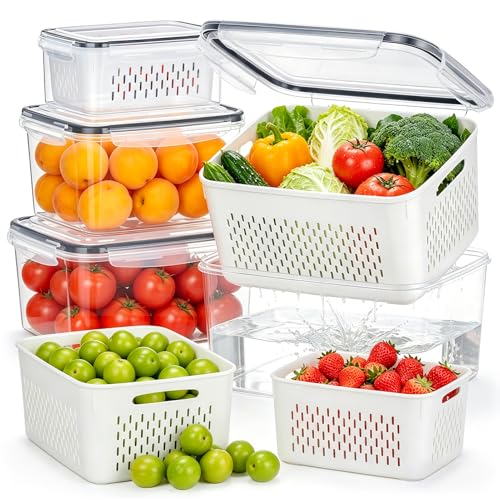
The best produce saver container for your fridge is the OXO Good Grips GreenSaver for leafy greens and large vegetables, while Rubbermaid FreshWorks is the better value for everyday berries, grapes, and cut produce.
These containers do not “preserve” food indefinitely. Their advantage comes from controlling the conditions that make produce deteriorate: trapped moisture, poor airflow, ethylene buildup, and contact with standing water. The right choice depends less on the largest advertised capacity than on whether the container fits your refrigerator, drains effectively, and is easy enough to clean that you will use it consistently.
Our top picks



As an Amazon Associate we earn from qualifying purchases at no extra cost to you. Ratings are shown as listed on Amazon.
Quick picks by situation
| Fridge situation | Best fit | Why | Main compromise |
|---|---|---|---|
| Leafy greens and herbs | OXO Good Grips GreenSaver | Raised basket, venting, and replaceable carbon filter | Costs more and takes substantial shelf space |
| Berries, grapes, and small produce | Rubbermaid FreshWorks | Useful airflow and a simple produce-saving insert | Drainage is less convenient for very wet washing |
| Lowest upfront cost | Vented produce container with removable basket | Usually available in the $8–$18 range | Vent controls and seals tend to be less refined |
| Meal preparation and cut vegetables | Airtight glass container with a vented produce insert | Stable, odor-resistant, and useful for ready-to-eat portions | Glass is heavier and does not improve whole produce by itself |
| Very limited shelf depth | Low-profile rectangular container, about 1.5–2.5 quarts | Uses horizontal space efficiently | Small capacity means more frequent refilling |
Head-to-head: the features that matter
| Container type | Typical usable capacity | Ventilation | Drainage | Stackability | Typical price range |
|---|---|---|---|---|---|
| OXO-style crisper with basket and filter | 4–5 quarts | Adjustable vent; carbon filter on some models | Excellent; produce sits above the base | Good when empty; bulky when full | $25–$35 |
| Rubbermaid FreshWorks-style container | 1.5–17 cups, depending on size | Built-in FreshVent-style lid | Fair to good; insert varies by model | Very good in matching sizes | $10–$30 per set or container |
| Vented plastic basket container | 2–8 quarts | Fixed holes or sliding vents | Good if the basket is raised | Usually good | $8–$20 |
| Glass storage container with produce insert | 3–7 cups | Limited unless specifically designed for produce | Good with a rack or perforated tray | Moderate; lids need clearance | $15–$35 |
Capacity figures are useful only when interpreted as usable capacity. A nominal 5-quart container may hold less than that once a raised basket, lid channels, or a bulky head of lettuce is inside. For fragile berries, a shallow 1.5- to 2.5-quart container is often more practical than a deep container because it reduces crushing and makes inspection easier.
OXO Good Grips GreenSaver: best for greens and high-value produce
The OXO GreenSaver is the strongest choice when your main problem is delicate leafy produce. Its elevated basket keeps spinach, kale, lettuce, and herbs away from condensation, while the vent helps regulate humidity. Models with a replaceable carbon filter are designed to reduce ethylene accumulation, which can contribute to faster deterioration in some produce.
The basket is also useful after washing: shake off excess water, place the produce in the basket, and leave enough empty space for air movement. This is better than packing wet leaves tightly into a sealed box.
Its disadvantages are size and ownership cost. A large container can occupy roughly one-third of a refrigerator shelf, and the carbon filter is a consumable. Replace it according to the manufacturer’s guidance rather than treating it as permanent. The filter cannot compensate for slimy leaves, dirty water, or produce that was already damaged before storage.
Rubbermaid FreshWorks: best everyday value
Rubbermaid FreshWorks containers are a practical middle ground for strawberries, blueberries, grapes, cherry tomatoes, and small quantities of vegetables. Their vented lids are intended to balance airflow and moisture, and the range of sizes makes it easier to choose a container that is not dramatically oversized for the food inside.
Their greatest advantage is stackability. A set of matching rectangular containers can use refrigerator space more efficiently than one large crisper box. This matters if you buy produce several times a week and want separate containers for berries, grapes, and cut vegetables.
Do not assume that the lid makes washing unnecessary. Rinse and dry berries only when appropriate for your storage routine, remove damaged pieces, and wipe condensation from the container. Excess water remains the most common reason berries spoil inside any “produce saver.”
How different produce behaves in these containers
- Leafy greens: Choose a raised basket and moderate ventilation. Remove wilted leaves, dry the greens well, and avoid compressing them.
- Berries: Use a shallow vented container. Soft fruit benefits from a single or double layer rather than a deep pile. Moldy berries should be removed immediately.
- Grapes: A medium vented container works well, but leave room around the bunches. Excessively airtight storage can trap condensation.
- Carrots and celery: Drainage and a stable, cool environment matter more than a carbon filter. A container with a removable rack is convenient.
- Mushrooms: Avoid sealing them in a wet, airtight box. A breathable container or paper packaging is often more suitable.
- Cut vegetables: Use a clean, leak-resistant container and refrigerate promptly. Produce savers are not a substitute for safe food-handling practices.
- Bananas, apples, and avocados: These can produce or respond to ethylene, so storing them beside sensitive greens may shorten the greens’ useful life. Separate them when possible.
Cleaning, durability, and the parts that wear first
Most produce containers fail through small maintenance problems rather than dramatic breakage. The first parts to deteriorate are usually silicone seals, sliding vents, snap tabs, and carbon filters. A lid that no longer closes evenly may allow excessive drying or condensation, while a clogged vent can defeat the container’s design.
Before buying, check whether the container is dishwasher-safe and whether its basket, lid, and filter can be removed separately. Hand-wash filter compartments and soft seals if the manufacturer recommends it. Do not scrub vents with abrasive tools, which can damage their fit. Dry every component completely before reassembly; storing a damp, closed container creates the humid environment you are trying to avoid.
A simple maintenance cycle is:
- Empty the container and discard damaged produce.
- Remove the basket, insert, and seal if possible.
- Wash with warm water and dish soap, paying attention to corners and vent openings.
- Rinse and air-dry all parts separately.
- Wipe the refrigerator shelf before returning the container.
- Replace a cracked lid, loose seal, or exhausted filter instead of relying on a damaged system.
A practical sizing calculation
Suppose you typically buy two 6-ounce punnets of berries and one small bunch of grapes each week. A 1.5- to 2.5-quart container can hold one berry purchase without excessive empty space, while a 4- to 5-quart container is likely too deep for the berries and encourages stacking. Two medium containers may cost $20–$30 total, compared with $25–$35 for one larger premium container. The smaller pair gives better separation and easier rotation, even if the total capacity is similar.
For greens, calculate space by volume rather than weight. A loosely filled 5-quart container is more useful than a tightly packed 3-quart container because leafy vegetables need air and room to avoid bruising. If your refrigerator shelf is only 12 inches deep, measure the container’s outside depth—including lid handles—before purchasing.
What to buy
Choose the OXO GreenSaver if leafy greens are your main concern, you have enough shelf height, and you are comfortable replacing a filter. Choose Rubbermaid FreshWorks if you want modular sizes, better stacking, and a lower entry price for mixed everyday produce. Choose a basic vented container with a raised basket if budget matters most, but inspect the lid and drainage design before buying. For cut vegetables and leftovers, prioritize a leak-resistant, easy-to-clean container over an ethylene filter.
The best produce saver container for fridge storage is therefore the one matched to your buying pattern: raised drainage for wet greens, shallow ventilation for berries, modular stacking for frequent shoppers, and simple cleaning for everyone.




Write Your Review
No reviews yet. Be the first to share your experience!