

Key takeaways
- Transom space and weight. Compare the maker’s transom-weight figures with your hull’s rating and your motor’s weight. Adding two anchors doubles the load.
- Mounting location. Many installs use a bracket on the transom corner. Make sure the anchor clears the outboard, jack plate and trim tabs.
- Electrical. These are 12V systems. Use the correct wire gauge and fuse the maker specifies, and have a marine electrician handle the wiring if you are not experienced.
- Single or dual. One anchor holds the stern or bow in place. Two reduce swing and pitching in wind. Many anglers start with one and add a second.
- Bottom type. Spikes and blades work best in mud, sand or firm bottoms. Rock and thick weed beds can prevent a good set.
- Maintenance. Rinse after saltwater use, follow the maker’s lubrication and fluid guidance, and inspect hoses and fittings.
For a bass boat, flats skiff or bay boat up to roughly 28 feet, the real choice is between the Power-Pole Blade and the Minn Kota Raptor; small boats, jon boats and kayaks are better served by a lighter system such as the Power-Pole Micro Anchor or a simple manual stake-out pole. Neither hydraulic leader wins on every point, so the decision usually comes down to the electronics you already own, your boat’s transom space and weight limits, and how much you want to spend.
Our top picks


As an Amazon Associate we earn from qualifying purchases at no extra cost to you.
Shallow Water Anchor Systems at a Glance
| System | Best for | Key stated specs | Limits |
|---|---|---|---|
| Power-Pole Blade (8 ft and 10 ft) | Boats up to about 28 ft | Maker lists boats up to 28 ft or 4,500 lb; full deployment in about 4.0 seconds (8 ft) and 4.7 seconds (10 ft); 12V power; brushless motor | Transom weight and clearance; premium tier cost |
| Power-Pole Sportsman II and Pro Series II | Anglers wanting other Power-Pole hardware tiers | Hydraulic models listed on the maker’s site, with 8 ft lengths referenced | Model details vary; read the maker’s sheet |
| Power-Pole Micro Anchor | Kayaks, canoes, small boats | Electric, smaller and lighter system; Bluetooth control reported by one roundup | Not built for large boats or rough water |
| Minn Kota Raptor 8 ft | Mid-size bass and flats boats | Maker lists 58 in height, 41 lb total, 24.5 lb on transom, five-year warranty | Bulkier; Active Anchoring and non-Active units cannot be paired |
| Minn Kota Raptor 10 ft | Deeper water, larger hulls | Maker lists 70 in height, 44 lb total, 27.5 lb on transom | Taller retracted height, more weight |
| Manual push pole or stake-out pole | Tight budgets, very shallow water | No power or pump required | Muscle effort, slower to set |
Figures above are from maker product pages and outlet coverage. Retail listings differ in minor ways, so use the maker’s installation guide before you drill anything.
How Shallow Water Anchors Work
A shallow water anchor is a vertical spike or blade that drops from the transom or bow and pins the boat in place. Hydraulic systems use a small pump to extend and retract the shaft, which gives you remote, near-instant deployment. Compared with a traditional anchor, you skip the rope handling, the bow hanging and the noise of dropping iron, which matters when you are stalking fish that spook easily. One marine-supply buying guide notes that hydraulic systems tend to hold up better to daily saltwater exposure, which is one reason serious saltwater anglers lean toward the Blade or the Raptor.
Power-Pole Blade
Power-Pole is widely regarded as the benchmark for hydraulic shallow water anchors. The maker lists the Blade in 8 and 10 foot lengths, for boats up to 28 feet or 4,500 pounds, in fresh or salt water. Listed deploy times are about 4.0 seconds for the 8 foot and about 4.7 seconds for the 10 foot. Retracted height is 55 inches for the 8 foot and 68 inches for the 10 foot. A single 8 foot anchor is listed at 31.7 pounds total and 23.15 pounds on the transom, while the 10 foot is listed at 38.19 pounds total and 28.69 pounds on the transom. It runs on 12V power with a brushless motor and high-volume pump.
Owner forums frequently praise Power-Pole’s warranty support, and some owners say the units can be serviced by the end user. A few forum posters report vibration or shake on some installs, while others say they have never had a problem, so reports are mixed and installation quality clearly matters.
Pick it if you want a long-established system with strong dealer and warranty support, or if you plan to run two anchors and want a well-documented setup.
Minn Kota Raptor
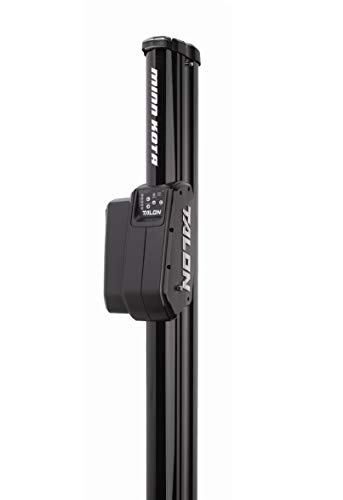
The Raptor is Minn Kota’s hydraulic shallow water anchor. The maker describes a four-bar articulating arm with automatic up and down, in 8 foot and 10 foot lengths. The 8 foot model is listed at 58 inches retracted, 41 pounds total and 24.5 pounds on the transom. The 10 foot is listed at 70 inches, 44 pounds total and 27.5 pounds on the transom. Raptor lists a five-year warranty.
Models sold with Active Anchoring include an Auto Bottom Mode that senses bottom composition and hardness to apply the right anchoring force, plus selectable Rough Water, Soft Bottom and Standard modes. The non-Active version lists Active Anchoring as “No”, and units with and without Active Anchoring cannot be paired together as a two-anchor set. You can control the Raptor with a remote, a foot switch, i-Pilot or i-Pilot Link, a mobile app, or from a compatible Humminbird unit.
Comparison sites claim a faster deploy time for the Raptor, but those pages contradict each other and the numbers are not consistent with the makers’ own listings, so do not buy on a one-second claim. Owners are split on stability and build: some call the Raptor steadier and better built, others prefer Power-Pole. Several describe the Raptor as thicker or bulkier, which affects how it sits next to a bracket or outboard.
Pick it if you already run a Minn Kota trolling motor or Humminbird electronics and want everything controlled from one system.
Smaller Boats: Power-Pole Micro Anchor and Manual Poles
The Power-Pole Micro Anchor is described by roundups as the small-boat option, aimed at kayaks and canoes, with a six foot spike and Bluetooth control in one listing. It is a lighter, simpler system than the hydraulic Blade. For jon boats and skiffs without room for a 30-plus pound transom load, it can be the only practical powered choice. Manual stake-out poles are even simpler. They cost little and weigh little, but they require physical effort and may not hold in strong wind or current.
Sizing: 8 Foot or 10 Foot?
Both Power-Pole and Minn Kota sell 8 and 10 foot lengths. Roundups put practical working depth for hydraulic models at around 8 to 10 feet, depending on the shaft length and how much of the shaft needs to stay above the water. Choose the shorter length for lakes, skinny flats and ponds, and the longer for tidal creeks or reservoirs where depth varies. Note the retracted height, which changes how the pole sits against a console, bimini or storage position, and whether it stays under a bridge or in a trailer garage.
Fit and Installation Notes
- Transom space and weight. Compare the maker’s transom-weight figures with your hull’s rating and your motor’s weight. Adding two anchors doubles the load.
- Mounting location. Many installs use a bracket on the transom corner. Make sure the anchor clears the outboard, jack plate and trim tabs.
- Electrical. These are 12V systems. Use the correct wire gauge and fuse the maker specifies, and have a marine electrician handle the wiring if you are not experienced.
- Single or dual. One anchor holds the stern or bow in place. Two reduce swing and pitching in wind. Many anglers start with one and add a second.
- Bottom type. Spikes and blades work best in mud, sand or firm bottoms. Rock and thick weed beds can prevent a good set.
- Maintenance. Rinse after saltwater use, follow the maker’s lubrication and fluid guidance, and inspect hoses and fittings.
Budget Tiers
- Budget: a manual stake-out pole or push pole.
- Mid-range: a Power-Pole Micro Anchor for small boats, or a single 8 foot hydraulic unit for mid-size boats.
- Premium: dual 10 foot Blade or Raptor installs with remote and electronics integration.
Pick X If You…
| If you… | Pick | Why |
|---|---|---|
| Fish a bass or bay boat and want brand support | Power-Pole Blade | Long track record, listed boat size up to 28 ft |
| Already run Minn Kota or Humminbird | Minn Kota Raptor with Active Anchoring | Integrates with i-Pilot, app and compatible fish finders |
| Fish a kayak, canoe or small skiff | Power-Pole Micro Anchor | Smaller and lighter than hydraulic units |
| Fish deeper water | 10 ft Blade or Raptor | Longer shaft |
| Want the lowest cost | Manual stake-out pole | No wiring or pump |
| Care about transom weight | 8 ft Blade or Raptor | Lighter than the 10 ft versions |
Alternatives
- Traditional anchor and rode. Quiet in the sense of simplicity, but slower and louder to deploy and less precise in shallow water.
- Trolling-motor spot-lock. GPS holding features on many trolling motors can keep position in light wind without a physical anchor, though they use battery power and can drift in strong conditions.
- Push pole. A traditional flats-boat tool for positioning and holding in very skinny water.
Frequently Asked Questions
Is the Power-Pole Blade better than the Minn Kota Raptor?
Neither wins everywhere. Power-Pole is praised for support and its long record, while the Raptor is praised for integration with Minn Kota and Humminbird gear and its Active Anchoring modes. Owner reports conflict on stability, so decide by electronics, price and fit.
How deep can shallow water anchors hold?
Roundups cite around 8 to 10 feet of working depth for hydraulic models, depending on shaft length. Use a longer pole for deeper or tidal water and confirm limits in the maker’s manual.
Can I install a shallow water anchor myself?
Many owners do, but it involves drilling the transom, mounting a bracket and wiring a 12V circuit. If you are unsure, a marine technician can ensure sound mounting and electrical work.
Do I need two anchors?
Not always. One anchor holds the boat roughly in place, while two stop swing in wind or current. Note that Raptor units with and without Active Anchoring cannot be paired.
Are shallow water anchors good for saltwater?
Retail guidance says hydraulic systems stand up well to regular saltwater exposure, but rinse the unit after use and follow the maker’s maintenance steps. Corrosion care matters in any marine setting.
What is the best option for a kayak?
The Power-Pole Micro Anchor is positioned for kayaks and small craft, and a manual stake-out pole is the simplest alternative. Confirm that your hull can support the mounting hardware.
More from Amazon
Programs that pair well with the guide above. Offers and eligibility are set by Amazon and may change.
Free shipping on eligible items, Prime Video and more. Eligible new members can start with a free trial.
Start a Prime free trialA Prime membership for ages 18-24 with a trial period. Eligibility is set by Amazon.
See Prime for Young AdultsAudiobooks and podcasts to listen to on the go. Eligible new members can start with a free trial.
Try Audible freeAd-free music streaming. Eligible new subscribers can start with a free trial.
Try Music Unlimited freeAs an Amazon Associate we earn from qualifying purchases.





Write Your Review
No reviews yet. Be the first to share your experience!