

Key takeaways
- Best for a permanently rigged boat: a stainless-steel or glass-filled-nylon flush-mount holder with a 30- to 45-degree angle.
- Best for a kayak: a track-mounted adjustable holder, such as the YakAttack Omega Rod Holder, because it can move without drilling new holes.
- Best for heavy trolling: a reinforced holder with a positive locking collar, such as a RAM ROD 2007-style mount or heavy-duty metal holder.
- Best budget choice: a fixed deck or rail holder made from UV-resistant nylon, provided the mount is reinforced underneath.
- Best for a truck or bank setup: a clamp-on, receiver-mounted, or stake-in holder that can be removed after the trip.
The best fishing rod holders are the ones that match your mounting surface, rod-and-reel weight, fishing style, and willingness to drill: a flush-mount holder suits a permanent boat installation, a track-mounted holder offers flexibility, and a clamp, suction, or stake-in design is better when you cannot make holes.
Our top picks
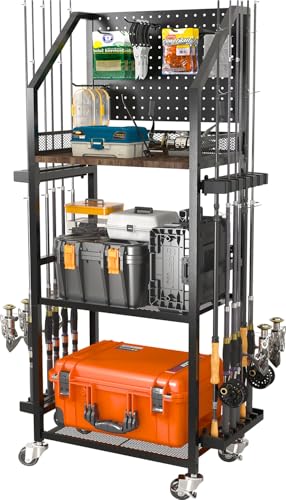


As an Amazon Associate we earn from qualifying purchases at no extra cost to you. Ratings are shown as listed on Amazon.
Quick picks by fishing situation
- Best for a permanently rigged boat: a stainless-steel or glass-filled-nylon flush-mount holder with a 30- to 45-degree angle.
- Best for a kayak: a track-mounted adjustable holder, such as the YakAttack Omega Rod Holder, because it can move without drilling new holes.
- Best for heavy trolling: a reinforced holder with a positive locking collar, such as a RAM ROD 2007-style mount or heavy-duty metal holder.
- Best budget choice: a fixed deck or rail holder made from UV-resistant nylon, provided the mount is reinforced underneath.
- Best for a truck or bank setup: a clamp-on, receiver-mounted, or stake-in holder that can be removed after the trip.
How to choose among the best fishing rod holders
1. Start with the mounting style
Flush-mount holders sit in a hole cut into a gunwale, side panel, or deck. They have a clean appearance and low profile, and they are difficult to knock loose. Their disadvantages are permanent installation and limited repositioning. Measure the outside diameter and insertion depth before cutting; many holders require a hole roughly 2 to 2.5 inches wide, but the exact measurement varies by model.
Rail- and clamp-mounted holders attach to a boat rail, kayak tube, bench, or truck bed edge. They are useful for rented boats and temporary setups, but the clamp must match the rail diameter. A clamp rated for a 1-inch rail may not grip a 1.25-inch rail securely, especially when a fish pulls sideways.
Track-mounted holders use a base that slides into a kayak accessory track. This is usually the most practical arrangement for kayak anglers: the holder can move forward for casting, backward for trolling, or out of the way during landing. The trade-off is that a track base adds height and can loosen if its knob is not tightened after repeated adjustments.
Surface-mounted and suction mounts avoid drilling. Surface mounts need a flat, strong area and usually use screws or adhesive. Suction mounts are convenient on smooth, nonporous surfaces, but they are not the first choice for offshore trolling or a heavy rod under sustained load.
Stake-in and receiver-mounted holders are designed for shore fishing, beaches, piers, and trucks. A stake-in holder transfers the load into sand or soil, while a receiver-mounted holder uses a vehicle’s 1.25- or 2-inch hitch receiver. Neither is intended for use while driving with a rod installed unless the entire system is specifically designed and secured for transport.
2. Match the material to the environment
Glass-filled nylon is light, corrosion-resistant, and generally adequate for freshwater, kayak, and casual saltwater use. It can become brittle after years of ultraviolet exposure or if overtightened. Stainless steel offers better abrasion resistance and a more rigid feel, but it adds weight and can still corrode if salt is trapped around fasteners.
Anodized aluminum is a useful middle ground for bases and brackets. It is light and stiff, though damaged anodizing can expose the metal to corrosion. For saltwater, prioritize 316 stainless fasteners where available, isolate dissimilar metals with suitable washers, and rinse the entire assembly with fresh water after each trip.
Head-to-head comparison
| Holder type | Typical weight | Typical load guidance | Best mounting surface | Main limitation | Typical price range |
|---|---|---|---|---|---|
| Flush-mount glass-filled nylon | 6–12 oz | 8–15 lb static rod load | Boat gunwale or reinforced deck | Permanent hole and fixed position | $15–$40 |
| Stainless or aluminum flush mount | 10–24 oz | 15–30 lb static rod load | Heavy boat side or trolling panel | Higher cost and corrosion care | $35–$100 |
| Kayak track-mounted adjustable holder | 12–24 oz, excluding track base | 5–12 lb practical fishing load | Gear track | More height and moving parts | $30–$80 |
| Clamp-on rail holder | 12–32 oz | 5–15 lb, depending on clamp | 1–1.5 inch rail or tube | Can rotate or slip on smooth rails | $25–$90 |
| Receiver-mounted truck holder | 4–12 lb | 20–40 lb total system load | 1.25- or 2-inch hitch receiver | Bulky and vehicle-specific | $60–$180 |
| Stake-in shore holder | 1–4 lb | One to four rods, depending on frame | Sand, soil, or gravel | Unstable in rock or hard-packed ground | $15–$70 |
These are practical comparison ranges rather than universal manufacturer ratings. A holder’s real capacity depends on the fasteners, backing plate, mounting angle, wave action, and the leverage created by a long rod. A 20-pound static rating does not mean the holder can safely absorb a 20-pound fish striking at speed.
Best fishing rod holders by use case
For kayaks: adjustable track systems
Choose a holder with a broad base, a locking collar, and enough adjustment to keep the reel above splash level. The YakAttack Omega Rod Holder is an example of the adjustable kayak-oriented format. A tube-style holder is convenient for trolling, while an open-sided design makes it faster to remove a rod when a fish bites.
Keep the holder close enough to reach without twisting your torso, but not so close that the rod interferes with a paddle stroke. On a narrow kayak, a low-profile track adapter is often more stable than a tall articulating arm.
For boats: fixed or rail-mounted holders
Boat owners who troll regularly should favor rigidity and retention over maximum adjustability. A fixed flush-mount holder keeps the center of gravity low and leaves fewer knobs to loosen. Add a rubber gimbal cushion if the design permits it, especially for rods with a fighting butt.
For boats shared by several anglers, rail-mounted holders are more versatile. Select a model with a positive clamp, a rubberized contact pad, and a secondary anti-rotation feature. A simple friction knob may be fine for casting, but trolling puts continuous torque on the mount.
For trucks: receiver-mounted systems
A receiver-mounted rack is convenient for transporting several rods at a launch or keeping rods organized at a campsite. Check whether the rack supports the butt diameter of your rods and whether the tubes drain water. Use protective caps or rod socks to prevent reel handles from striking the rack.
Do not leave rods unsecured in a rack during road travel. Remove reels when practical, use straps that cannot contact the line guides, and treat the holder as storage rather than a substitute for a roof or bed tie-down system.
For shore fishing: stake-in and portable holders
A long metal or reinforced-plastic stake is the most dependable option on sand and soft soil. In loose sand, a wider or helical base resists pullout better than a narrow spike. On rock, a stake-in holder is the wrong design; use a weighted portable base or a clamp attached to a stable rail.
A simple decision matrix
| Your situation | Recommended style | Why |
|---|---|---|
| New angler, limited budget, freshwater | Fixed nylon surface or flush mount | Low cost, few parts, easy maintenance |
| Experienced kayak angler, changing techniques | Track-mounted adjustable holder | Position changes without new holes |
| Frequent saltwater trolling | 316 stainless or reinforced holder with lock | Better stiffness and retention under load |
| Occasional renter or borrowed boat | Clamp-on rail holder | Portable and non-permanent |
| Bank angler using multiple rods | Stake-in rack or multi-rod shore stand | Separates rods and keeps handles off the ground |
| Truck-based fishing trips | Receiver-mounted rack | Fast installation and high storage capacity |
Installation details that determine real-world performance
For a permanent holder, locate the mount where the rod will clear consoles, cleats, bimini hardware, and other anglers. Drill a pilot hole, verify the underside is accessible, then use a backing plate or large washers on thin fiberglass or aluminum. Seal screw holes with a marine-grade sealant, but avoid permanently gluing a part that may need replacement.
For a kayak track mount, tighten the base until it cannot rotate by hand, then apply moderate downward pressure and check that the track hardware has fully engaged. Do not use excessive force on plastic tracks; crushing the track can create a loose fit that no amount of knob tightening will fix.
A useful sizing check is the clearance between the rod butt and the holder bottom. If a rod has a 1-inch butt diameter and the holder opening is 1.5 inches, the 0.5-inch total clearance may be acceptable, but a very short holder can allow the rod to rock. For trolling, choose a deeper tube or a locking strap rather than relying on a loose opening.
Maintenance and common mistakes
- Rinse saltwater holders with fresh water, especially around threads, springs, clamps, and track hardware.
- Inspect locking collars and adjustment teeth before every trip; these commonly wear before the main body fails.
- Replace cracked nylon, flattened rubber pads, missing retaining pins, and corroded fasteners instead of compensating by overtightening.
- Do not place a heavy trolling rod in a light casting holder simply because the tube fits.
- Keep reel handles and line guides from bearing against the holder edge, where vibration can cause scratches or damage.
- Check the backing surface annually. A holder can remain intact while the surrounding fiberglass, wood, or plastic slowly flexes and develops cracks.
Bottom line
For the broadest range of kayak techniques, choose an adjustable track-mounted holder. For a dedicated boat, a reinforced flush mount is usually the most secure and least troublesome. Pick a clamp-on model when portability matters, a receiver rack for truck storage, and a stake-in design for sand or soil. The best fishing rod holders are not necessarily the most elaborate: they are the ones whose mount, materials, and load rating suit the actual forces and environment of your fishing setup.



Write Your Review
No reviews yet. Be the first to share your experience!