

Key takeaways
- 240 guests × 70 percent = 168 servings
- 168 × 1.5 ounces = 252 ounces of popped popcorn
- 252 ounces ÷ 4 hours = 63 ounces per hour
Best Commercial Popcorn Machines for Events
The best commercial popcorn machines for events are usually 8-ounce kettles for small and medium crowds, 12-ounce kettles for busy concessions, and 16-ounce or larger machines when continuous service matters more than compact size.
Choose by the amount of popcorn you must serve during the busiest hour—not by the cabinet’s visual size alone. Kettle capacity affects batch size, output, recovery time, electrical load, and the amount of counter or cart space required. Established commercial manufacturers such as Gold Medal, Cretors, Paragon, and Great Northern Popcorn offer machines across these categories, but the right specification matters more than the badge on the cabinet.
Our top picks


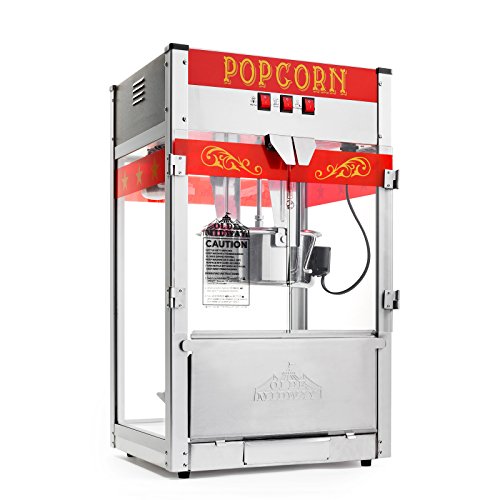
As an Amazon Associate we earn from qualifying purchases at no extra cost to you. Ratings are shown as listed on Amazon.
Quick comparison: kettle size, output, and power
Published output varies with the recipe, operator speed, serving size, and whether the machine is run continuously. The figures below are practical planning ranges for standard oil-popped popcorn rather than guaranteed production figures.
| Machine type | Typical kettle | Practical output per hour | Typical electrical requirement | Best fit |
|---|---|---|---|---|
| Compact countertop | 4–6 oz | 20–35 servings | 120 V, 8–12 A | Small meetings, cafés, occasional school events |
| Standard commercial countertop | 8 oz | 35–60 servings | 120 V, 12–15 A | Markets, fundraisers, parties, regular concessions |
| High-volume countertop or cart | 12 oz | 55–85 servings | 120 V, 15–20 A | Busy halls, sports sidelines, festivals |
| Large commercial floor unit | 16–32 oz | 80–150+ servings | 120 V or 208–240 V, 15–30 A | Large venues and sustained concessions |
For planning, one serving is approximately 1 ounce of popped corn by weight, or a small concession bag. A larger 2-ounce serving cuts the apparent serving count in half. Always verify the nameplate amperage and plug configuration before ordering: two machines that both use a 120-volt supply may still require different dedicated circuits.
Best choice by event situation
| Your situation | Recommended specification | Why |
|---|---|---|
| Under 40 servings per hour | 4–6 oz kettle, countertop cabinet | Lower purchase cost, easier storage, less electrical demand |
| 40–70 servings per hour | 8 oz kettle, 120 V commercial machine | Good balance of batch size, speed, and venue compatibility |
| 70–100 servings per hour | 12 oz kettle, preferably with a cart or robust base | Fewer reloads and better recovery during queues |
| Over 100 servings per hour | 16 oz or larger, or two 8–12 oz machines | Provides redundancy and separates queues when one large kettle is insufficient |
| Limited counter space | Compact 6–8 oz machine, roughly 20–24 inches wide | Preserves workspace for bags, scoops, and serving containers |
| Frequent rental or touring use | Commercial cabinet with tempered glass, stainless kettle, and locking cart | Better protection during transport and simpler servicing |
How kettle size changes real event performance
Small kettles: easier to place, slower under pressure
A 4- or 6-ounce kettle suits intermittent service. It can produce enough for a meeting break or small party without consuming an entire counter. The limitation appears when a queue forms: each batch may take several minutes, and a small cabinet can run empty before the next batch finishes. These machines are also more sensitive to overfilling. Adding extra kernels to “catch up” can leave unpopped corn, scorched oil, and a difficult cleanup.
8-ounce kettles: the practical all-rounder
An 8-ounce machine is often the safest choice for community events because it remains compatible with common 120-volt outlets while producing useful batch sizes. It is large enough to serve a steady flow but usually small enough for a countertop or narrow cart. Look for a heated deck or warming compartment, a removable kettle, a hinged or lift-out kettle lid, and a separate control for the kettle stirrer if available.
12-ounce and larger kettles: capacity with electrical trade-offs
Larger kettles reduce the number of batches an operator must start, which is valuable when demand is concentrated into a short interval. They also generate more heat and may draw close to the safe limit of a circuit. A venue may have outlets nearby but still lack a dedicated circuit capable of supporting the machine. Confirm the circuit rating with the venue before committing to a large unit, and do not use an extension cord unless the manufacturer and venue electrician approve the cable size and length.
Worked example: sizing a machine for a fundraiser
Suppose a fundraiser expects 240 guests over four hours, with 70 percent likely to buy popcorn. If each buyer receives a 1.5-ounce serving, the estimated requirement is:
- 240 guests × 70 percent = 168 servings
- 168 × 1.5 ounces = 252 ounces of popped popcorn
- 252 ounces ÷ 4 hours = 63 ounces per hour
That event needs a machine capable of at least 63 servings per hour at the selected serving size, plus a safety margin for rushes and waste. A practical choice would be an 8-ounce machine rated around 45–60 small servings per hour only if demand is spread evenly; a 12-ounce machine rated around 70–85 servings per hour is safer. If the venue has only one shared 15-amp circuit, two smaller machines may not be an improvement because their combined electrical draw could exceed the circuit.
Features worth paying for
- Stainless-steel kettle: It tolerates repeated heating and is easier to wipe clean than painted metal. Confirm whether the kettle is removable before buying.
- Tempered glass panels: They provide visibility and resist ordinary service heat. Replacement panels can be expensive, so corner protection matters during transport.
- Heated holding deck: This helps keep finished popcorn warm while the next batch cooks, but it cannot restore freshness to popcorn held for hours.
- Stirring mechanism: Automatic stirring promotes even oil and kernel contact, especially in larger kettles. It does not eliminate the need to use the specified oil quantity.
- Crumb tray and perforated deck: These let small debris fall away from the finished popcorn and speed up end-of-event cleaning.
- Cart with locking casters: Useful for venues with ramps or long corridors. A cart also places the serving area at a more comfortable height.
- Independent kettle and warmer controls: These reduce unnecessary heat during setup and make shutdown less wasteful.
Ownership realities: what wears first
The kettle’s stirrer shaft, gears, heating element, switches, and power cord typically deserve more attention than the cabinet. Stirrer components can wear when operators run the kettle empty or allow hardened oil to accumulate around the shaft. Heating elements lose performance when residue forms a thick layer on the kettle surface. Door hinges, magnetic catches, and glass seals also suffer in machines that are repeatedly loaded into vehicles.
Budget for approved popping oil, kernels, salt or seasoning, serving bags, and cleaning supplies. Consumable costs often matter more than a small difference in purchase price. A machine that costs $300 more but prevents frequent emergency batches may be the better value for a regular event operator.
Setup and cleaning routine
- Check the circuit before loading ingredients. Confirm voltage, amperage, plug type, and whether other equipment shares the outlet.
- Preheat according to the manual. Starting too cold can increase unpopped kernels; overheating an empty kettle can shorten component life.
- Measure every batch. Use the manufacturer’s oil and kernel measurements rather than filling by eye.
- Empty the kettle promptly. Leaving finished popcorn over residual heat causes burnt flavors and unnecessary moisture loss.
- Remove loose debris after service. Empty the crumb tray, brush out kernels, and wipe the cabinet once it is safe to touch.
- Clean the kettle as directed. Avoid immersing electrical parts and avoid abrasive pads that can scratch stainless steel or glass.
- Inspect before storage. Look for frayed cords, loose fasteners, damaged glass, and sticky stirrer movement.
Never pour water into a hot kettle or use water on energized electrical components. If a machine repeatedly trips a breaker, produces an unusual smell, or heats unevenly, remove it from service until it has been inspected by a qualified technician.
Final buying recommendation
For most event organizers, an 8-ounce, 120-volt commercial popcorn machine is the best starting point because it combines manageable power requirements with enough output for ordinary fundraisers and parties. Choose a 12-ounce model when queues are likely and the venue confirms adequate electrical capacity. Move to a 16-ounce or larger floor unit only when the event consistently exceeds roughly 100 servings per hour or when a dedicated concession station justifies the extra footprint, heat, transport effort, and operating cost.

Write Your Review
No reviews yet. Be the first to share your experience!