

Key takeaways
- For most anglers, an insulated three-person hub such as the Eskimo Quickfish 3i offers the best balance of warmth, packed size, and usable space. Choose a Quickfish 6i or Clam X-400-style shelter for four anglers, an Otter XT Pro Lodge for a spacious group base,…
The best ice fishing shelters depend on how many people you carry, how often you fish, and whether warmth or portability matters most: choose a compact flip-over for frequent solo trips, an insulated hub for flexible two- to four-person fishing, and a large insulated shelter only when interior space justifies the weight.
Our top picks


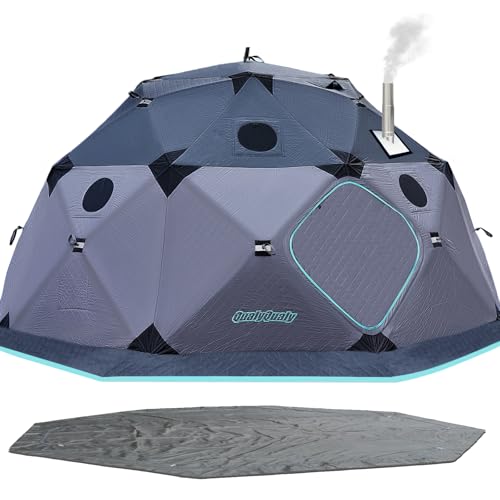
As an Amazon Associate we earn from qualifying purchases at no extra cost to you. Ratings are shown as listed on Amazon.
Best ice fishing shelters at a glance
| Shelter and best use | Approx. fishing area | Packed size and weight | Insulation | Practical capacity | Typical setup |
|---|---|---|---|---|---|
| Eskimo Quickfish 3i, solo or two anglers | 34 sq. ft.; about 6 ft. 8 in. x 6 ft. 8 in. | Approx. 52 x 8 x 8 in.; about 23 lb | Insulated fabric with reflective interior | 2 adults comfortably | About 60 seconds after unpacking |
| Eskimo Quickfish 6i, three- to four-person hub | 71 sq. ft.; about 11 ft. x оли? 6 ft. 6 in. | Approx. 68 x 8 x 8 in.; about 32 lb | Insulated, thermal-lined fabric | 4 adults with gear | About 60 seconds after unpacking |
| Clam X-400 or similar insulated four-person hub | About 65–70 sq. ft. | Usually 60–70 in. long; roughly 30–40 lb | Quilted insulated shell | 3–4 adults | About 1–3 minutes |
| Otter XT Pro Lodge, group shelter | About 80–90 sq. ft. | Typically 70–80 in. long; roughly 55–70 lb | Heavy insulated shell | 5–6 adults | About 3–5 minutes |
| Non-insulated 2–3 person hub, mild-weather budget choice | About 25–45 sq. ft. | Usually 40–65 in. long; roughly 10–25 lb | Single-layer polyester | 1–2 adults with gear | About 1–3 minutes |
Dimensions, packed weights, and model revisions vary by season and configuration, so confirm the current manufacturer specification before ordering. The table is most useful for comparing proportions: a shelter advertised for four people may be comfortable for two anglers once seats, heater, augers, tackle, and fish-finding electronics occupy the floor.
Our picks by fishing situation
Best all-around insulated hub: Eskimo Quickfish 3i
The Quickfish 3i is a strong choice for one angler who wants room to move or two anglers who bring modest equipment. Its roughly 34-square-foot footprint is easier to heat than a large shelter, while the insulated shell reduces drafts and light penetration compared with a basic single-wall hub.
Its main advantage is the balance between packed size, setup speed, and usable floor area. It fits in many vehicle trunks and can be carried from the parking area without turning every trip into a hauling project. For two people, place the heater and propane cylinder near a vent, keep the holes separated, and use compact chairs rather than bulky folding loungers.
It is less suitable for three adults, especially if each person uses a flasher, rod case, and large tackle box. The central hub design also needs to be anchored carefully in strong wind; fast setup does not mean wind-proof setup.
Best for four anglers: Eskimo Quickfish 6i or Clam X-400
A roughly 65- to 70-square-foot insulated hub is the better choice for a small group. The extra floor area allows four holes and enough clearance for chairs, although four adults will still be more comfortable if they coordinate gear and use compact seating.
The Quickfish 6i emphasizes quick hub deployment and a long, narrow footprint. A Clam X-400-style shelter offers a similar use case, with insulated walls, skirt material for sealing the bottom edge, and multiple doors or windows depending on the version. Compare door placement, window size, and the number of roof vents rather than choosing on floor area alone.
These shelters are portable but not necessarily easy to carry in deep snow. Their long carry bags can be awkward on a sled, and a loaded shelter may need two people. If your group regularly walks more than a few hundred yards, a flip-over sled shelter may be more practical.
Best for maximum interior room: Otter XT Pro Lodge
The Otter XT Pro Lodge category suits a permanent-feeling base camp for five or six people, family fishing, or long days when you want room for cooking equipment, multiple heaters, and changing layers. The heavy insulated shell and large footprint improve comfort in wind and cold, but the trade-off is substantial: packed length, weight, storage space, and setup effort all increase.
Large shelters also require more heat to reach a comfortable temperature. A heater that warms a compact two-person shelter quickly may struggle in a large shelter during a windy day. Follow the heater manufacturer’s ventilation and clearance requirements, and never treat insulation as a substitute for fresh air or carbon-monoxide protection.
Best budget choice: non-insulated hub shelter
A single-wall hub is sensible for occasional trips, mild weather, or anglers who already own effective cold-weather clothing. These shelters are lighter and often less expensive, but they lose heat quickly and can collect more interior condensation. They are also noisier in wind and less forgiving when temperatures drop.
For infrequent use, the lower purchase price can make sense. For weekly fishing, the cost difference may be outweighed by faster warm-up, better comfort, and reduced condensation in an insulated model.
Head-to-head: hub versus flip-over shelters
| Factor | Insulated hub | Flip-over sled shelter |
|---|---|---|
| Setup | Usually 1–5 minutes; four or more hubs must be spread and staked | Often ready by pulling the sled and flipping the frame over |
| Mobility during the day | Must be emptied and collapsed to move | Gear stays in the sled; move between spots more easily |
| Warmth | Good insulated options retain heat well | Usually excellent at blocking wind, with less vertical room |
| Seating | Flexible floor plan for chairs | Built-in bench seats are convenient but limit layout |
| Wind resistance | Depends heavily on stakes, tie-downs, and skirt seal | Low profile and sled weight provide an advantage |
| Storage | Long bag plus separate gear storage | Sled stores auger, heater, rods, and tackle together |
Choose a hub when you fish from one location, need standing room, or want the most flexible seating. Choose a flip-over when you move often, fish alone or with one partner, and value organized transport over headroom.
How to size a shelter correctly
Start with the number of active fishing holes, not the advertised person count. Allow approximately 12–16 square feet per angler when each person has a chair, electronics, and a tackle box. Four anglers therefore need roughly 48–64 square feet before allowing extra space for a heater, bags, and a central walkway.
For example, a 71-square-foot shelter with four anglers provides 17.75 square feet per person before equipment. That is workable. A 34-square-foot shelter with three anglers provides only 11.3 square feet each, so rods and feet begin competing for the same space. In practice, the smaller shelter is a two-person choice.
Also measure your vehicle and storage area. A 70-inch packed bag may fit across an SUV cargo area but not diagonally through a narrow hatch opening. Check the bag’s length, diameter, and weight as carefully as the open dimensions.
What matters beyond the product listing
Wind resistance
Look for a full skirt, reinforced hub joints, strong corner straps, and enough anchor points to secure every side. In snow, pack snow over the skirt after staking it; this reduces drafts. In bare ice, use ice anchors designed for shelters rather than improvised objects that can damage fabric or become dangerous projectiles.
Ventilation and condensation
Insulated fabric retains heat but does not remove moisture. Wet clothing, boiling water, and breathing can create frost on the interior. Open adjustable vents on opposite sides when conditions allow, keep the heater’s required clearances, and use a battery carbon-monoxide detector as an additional safety measure. Never sleep in a heated fishing shelter with a fuel-burning heater operating.
What wears first
Floor edges, zipper corners, hub sleeves, window hook-and-loop fasteners, and carry-bag seams usually see more abuse than the central fabric. Dragging a shelter across rough ice accelerates wear. Lift it, use a sled, or protect the bottom with a hauling cover. Dry the shelter completely before storage; packing it wet encourages mildew and can freeze the fabric into a rigid mass on the next trip.
Buying decision matrix
| Your situation | Best type | Recommended target | Why |
|---|---|---|---|
| One or two short trips each winter | Non-insulated hub | 25–45 sq. ft., under 25 lb | Lower cost and easy storage |
| Weekly solo fishing | Small insulated hub or flip-over | 30–45 sq. ft.; 20–45 lb | Better warmth and manageable transport |
| Two anglers with substantial gear | Three-person insulated hub | About 35–50 sq. ft. | Enough room without excessive heating demand |
| Four-person group | Six-person insulated hub | 65–75 sq. ft. | Advertised capacity leaves usable personal space |
| Frequent moves and heavy equipment | Flip-over sled | Two-person model with a deep sled | Gear remains organized while moving |
| Stationary group base camp | Large insulated hub | 80 sq. ft. or more | Room for seats, gear, and multiple fishing positions |
Bottom line
For most anglers, an insulated three-person hub such as the Eskimo Quickfish 3i offers the best balance of warmth, packed size, and usable space. Choose a Quickfish 6i or Clam X-400-style shelter for four anglers, an Otter XT Pro Lodge for a spacious group base, and a non-insulated hub only when low weight, low cost, or mild-weather use is the priority. The right shelter is the one you can transport, anchor, ventilate, and dry properly—not simply the one with the largest capacity printed on the bag.



Write Your Review
No reviews yet. Be the first to share your experience!