

Key takeaways
- Two-layer: often lighter on the budget, but the interior may require a liner or mesh and can feel less durable.
- Two-and-a-half-layer: a lighter compromise, often suitable for occasional use and warm weather.
- Three-layer: usually the strongest choice for frequent anglers and rough terrain.
Best Fishing Waders: Waterproof Picks for Any Budget
The best fishing waders are breathable three-layer waders for most active anglers, neoprene waders for cold water, and affordable two-layer or coated-fabric waders for occasional use in moderate conditions.
Your choice should come down to four practical questions: how cold the water will be, how often you fish, how much walking you do, and whether you need integrated boots or separate wading footwear. The right material and fit matter more than a long list of pockets or a high headline waterproof rating.
Our top picks

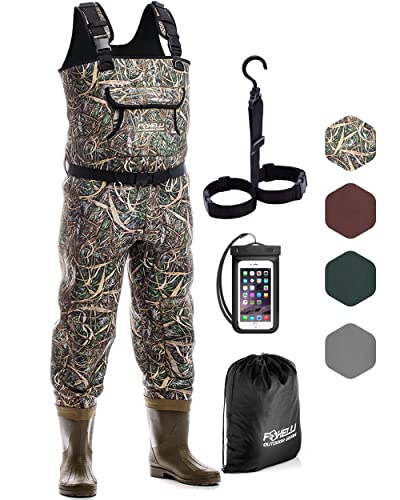
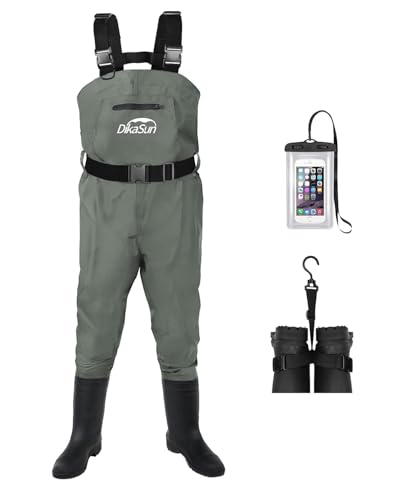
As an Amazon Associate we earn from qualifying purchases at no extra cost to you. Ratings are shown as listed on Amazon.
Quick Comparison: Which Waders Fit Your Situation?
| Fishing situation | Best wader type | Typical price range | Main advantage | Main compromise |
|---|---|---|---|---|
| One or two trips per year in mild weather | Coated two-layer or entry-level breathable | $80–$180 | Low upfront cost | Less durable and less comfortable during long walks |
| Regular spring, summer, or fall fishing | Three-layer breathable stockingfoot | $180–$450 | Versatile comfort and mobility | Needs separate wading boots and careful storage |
| Cold rivers, winter steelhead, or ice-edge conditions | Neoprene, usually 3.5–5 mm | $150–$350 | Warmth and puncture resistance | Heavy, warm, and less breathable |
| Frequent hiking over rocks and brush | Premium three-layer breathable | $350–$800+ | Better mobility, seam construction, and repair support | Highest initial cost |
| Shore access with no need to wade deeply | Hip waders or waist-high breathable waders | $70–$250 | Cooler and easier to put on | Limited depth and splash protection |
Breathable vs. Neoprene Waders
Breathable waders: the best all-season choice
Breathable waders use a microporous or waterproof membrane that blocks liquid water while allowing some water vapor to escape. Common constructions include two-layer, two-and-a-half-layer, and three-layer fabrics. Three-layer designs generally offer the best balance of abrasion resistance, mobility, and long-term reliability because the membrane is protected between an outer fabric and an inner layer.
They are the best fishing waders for anglers who walk substantial distances, fish changing weather, or want one pair for several seasons. Breathability does not mean they keep you dry if you overheat, wear cotton, or trap sweat under heavy insulating layers. Moisture management still depends on your base layers and activity level.
- Two-layer: often lighter on the budget, but the interior may require a liner or mesh and can feel less durable.
- Two-and-a-half-layer: a lighter compromise, often suitable for occasional use and warm weather.
- Three-layer: usually the strongest choice for frequent anglers and rough terrain.
Neoprene waders: warmth for cold water
Neoprene is a closed-cell synthetic rubber that insulates even when damp. Thickness is the key specification: approximately 3.5 mm is a versatile cold-water option, while 5 mm is warmer for very cold conditions but noticeably heavier and less flexible. Neoprene waders can also be more forgiving around brush and incidental contact with rocks.
The trade-off is heat buildup. Neoprene is a poor choice for strenuous hiking or mild-weather fishing because perspiration has nowhere to escape. Do not assume thicker is always better; excessive insulation can leave you sweating, which eventually makes your clothing feel cold when you stop moving.
Waterproof Ratings: What the Numbers Really Tell You
Waterproof ratings are commonly expressed as hydrostatic-head pressure in millimeters. A fabric rated at 10,000 mm, for example, resisted a water column approximately 10 meters high under a specified laboratory test. Higher numbers indicate greater resistance in that test, but they do not guarantee that a garment will last longer or remain dry at every seam, zipper, or boot attachment.
| Waterproof rating | Practical use | What to check alongside it |
|---|---|---|
| 3,000–5,000 mm | Light rain, shallow or occasional wading | Seam tape, fabric durability, and careful use |
| 10,000–15,000 mm | Regular wading and sustained wet weather | Reinforced knees, seat, and lower legs |
| 20,000 mm or higher | Frequent use, heavy rain, and demanding conditions | Membrane quality, zipper design, and repair support |
Ratings from different manufacturers are not always directly comparable because test methods and garment construction vary. A well-taped 10,000 mm wader can perform better in practice than a poorly finished garment with a higher fabric rating. Look for fully taped or sealed seams, a reliable waterproof pocket, and reinforced high-wear zones.
Stockingfoot or Bootfoot?
Stockingfoot waders
Stockingfoot waders end in attached neoprene socks. You wear them with separate wading boots, which gives you more control over traction, fit, and replacement. Felt-free rubber soles with studs are useful where permitted, while lugged rubber is the more broadly accepted option in many waterways. Check local regulations before choosing felt or studs.
Stockingfoot designs are usually the better choice for anglers who hike, fish different rivers, or want to replace boots without replacing the waders. The downside is extra cost and equipment to carry.
Bootfoot waders
Bootfoot waders have attached rubber or insulated boots. They are quick to put on, often less expensive as a complete system, and convenient for muddy banks, marshes, and short walks. Their fixed boot shape can be harder to fit precisely, and they are bulkier to transport. Once the attached boot wears out, the entire wader may be difficult or uneconomical to repair.
Getting the Size Right
Use the manufacturer’s chest, waist, inseam, and foot measurements rather than relying only on your normal clothing size. Measure over the layers you expect to wear, but do not add several extra sizes for insulation; oversized waders can bunch at the knees and create abrasion.
- The crotch should allow a comfortable high step without pulling at the seams.
- You should be able to squat, bend, and climb while wearing your planned layers.
- The shoulder straps should adjust without reaching their maximum extension.
- Neoprene stocking feet should fit snugly without compressed toes or heel movement.
- Wading boots should have enough room for the sock and a small amount of foot movement, but not enough for your heel to lift repeatedly.
A useful fit check is to perform ten deep knee bends, lift each knee to waist height, and reach overhead. If the fabric pulls sharply at the crotch, shoulders, or knees, try a different cut rather than simply sizing up.
How Much Should You Spend?
Think in cost per use rather than purchase price. Suppose an occasional angler buys $120 waders and uses them six times per year for three years. The cost is about $6.67 per use: $120 divided by 18 outings. A $360 pair used 30 times per year for four years costs $3 per use, before repairs. The more frequently you fish, the more worthwhile better fabric, seam construction, and repair support become.
Budget waders make sense when you fish rarely, stay in relatively gentle terrain, and can inspect them before each trip. Spend more for frequent use, long approaches, sharp vegetation, cold conditions, or difficult-to-replace fishing trips.
Durability and Maintenance Realities
The first failures often occur at the stockingfoot seam, crotch, knees, seat, gravel guards, and zipper rather than in the middle of an undamaged fabric panel. Wading belts reduce the consequences of a fall and help prevent water from entering over the top. They do not make waders safe for deeper or faster water, so use appropriate caution and never rely on waders as flotation.
After each trip, rinse off sand, mud, and salt. Hang waders inside out until the interior is completely dry, then turn them right-side out and dry the exterior away from direct heat. Do not store damp waders in a vehicle or sealed container. Avoid washing with household detergent, which can damage water-repellent finishes and leave residues in the membrane.
For a suspected leak, turn the dry waders inside out, apply a small amount of rubbing alcohol to likely areas, and look for dark spots that reveal pinholes. Follow the manufacturer’s repair instructions and use compatible urethane or wader repair adhesive. Patch early: a pinhole is inexpensive to fix, while repeated abrasion can require a larger panel repair.
Bottom Line
Choose three-layer breathable stockingfoot waders if you want the most versatile option for regular fishing. Choose 3.5–5 mm neoprene for genuinely cold water and limited walking. Choose bootfoot waders for convenience, marshes, and short approaches, and choose a lower-cost coated or breathable pair when use is occasional. Whatever the budget, prioritize a correct fit, sealed seams, reinforced high-wear areas, and a maintenance routine that keeps small leaks from becoming major failures.



Write Your Review
No reviews yet. Be the first to share your experience!